Paper Promotional Handbag
CN → US| HS Code | Tariff Rate | Origin | Destination | Doc |
|---|---|---|---|---|
| 4819400040 | 35.0% | CN | US | Official Doc |
| 4911100040 | 17.5% | CN | US | Official Doc |
| 4823908680 | 35.0% | CN | US | Official Doc |
| 4901100040 | 17.5% | CN | US | Official Doc |
| 4901990093 | 17.5% | CN | US | Official Doc |
Product Images


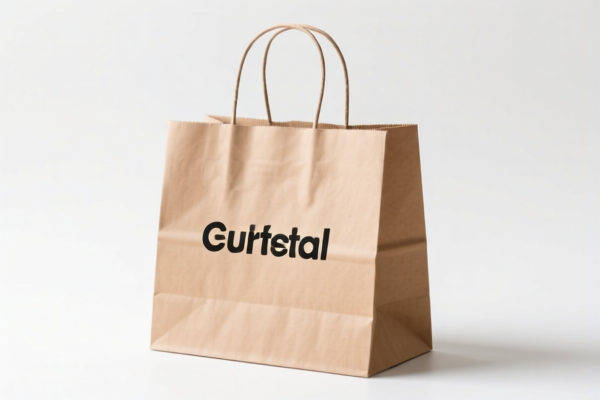
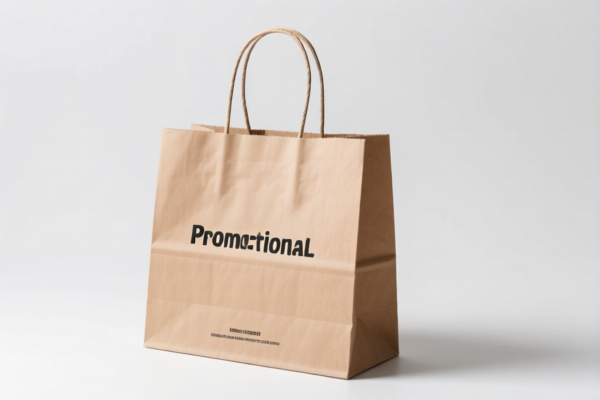
AI Analysis
🎒 Paper Promotional Handbag (Paper Promotional Handbag)
🌐 HS Code Reference & Customs Clearance Guide | 2026 Latest Tariff Analysis | Professional Clearance Strategy 📌 I. Product Definition and Classification: What is a "Paper Promotional Handbag"?
A Paper Promotional Handbag is a carrying bag made primarily from paper or paper-based composite materials, used for marketing, branding, or retail purposes. In international trade, its classification depends heavily on the material composition and structural form.
Key Distinctions: * Pure Paper Bags: Made entirely of paper (e.g., kraft paper, white card). These are classified under Chapter 48 or 49 depending on printing and function. * Paper-Plastic Composite Bags (Paper-Film Laminated): Made of paper laminated with plastic film (e.g., PE-coated paper). These are often classified as Plastic Bags/Pouches (Chapter 39/48) because the plastic layer provides the primary structural integrity or waterproofing, falling under the category of "Bags and Pouches."
⚠️ Critical Classification Point: - If the bag is laminated with plastic (Paper-Plastic Composite), it is typically classified as a Plastic Bag (HS Code starting with 4819.40) because the plastic layer defines its utility as a durable, often moisture-resistant carrier. - If it is pure paper with no plastic lining, it falls under Other Paper Articles (HS Code starting with 4823.90) or Printed Matter (HS Code starting with 4901/4911) if it functions more as a brochure or catalog holder than a traditional bag.
📦 II. HS Code Classification Details (2026 Latest Tariff Authority Comparison)
Based on the provided data, here are the specific HS Codes and their corresponding tax structures for Paper Promotional Handbags:
| HS Code | Product Description | Material/Form | Applicable Scenario | Tax Rate Structure |
|---|---|---|---|---|
4819.40.00.40 |
Plastic Paper Bags / Composite Bags | Paper-Plastic Composite (Laminated) | Promotional bags with plastic lining, durable retail bags | 35.0% (Base 0% + 301 25% + Section 122 10%) |
4911.10.00.40 |
Promotional Brochures / Printed Materials | Pure Paper | Bags designed primarily as printed advertising material/catalogs | 17.5% (Base 0% + 301 7.5% + Section 122 10%) |
4823.90.86.80 |
Other Paper Articles | Pure Paper | Cut-to-size paper items, non-printed or simple printed paper containers | 35.0% (Base 0% + 301 25% + Section 122 10%) |
4901.10.00.40 |
Printed Single Sheets / Folded Matter | Pure Paper | Folded paper items, pamphlets used as bags | 17.5% (Base 0% + 301 7.5% + Section 122 10%) |
4901.99.00.93 |
Other Printed Matter | Pure Paper | Generic printed paper items not specified elsewhere | 17.5% (Base 0% + 301 7.5% + Section 122 10%) |
🔍 Key Insight: - Composite Bags (
4819.40.00.40) incur a higher tariff (35%) because they are treated as plastic-contaminated or composite goods under US trade policy. - Pure Paper Promotional Items (4911.10.00.40,4901.10.00.40,4901.99.00.93) incur a lower tariff (17.5%) if they are primarily recognized as printed advertising material or printed matter. -4823.90.86.80is a catch-all for paper articles and also carries the 35% rate, similar to the composite bags.
💰 III. 2026 Latest Tariff Rate Details (Including Surcharges, Policy Surcharges)
✅ Applicable Country: United States (US) ✅ Country of Origin: China (CN) ✅ Effective Date: From November 10, 2025 onwards (including subsequent imports)
🎯 1. 4819.40.00.40 —— Plastic Paper Bags (Paper-Plastic Composite)
| Item | Details |
|---|---|
| Base Tariff | 0% (ad valorem) |
| USITC Surcharge | +25% (Under Section 301 of the US Trade Act) |
| Section 122 Surcharge | +10% (Specific to certain goods from China) |
| Total Tariff | 35.0% |
| Tax Calculation | CIF Value × 35% |
| De Minimis Exemption | ❌ Not Eligible (deny_de_minimis) |
| Legal Basis Path | Section 122: 9903.01.25 → Section 301: 9903.08.01 → HS: 4819.40.00.40 |
📌 Explanation: - The 25% USITC surcharge is the standard Section 301 tariff on Chinese-origin plastic/paper composite goods. - The 10% Section 122 surcharge applies specifically to certain imported goods under this specific provision. - Total 35% is a significant cost driver. Classification as "Plastic Bag" rather than "Paper" is the key differentiator here.
🎯 2. 4911.10.00.40 —— Promotional Brochures / Printed Materials
| Item | Details |
|---|---|
| Base Tariff | 0% |
| USITC Surcharge | +7.5% (Reduced Section 301 rate for certain printed materials) |
| Section 122 Surcharge | +10% |
| Total Tariff | 17.5% |
| Tax Calculation | CIF Value × 17.5% |
| De Minimis Exemption | ❌ Not Eligible (deny_de_minimis) |
| Legal Basis Path | Section 122: 9903.01.24 → Section 301: 9903.08.01 → HS: 4911.10.00.40 |
📌 Note: - This lower rate (17.5%) applies if the item is clearly defined as advertising material or commercial catalogs rather than a durable bag. - Strategy: If your "handbag" is primarily a printed promotional item (e.g., a folded brochure-style bag), argue for this classification to save 17.5% in tariffs.
🎯 3. 4823.90.86.80 —— Other Paper Articles
| Item | Details |
|---|---|
| Base Tariff | 0% |
| USITC Surcharge | +25% |
| Section 122 Surcharge | +10% |
| Total Tariff | 35.0% |
| Tax Calculation | CIF Value × 35% |
| De Minimis Exemption | ❌ Not Eligible (deny_de_minimis) |
| Legal Basis Path | Section 122: 9903.01.25 → Section 301: 9903.08.01 → HS: 4823.90.86.80 |
📌 Note: - This code is used for paper items that do not fit into specific printing categories. It carries the full 35% tariff due to the higher Section 301 rate for general paper articles.
🎯 4. 4901.10.00.40 & 4901.99.00.93 —— Other Printed Matter
| Item | Details |
|---|---|
| Base Tariff | 0% |
| USITC Surcharge | +7.5% |
| Section 122 Surcharge | +10% |
| Total Tariff | 17.5% |
| Tax Calculation | CIF Value × 17.5% |
| De Minimis Exemption | ❌ Not Eligible (deny_de_minimis) |
| Legal Basis Path | Section 122: 9903.01.24 → Section 301: 9903.08.01 → HS: 4901.10.00.40 / 4901.99.00.93 |
📌 Note: - Similar to
4911.10.00.40, these codes benefit from the lower 7.5% Section 301 rate for printed materials. - Use these if the item is primarily printed matter (e.g., a folded pamphlet used as a bag).
🛠️ IV. Customs Clearance Practical Advice (Pitfall Avoidance Guide)
✅ 1. Documentation Checklist (Essential)
| Document | Required | Description |
|---|---|---|
| ✅ Product Spec Sheet | ✔️ | Must clearly state material composition (e.g., "50% Paper, 50% PE Film" vs. "100% Kraft Paper"). |
| ✅ Photos | ✔️ | Show the bag’s structure, lining (if any), and handles. Prove it’s a bag, not just a flat sheet. |
| ✅ Commercial Invoice | ✔️ | Describe the item accurately: "Paper Promotional Bag, Laminated with PE" or "Paper Brochure Bag." |
| ✅ Material Declaration | ✔️ | Explicitly declare if the bag contains plastic. Misdeclaration can lead to severe penalties. |
| ✅ Printing Details | ✔️ | If claiming a lower rate under Chapter 49, provide evidence of heavy printing/advertising content. |
✅ 2. Classification Strategy (Key Mantra)
🔥 "Composite Bags Pay 35%, Pure Paper Brochures Pay 17.5%! Choose Wisely!"
| Scenario | Recommended HS Code | Tariff Rate | Why? |
|---|---|---|---|
| Bag with Plastic Lining | 4819.40.00.40 |
35% | Classified as plastic bag; plastic layer dominates utility. |
| 100% Paper Bag, Heavy Printing | 4911.10.00.40 |
17.5% | Classified as promotional printed material. |
| 100% Paper Bag, Minimal Printing | 4823.90.86.80 |
35% | Classified as generic paper article. |
| Folded Paper "Bag" (Brochure Style) | 4901.10.00.40 |
17.5% | Classified as printed single sheet/folded matter. |
📌 Strategic Tip: - If your bag is 100% paper and has promotional graphics, argue for Chapter 49 (
4911.10.00.40or4901.10.00.40) to save 17.5% in tariffs. - If your bag has plastic laminating (for waterproofing/durability), you must classify under4819.40.00.40(35%). Do not attempt to reclassify as pure paper.
✅ 3. Special Cases & Handling
| Situation | Handling Advice |
|---|---|
| OEM Promotional Bags | Provide customer design files to prove "advertising material" nature. |
| Bags with Plastic Handles | If the handle is plastic but the bag is paper, the entire item may still be classified as plastic bag (4819.40.00.40). |
| Small Paper Sachets | If very small and printed, may qualify as 4911.10.00.40 (promotional material). |
| Large Paper Shopping Bags | Likely 4819.40.00.40 if laminated, or 4823.90.86.80 if pure paper. |
🌍 V. Global Market Comparison (2026 Latest)
| Country/Region | Recommended HS Code | Tariff | Certification | Notes |
|---|---|---|---|---|
| 🇺🇸 USA | 4819.40.00.40 |
35% (China) | No special certs | High tariff on composite bags. |
| 🇺🇸 USA | 4911.10.00.40 |
17.5% (China) | No special certs | Lower tariff for pure paper printed items. |
| 🇨🇳 China | 4819.40.00.40 |
~5% | No special certs | Low import tariff in China. |
| 🇪🇺 EU | 4819.40.00.40 |
0-5% | CE (if applicable) | No Section 301 or 122 surcharges. |
| 🇦🇺 Australia | 4819.40.00.40 |
~5% | RCM (if applicable) | No additional surcharges. |
📌 Conclusion: - USA is the only market with significant surcharges (351 + 122). - China-origin goods face double-digit surcharges in the US. - Pure Paper + Heavy Printing is the best strategy to minimize US tariffs.
📌 VI. Common Mistakes & Pitfalls (Lessons Learned)
❌ Mistake 1: Classifying a plastic-laminated bag as pure paper (4911.10.00.40).
👉 Consequence: Customs will reclassify to 4819.40.00.40 and charge 35% instead of 17.5%, plus penalties.
❌ Mistake 2: Calling a pure paper bag a "Plastic Bag" to avoid scrutiny. 👉 Consequence: Still 35%, but with risk of inspection if documentation doesn't match.
❌ Mistake 3: Ignoring the Section 122 10% surcharge. 👉 Consequence: All Chinese-origin goods in these categories are subject to the 10% surcharge. Total cost is Base + 301 + 122.
❌ Mistake 4: Using vague descriptions like "Paper Bag" without material breakdown.
👉 Consequence: Customs may apply the highest possible tariff (35%) due to uncertainty.
✅ Correct Approach:
"Paper Promotional Handbag, 100% Kraft Paper, Heavy Offset Printing, No Plastic Lining, Model XYZ" → Classify under
4911.10.00.40(17.5%).
🎯 VII. Conclusion: Professional Classification, Save Costs!
🎯 Remember the Mantra:
🔹 "Plastic Lamination = 35% Tax. Pure Paper + Printing = 17.5% Tax." 🔹 "HS Code Decides Your Cost. 17.5% vs 35% = 17.5% Savings!"
📌 Pro Tip:
If your product is 100% paper and used for promotional purposes, ensure your commercial invoice and product description emphasize "Promotional Printed Material" rather than just "Bag." This supports classification under Chapter 49 (4911.10.00.40 or 4901.10.00.40), saving you 17.5% in tariffs.
📣 Immediate Action:
📞 Consult your customs broker with material composition details. 🚀 Optimize your HS Code classification to reduce your 35% tariff burden to 17.5%.
✨ Professional Customs Clearance Starts with Precise Classification! 💼 Your Every Dollar Saved is Worth Calculating!
Customer Reviews
About HS Code Classification
The Harmonized System (HS) is an internationally standardized nomenclature developed by the World Customs Organization (WCO) to classify traded products. Over 200 countries use the HS system as the basis for customs tariffs, trade statistics, and import/export regulations.
Each HS code follows a hierarchical structure:
- Chapter (2 digits) — Broad category of goods (e.g., Chapter 84: Machinery and Mechanical Appliances)
- Heading (4 digits) — More specific grouping within the chapter
- Subheading (6 digits) — Internationally standardized breakdown, used by all WCO member countries
- National subdivisions (8-10 digits) — Country-specific extensions for further classification, such as US HTSUS 10-digit codes
Correct HS code classification is essential for smooth customs clearance, accurate duty payment, and compliance with trade regulations. Misclassification can lead to customs delays, overpayment of duties, or penalties.
When importing from CN to US, the applicable tariff rates may include:
- Most-Favored-Nation (MFN) rate — The standard duty rate applied to WTO members
- General rate — Applied to countries without trade agreements
- Trade remedy duties — Additional tariffs such as Section 301 (anti-dumping), Section 232 (national security), or countervailing duties
The information provided on this page is for reference purposes only. For official classification, please consult with your local customs authority or a licensed customs broker.