Paper Recyclable Food Container
CN → US| HS Code | Tariff Rate | Origin | Destination | Doc |
|---|---|---|---|---|
| 4823610020 | 35.0% | CN | US | Official Doc |
| 4823690020 | 35.0% | CN | US | Official Doc |
| 4819100020 | 35.0% | CN | US | Official Doc |
| 4819200020 | 35.0% | CN | US | Official Doc |
Product Images
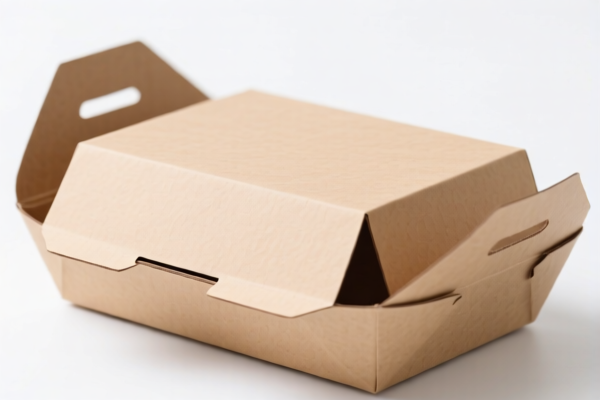
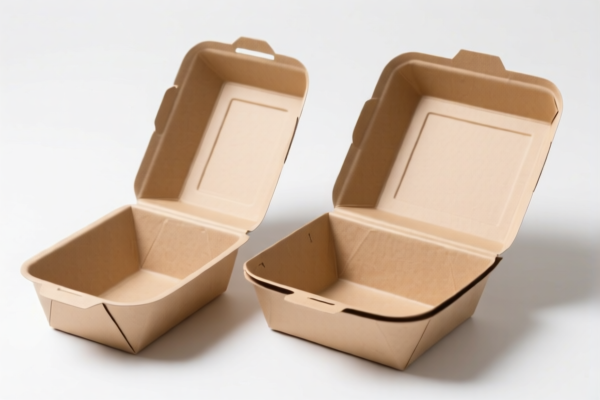
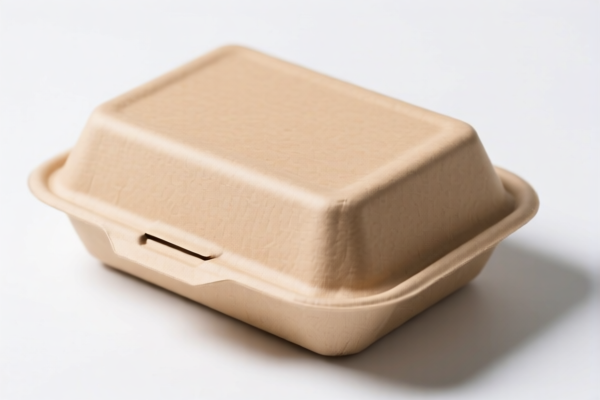
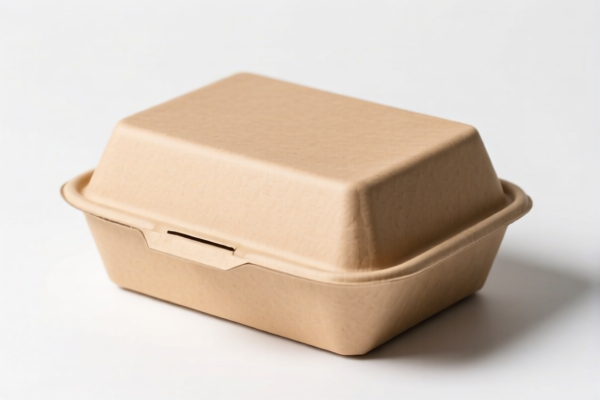
AI Analysis
🌿 Eco-Friendly Paper Recyclable Food Containers
🌐 HS Code Reference & Customs Clearance Guide | 2026 Latest Tariff Analysis | Professional Compliance Strategy
📌 I. Product Definition & Classification: What Exactly Are "Paper Food Containers"?
Paper recyclable food containers are disposable packaging solutions designed for the storage, transport, and consumption of food and beverages. They are primarily made from paper pulp, corrugated paper, or cellulose fibers. In international trade, these products are strictly categorized based on their shape, material composition, and specific use case (e.g., cups vs. trays).
Key Distinctions: * Cups & Round Containers: Specifically shaped vessels for liquids or round foods (e.g., coffee cups, noodle bowls, nested food containers). * Cartons & Boxes: Structural packaging for solid foods, including corrugated boxes and folding cartons (e.g., pizza boxes, bakery boxes, takeout containers).
⚠️ Critical Classification Point:
- If the product is a cup, dish, plate, or round nested container → It falls under Chapter 48.23.
- If the product is a box, carton, or case (even if used for food) → It falls under Chapter 48.19.
- Do not confuse "food-grade paper cups" with "corrugated shipping boxes." They have different HS codes and, crucially, different tax rates.
📦 II. HS Code Classification Details (2026 Latest Tariff Authority Comparison)
| HS Code | Product Description | Application Scenario | Material/Feature |
|---|---|---|---|
4823.61.00.20 |
Trays, dishes, plates, cups, and the like: Of bamboo – Cups and round nested food containers | Bamboo-based eco-cups, round nesting bowls for salads/soups | ✅ Bamboo Fiber |
4823.69.00.20 |
Trays, dishes, plates, cups, and the like: Other – Cups and round nested food containers | Standard paper pulp cups, PLA-lined paper cups, round takeout bowls | ✅ Paper/Pulp (Non-Bamboo) |
4819.10.00.20 |
Cartons, boxes, cases...: Of corrugated paper or paperboard – Sanitary food and beverage containers | Corrugated pizza boxes, large insulated shipping boxes for food | ✅ Corrugated Paper |
4819.20.00.20 |
Cartons, boxes, cases...: Folding cartons, boxes and cases – Sanitary food and beverage containers | Non-corrugated folding boxes (e.g., cereal boxes, bakery boxes, donut boxes) | ✅ Non-Corrugated Paper/Cardboard |
🔍 Key Reminder:
-4823.6xseries applies to open-top containers like cups and round bowls.
-4819.1x&4819.2xseries applies to enclosed or folded structures like boxes and cartons.
- "Sanitary" implies direct contact with food; however, for HS classification, the physical form (cup vs. box) is the primary determinant, not just the hygiene level.
💰 III. 2026 Latest Tariff Rate Details (Including Additional Duties & Policy Surcharges)
✅ Applicable Country: United States (US)
✅ Origin: China (CN)
✅ Effective Date: 2025 November 10 onwards (including subsequent imports)
🎯 1. 4823.61.00.20 — Bamboo Cups & Round Nested Containers
| Item | Details |
|---|---|
| Base Tariff | 0.0% (ad valorem) |
| Retaliatory/Additional Tariff | 0.0% |
| Total Tariff Rate | 0.0% |
| Tax Calculation | CIF Value × 0% = $0 |
| De Minimis Exemption | ❌ Not Applicable (Standard import rules apply, but duty is zero) |
| Legal Basis | USITC Harmonized Tariff Schedule (HTS) 2026 |
📌 Explanation:
- Bamboo-based paper cups enjoy zero tariff entry. This is a strategic advantage for eco-friendly bamboo products. - No additional Section 301 or IEEPA surcharges apply to this specific subheading.
🎯 2. 4823.69.00.20 — Other Paper Cups & Round Nested Food Containers
| Item | Details |
|---|---|
| Base Tariff | 0.0% |
| Retaliatory/Additional Tariff | +25.0% |
| Total Tariff Rate | 25.0% |
| Tax Calculation | CIF Value × 25% |
| De Minimis Exemption | ❌ Not Eligible |
| Legal Basis | USITC:4823.69.00.20 → Footnote: 9903.88.01 (Section 301 List 4) |
📌 Warning:
- Standard paper or pulp-based cups (non-bamboo) are subject to a 25% additional tariff. - Even though the base duty is 0%, the effective cost increases significantly due to this surcharge. - Common items: Disposable coffee cups, plastic-lined paper bowls, PLA-coated round containers.
🎯 3. 4819.10.00.20 — Corrugated Sanitary Food Containers (Boxes)
| Item | Details |
|---|---|
| Base Tariff | 0.0% |
| Retaliatory/Additional Tariff | +25.0% |
| Total Tariff Rate | 25.0% |
| Tax Calculation | CIF Value × 25% |
| De Minimis Exemption | ❌ Not Eligible |
| Legal Basis | USITC:4819.10.00.20 → Footnote: 9903.88.01 |
📌 Note:
- Corrugated boxes used for food (e.g., pizza boxes, large takeout boxes) fall here. - Subject to the same 25% additional tariff as other paper cups.
🎯 4. 4819.20.00.20 — Folding Cartons & Boxes (Sanitary Food Containers)
| Item | Details |
|---|---|
| Base Tariff | 0.0% |
| Retaliatory/Additional Tariff | +25.0% |
| Total Tariff Rate | 25.0% |
| Tax Calculation | CIF Value × 25% |
| De Minimis Exemption | ❌ Not Eligible |
| Legal Basis | USITC:4819.20.00.20 → Footnote: 9903.88.01 |
📌 Note:
- Non-corrugated folding boxes (e.g., bakery boxes, donut sleeves, cereal boxes) are also subject to 25% additional tariff. - These are classified under "Folding cartons" rather than "Cups."
🛠️ IV. Customs Clearance Practical Advice (Battle-Tested Pitfall Guide)
✅ 1. Documentation Checklist (Non-Negotiable)
| Document | Required | Purpose |
|---|---|---|
| ✅ Product Specifications | ✔️ | Must specify material (e.g., "Bamboo Fiber," "Paper Pulp," "Corrugated Cardboard") |
| ✅ Product Photos | ✔️ | Clear images showing shape (cup vs. box) to prevent misclassification |
| ✅ Commercial Invoice | ✔️ | Must clearly state "Paper Food Container" and specify type (e.g., "Bamboo Cup" vs. "Paper Box") |
| ✅ Packing List | ✔️ | Detail quantity and dimensions |
| ✅ Material Declaration | ✔️ | Confirm no hazardous coatings (if any) |
✅ 2. Declaration Strategy (Key Mnemonics)
🔥 "Shape Determines Code, Material Determines Tax!"
| Scenario | Correct HS Code | Error Risk |
|---|---|---|
| Bamboo Cup/Bowl | 4823.61.00.20 |
✅ 0% Tariff (Best Option) |
| Paper/Pulp Cup/Bowl | 4823.69.00.20 |
⚠️ 25% Tariff |
| Corrugated Food Box | 4819.10.00.20 |
⚠️ 25% Tariff |
| Folding Bakery Box | 4819.20.00.20 |
⚠️ 25% Tariff |
📌 Critical Tip:
- If you can source Bamboo-based containers instead of standard paper/pulp, you can save 25% in tariffs. - Do not declare a corrugated box as a "cup" or vice versa. Customs will inspect and penalize for misdeclaration.
✅ 3. Special Handling Tips
| Situation | Recommendation |
|---|---|
| PLA/Compostable Linings | Declare as "Paper Container" (HS 4823/4819). The liner does not change the HS code unless it changes the primary material classification significantly. |
| Mixed Containers | If a shipment contains both cups and boxes, declare separately to avoid customs confusion. Do not lump under one generic "Food Packaging" code. |
| Sample Shipments | Even small samples are subject to the same HS rules. Ensure the HS code matches the sample's physical form. |
| Origin Labeling | Ensure products are clearly marked "Made in China" to trigger the correct 25% additional tariff calculation (if applicable). |
🌍 V. Global Market Comparison (2026 Latest)
| Country/Region | Recommended HS Code | Tariff (CN Origin) | Key Certification | Notes |
|---|---|---|---|---|
| 🇺🇸 USA | 4823.61.00.20 (Bamboo) |
0.0% | FDA Compliance (Food Contact) | Zero Duty! Best for bamboo. |
| 🇺🇸 USA | 4823.69.20 (Paper) |
25.0% | FDA Compliance | High duty due to Section 301. |
| 🇪🇺 EU | 4823.61 / 4823.69 |
0.0% - 4.5% | FDA/EFSA, Recycling Marks | Lower duties; focus on recyclability claims. |
| 🇨🇳 China | 4823.61 / 4823.69 |
5% - 12% | GB Standards | Higher base duty than US for some items. |
| 🇬🇧 UK | 4823.61 / 4823.69 |
0.0% - 5% | UKCA Mark | Post-Brexit rules apply; check UK TARIC. |
📌 Conclusion:
- USA is the most complex market due to the 25% additional tariff on non-bamboo paper products. - Bamboo products (4823.61.00.20) are the only tariff-free option for paper-based food containers entering the US.
📌 VI. Common Mistakes & Pitfalls (Blood-Tested Lessons)
❌ Mistake 1: Declaring all paper containers under one generic "Paper Cups" code.
👉 Consequence: Customs may classify it as the higher-duty item (25%) if it's not bamboo. Always specify material.
❌ Mistake 2: Calling a cardboard box a "container" without specifying if it's corrugated or folding.
👉 Consequence: Both 4819.10 and 4819.20 have 25% tariffs, but incorrect description leads to delays and potential fines.
❌ Mistake 3: Assuming "Eco-Friendly" or "Recyclable" grants tariff exemptions.
👉 Consequence: No tariff exemptions exist for recyclability alone in the US HTS. Only material type (Bamboo) matters for the 0% rate.
✅ Correct Declaration Example:
"Disposable Bamboo Fiber Coffee Cups, 12oz, Unbleached, FDA Compliant, Model BC-12, HS Code: 4823.61.00.20"
🎯 VII. Conclusion: Strategic Sourcing & Cost Optimization
🎯 Key Takeaway:
🔹 "Choose Bamboo for Zero Duty!"
🔹 "Paper/Pulp & Boxes = 25% Extra Tax!"
🔹 "Never Mix HS Codes in One Line Item!"
📌 Pro Tip:
If your supply chain is flexible, shift production to bamboo-based containers (4823.61.00.20) to save 25% in customs duties for the US market. This is a significant competitive advantage.
📣 Immediate Action:
📞 Verify Material Composition: Is it Bamboo? Paper? Corrugated?
📄 Update HS Codes: Ensure invoices match4823.61.00.20(Bamboo) or4823.69.00.20(Other).
🚀 Optimize Costs: Use bamboo to bypass the 25% tariff barrier.
✨ Precision Classification Saves 25%!
💼 Don't let tariffs eat your margins—choose wisely!
Customer Reviews
About HS Code Classification
The Harmonized System (HS) is an internationally standardized nomenclature developed by the World Customs Organization (WCO) to classify traded products. Over 200 countries use the HS system as the basis for customs tariffs, trade statistics, and import/export regulations.
Each HS code follows a hierarchical structure:
- Chapter (2 digits) — Broad category of goods (e.g., Chapter 84: Machinery and Mechanical Appliances)
- Heading (4 digits) — More specific grouping within the chapter
- Subheading (6 digits) — Internationally standardized breakdown, used by all WCO member countries
- National subdivisions (8-10 digits) — Country-specific extensions for further classification, such as US HTSUS 10-digit codes
Correct HS code classification is essential for smooth customs clearance, accurate duty payment, and compliance with trade regulations. Misclassification can lead to customs delays, overpayment of duties, or penalties.
When importing from CN to US, the applicable tariff rates may include:
- Most-Favored-Nation (MFN) rate — The standard duty rate applied to WTO members
- General rate — Applied to countries without trade agreements
- Trade remedy duties — Additional tariffs such as Section 301 (anti-dumping), Section 232 (national security), or countervailing duties
The information provided on this page is for reference purposes only. For official classification, please consult with your local customs authority or a licensed customs broker.