Paper Ring Binder
CN → US| HS Code | Tariff Rate | Origin | Destination | Doc |
|---|---|---|---|---|
| 3926909989 | 22.8% | CN | US | Official Doc |
| 3926908700 | 40.3% | CN | US | Official Doc |
| 4820300020 | 35.0% | CN | US | Official Doc |
| 4820104000 | 35.0% | CN | US | Official Doc |
| 4820300020 | 35.0% | CN | US | Official Doc |
Product Images
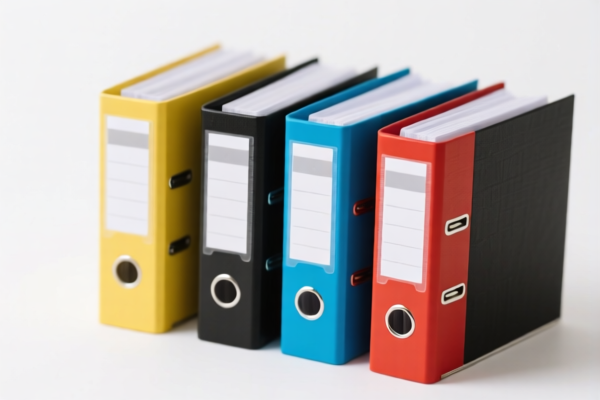
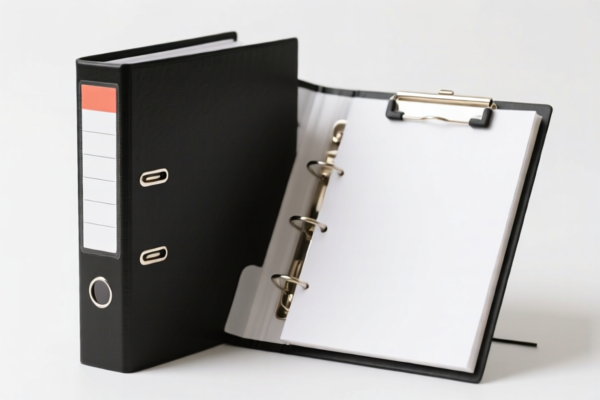


AI Analysis
📎 Paper Ring Binder (and Variants) – HS Code Classification & 2026 Tariff Guide
🌐 HS Code Reference & Customs Clearance Guide | 2026 Latest Tariff Analysis | Professional Clearance Strategy
📌 I. Product Definition & Classification: Do You Really Understand "Binders"?
Ring Binders are essential office supply items used for organizing loose-leaf papers, documents, and notes. In international trade, they are strictly categorized by material and structure, which directly determines their HS Code and, consequently, the tariff burden.
There are two main categories:
- Paper/Cardboard Binders (e.g., Loose-Leaf Rings):
Made primarily of paper or cardboard. These are often simple "ring binders" where the rings are fixed to a paper backing. They fall under Chapter 48. - Plastic Binders:
Made of plastic materials, often with metal or plastic rings. These fall under Chapter 39.
⚠️ Key Distinction Point:
- If the binder is paper/cardboard based (even with metal rings), it is generally classified under 4820.30.00.20 or 4820.10.40.00.
- If the binder is plastic based (e.g., plastic lever-arch file, plastic ring binder), it is classified under 3926.90.87.00 or 3926.90.99.89.
📦 II. HS Code Classification Details (2026 Latest Tariff Authority Comparison)
| HS Code | Product Description | Application Scenario | Material |
|---|---|---|---|
4820.30.00.20 |
Paper or cardboard ring binders (loose-leaf type) | Standard office paper binders, loose-leaf folders | ✅ Paper/Cardboard |
4820.10.40.00 |
Paper ring binders/notebooks (stationery items) | Plastic-free or paper-based notebooks, simple binders | ✅ Paper |
3926.90.87.00 |
Plastic ring binders (flat document binders) | Plastic lever-arch files, plastic ring binders | ✅ Plastic |
3926.90.99.89 |
Plastic office supplies (other plastic articles) | Other plastic binders not specified elsewhere | ✅ Plastic |
🔍 Critical Reminder:
- Paper Binders (4820.xxxx) generally have 0% base tariff, but face 25% Additional Tariff + 10% Section 301/IEEPA Tax.
- Plastic Binders (3926.90) have 5.3% Base Tariff, but face 7.5% to 25% Additional Tariffs + 10% Section 301/IEEPA Tax, depending on specific sub-classification.
- Misclassification Risk: Declaring a plastic binder as paper (or vice versa) can lead to severe penalties due to tariff differences.
💰 III. 2026 Latest Tariff Rate Breakdown (Including Surtaxes & Policy Surcharges)
✅ Applicable Country: United States (US)
✅ Origin: China (CN)
✅ Effective Date: 2025-11-10 onwards (including subsequent imports)
🎯 1. 4820.30.00.20 – Paper/Cardboard Ring Binders (Loose-Leaf)
| Item | Content |
|---|---|
| Base Tariff Rate | 0.0% (ad valorem) |
| USITC Additional Tariff | +25.0% (Section 301) |
| IEEPA Additional Tariff | +10.0% (Targeting China/HK products, effective from 2025-11-10) |
| Total Tax Rate | 35.0% |
| Tax Calculation | CIF Value × 35% |
| De Minimis Eligibility | ❌ No (deny_de_minimis) |
| Legal Basis Path | IEEPA:9903.01.25 → IEEPA:9903.01.24 → USITC:4820.30.00.20 |
📌 Explanation:
- Although the base tariff is 0%, the 25% Section 301 tariff + 10% IEEPA tariff results in a 35% total tax.
- This applies to paper/cardboard binders that are classified as "loose-leaf ring binders."
- High Tax Alert: Despite being "cheap" paper products, the surtaxes are significant.
🎯 2. 4820.10.40.00 – Paper Ring Binders/Notebooks
| Item | Content |
|---|---|
| Base Tariff Rate | 0.0% |
| USITC Additional Tariff | +25.0% |
| IEEPA Additional Tariff | +10.0% |
| Total Tax Rate | 35.0% |
| Tax Calculation | CIF × 35% |
| De Minimis Eligibility | ❌ No |
| Legal Basis Path | IEEPA:9903.01.25 → IEEPA:9903.01.24 → USITC:4820.10.40.00 |
📌 Note:
- This code is used for paper-based binders that may be classified as "notebooks" or similar stationery items if they include pages or specific bound structures.
- Tax identical to 4820.30.00.20: 35%.
🎯 3. 3926.90.87.00 – Plastic Ring Binders (Flat Document Binders)
| Item | Content |
|---|---|
| Base Tariff Rate | 5.3% |
| USITC Additional Tariff | +25.0% |
| IEEPA Additional Tariff | +10.0% |
| Total Tax Rate | 40.3% |
| Tax Calculation | CIF × 40.3% |
| De Minimis Eligibility | ❌ No |
| Legal Basis Path | IEEPA:9903.01.25 → IEEPA:9903.01.24 → USITC:3926.90.87.00 |
📌 Note:
- This code specifically covers plastic binders that are "flat document binding materials."
- Higher Tax: The base rate of 5.3% pushes the total to 40.3%, which is 5.3% higher than the paper-based binders.
🎯 4. 3926.90.99.89 – Plastic Office Supplies (Other)
| Item | Content |
|---|---|
| Base Tariff Rate | 5.3% |
| USITC Additional Tariff | +7.5% (Note: Lower surtax for this specific sub-category) |
| IEEPA Additional Tariff | +10.0% |
| Total Tax Rate | 22.8% |
| Tax Calculation | CIF × 22.8% |
| De Minimis Eligibility | ❌ No |
| Legal Basis Path | IEEPA:9903.01.25 → IEEPA:9903.01.24 → USITC:3926.90.99.89 |
📌 Optimization Tip:
- This is the lowest tax rate option (22.8%) for plastic binders if they can be classified as "other plastic articles" not specifically listed as "flat document binders."
- Risk: Misclassification here could lead to audits. Ensure the product does not fit the specific description of3926.90.87.00.
🛠️ IV. Customs Clearance Practical Advice (Battle-Tested Pitfall Avoidance)
✅ 1. Required Documentation Checklist (Non-negotiable)
| Document | Mandatory? | Explanation |
|---|---|---|
| ✅ Product Specification Sheet | ✔️ | Must specify material (Paper vs. Plastic), dimensions, ring type |
| ✅ Product Photos (Clear) | ✔️ | Show logo, material texture, and structure (e.g., plastic cover vs. paper cover) |
| ✅ Commercial Invoice | ✔️ | Must accurately describe the product (e.g., "Plastic Ring Binder" not just "Binder") |
| ✅ Packing List | ✔️ | Include item count, weight, and packaging details |
| ✅ Certificate of Origin (CO) | ✔️ | Required for tariff calculation and potential exemptions |
✅ 2. Declaration Tips (Key Mnemonic)
🔥 "Material First, Code Second, Name Precise, Tax Minimized!"
| Scenario | Correct Declaration | Wrong Practice |
|---|---|---|
| Plastic Binder | 3926.90.87.00 or 3926.90.99.89 |
Misdeclare as Paper (4820.xxxx) → Fraud Risk |
| Paper Binder | 4820.30.00.20 or 4820.10.40.00 |
Misdeclare as Plastic → Higher Tax (40.3% vs 35%) |
| Mixed Material | Check primary material | Declare as "Mixed" → Customs Rejection |
| OEM Custom Binder | Provide client PO + Design | Use generic name "Binder" → Valuation Issues |
✅ 3. Special Cases Handling
| Scenario | Handling Advice |
|---|---|
| OEM Custom Binders | Provide client order + design drawings. Avoid being classified as "non-standard" which may trigger higher scrutiny. |
| Binders with Metal Rings | Still classified by cover material (Paper or Plastic). Metal rings do not change the HS Code to Chapter 83. |
| Binders for Medical/Industrial Use | If specialized, may apply for "non-commercial" classification, but requires proof. |
| Binders for Military/Aerospace | May apply for "special use" declaration. Tax may be reduced, but requires prior communication. |
🌍 V. Global Market Customs Comparison (2026 Latest)
| Country/Region | Recommended HS Code | Tariff (China Origin) | Certification Requirements | Notes |
|---|---|---|---|---|
| 🇺🇸 USA | 4820.30.00.20 / 3926.90.87.00 |
35% (Paper) / 40.3% (Plastic) | None specific, but FTC labeling required | High Surcharge Market |
| 🇨🇳 China | 4820.30.00.20 / 3926.90.87.00 |
0%~5.3% | CCC (if applicable) | No Additional Surtax |
| 🇪🇺 EU | 4820.30.00.20 / 3926.90.87.00 |
0% (if compliant with CE) | CE + RoHS | Low Tariff |
| 🇦🇺 Australia | 4820.30.00.20 / 3926.90.87.00 |
5% | RCM | No Surcharge |
| 🇯🇵 Japan | 4820.30.00.20 / 3926.90.87.00 |
0% | PSE | No Surcharge |
📌 Conclusion:
- USA is the only major market with high additional tariffs (Section 301 + IEEPA).
- Paper binders (35%) are cheaper than Plastic binders (40.3%) in the US market.
- If you can switch from plastic to paper binders, you can save 5.3% in taxes.
📌 VI. Common Errors & Pitfall Guide (Lessons Learned)
❌ Error 1: Misclassifying Plastic Binders as Paper Binders
👉 Consequence: Customs Fraud Penalty + Retroactive Tax Payment + Fines.
❌ Error 2: Declaring Plastic Binders under 3926.90.99.89 when they fit 3926.90.87.00
👉 Consequence: Higher Tax (40.3% vs 22.8%) if the "flat document" criteria are met.
❌ Error 3: Vague Description ("Office Supplies")
👉 Consequence: Customs Delay + Additional Inspection + Potential Rejection.
❌ Error 4: Ignoring IEEPA Tariff (10%)
👉 Consequence: Unexpected Cost Increase at clearance. The 10% IEEPA tariff is mandatory for Chinese-origin goods since Nov 2025.
✅ Correct Practice:
"Plastic Ring Binder, 3-Ring, 1.5-inch, Blue, Model XYZ, Made in China"
OR
"Paper Loose-Leaf Ring Binder, Cardboard Cover, 3-Ring, Model ABC, Made in China"
🎯 VII. Conclusion: Professional Declaration, Save Time & Money
🎯 Remember the Mnemonic:
🔹 "Paper 35, Plastic 40, Other Plastic 22.8! Material is King!"
🔹 "HS Code Determines Life, Tax Rate Difference 5.3%, One Wrong Step, Thousands Lost!"
📌 Tips:
- If your binders are originally from Vietnam, Mexico, Thailand, or Malaysia, you may apply for IEEPA Exemption, reducing the tax to 0%~5%.
- Suggest Advance Ruling Application to avoid clearance risks.
📣 Immediate Action:
📞 Contact Professional Customs Broker + Provide Product Photos + Apply for HS Code Advance Ruling
🚀 Let your binders, Smooth Clearance, Efficient Export, Profit Maximization!
✨ Professional Clearance Starts with Accurate Classification!
💼 Every Cent of Your Cost Deserves to Be Precisely Calculated!
Customer Reviews
About HS Code Classification
The Harmonized System (HS) is an internationally standardized nomenclature developed by the World Customs Organization (WCO) to classify traded products. Over 200 countries use the HS system as the basis for customs tariffs, trade statistics, and import/export regulations.
Each HS code follows a hierarchical structure:
- Chapter (2 digits) — Broad category of goods (e.g., Chapter 84: Machinery and Mechanical Appliances)
- Heading (4 digits) — More specific grouping within the chapter
- Subheading (6 digits) — Internationally standardized breakdown, used by all WCO member countries
- National subdivisions (8-10 digits) — Country-specific extensions for further classification, such as US HTSUS 10-digit codes
Correct HS code classification is essential for smooth customs clearance, accurate duty payment, and compliance with trade regulations. Misclassification can lead to customs delays, overpayment of duties, or penalties.
When importing from CN to US, the applicable tariff rates may include:
- Most-Favored-Nation (MFN) rate — The standard duty rate applied to WTO members
- General rate — Applied to countries without trade agreements
- Trade remedy duties — Additional tariffs such as Section 301 (anti-dumping), Section 232 (national security), or countervailing duties
The information provided on this page is for reference purposes only. For official classification, please consult with your local customs authority or a licensed customs broker.