Paper Ring Binder Clip
CN → US| HS Code | Tariff Rate | Origin | Destination | Doc |
|---|---|---|---|---|
| 8305100010 | 20.4% | CN | US | Official Doc |
| 8305100050 | 70.4% | CN | US | Official Doc |
Product Images
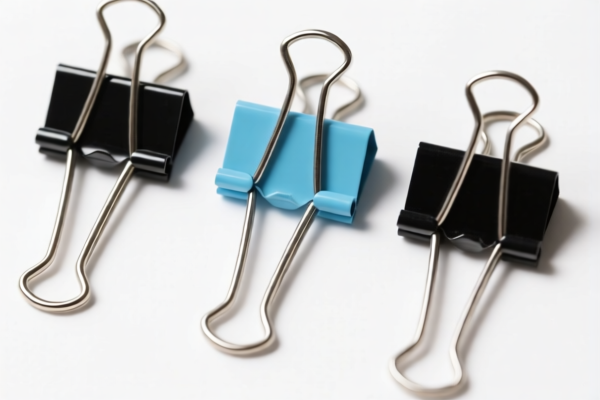
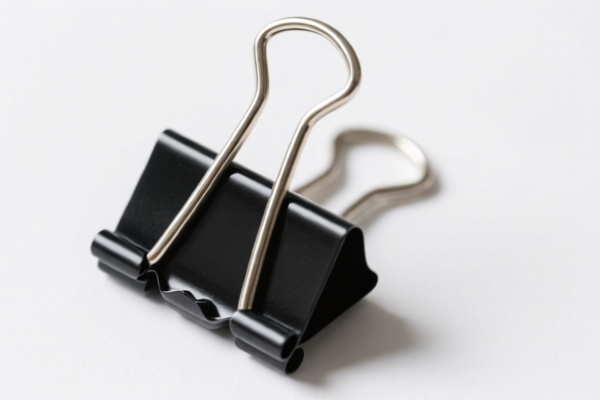


AI Analysis
📎 Paper Ring Binder Clip & Fittings (Office Articles of Base Metal)
🌐 HS Code Reference & Customs Clearance Guide | 2026 Latest Tariff Analysis | Professional Compliance Strategy
📌 I. Product Definition & Classification: What Exactly Is a "Ring Binder Clip"?
Paper Ring Binder Clips, often categorized under broader office fittings, are mechanical accessories used to bind documents, organize files, or attach pages to binders. In international trade, these items are strictly classified under Chapter 83 (Miscellaneous Manufactured Articles of Base Metal), specifically focusing on office articles made of base metal.
These products are generally divided into two distinct functional categories based on their mechanism:
1. Ring Binder Mechanisms (The "Ring"):
These are the circular or oval metal rings (loose-leaf mechanisms) that allow pages to be opened and closed. They include single rings, double rings, and three-ring mechanisms.
2. Other Office Fittings (The "Clip" or "Other"):
This includes letter clips, letter corners, indexing tags, paper clips, and general fittings that do not function as a "ring binding mechanism."
⚠️ Critical Distinction Point:
- If the product is specifically a mechanism for loose-leaf binders (i.e., the ring itself), it falls under the specific subheading for "Ring binder mechanisms". - If the product is a clip, corner, or other accessory (even if made of base metal) or a ring binder fitting that is not a mechanism, it falls under the "Other" subheading. - Material Matters: Both categories must be made of base metal (e.g., steel, aluminum, zinc alloy). If made of plastic, they would fall under different chapters (e.g., Chapter 39 or 8543).
📦 II. HS Code Classification Details (2026 Latest Tariff Authority Comparison)
| HS Code | Product Description | Applicable Scenario | Key Characteristic |
|---|---|---|---|
8305.10.00.10 |
Fittings for loose-leaf binders or files: Ring binder mechanisms | The actual metal rings/mechanisms that hold the paper. | ✅ Specific Mechanism |
8305.10.00.50 |
Fittings for loose-leaf binders or files: Other | Letter clips, letter corners, paper clips, indexing tags, and other fittings not defined as "ring mechanisms." | ❌ General Fitting/Clip |
🔍 Key Reminder:
-8305.10.00.10is for the binding mechanism itself (the ring).
-8305.10.00.50is for all other base metal office fittings (including "Paper Ring Binder Clips" that are decorative clips, or general clips like letter clips).
- Note on "Paper Clip": Standard small paper clips are often included in8305.10.00.50("Other") unless specifically exempted or classified differently by local customs, but this dataset places them under "Other."
💰 III. 2026 Latest Tariff Rate Details (Detailed Tax Breakdown)
✅ Applicable Country: United States (US)
✅ Country of Origin: China (CN)
✅ Effective Time: 2025-11-10 onwards (including subsequent imports)
🎯 1. 8305.10.00.10 —— Ring Binder Mechanisms
| Item | Content |
|---|---|
| Base Tariff | 0.0% |
| Additional Tariff (Section 301/IEEPA) | 0.0% |
| Total Tax Rate | 0.0% |
| Tax Calculation | CIF Value × 0% = $0 |
| Steel/Aluminum/Copper Additional Tax | ❌ Not Applicable |
| Legal Basis Path | HTSUS:8305.10.00.10 |
📌 Explanation:
- "Ring binder mechanisms" enjoy zero duty under this specific classification.
- There are no additional tariffs (such as Section 301 or IEEPA penalties) applied to this specific subheading in the provided data.
- Cost Advantage: This is a low-cost item for importers, with no tariff burden.
🎯 2. 8305.10.00.50 —— Other Fittings (Includes Letter Clips, Paper Clips, etc.)
| Item | Content |
|---|---|
| Base Tariff | 0.0% |
| Additional Tariff (Section 301/IEEPA) | 0.0% |
| Steel/Aluminum/Copper Additional Tax | +50% |
| Total Tax Rate | 50.0% |
| Tax Calculation | CIF Value × 50% |
| Legal Basis Path | HTSUS:8305.10.00.50 + Steel/Aluminum/Copper Tariff Rule |
📌 Explanation:
- Although the "Base Tariff" is 0%, this category is subject to a massive 50% additional tariff because these items are considered "Products of Steel, Aluminum, or Copper" (base metals).
- This is a critical penalty clause: Even though it’s an "office article," the material (base metal) triggers the high surcharge.
- Total Liability: You pay 50% of the CIF value in tariffs alone. This is extremely high and significantly impacts profit margins.
🛠️ IV. Customs Clearance Practical Advice (Real-World Pitfall Avoidance Guide)
✅ 1. Preparation Checklist (Essential Documents)
| Document | Required | Description |
|---|---|---|
| ✅ Product Specifications | ✔️ | Clearly define if the item is a "Ring Mechanism" or a "Clip/Other Fitting". Include material composition (e.g., "Zinc Alloy," "Steel"). |
| ✅ Material Declaration | ✔️ | Must explicitly state the base metal type (Steel, Aluminum, Copper, etc.). This triggers the 50% tax if classified under 8305.10.00.50. |
| ✅ Product Photos | ✔️ | Clear images showing the mechanism type (ring vs. clip) and any branding. |
| ✅ Commercial Invoice | ✔️ | Description must match the HS Code precisely. |
| ✅ Packing List | ✔️ | Weight and quantity details. |
✅ 2. Declaration Strategy (Key Tips)
🔥 “Classify by Mechanism, Not Just Material: ‘Ring’ is Free, ‘Clip’ Costs 50%!”
| Scenario | Correct HS Code | Incorrect HS Code | Consequence of Error |
|---|---|---|---|
| Actual Item: Metal Rings for Binders | 8305.10.00.10 |
8305.10.00.50 |
Under-declaration: If declared as 50 (0%), but customs reclassifies to 10 (0%), no penalty. But if you declare 10 when it’s actually 50... |
| Actual Item: Letter Clips / Paper Clips | 8305.10.00.50 |
8305.10.00.10 |
Misclassification: Risk of 50% back-tariff + penalties if customs determines it’s "Other" and applies the base metal surcharge. |
| Plastic Clips | Not in this dataset (likely Chapter 39 or 8543) | 8305.10.00.x0 |
Wrong Chapter: Delayed clearance, re-inspection. |
📌 Strategic Advice:
- If your product is strictly a ring binder mechanism, ensure the description highlights "Mechanism" and "Ring" to qualify for8305.10.00.10(0% tax).
- If your product is a clip (even if used in binders), it likely falls under8305.10.00.50(50% tax). Be prepared for the 50% cost or consider if plastic/composite alternatives can change the classification.
✅ 3. Special Cases Handling
| Situation | Handling Suggestion |
|---|---|
| Mixed Shipments | If a shipment contains both rings (8305.10.00.10) and clips (8305.10.00.50), separate them in the invoice. Do not lump them together. |
| OEM Custom Clips | Provide design drawings to prove if it’s a "mechanism" or a "clip." Visual evidence is key. |
| Material Change | If you switch from steel to plastic, the HS Code changes entirely, potentially avoiding the 50% base metal tax. |
🌍 V. Global Market Comparison (2026 Latest)
| Country/Region | Recommended HS Code | Tariff Rate (China Origin) | Notes |
|---|---|---|---|
| 🇺🇸 USA | 8305.10.00.10 |
0.0% | Best for ring mechanisms. |
| 🇺🇸 USA | 8305.10.00.50 |
50.0% | High penalty for other base metal office fittings. |
| 🇨🇳 China | 8305.10.00 |
Varies (Export Duty) | Usually low or zero for export, but check domestic rules. |
| 🇪🇺 EU | 8305.10 |
0% (Generally) | EU often has 0% for office articles of base metal, but verify local interpretations. |
| 🇦🇺 Australia | 8305.10 |
0% | Generally low duties for office supplies. |
📌 Conclusion:
- The USA is the most challenging market for base metal office fittings due to the 50% additional tariff on "Other" items.
- Ring mechanisms (8305.10.00.10) are duty-free, offering a significant cost advantage.
📌 VI. Common Errors & Pitfall Guide (Lessons Learned)
❌ Mistake 1: Declaring Paper Clips as Ring Mechanisms to avoid the 50% tax.
👉 Consequence: Customs audit reveals the product is not a "mechanism" but a "clip." Back taxes + 50% penalty applied.
❌ Mistake 2: Ignoring the 50% Base Metal Surcharge on 8305.10.00.50.
👉 Consequence: Profit margins wiped out by unexpected 50% duty. Many importers lose money on "cheap" office supplies.
❌ Mistake 3: Mixing Plastic and Base Metal items in one HS Code.
👉 Consequence: Misdeclaration. Plastic items should not be declared under Chapter 83.
✅ Correct Approach:
“Ring Binder Mechanism, Zinc Alloy, Non-Decorative, For Office Use, Model RB-100” → HS 8305.10.00.10
“Paper Clip, Steel, Standard Size” → HS 8305.10.00.50 (Budget for 50% tax!)
🎯 VII. Conclusion: Smart Classification Saves Money!
🎯 Key Takeaway:
🔹 “Ring Mechanisms = 0% Tax”
🔹 “Other Fittings (Clips/Tags) = 50% Tax”
🔹 Material Definition is King!
📌 Pro Tip:
If you are importing Paper Ring Binder Clips (which are often decorative or functional clips rather than the binding rings themselves), check if they can be classified as Plastic or Other Materials to avoid the 50% base metal surcharge. If they are strictly Base Metal, expect a 50% tariff on the 8305.10.00.50 code.
📣 Immediate Action:
📞 Consult a Customs Broker: Verify if your "Clip" is truly a "Mechanism" or "Other."
💰 Calculate True Landed Cost: Include the 50% tariff if using8305.10.00.50.
🚀 Optimize Product Design: Consider if a mechanism-based design (0% tax) is feasible for your product line.
✨ Precision Classification, Maximum Profit!
💼 Every Penny Counts in International Trade!
Customer Reviews
About HS Code Classification
The Harmonized System (HS) is an internationally standardized nomenclature developed by the World Customs Organization (WCO) to classify traded products. Over 200 countries use the HS system as the basis for customs tariffs, trade statistics, and import/export regulations.
Each HS code follows a hierarchical structure:
- Chapter (2 digits) — Broad category of goods (e.g., Chapter 84: Machinery and Mechanical Appliances)
- Heading (4 digits) — More specific grouping within the chapter
- Subheading (6 digits) — Internationally standardized breakdown, used by all WCO member countries
- National subdivisions (8-10 digits) — Country-specific extensions for further classification, such as US HTSUS 10-digit codes
Correct HS code classification is essential for smooth customs clearance, accurate duty payment, and compliance with trade regulations. Misclassification can lead to customs delays, overpayment of duties, or penalties.
When importing from CN to US, the applicable tariff rates may include:
- Most-Favored-Nation (MFN) rate — The standard duty rate applied to WTO members
- General rate — Applied to countries without trade agreements
- Trade remedy duties — Additional tariffs such as Section 301 (anti-dumping), Section 232 (national security), or countervailing duties
The information provided on this page is for reference purposes only. For official classification, please consult with your local customs authority or a licensed customs broker.