Paper Rope Basket
CN → US| HS Code | Tariff Rate | Origin | Destination | Doc |
|---|---|---|---|---|
| 4602191200 | 40.8% | CN | US | Official Doc |
| 4602191600 | 40.0% | CN | US | Official Doc |
| 4823908620 | 35.0% | CN | US | Official Doc |
Product Images
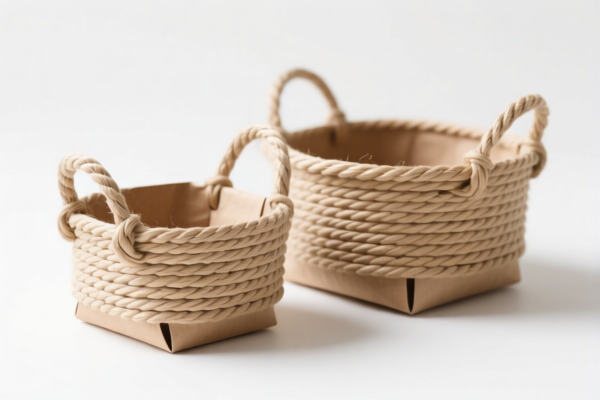
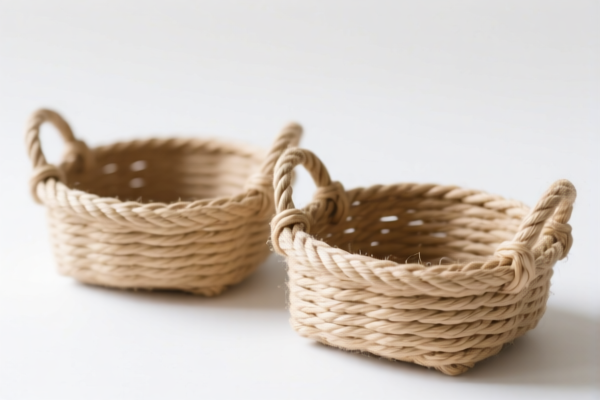
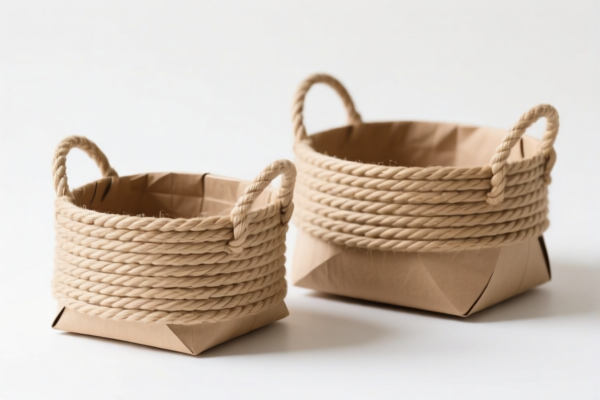
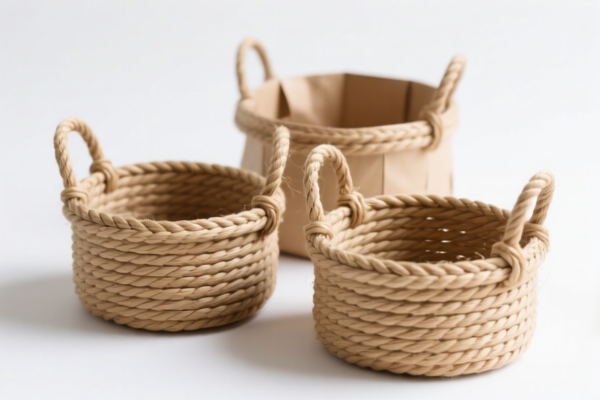
AI Analysis
🧺 Paper Rope Basket (Paper Twine Basket)
🌐 HS Code Reference & Customs Clearance Guide | 2026 Latest Tariff Analysis | Professional Entry Strategies
📌 Part 1: Product Definition & Classification: Do You Truly Understand "Paper Rope Baskets"?
Paper rope baskets are versatile storage and decorative items made by weaving paper strips or ropes. In international trade, their classification is highly sensitive to their material composition and perceived primary character. They are generally categorized into two main pathways:
1. Plant Fiber Articles (Wickerwork/Seagrass-like):
If the paper rope is treated, processed, or perceived similarly to plant fibers (like rattan, bamboo, or seagrass) and used for basket-weaving crafts, it may fall under Chapter 46. This is often the case for "wicker-style" paper baskets used for storage, laundry, or decoration.
2. Paper/Paperboard Articles (Processed Paper Products):
If the item is primarily viewed as a finished paper product, manufactured from paperboard or paper strips that have been shaped but not strictly "woven" in the traditional plant-fiber sense, it may fall under Chapter 48. This is common for rigid paper containers or decorative paper goods.
⚠️ Key Distinction Point:
- If the product is described as "wicker-style," "rattan-effect," or "woven plant-fiber look" → Lean towards Chapter 46 (e.g.,4602.19...).
- If the product is described as "paper container," "paper basket," or "paper craft item" → Lean towards Chapter 48 (e.g.,4823.90...).
- Critical Note: Misclassification can lead to significant tariff differences due to trade war duties!
📦 Part 2: HS Code Classification Details (2026 Latest Tariff Authority Comparison)
Based on the provided data, here are the three possible HS Codes for Paper Rope Baskets, along with their descriptions and tax implications.
| HS Code | Product Description | Application Scenario | Primary Tax Rate |
|---|---|---|---|
4602.19.12.00 |
Wickerwork articles; Baskets of plant fibers (Paper rope treated as plant fiber-like wicker) | Wicker-style storage baskets, laundry baskets, decorative woven items | 40.8% |
4602.19.16.00 |
Other wickerwork articles; Baskets & bags of other plaiting materials (Other plant fiber articles) | Other basket/bag forms using plant-fiber-like paper plaiting | 40.0% |
4823.90.86.20 |
Paper and paperboard articles; Other paper goods; Finished consumer goods | Paper containers, paper craft baskets, non-woven paper storage | 35.0% |
🔍 Key Reminder:
- The choice between Chapter 46 and Chapter 48 depends on how the Customs Authority perceives the material nature of the "paper rope."
- Chapter 46 codes generally carry higher tariffs due to the "wicker/plant fiber" classification being more susceptible to specific trade restrictions.
- Chapter 48 codes may offer a slightly lower total tax burden, but require strict justification that the product is a "paper article" and not a "wicker article."
💰 Part 3: 2026 Latest Tariff Rate Breakdown (Including Additional Taxes & Policy Surcharges)
✅ Applicable Country: United States (US)
✅ Country of Origin: China (CN)
✅ Effective Date: Current applicable rates for Chinese-origin goods
🎯 1. 4602.19.12.00 —— Wickerwork Articles (Plant Fiber-like Baskets)
| Item | Content |
|---|---|
| Base Tariff | 5.8% (ad valorem) |
| Section 301 Additional Tariff | +25.0% (USITC Footnote for Chinese imports) |
| Section 122 Tariff | +10.0% (Specific additional tariff on certain Chinese goods) |
| Total Tariff Rate | 40.8% |
| Tax Calculation | CIF Value × 40.8% |
| De Minimis Eligibility | ❌ No (Deny de minimis for Section 301 goods) |
| Legal Basis Path | HTSUS:4602.19.12 → USITC:301_Tariff → Section_122 |
📌 Explanation:
- The 5.8% base rate is standard for wicker/plant fiber baskets under HTSUS Chapter 46.
- The +25% is the standard Section 301 duty on Chinese goods in this category.
- The +10% is the additional Section 122 duty, which applies to specific subsets of Chinese imports.
- Total: 40.8% is a high tariff rate. Importers must account for this in their landed cost.
🎯 2. 4602.19.16.00 —— Other Baskets & Bags (Plant Fiber-like Articles)
| Item | Content |
|---|---|
| Base Tariff | 5.0% (ad valorem) |
| Section 301 Additional Tariff | +25.0% (USITC Footnote for Chinese imports) |
| Section 122 Tariff | +10.0% (Specific additional tariff on certain Chinese goods) |
| Total Tariff Rate | 40.0% |
| Tax Calculation | CIF Value × 40.0% |
| De Minimis Eligibility | ❌ No |
| Legal Basis Path | HTSUS:4602.19.16 → USITC:301_Tariff → Section_122 |
📌 Note:
- This code has a slightly lower base rate (5.0% vs 5.8%) compared to4602.19.12.00.
- However, the additional tariffs remain the same, resulting in a 40.0% total rate.
- Still considered a high tariff category.
🎯 3. 4823.90.86.20 —— Paper Articles (Finished Consumer Goods)
| Item | Content |
|---|---|
| Base Tariff | 0.0% (ad valorem) |
| Section 301 Additional Tariff | +25.0% (USITC Footnote for Chinese imports) |
| Section 122 Tariff | +10.0% (Specific additional tariff on certain Chinese goods) |
| Total Tariff Rate | 35.0% |
| Tax Calculation | CIF Value × 35.0% |
| De Minimis Eligibility | ❌ No (Section 301 goods are ineligible for de minimis) |
| Legal Basis Path | HTSUS:4823.90.86.20 → USITC:301_Tariff → Section_122 |
📌 Important:
- This is the most favorable option in terms of total tariff (35.0% vs 40%+).
- Basis: The base tariff is 0% for this specific subheading of paper articles.
- Risk: This classification is highly scrutinized. Customs may argue that "paper rope baskets" are essentially wicker/plant fiber articles (Chapter 46) rather than simple paper goods (Chapter 48).
- Justification Needed: Must provide evidence that the product is primarily paper, not "wicker-style" plant fiber substitute.
🛠️ Part 4: Customs Clearance Practical Advice (Battle-Tested Pitfall Avoidance)
✅ 1. Documentation Checklist (Non-Negotiable)
| Document | Required | Explanation |
|---|---|---|
| ✅ Product Specification Sheet | ✔️ | Detail material (paper type, rope thickness), dimensions, weight, and intended use. |
| ✅ Material Composition Statement | ✔️ | Explicitly state "100% Paper" or "Paper Rope" to support Chapter 48 classification. Avoid terms like "wicker," "rattan," or "plant fiber" if aiming for Chapter 48. |
| ✅ Product Photos (Clear & Detailed) | ✔️ | Show texture, weave pattern, and finish. If it looks like wood/plant fiber, Chapter 46 may be enforced. |
| ✅ Commercial Invoice | ✔️ | Describe as "Paper Basket" or "Paper Rope Container," NOT "Wicker Basket." |
| ✅ Packing List | ✔️ | Ensure no mixing of goods that could confuse the classifier. |
| ✅ Pre-Ruling Request (Optional but Recommended) | ✔️ | Apply for an Advance Ruling from CBP to confirm HS Code before shipment. |
✅ 2. Classification Strategy (Key Mantra)
🔥 "Material Defines Code, Description Defines Risk!"
| Scenario | Recommended HS Code | Declaration Description | Risk Level |
|---|---|---|---|
| Pure Paper Rope, Rigid Structure | 4823.90.86.20 |
"Paper Rope Basket, Paper Material, No Plant Fiber" | 🟡 Medium (Subject to CBP review) |
| Wicker-Style, Soft Weave, Plant-Fiber Appearance | 4602.19.12.00 or 16.00 |
"Wicker-Style Basket, Paper Material" | 🟠 High (CBP may enforce Chapter 46) |
| Mixed Material (Paper + Plastic/Metal Base) | Varies | Must break down components | 🔴 High (Complex classification) |
📌 Advice:
- If you declare as Chapter 48 (4823.90.86.20), ensure your product description does not use words like "wicker," "rattan," "seagrass," or "plant fiber."
- Use terms like: "Paper Rope Basket," "Twisted Paper Basket," "Paper Craft Container."
- If CBP suspects it's a "wicker article," they will reclassify to Chapter 46, leading to back taxes + penalties.
✅ 3. Special Circumstances Handling
| Situation | Handling Advice |
|---|---|
| OEM Custom Baskets | Provide design drawings to prove it's a paper product, not a traditional wicker item. |
| Baskets with Handles (Non-Paper) | If handles are plastic/metal, the basket may still be classified as paper if handles are accessory. |
| Gift Sets (Basket + Contents) | The basket is usually the principal item. Classify based on the basket's material. |
| Seasonal Decorations | Ensure no "festive" language that might trigger different duty treatments. |
🌍 Part 5: Global Market Comparison (2026 Latest)
| Country/Region | Recommended HS Code | Tariff (China Origin) | Certification Requirements | Notes |
|---|---|---|---|---|
| 🇺🇸 USA | 4823.90.86.20 |
35.0% | None specific, but CBP scrutiny high | Cheapest option if accepted. Avoid Chapter 46 to save 5.8%. |
| 🇺🇸 USA | 4602.19.12.00 |
40.8% | None specific | Higher risk, higher cost. |
| 🇪🇺 EU | 4601.00 / 4823 |
0% - 4.5% | CE (if applicable), REACH | No Section 301/122. Much lower tariffs. |
| 🇬🇧 UK | 4601.00 / 4823 |
0% - 4.5% | UKCA | Post-Brexit rules apply. |
| 🇨🇦 Canada | 4601.00 / 4823 |
0% - 5.5% | None specific | FTA benefits may apply. |
📌 Conclusion:
- USA is the critical market due to Section 301 and Section 122 tariffs.
- Chapter 48 (4823.90.86.20) saves 5.0-5.8% compared to Chapter 46.
- Justification is key: You must prove the product is a paper article, not a wicker/plant fiber article.
📌 Part 6: Common Mistakes & Pitfalls (Lessons Learned)
❌ Mistake 1: Using "Wicker Basket" in the product description
👉 Result: CBP reclassifies to Chapter 46 → Pay extra 5.0-5.8% + penalties!
❌ Mistake 2: Assuming Paper Rope = Plant Fiber
👉 Result: If not properly justified, CBP will enforce Chapter 46. Do not guess!
❌ Mistake 3: Ignoring Section 122 Tariff
👉 Result: Underpayment by 10%. CBP will audit and demand back taxes.
❌ Mistake 4: Declaring as "Plastic Basket" when it's Paper
👉 Result: Customs valuation and classification error → Seizure or detention.
✅ Correct Approach:
"Paper Rope Basket, 100% Paper Material, Twisted Paper Construction, For Home Storage, Model ABC"
🎯 Part 7: Conclusion: Smart Classification Saves Money!
🎯 Remember the Mantra:
🔹 "Paper is Paper, Wicker is Wicker!"
🔹 "Chapter 48 saves 5%, but needs strong proof!"
🔹 "Section 122 adds 10%, don't forget it!"
📌 Pro Tip:
- Apply for a CBP Advance Ruling before shipping to secure the
4823.90.86.20classification.- Document your material composition clearly in invoices and packing lists.
- Avoid "wicker" or "rattan" terminology if you are aiming for the lower Chapter 48 rate.
📣 Take Action Now:
📞 Contact a licensed customs broker to review your product samples.
📄 Prepare a detailed material specification sheet.
🚀 Classify accurately, pay less, clear faster!
✨ Professional Clearance Starts with Accurate Classification!
💼 Every Percentage Point Counts in Landed Cost!
Customer Reviews
About HS Code Classification
The Harmonized System (HS) is an internationally standardized nomenclature developed by the World Customs Organization (WCO) to classify traded products. Over 200 countries use the HS system as the basis for customs tariffs, trade statistics, and import/export regulations.
Each HS code follows a hierarchical structure:
- Chapter (2 digits) — Broad category of goods (e.g., Chapter 84: Machinery and Mechanical Appliances)
- Heading (4 digits) — More specific grouping within the chapter
- Subheading (6 digits) — Internationally standardized breakdown, used by all WCO member countries
- National subdivisions (8-10 digits) — Country-specific extensions for further classification, such as US HTSUS 10-digit codes
Correct HS code classification is essential for smooth customs clearance, accurate duty payment, and compliance with trade regulations. Misclassification can lead to customs delays, overpayment of duties, or penalties.
When importing from CN to US, the applicable tariff rates may include:
- Most-Favored-Nation (MFN) rate — The standard duty rate applied to WTO members
- General rate — Applied to countries without trade agreements
- Trade remedy duties — Additional tariffs such as Section 301 (anti-dumping), Section 232 (national security), or countervailing duties
The information provided on this page is for reference purposes only. For official classification, please consult with your local customs authority or a licensed customs broker.