Paper Rope Baskets
CN → US| HS Code | Tariff Rate | Origin | Destination | Doc |
|---|---|---|---|---|
| 4602191200 | 40.8% | CN | US | Official Doc |
| 4602191600 | 40.0% | CN | US | Official Doc |
| 4823908620 | 35.0% | CN | US | Official Doc |
Product Images
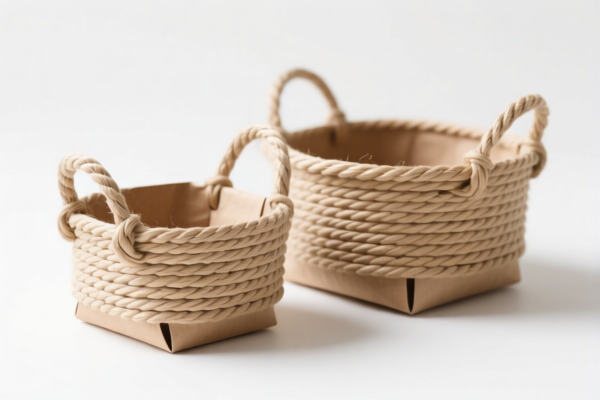
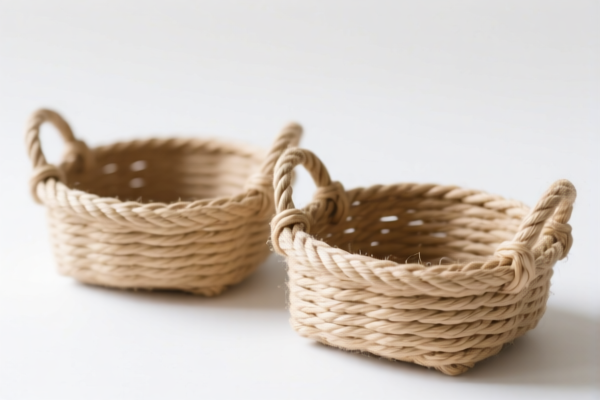
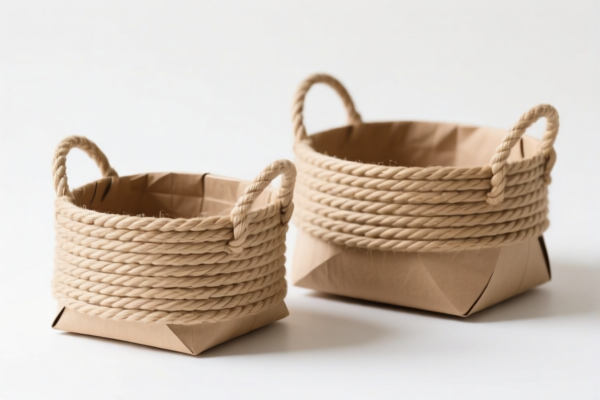
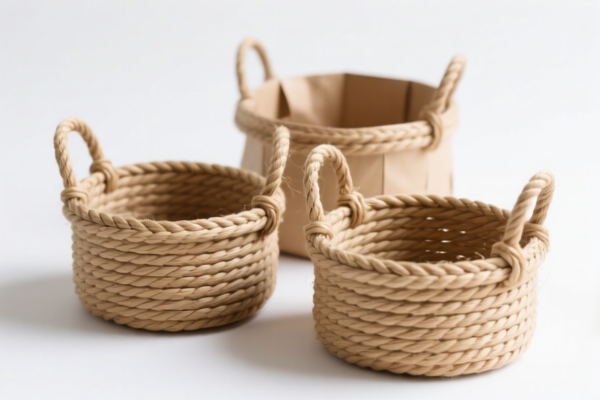
AI Analysis
🧺 Paper Rope Baskets (Paper Woven Baskets)
🌐 HS Code Reference & Customs Clearance Guide | 2026 Latest Tariff Analysis | Professional Strategy
📌 I. Product Definition & Classification: Do You Really Understand "Paper Rope Baskets"?
Paper Rope Baskets are decorative or storage containers made from woven paper ropes or paper twigs. In international trade, especially for imports into the United States from China, they are often scrutinized due to their material composition (plant fibers vs. paper) and form factor.
There are two primary classification paths depending on how the "paper" is processed: 1. Plaited Materials/Plant Fiber Products (Chapter 46): If the paper is processed into thin, flexible strips resembling reeds, rattan, or straw. 2. Paper Articles (Chapter 48): If the product is considered a rigid or semi-rigid container made primarily of paperboard or paper sheets, even if woven.
⚠️ Key Distinction Point:
- If the material is thin, pliable paper strips woven by hand/machine to mimic natural fibers → Classify under Chapter 46 (Plaiting materials).
- If the material is stiff, layered, or thick paper pulp molded/woven into a container → Classify under Chapter 48 (Paper/Paperboard).
📦 II. HS Code Classification Details (2026 Latest Tariff Authority Match)
Based on the provided data, here are the specific HS Codes applicable to Paper Rope Baskets, categorized by material interpretation.
| HS Code | Product Description | Applicable Scenario | Material Basis |
|---|---|---|---|
4602.19.12.00 |
Plant Fiber Braided Articles: Baskets made from paper rope/twigs (simulating willow/peach wood). | Hand-woven decorative baskets, picnic baskets, retail display baskets. | Treated as Plant Fiber (Paper twisted into rope). |
4602.19.16.00 |
Other Baskets & Bags: Other plaited articles, not specified elsewhere. | Generic paper rope baskets, utility storage baskets, non-decorative items. | Plant Fiber制品 (Paper fiber products). |
4823.90.86.20 |
Paper Articles: Other articles of paper/paperboard, woven or braided. | Paper tube baskets, stiff paper-weave containers, mass-produced paper fiber baskets. | Paper/Paperboard (Paper-based woven vessel). |
🔍 Critical Reminder:
- Chapter 46 Codes (4602...) generally apply if the "paper rope" is made from strips of paper that have been processed to behave like natural fibers (reeds/rattan). This is common for "eco-friendly" decorative baskets.
- Chapter 48 Code (4823...) applies if the basket is primarily viewed as a paper product (e.g., molded paper pulp or stiff paper weave) rather than a plaited fiber product.
- Do not mix: A basket cannot be classified as both. The physical form and manufacturing process dictate the chapter.
💰 III. 2026 Latest Tariff Rate Breakdown (Including Surcharges & Policy Add-ons)
✅ Applicable Country: United States (US)
✅ Country of Origin: China (CN)
✅ Effective Time: Includes imports post-2025 trade policy adjustments.
🎯 1. 4602.19.12.00 —— Plant Fiber Braided Baskets (Paper Rope)
| Item | Content |
|---|---|
| Base Duty Rate | 5.8% (Ad valorem) |
| Additional Duty (301/Section 301) | +25.0% |
| Section 122 Duty (China-Specific) | +10.0% |
| Total Effective Duty Rate | 40.8% |
| Tax Calculation Basis | CIF Value × 40.8% |
| De Minimis Exemption | ❌ Not Eligible (Deny de minimis for Section 122/301 goods) |
| Legal Basis Path | USITC:4602.19.12.00 → Footnote: 301 Tariff → Section 122: China-Specific |
📌 Explanation:
- Although "plant fiber" baskets often enjoy low base duties, the paper rope variant is frequently targeted under additional trade remedies if deemed to circumvent natural fiber quotas or due to its classification under specific Chinese export categories.
- Total 40.8% is a high threshold. Importers must verify if the paper rope is genuinely "plant fiber" (Chapter 46) or "paper" (Chapter 48) to avoid misclassification penalties.
🎯 2. 4602.19.16.00 —— Other Baskets (Plant Fiber Products)
| Item | Content |
|---|---|
| Base Duty Rate | 5.0% (Ad valorem) |
| Additional Duty (301/Section 301) | +25.0% |
| Section 122 Duty (China-Specific) | +10.0% |
| Total Effective Duty Rate | 40.0% |
| Tax Calculation Basis | CIF Value × 40.0% |
| De Minimis Exemption | ❌ Not Eligible |
| Legal Basis Path | USITC:4602.19.16.00 → Footnote: 301 Tariff → Section 122: China-Specific |
📌 Note:
- This is a "catch-all" for plaited baskets not specifically listed in 12.00.
- The 2% difference from the previous code is due to a slightly lower base duty (5.0% vs 5.8%).
- Still subject to the same high surcharges (35% total add-on).
🎯 3. 4823.90.86.20 —— Paper Articles (Woven/Composite)
| Item | Content |
|---|---|
| Base Duty Rate | 0.0% (Ad valorem) |
| Additional Duty (301/Section 301) | +25.0% |
| Section 122 Duty (China-Specific) | +10.0% |
| Total Effective Duty Rate | 35.0% |
| Tax Calculation Basis | CIF Value × 35.0% |
| De Minimis Exemption | ❌ Not Eligible |
| Legal Basis Path | USITC:4823.90.86.20 → Footnote: 301 Tariff → Section 122: China-Specific |
📌 Strategy Insight:
- This code has the lowest total duty (35.0%) because the Base Duty is 0%.
- However, you must prove the product is Paper (Chapter 48) and not Plant Fiber (Chapter 46).
- Risk: If US Customs (CBP) determines the "paper rope" is actually processed plant fiber, they will reclassify to 4602.19.12.00/16.00, increasing your duty by 5.8%.
- Best For: Baskets made from thick, stiff paper tubes or molded paper pulp, rather than flexible, hand-woven paper strips.
🛠️ IV. Customs Clearance Practical Advice (Avoiding Pitfalls)
✅ 1. Documentation Checklist (Mandatory)
| Document | Required? | Explanation |
|---|---|---|
| ✅ Product Specification Sheet | ✔️ | Must clearly state material: "Paper Rope," "Paper Twigs," or "Plaited Paper." Include thickness, diameter, and weaving type. |
| ✅ Material Test Report | ✔️ | Crucial: Third-party lab report confirming whether the material is Paper (cellulose-based, Chapter 48) or Processed Plant Fiber (Chapter 46). |
| ✅ Product Photos (Detailed) | ✔️ | Close-ups of the weave, cross-section of the rope, and overall shape. Show if it’s flexible (fiber-like) or stiff (paper-like). |
| ✅ Commercial Invoice | ✔️ | Describe accurately: e.g., "Decorative Basket, Made of Woven Paper Rope." Avoid vague terms like "Willow Basket" if it’s paper. |
| ✅ Packing List | ✔️ | List dimensions and weight per unit. |
| ✅ Certificate of Origin (CO) | ✔️ | Confirm Country of Origin is China to apply surcharges correctly. |
✅ 2. Declaration Strategy (Key Mantras)
🔥 "Material Defines Chapter, Form Defines Heading, Origin Determines Tax!"
| Scenario | Correct Declaration | Wrong Declaration |
|---|---|---|
| Flexible Paper Strips Woven Like Rattan | 4602.19.12.00 or 4602.19.16.00 |
4823... (Will be reclassified → Penalty) |
| Stiff Paper Tube/Molded Paper Basket | 4823.90.86.20 |
4602... (Unnecessary 5% base duty) |
| Mixed Material (Paper + Plastic Handle) | Declare main material | Split parts incorrectly |
✅ 3. Special Situation Handling
| Situation | Handling Advice |
|---|---|
| OEM Custom Baskets | Provide design specs showing the "paper rope" is made from paper, not natural reeds. |
| Samples vs. Bulk | Even samples are subject to duty if value exceeds de minimis thresholds for these specific goods. |
| "Eco-Friendly" Marketing | Do not use misleading terms like "Natural Willow" if it’s paper. CBP checks for misdeclaration of origin/material. |
| Pre-Ruling Application | Highly Recommended: If unsure, apply for an Advance Ruling from CBP before bulk shipment to lock in the HS Code and duty rate. |
🌍 V. Global Market Comparison (2026 Latest)
| Country/Region | Recommended HS Code | Duty Rate (China Origin) | Certification Requirements | Notes |
|---|---|---|---|---|
| 🇺🇸 USA | 4602.19.12.00 / 4823.90.86.20 |
35.0% - 40.8% | No specific certification, but accurate classification is key. | Highly taxed due to Section 301 & 122. |
| 🇨🇳 China | 4602.19.12.00 / 4823.90.86.20 |
5% - 13% | N/A | Low entry duty for export. |
| 🇪🇺 EU | 4602.19 / 4823.90 |
5.8% - 6.5% | CE (if for food contact) | No additional anti-dumping tariffs typically. |
| 🇬🇧 UK | 4602.19 / 4823.90 |
5.8% - 6.5% | N/A | Post-Brexit tariffs similar to EU. |
| 🇨🇦 Canada | 4602.19 / 4823.90 |
5% - 10% | N/A | Lower surcharges than US. |
📌 Conclusion:
- The US market is the most expensive due to the combination of base duty + 301 tariffs + Section 122 tariffs.
- Cost Optimization: If the product can be legitimately classified as Paper (Chapter 48), use4823.90.86.20to save 5.8% compared to the primary plant fiber code.
- Risk Management: Misclassifying paper as plant fiber (or vice versa) leads to audits, back-taxes, and delays.
📌 VI. Common Errors & Pitfalls (Lessons Learned)
❌ Error 1: Calling it "Willow Basket" when it's Paper
👉 Consequence: CBP reclassifies to correct code, imposes penalties for misdeclaration.
❌ Error 2: Assuming Paper Rope = Natural Fiber = Lower Tax
👉 Consequence: It doesn't! Even if classified as Chapter 46, the 35% surcharge applies. Only Chapter 48 offers a lower total rate (35% vs 40.8%).
❌ Error 3: Ignoring Section 122
👉 Consequence: Forgetting the 10% Section 122 duty results in underpayment and seizures.
❌ Error 4: Using "De Minimis" (Section 321) for Small Baskets
👉 Consequence: Denied. Goods from China under these HTS codes are explicitly excluded from de minimis treatment. Every unit is taxed.
✅ Correct Approach:
"Decorative Basket, Woven Paper Rope, Made in China, For Retail Display, Model XYZ"
🎯 VII. Conclusion: Professional Declaration Saves Money!
🎯 Remember the Mantras:
🔹 "Paper is Chapter 48, Plant Fiber is Chapter 46."
🔹 "Total Tax = Base + 25% (301) + 10% (122)."
🔹 "Chapter 48 (35%) is cheaper than Chapter 46 (40.8%), but proof is mandatory!"
📌 Pro Tip:
If your paper rope baskets are originally designed for the US market, consider:
1. Pre-Request an Advance Ruling from CBP to confirm the HS Code.
2. Document the Material with lab tests showing it’s paper-based (Chapter 48) to benefit from the 0% base duty.
3. Price Your Products with the full 35-40% duty burden in mind.
📣 Act Now:
📞 Contact your customs broker today.
📄 Provide material specs and photos.
🚀 Ensure smooth customs clearance, avoid penalties, and protect your margins!
✨ Professional Clearance Starts with Accurate Classification!
💼 Your Every Penny is Worth Precise Calculation!
Customer Reviews
About HS Code Classification
The Harmonized System (HS) is an internationally standardized nomenclature developed by the World Customs Organization (WCO) to classify traded products. Over 200 countries use the HS system as the basis for customs tariffs, trade statistics, and import/export regulations.
Each HS code follows a hierarchical structure:
- Chapter (2 digits) — Broad category of goods (e.g., Chapter 84: Machinery and Mechanical Appliances)
- Heading (4 digits) — More specific grouping within the chapter
- Subheading (6 digits) — Internationally standardized breakdown, used by all WCO member countries
- National subdivisions (8-10 digits) — Country-specific extensions for further classification, such as US HTSUS 10-digit codes
Correct HS code classification is essential for smooth customs clearance, accurate duty payment, and compliance with trade regulations. Misclassification can lead to customs delays, overpayment of duties, or penalties.
When importing from CN to US, the applicable tariff rates may include:
- Most-Favored-Nation (MFN) rate — The standard duty rate applied to WTO members
- General rate — Applied to countries without trade agreements
- Trade remedy duties — Additional tariffs such as Section 301 (anti-dumping), Section 232 (national security), or countervailing duties
The information provided on this page is for reference purposes only. For official classification, please consult with your local customs authority or a licensed customs broker.