Paper Sample Display Album
CN → US| HS Code | Tariff Rate | Origin | Destination | Doc |
|---|---|---|---|---|
| 4820500000 | 35.0% | CN | US | Official Doc |
| 4820900000 | 35.0% | CN | US | Official Doc |
Product Images
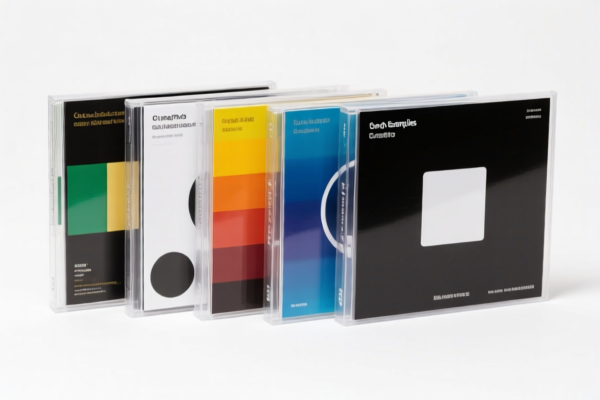
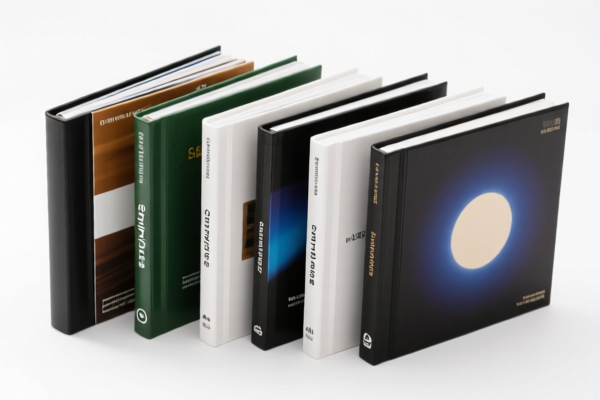
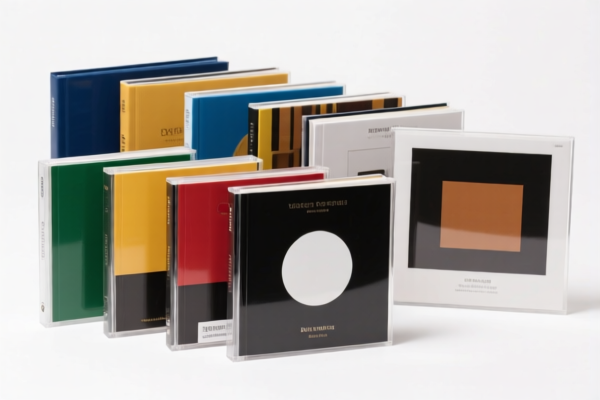
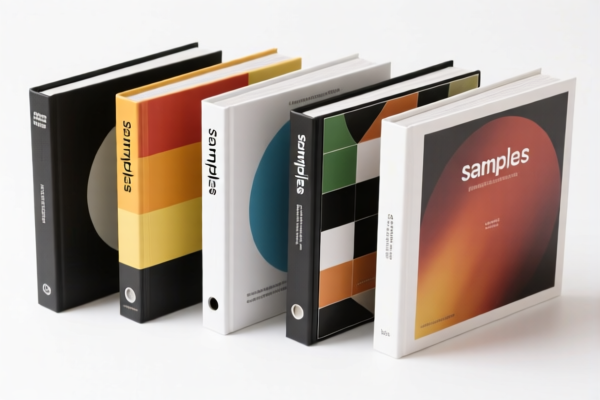
AI Analysis
📚 Paper Sample Display Album (Stationery of Paper or Paperboard)
🌐 HS Code Reference & Customs Clearance Guide | 2026 Latest Tariff Analysis | Professional Compliance Strategy
📌 I. Product Definition & Classification: Do You Really Understand "Paper Albums"?
Paper Sample Display Albums are specialized stationery items designed for displaying, storing, or showcasing samples, swatches, or small documents. In international trade, they are primarily classified under Chapter 48 (Paper and Paperboard).
The classification depends on the specific function and structure: 1. General Stationery Albums: Used for general business records, loose-leaf notebooks, or standard sample displays without specific cover functionality. 2. Book Covers/Boards: If the item is specifically designed to enclose a book (including cover boards and book jackets), it falls under a different subheading.
⚠️ Key Distinction Point:
- If the item is a loose-leaf binder, ring binder, or folder for organizing papers/samples → It is General Stationery.
- If the item is explicitly a cover for a bound book (protective jacket, board) → It is Book Cover.
- Note: The provided data does not distinguish between "loose-leaf" and "other" binders for the first code, implying most sample albums fall under the general "registers, notebooks... binders" category unless they are strictly book covers.
📦 II. HS Code Classification Details (Based on Provided Data)
| HS Code | Product Description | Applicable Scenario | Binding Type |
|---|---|---|---|
4820.50.00.00 |
Registers, account books, notebooks, order books, receipt books, letter pads, memorandum pads, diaries, albums for samples or for collections, binders (looseleaf or other), folders, file covers... of paper or paperboard | Primary Classification for most Paper Sample Albums, Ring Binders, and File Folders | ✅ General Stationery |
4820.90.00.00 |
Other articles of stationery... book covers (including cover boards and book jackets) of paper or paperboard | Specific Book Covers or Book Jackets made of paper/paperboard | ✅ Book Cover/Accessory |
🔍 Important Note:
- The term "Albums for samples or for collections" is explicitly listed under4820.50.00.00.
- If the "Display Album" is essentially a binder or a folder designed to hold samples, it belongs to4820.50.00.00.
- Only if the item is strictly a protective cover for a book (not a binder/folder for loose samples) should4820.90.00.00be considered. For most "Sample Albums" used in trade/showrooms,4820.50.00.00is the correct choice.
💰 III. 2026 Latest Tariff Rate Breakdown (Detailed Tax Clauses)
✅ Applicable Country: United States (US)
✅ Origin: China (CN)
✅ Effective Time: As per current trade policies (Section 301 & Additional Tariffs)
🎯 1. 4820.50.00.00 —— Paper Sample Albums, Binders, Folders
| Item | Content |
|---|---|
| Base Tariff | 0.0% (ad valorem) |
| Additional Tariff (Section 301) | +25.0% |
| Total Tax Rate | 25.0% |
| Tax Calculation | CIF Value × 25.0% |
| De Minimis Exemption | ❌ Not Eligible (Due to 25% additional tariff) |
| Legal Basis | HTSUS 4820.50.00.00 + USITC Footnote (Section 301 List 3/4) |
📌 Explanation:
- The base tariff for paper stationery albums is generally 0%.
- However, due to the 25% additional tariff imposed on Chinese goods under Section 301, the total effective tax rate is 25%.
- This is a flat 25% surcharge on top of the base rate.
- Critical: This tax applies to all imports from China classified under this code. There are no general exemptions for stationery unless specific exclusions apply (which are rare and time-limited).
🎯 2. 4820.90.00.00 —— Book Covers (Paper/Paperboard)
| Item | Content |
|---|---|
| Base Tariff | 0.0% (ad valorem) |
| Additional Tariff (Section 301) | +25.0% |
| Total Tax Rate | 25.0% |
| Tax Calculation | CIF Value × 25.0% |
| De Minimis Exemption | ❌ Not Eligible |
| Legal Basis | HTSUS 4820.90.00.00 + USITC Footnote (Section 301) |
📌 Note:
- Same tax structure as4820.50.00.00.
- If your "Sample Album" is misclassified as a "Book Cover" by mistake, the tax rate remains 25%, but the legal description differs.
- Recommendation: Use4820.50.00.00for sample albums as it explicitly mentions "albums for samples," ensuring smoother customs clearance.
🛠️ IV. Customs Clearance Practical Advice (Pitfall Avoidance Guide)
✅ 1. Required Documentation Checklist
| Document | Mandatory? | Description |
|---|---|---|
| ✅ Product Specification Sheet | ✔️ | Detail material (paper type, weight), structure (ring binder, folder, stapled), and usage (sample display). |
| ✅ Product Photos | ✔️ | Clear images showing the item in use (holding samples) and its structure. |
| ✅ Commercial Invoice | ✔️ | Must accurately describe the item as "Paper Sample Album" or "Paper Binder for Samples", not just "Stationery." |
| ✅ Packing List | ✔️ | Include dimensions and weight to prove it’s not a "book" or "electronic device." |
| ✅ Country of Origin Certificate | ✔️ | Crucial for proving Chinese origin to apply the correct 25% additional tariff. |
✅ 2. Declaration Tips (Key Mnemonic)
🔥 "Don't Call it a Book, Call it a Binder or Album!"
| Scenario | Correct Declaration | Incorrect Practice |
|---|---|---|
| Loose-leaf Sample Album | 4820.50.00.00 - "Paper Ring Binder for Samples" |
Describing as "Book" → May trigger inspection |
| Fixed Paper Folder | 4820.50.00.00 - "Paper File Cover/Folder" |
Splitting parts → Delayed clearance |
| Book Cover Only | 4820.90.00.00 - "Paper Book Cover" |
Mislabeling as "Album" → Potential discrepancy |
📌 Key Strategy:
- Always emphasize "For Samples" or "Loose-leaf" in the description.
- Avoid vague terms like "Notebook" if it’s not for writing, as customs may question its function.
- Use "Paper and Paperboard" in the description to align with Chapter 48.
✅ 3. Special Cases
| Situation | Handling Advice |
|---|---|
| Sample Album with Plastic Components | If >50% value or essential function is plastic, it may shift to Chapter 39. However, if paper is dominant, 4820.50.00.00 is still acceptable. Declare "Paper Album with Plastic Rings". |
| Laminated Sample Display | If laminated, it’s still paper-based. Use 4820.50.00.00. Provide lamination specs. |
| Custom Printed Branding | Printing on paper albums does not change HS Code. Ensure branding doesn’t make it look like "Advertising Material" (Chapter 49), which has different rules. |
🌍 V. Global Market Clearance Comparison (2026 Latest)
| Country/Region | Recommended HS Code | Tariff Rate | Notes |
|---|---|---|---|
| 🇺🇸 USA | 4820.50.00.00 |
25.0% | High tariff due to Section 301. No de minimis. |
| 🇨🇳 China | 4820.50.00.00 |
0.0% - 6% | Varies by exact subheading. Import duty may be lower. |
| 🇪🇺 EU | 4820.50.00 |
6.5% | Standard EU duty. No additional sanctions on paper stationery. |
| 🇬🇧 UK | 4820.50.00 |
6.5% | Post-Brexit tariff. Standard rate applies. |
| 🇯🇵 Japan | 4820.50.00 |
3.0% - 6% | Generally low tariffs on paper products. |
📌 Conclusion:
- USA is the only major market with a high 25% surcharge on Chinese paper stationery.
- For US exports, ensure accurate classification to avoid overpayment or penalties.
- Consider third-party manufacturing (e.g., Vietnam, Mexico) for US-bound goods if tariff costs are prohibitive, as these countries may be exempt from Section 301 tariffs.
📌 VI. Common Errors & Pitfalls (Lessons Learned)
❌ Error 1: Declaring "Sample Album" as "Notebook"
👉 Consequence: Customs may classify it as 4820.10 (Notebooks) with different tax rates or require additional documentation.
👉 Fix: Use precise terms like "Binder" or "Album."
❌ Error 2: Ignoring the 25% Additional Tariff
👉 Consequence: Underpayment of duties → Seizure, fines, and retroactive tax collection.
👉 Fix: Always factor in the 25% surcharge for Chinese-origin goods entering the US.
❌ Error 3: Splitting a Sample Album into "Paper" and "Plastic Rings"
👉 Consequence: Each part declared separately → Higher total tax or classification errors.
👉 Fix: Declare as a single unit under 4820.50.00.00.
❌ Error 4: Using "Book Cover" for a Sample Album
👉 Consequence: If customs disagrees, it may lead to disputes.
👉 Fix: Use 4820.50.00.00 as it explicitly includes "albums for samples."
✅ Correct Declaration Example:
"Paper Ring Binder for Displaying Fabric Samples, Made of Paper and Paperboard, Model: SA-2026"
🎯 VII. Conclusion: Accurate Classification Saves Money!
🎯 Remember:
🔹 "Paper Album = 4820.50.00.00"
🔹 "US Import from China = 25% Total Tax"
🔹 "Be Specific, Avoid Ambiguity!"
📌 Pro Tip:
If you are exporting to the US, consider pre-classifying with a licensed customs broker to confirm the 25% tariff application. For other markets, tariffs are generally lower, making paper stationery exports more profitable.
📣 Immediate Action:
📞 Consult a Customs Broker + Prepare Product Photos + Verify Origin
🚀 Ensure Smooth Clearance and Cost Efficiency!
✨ Professional Customs Clearance Starts with Accurate Classification!
💼 Your Cost Efficiency Depends on Precise Tariff Application!
Customer Reviews
About HS Code Classification
The Harmonized System (HS) is an internationally standardized nomenclature developed by the World Customs Organization (WCO) to classify traded products. Over 200 countries use the HS system as the basis for customs tariffs, trade statistics, and import/export regulations.
Each HS code follows a hierarchical structure:
- Chapter (2 digits) — Broad category of goods (e.g., Chapter 84: Machinery and Mechanical Appliances)
- Heading (4 digits) — More specific grouping within the chapter
- Subheading (6 digits) — Internationally standardized breakdown, used by all WCO member countries
- National subdivisions (8-10 digits) — Country-specific extensions for further classification, such as US HTSUS 10-digit codes
Correct HS code classification is essential for smooth customs clearance, accurate duty payment, and compliance with trade regulations. Misclassification can lead to customs delays, overpayment of duties, or penalties.
When importing from CN to US, the applicable tariff rates may include:
- Most-Favored-Nation (MFN) rate — The standard duty rate applied to WTO members
- General rate — Applied to countries without trade agreements
- Trade remedy duties — Additional tariffs such as Section 301 (anti-dumping), Section 232 (national security), or countervailing duties
The information provided on this page is for reference purposes only. For official classification, please consult with your local customs authority or a licensed customs broker.