Paper Self Adhesive Label
CN → US| HS Code | Tariff Rate | Origin | Destination | Doc |
|---|---|---|---|---|
| 4821902000 | 35.0% | CN | US | Official Doc |
| 3919905060 | 40.8% | CN | US | Official Doc |
| 3919102055 | 40.8% | CN | US | Official Doc |
| 4821102000 | 35.0% | CN | US | Official Doc |
| 3926909989 | 22.8% | CN | US | Official Doc |
Product Images
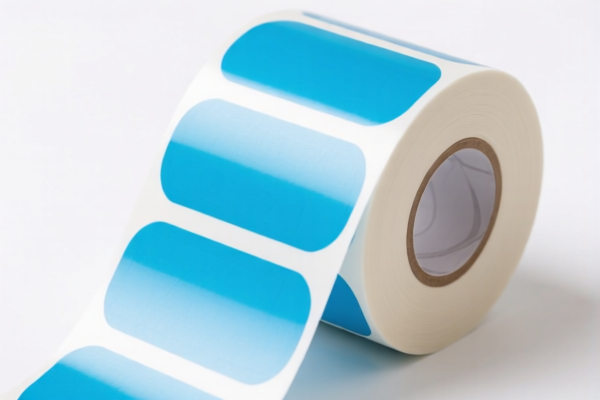
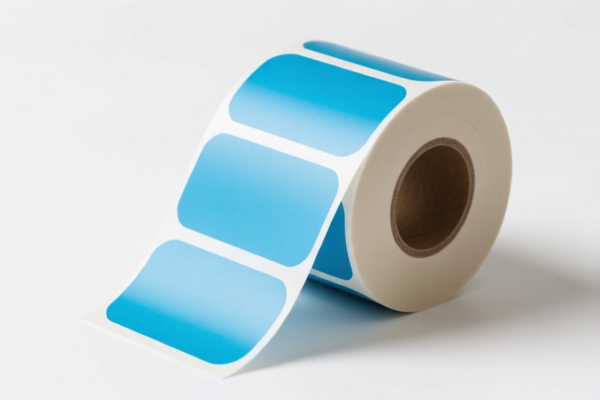
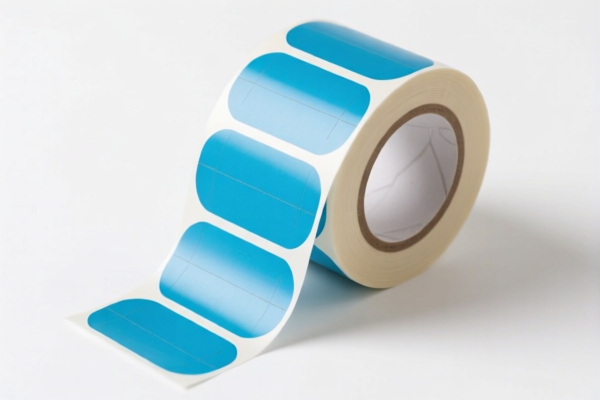

AI Analysis
🏷️ Paper Self-Adhesive Labels (自粘材料标签-纸质)
🌐 HS Code Reference & Customs Clearance Guide | 2026 Latest Tariff Analysis | Strategic Clearance Strategy
📌 I. Product Definition & Classification: Do You Really Understand "Paper Labels"?
Paper self-adhesive labels are ubiquitous in global trade, used for product identification, logistics tracking, and branding. In international customs, the classification depends heavily on the substrate material (Paper vs. Plastic) and the state of the product (Rolled vs. Cut, Printed vs. Blank).
Key Distinction: - Paper Substrate: If the backing material is primarily paper/cardboard, it falls under Chapter 48. - Plastic Substrate: If the backing is plastic/polymer, it falls under Chapter 39. - Adhesive Nature: The presence of self-adhesive properties does not automatically change the chapter if the primary material defines the classification, but it affects the specific subheading.
⚠️ Critical Identification Point:
- If the label is Paper-based → Look at HS Code 4821.
- If the label is Plastic-based → Look at HS Code 3919 or 3926.
- Do not mix paper and plastic labels in the same declaration line without clear segregation, as tax rates differ significantly.
📦 II. HS Code Classification Details (2026 Latest Tariff Authority Comparison)
Based on the provided data, here are the applicable HS Codes for "Self-Adhesive Labels," specifically highlighting the Paper variant and its Plastic counterparts for comparison.
| HS Code | Product Description | Material | Key Characteristics | Applicable Scenario |
|---|---|---|---|---|
| 4821.10.20.00 | Paper Self-Adhesive Label | Paper | Self-adhesive,符合标签类别 (Meets label category) | Standard paper labels, barcode labels, shipping labels |
| 4821.90.20.00 | Paper/Cardboard Self-Adhesive Label | Paper/Cardboard | Self-adhesive,符合自粘性标签特征 (Meets self-adhesive characteristics) | Thicker paper labels, cardboard-based stickers |
| 3919.90.50.60 | Plastic Self-Adhesive Label | Plastic | Sheet/film/flat shape, Self-adhesive | Plastic stickers, waterproof labels |
| 3919.10.20.55 | Plastic Self-Adhesive Label | Plastic | Self-adhesive, Flat shape | Thin plastic films, synthetic labels |
| 3926.90.99.89 | Plastic/Composite Label | Plastic/Composite | Other manufactured articles | Composite materials (e.g., paper-plastic hybrid) |
🔍 Key Reminder:
- Paper Labels (4821) generally have a 0% Base Tariff.
- Plastic Labels (3919) generally have a 5.8% Base Tariff.
- This 5.8% difference impacts the final total cost when combined with additional duties.
💰 III. 2026 Latest Tariff Rate Details (Including Additional Taxes & Policy Surcharges)
✅ Applicable Country: USA (US)
✅ Origin: China (CN)
✅ Effective Date: From November 10, 2025 (and subsequent imports)
🎯 1. 4821.10.20.00 & 4821.90.20.00 —— Paper Self-Adhesive Labels (Most Common)
| Item | Content |
|---|---|
| Base Tariff | 0.0% (Ad Valorem) |
| Section 301 Additional Tariff | +25.0% (From USITC Footnote 9903.88.01 / Section 301 List 4) |
| IEEPA Additional Tariff | +10.0% (Against China/HK products, from Nov 10, 2025) |
| Total Tax Rate | 35.0% |
| Tax Calculation | CIF Value × 35% |
| De Minimis Exemption | ❌ Not Eligible (deny_de_minimis) |
| Legal Basis Path | IEEPA:9903.01.25 → IEEPA:9903.01.24 → USITC:4821.10.20.00 / 4821.90.20.00 |
📌 Explanation:
- The Base Tariff is 0% because paper products (Chapter 48) often have low base duties.
- However, the 25% Section 301 Tariff and 10% IEEPA Tariff still apply to Chinese-origin goods.
- Total Rate: 35%. This is a significant cost burden compared to base rates, so accurate declaration is vital to avoid overpayment or underpayment penalties.
🎯 2. 3919.90.50.60 & 3919.10.20.55 —— Plastic Self-Adhesive Labels
| Item | Content |
|---|---|
| Base Tariff | 5.8% (Ad Valorem) |
| Section 301 Additional Tariff | +25.0% |
| IEEPA Additional Tariff | +10.0% |
| Total Tax Rate | 40.8% |
| Tax Calculation | CIF Value × 40.8% |
| De Minimis Exemption | ❌ Not Eligible (deny_de_minimis) |
| Legal Basis Path | IEEPA:9903.01.25 → IEEPA:9903.01.24 → USITC:3919.90.50.60 / 3919.10.20.55 |
📌 Note:
- Plastic labels carry a 5.8% Base Tariff, which adds to the total.
- Total Rate: 40.8%. This is 5.8% higher than paper labels.
- If your product is primarily plastic, budget for this higher cost.
🎯 3. 3926.90.99.89 —— Plastic/Composite Labels
| Item | Content |
|---|---|
| Base Tariff | 5.3% (Ad Valorem) |
| Section 301 Additional Tariff | +7.5% (Note: Lower Section 301 rate in this specific data set) |
| IEEPA Additional Tariff | +10.0% |
| Total Tax Rate | 22.8% |
| Tax Calculation | CIF Value × 22.8% |
| De Minimis Exemption | ❌ Not Eligible (deny_de_minimis) |
| Legal Basis Path | IEEPA:9903.01.25 → IEEPA:9903.01.24 → USITC:3926.90.99.89 |
📌 Warning:
- This code (3926.90.99.89) is for "Other articles of plastics." It may apply to composite materials (e.g., paper-plastic hybrids) or specific shapes not covered by 3919.
- Total Rate: 22.8%. This is significantly lower than standard plastic labels (40.8%) but requires careful justification to avoid misclassification claims.
- Risk: Customs may challenge this if the product is clearly a standard self-adhesive label (which usually falls under 3919).
🛠️ IV. Customs Clearance Practical Advice (Battle-Tested Pitfall Guide)
✅ 1. Preparation Checklist (All items required)
| Document | Required? | Description |
|---|---|---|
| ✅ Product Specification Sheet | ✔️ | Must detail: Substrate (Paper/Plastic), Adhesive type, Dimensions, Quantity. |
| ✅ Product Photos | ✔️ | Clear images showing the label, backing, adhesive side, and any printed text. |
| ✅ Commercial Invoice | ✔️ | Clearly state: "Self-Adhesive Paper Labels" or "Plastic Stickers". Avoid vague terms like "Stickers". |
| ✅ Packing List | ✔️ | Detail contents to distinguish between paper and plastic labels if mixed. |
| ✅ Origin Certificate (CO) | ✔️ | Required for US imports to prove origin for IEEPA/301 calculations. |
| ✅ Form 4456 (if applicable) | ✔️ | For foreign manufacture costs if components are sourced differently. |
✅ 2. Declaration Tips (Key Mantra)
🔥 "Material First, Adhesive Second, Name Specific, Tax Clear!"
| Situation | Correct Declaration | Incorrect Practice |
|---|---|---|
| Paper Labels | HS 4821.10.20.00 or 4821.90.20.00 |
Misclassified as plastic → Higher tax (40.8%) |
| Plastic Labels | HS 3919.90.50.60 |
Misclassified as composite → Lower tax (22.8%) but high risk of audit |
| Mixed Paper/Plastic | Declare separately | Mix in one line item → Customs may audit entire shipment |
| Blank vs. Printed | Specify if critical | Vague description → Delays for classification review |
✅ 3. Special Cases Handling
| Situation | Handling Advice |
|---|---|
| Paper-Plastic Composite | If >50% value/mass is plastic, consider 3926.90.99.89 (22.8%) but consult customs broker. If paper-based, use 4821. |
| Rolls vs. Sheets | Ensure description matches the physical form. Rolls may be preferred for 3919. |
| High-Value Industrial Labels | Provide technical specs to justify specific subheading if standard ones don't fit. |
| Small Quantity Samples | Remember, De Minimis (Section 321) is NOT available for China-origin goods due to IEEPA/301. All taxes apply. |
🌍 V. Global Market Comparison (2026 Latest)
| Country/Region | Recommended HS Code | Base Tariff | Additional Tax (China) | Total Rate | Notes |
|---|---|---|---|---|---|
| 🇺🇸 USA | 4821.10.20.00 (Paper) |
0.0% | +25% (301) +10% (IEEPA) | 35.0% | High tax burden. No de minimis. |
| 🇺🇸 USA | 3919.90.50.60 (Plastic) |
5.8% | +25% (301) +10% (IEEPA) | 40.8% | Plastic costs more. |
| 🇨🇳 China | 4821.10.20.00 |
8.0% | None | 8.0% | Export from China has lower base, but import to US has high taxes. |
| 🇪🇺 EU | 4821.10.00.00 |
4.0% | None | 4.0% | No Section 301/IEEPA equivalents. Much cheaper. |
| 🇬🇧 UK | 4821.10.00.00 |
4.0% | None | 4.0% | Post-Brexit, follows own tariff schedule. |
| 🇨🇦 Canada | 4821.10.00.00 |
5.0% | None | 5.0% | No similar US-style punitive tariffs. |
📌 Conclusion:
- US is the most expensive market for self-adhesive labels from China due to combined 301 and IEEPA tariffs.
- Paper labels (35%) are cheaper than Plastic labels (40.8%) in the US due to lower base rates.
- Consider shifting production to Vietnam, Mexico, or other non-China origins if volume is high, to leverage USMCA or other free trade agreements.
📌 VI. Common Mistakes & Pitfalls (Lessons Learned)
❌ Mistake 1: Declaring "Stickers" without specifying material.
👉 Consequence: Customs may classify as highest duty rate (Plastic 40.8%) or detain for clarification.
❌ Mistake 2: Mixing Paper and Plastic labels in one HS Code.
👉 Consequence: Audit risk, potential penalties for underpayment on plastic parts.
❌ Mistake 3: Assuming small shipments are tax-free.
👉 Consequence: Section 321 de minimis is voided for Chinese goods. Every single label is subject to tax.
❌ Mistake 4: Using HS Code 3926 for standard paper/plastic labels.
👉 Consequence: Misclassification. 3926 is for "Other articles," not standard labels. Customs may adjust to 3919 or 4821 and impose penalties.
✅ Correct Practice:
"Paper Self-Adhesive Labels, 2x3 inches, Matte Finish, Used for Product Branding, Model XYZ, Origin: China"
🎯 VII. Conclusion: Precise Classification Saves Money!
🎯 Remember the Mantra:
🔹 "Paper is 35%, Plastic is 40.8%, Composite might be 22.8% but risky!"
🔹 "No De Minimis for China, Tax on Every Item!"
🔹 "Specify Material Clearly, Avoid Customs Delay!"
📌 Pro Tip:
If your labels are originating from Vietnam, Mexico, or Canada, you may qualify for IEEPA Exemptions or USMCA Zero Tariffs.
Recommend applying for an Advance Ruling (ACE Portal) before shipment to confirm the exact HS Code and tax liability.
📣 Immediate Action:
📞 Contact a licensed US Customs Broker
📄 Provide Product Photos + Material Composition
🚀 Ensure accurate HS Code declaration to avoid 25% + 10% surprise taxes!
✨ Professional Clearance Starts with Accurate Classification!
💼 Every Percent Saved is Pure Profit!
Customer Reviews
About HS Code Classification
The Harmonized System (HS) is an internationally standardized nomenclature developed by the World Customs Organization (WCO) to classify traded products. Over 200 countries use the HS system as the basis for customs tariffs, trade statistics, and import/export regulations.
Each HS code follows a hierarchical structure:
- Chapter (2 digits) — Broad category of goods (e.g., Chapter 84: Machinery and Mechanical Appliances)
- Heading (4 digits) — More specific grouping within the chapter
- Subheading (6 digits) — Internationally standardized breakdown, used by all WCO member countries
- National subdivisions (8-10 digits) — Country-specific extensions for further classification, such as US HTSUS 10-digit codes
Correct HS code classification is essential for smooth customs clearance, accurate duty payment, and compliance with trade regulations. Misclassification can lead to customs delays, overpayment of duties, or penalties.
When importing from CN to US, the applicable tariff rates may include:
- Most-Favored-Nation (MFN) rate — The standard duty rate applied to WTO members
- General rate — Applied to countries without trade agreements
- Trade remedy duties — Additional tariffs such as Section 301 (anti-dumping), Section 232 (national security), or countervailing duties
The information provided on this page is for reference purposes only. For official classification, please consult with your local customs authority or a licensed customs broker.