Paper Shopping Stickers
CN → US| HS Code | Tariff Rate | Origin | Destination | Doc |
|---|---|---|---|---|
| 4823908680 | 35.0% | CN | US | Official Doc |
| 4821902000 | 35.0% | CN | US | Official Doc |
| 4821904000 | 35.0% | CN | US | Official Doc |
| 4823904000 | 35.0% | CN | US | Official Doc |
| 4911998000 | 17.5% | CN | US | Official Doc |
Product Images
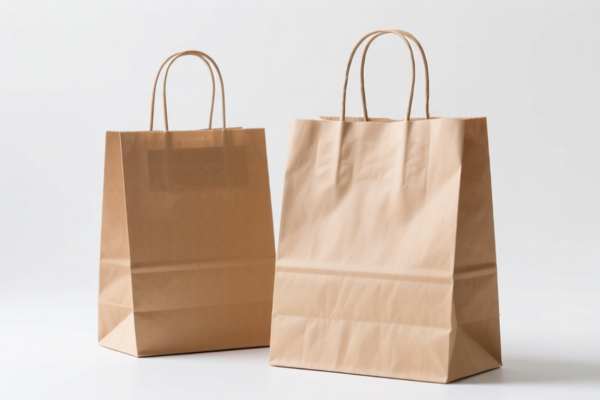
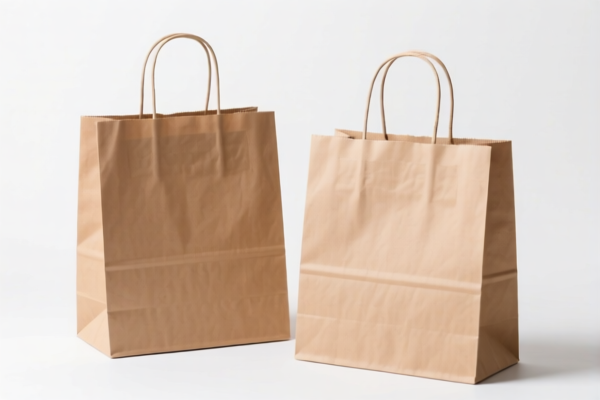
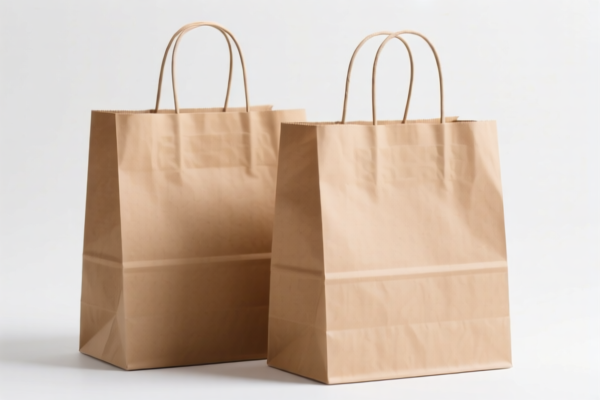
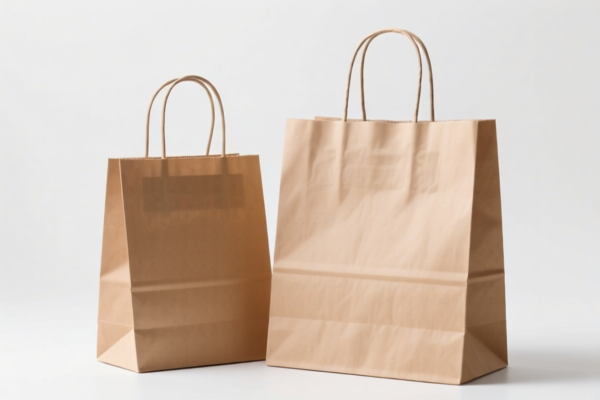
AI Analysis
🏷️ Paper Shopping Stickers (Paper Adhesive Labels)
🌐 HS Code Reference & Clearance Guide | 2026 Latest Tariff Analysis | Professional-Level Customs Strategy
📌 I. Product Definition & Classification: What Exactly Are "Paper Shopping Stickers"?
Paper shopping stickers are typically self-adhesive labels made primarily of paper, used for pricing, branding, information display, or promotional purposes on retail goods, packaging, or shopping bags.
In international trade, these products are classified based on their material (paper), form (adhesive/self-stick), and function (labels/stickers). The key distinction lies in whether they are considered "other paper products" or "printed matter/labels."
⚠️ Key Classification Distinction:
- If the product is defined as "other paper articles" (e.g., non-precisely defined paper items), it may fall under 4823.90.
- If it is explicitly defined as "self-adhesive labels", it falls under 4821.90.
- If it is broadly defined as "sticker/label" without specific self-adhesive detail in some systems, it may fall under 4821.90.
- If it is primarily considered "printed matter" (e.g., generic printed stickers not strictly defined as labels), it may fall under 4911.99.🔍 Critical Note for Importers:
- The US Customs and Border Protection (CBP) often scrutinizes 4821.90 (Self-adhesive labels) vs. 4823.90 (Other paper articles) vs. 4911.99 (Other printed matter).
- 4821.90 is generally the most precise for "self-adhesive labels."
- 4823.90 is a residual category for paper products not specified elsewhere.
- 4911.99 is for printed matter not elsewhere specified, which may apply if the adhesive nature is secondary or if the item is more akin to a "printed sticker" than a "label."
📦 II. HS Code Classification Details (2026 Latest Tariff Authority Comparison)
| HS Code | Product Description | Application Scenario | Material/Form |
|---|---|---|---|
4823.90.86.80 |
Other paper articles, not elsewhere specified | Generic paper goods, non-specific paper items | Paper |
4821.90.20.00 |
Self-adhesive labels, of paper | Self-stick labels for products, price tags, branding | Paper + Adhesive |
4821.90.40.00 |
Labels/stickers, of paper | General labels or stickers categorized under labels | Paper + Adhesive |
4823.90.40.00 |
Other paper articles, not elsewhere specified | Residual paper product category | Paper |
4911.99.80.00 |
Other printed matter, not elsewhere specified | Printed stickers treated as printed matter | Printed Paper |
🔍 Key Reminder:
-4821.90is the preferred classification for "self-adhesive labels" because it specifically mentions "self-adhesive."
-4823.90is a catch-all for paper products not specifically listed. Use only if the item doesn't fit4821.
-4911.99applies if the item is considered "printed matter" rather than a functional label. This is less common for typical shopping stickers but possible if the adhesive is minimal or the item is primarily decorative printed paper.
💰 III. 2026 Latest Tariff Rate Breakdown (Including Additional Duties & Policy Surcharges)
✅ Applicable Country: United States (US)
✅ Country of Origin: China (CN)
✅ Effective Date: November 10, 2025 (and subsequent imports)
🎯 1. 4823.90.86.80 —— Other Paper Articles (Residual Category)
| Item | Content |
|---|---|
| Base Rate | 0% (ad valorem) |
| USITC Surcharge | +25% (Under USITC Footnote 9903.88.01) |
| IEEPA Surcharge | +10% (Targeting China/HK products, effective Nov 10, 2025) |
| Total Rate | 45% |
| Tax Calculation | CIF Value × 45% |
| De Minimis Eligibility | ❌ No (deny_de_minimis) |
| Legal Basis Path | IEEPA:9903.01.25 → IEEPA:9903.01.24 → USITC:4823.90.86.80 → FOOTNOTE:9903.88.01 |
📌 Explanation:
- The 25% USITC surcharge is applied under Section 301 tariffs on Chinese-origin goods.
- The 10% IEEPA surcharge is imposed under the International Emergency Economic Powers Act on Chinese products.
- Total 45% is a very high tariff, so accurate classification is critical. Misclassifying to a lower-tariff code could lead to penalties.
🎯 2. 4821.90.20.00 —— Self-Adhesive Labels, of Paper
| Item | Content |
|---|---|
| Base Rate | 0% |
| USITC Surcharge | +25% |
| IEEPA Surcharge | +10% |
| Total Rate | 45% |
| Tax Calculation | CIF × 45% |
| De Minimis Eligibility | ❌ No |
| Legal Basis Path | IEEPA:9901.25 → IEEPA:9903.01.24 → USITC:4821.90.20.00 → FOOTNOTE:9903.88.01 |
📌 Note:
- This is the most accurate code for "self-adhesive paper labels."
- Even if the label is small or decorative, if it has an adhesive backing for attachment, this code applies.
- Same 45% rate as other paper categories due to Section 301 and IEEPA surcharges.
🎯 3. 4821.90.40.00 —— Labels/Stickers, of Paper
| Item | Content |
|---|---|
| Base Rate | 0% |
| USITC Surcharge | +25% |
| IEEPA Surcharge | +10% |
| Total Rate | 45% |
| Tax Calculation | CIF × 45% |
| De Minimis Eligibility | ❌ No |
| Legal Basis Path | IEEPA:9901.25 → IEEPA:9903.01.24 → USITC:4821.90.40.00 → FOOTNOTE:9903.88.01 |
📌 Note:
- Similar to4821.90.20.00, this code covers labels/stickers.
- CBP may distinguish between "self-adhesive" (4821.20) and other labels (4821.40), but both face the same 45% total tariff for Chinese goods.
🎯 4. 4823.90.40.00 —— Other Paper Articles (Residual)
| Item | Content |
|---|---|
| Base Rate | 0% |
| USITC Surcharge | +25% |
| IEEPA Surcharge | +10% |
| Total Rate | 45% |
| Tax Calculation | CIF × 45% |
| De Minimis Eligibility | ❌ No |
| Legal Basis Path | IEEPA:9903.01.25 → IEEPA:9903.01.24 → USITC:4823.90.40.00 → FOOTNOTE:9903.88.01 |
📌 Note:
- This is a residual category for paper products not elsewhere specified.
- Use only if the item does not fit the "label" definition under4821.
- Same 45% rate applies.
🎯 5. 4911.99.80.00 —— Other Printed Matter (Not Elsewhere Specified)
| Item | Content |
|---|---|
| Base Rate | 0% |
| USITC Surcharge | +7.5% |
| IEEPA Surcharge | +10% |
| Total Rate | 17.5% |
| Tax Calculation | CIF × 17.5% |
| De Minimis Eligibility | ❌ No |
| Legal Basis Path | IEEPA:9901.25 → IEEPA:9903.01.24 → USITC:4911.99.80.00 → FOOTNOTE:9903.75.01 |
📌 Critical Note:
- This code has a significantly lower tariff (17.5%) compared to the 45% for paper labels.
- However, misclassification is risky. If CBP determines the item is a "self-adhesive label," it will reclassify it under4821and assess the 45% rate plus penalties.
- This code is only appropriate if the item is primarily printed matter (e.g., a decorative sticker with minimal adhesive, or a printed paper cutout not intended as a functional label).
🛠️ IV. Customs Clearance Practical Advice (Real-World Pitfall Avoidance)
✅ 1. Required Documentation Checklist (Mandatory)
| Document | Required | Description |
|---|---|---|
| ✅ Product Specification Sheet | ✔️ | Include dimensions, adhesive type, backing material, print details |
| ✅ Product Photos (with label close-up) | ✔️ | Show adhesive side, printed side, and any packaging |
| ✅ Commercial Invoice | ✔️ | Clearly state "Paper Shopping Stickers, Self-Adhesive, Paper Material" |
| ✅ Packing List | ✔️ | Detail quantities, weights, and packaging type |
| ✅ Certificate of Origin (CO) | ✔️ | If applicable, for potential preferential treatment (though unlikely for China) |
| ✅ Third-Party Test Report (if applicable) | ✔️ | For adhesive safety, ink toxicity (if food-contact or children's products) |
✅ 2. Declaration Tips (Key Mantras)
🔥 "Be Specific: 'Self-Adhesive Paper Label' or 'Printed Paper Sticker'?"
| Scenario | Correct Declaration | Incorrect Declaration |
|---|---|---|
| Self-adhesive labels for pricing/branding | 4821.90.20.00 or 4821.90.40.00 |
"Paper Stickers" (ambiguous) |
| Decorative paper stickers with minimal adhesive | 4911.99.80.00 (if truly printed matter) |
4821.90 (overly specific, might be challenged) |
| Generic paper items not clearly labels | 4823.90.86.80 or 4823.90.40.00 |
"Labels" (if not self-adhesive) |
📌 Warning:
- Do not simply declare as "Stickers" without specifying material and adhesive nature.
- Do not use4911.99if the item is clearly a self-adhesive label intended for product attachment. CBP may impose 17.5% vs. 45% difference as smuggling risk.
✅ 3. Special Cases Handling
| Scenario | Handling Advice |
|---|---|
| OEM Custom Stickers | Provide design files and client order to prove purpose. |
| Stickers on Shopping Bags | Declare as "Paper Labels" attached to the bag, not part of the bag itself. |
| Children's Product Stickers | Ensure ink and adhesive meet CPSIA/CPSC safety standards. |
| Food-Contact Stickers | Provide FDA compliance documentation for adhesive and ink. |
🌍 V. Global Market Comparison (2026 Latest)
| Country/Region | Recommended HS Code | Tariff (China Origin) | Certification | Notes |
|---|---|---|---|---|
| 🇺🇸 USA | 4821.90.20.00 |
45% (Labels) / 17.5% (Printed Matter) | None specific | High risk of misclassification |
| 🇨🇳 China | 4821.90.20.00 |
5% | None | Low tariff, easy clearance |
| 🇪🇺 EU | 4821.90 |
0% (if CE) | CE | No Section 301 equivalent |
| 🇦🇺 Australia | 4821.90 |
5% | GTS marking | No surcharges |
| 🇯🇵 Japan | 4821.90 |
0% | FSC/PEFC (if paper) | No surcharges |
📌 Conclusion:
- USA is the only market with high additional tariffs (301 + IEEPA).
- Misclassification to4911.99(17.5%) in the US is high-risk and can lead to penalties, seizures, or back-dated duties.
- China and EU have much lower tariffs, making them easier markets for clearance.
📌 VI. Common Errors & Pitfall Guide (Lessons Learned)
❌ Error 1: Declaring "Self-Adhesive Labels" as "Printed Matter" (4911.99)
👉 Consequence: CBP reclassifies to 4821 and assesses 45% instead of 17.5%, plus penalties for undervaluation.
❌ Error 2: Not specifying "Self-Adhesive" in the description
👉 Consequence: CBP may classify under 4823 (Other Paper Articles) or 4911, leading to uncertainty and delays.
❌ Error 3: Using "Sticker" without material definition
👉 Consequence: CBP requests additional documentation, causing clearance delays.
✅ Correct Approach:
"Self-Adhesive Paper Labels, for Product Branding, 2-inch Round, Glossy Finish, Adhesive: Acrylic, Backing: Kraft Paper"
🎯 VII. Conclusion: Precise Classification Saves Money!
🎯 Remember:
🔹 "Self-Adhesive = 4821 (45% in US)"
🔹 "Printed Matter = 4911 (17.5% in US, High Risk)"
🔹 "Misclassification = Penalties + Back-Dated Duties"
📌 Tips:
- If your stickers are shipped from Vietnam, Mexico, or Thailand, they may be exempt from IEEPA/301 tariffs, resulting in 0%–5% rates.
- Consider Advance Ruling from CBP if unsure about classification.
📣 Immediate Action:
📞 Contact a professional customs broker + Provide product photos + Apply for CBP Advance Ruling
🚀 Ensure smooth clearance, minimize costs, and avoid penalties!
✨ Professional Clearance Starts with Accurate Classification!
💼 Every Cent Saved is Profit Gained!
Customer Reviews
About HS Code Classification
The Harmonized System (HS) is an internationally standardized nomenclature developed by the World Customs Organization (WCO) to classify traded products. Over 200 countries use the HS system as the basis for customs tariffs, trade statistics, and import/export regulations.
Each HS code follows a hierarchical structure:
- Chapter (2 digits) — Broad category of goods (e.g., Chapter 84: Machinery and Mechanical Appliances)
- Heading (4 digits) — More specific grouping within the chapter
- Subheading (6 digits) — Internationally standardized breakdown, used by all WCO member countries
- National subdivisions (8-10 digits) — Country-specific extensions for further classification, such as US HTSUS 10-digit codes
Correct HS code classification is essential for smooth customs clearance, accurate duty payment, and compliance with trade regulations. Misclassification can lead to customs delays, overpayment of duties, or penalties.
When importing from CN to US, the applicable tariff rates may include:
- Most-Favored-Nation (MFN) rate — The standard duty rate applied to WTO members
- General rate — Applied to countries without trade agreements
- Trade remedy duties — Additional tariffs such as Section 301 (anti-dumping), Section 232 (national security), or countervailing duties
The information provided on this page is for reference purposes only. For official classification, please consult with your local customs authority or a licensed customs broker.