Paper Shredder
CN → US| HS Code | Tariff Rate | Origin | Destination | Doc |
|---|---|---|---|---|
| 8479820080 | 35.0% | CN | US | Official Doc |
| 8438800000 | 35.0% | CN | US | Official Doc |
| 8479820040 | 35.0% | CN | US | Official Doc |
Product Images

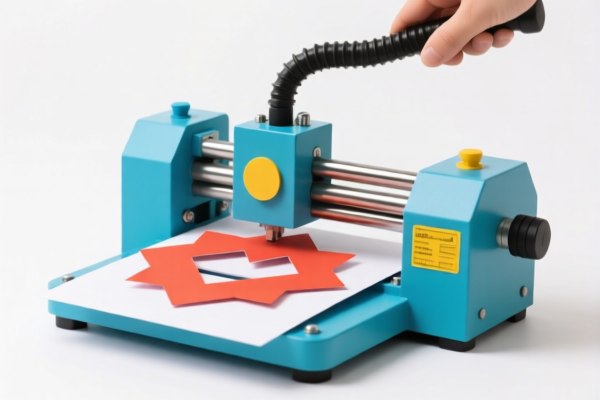


AI Analysis
📄 Paper Shredder: Global HS Code Classification & 2026 Tariff Strategy
🌐 HS Code Reference & Clearance Guide | 2026 Tax Rate Analysis | Professional Customs Strategy
📌 I. Product Definition & Classification: What Exactly is a "Paper Shredder"?
The Paper Shredder is a specialized mechanical device designed to cut paper documents into strips, cross-cut shreds, or confetti-like pieces for security and waste disposal. In international trade, its classification hinges on functionality rather than just appearance. It falls under Section XVI (Machinery), specifically under machines for crushing, grinding, or mixing.
⚠️ Key Distinction Logic:
- If the machine is designed to crush/grind (like the shredding mechanism) and has a single specific function → Classified under 84.79.
- If it is viewed broadly as a processing machine for paper (though less common for standard shredders) → Could be considered under 84.38.
- Crucial Point: Despite being used for "paper," the primary function is mechanical destruction (crushing/grinding), not paper processing (like cutting or folding). Therefore, 8479.82.00 is the primary category.
📦 II. HS Code Classification Details (2026 Tariff Authority)
| HS Code | Product Description | Functionality Logic | Material Focus |
|---|---|---|---|
8479.82.00.80 |
Shredder (Single Function) | Machinery of a kind not specified elsewhere, specifically for crushing/grinding. Fits the "stand-alone function" logic. | Metal/Plastic Mix |
8438.80.00.00 |
Paper Processing Machine | Machinery for the preparation of other materials (paper). Treated as a "processing machine" under other machinery chapters. | Plastic-heavy |
8479.82.00.40 |
Crushing/Grinding Machine | General purpose for crushing/grinding. Aligns logically with mixing, kneading, or stirring machines regarding function. | Metal/Plastic |
🔍 Critical Insight:
-8479.82.00.80is the most accurate classification for standard office paper shredders because they are defined by their single function of crushing/shredding.
-8438.80.00.00is a fallback if the machine is deemed a "paper processing plant" component, but for standalone office units,8479is preferred.
-8479.82.00.40applies to heavy-duty industrial crushers that are functionally similar to paper shredders but used in broader contexts.
💰 III. 2026 Tariff Rate Breakdown (Including Surcharges & Policy Add-ons)
✅ Applicable Country: United States (US)
✅ Origin: China (CN)
✅ Effective Date: 2025/2026 (Based on current trade data projections)
🎯 Scenario A: HS Code 8479.82.00.80 (Primary Classification)
The most common classification for standard paper shredders.
| Item | Detail |
|---|---|
| Base Tariff | 0.0% (Most Favored Nation - MFN rate) |
| Section 301 "Additional" Tariff | +25.0% (Trade Remedies Act) |
| Section 122 Tariff (China Specific) | +10.0% (Specific to certain Chinese manufactured goods) |
| Total Tax Rate | 35.0% |
| Tax Calculation | CIF Value × 35% |
| De Minimis Exemption | ❌ No (Strictly denied for machinery >$800) |
| Legal Basis Path | Section 301 (25%) + Section 122 (10%) |
📌 Explanation:
- Base Rate (0%): Standard duty for general machinery.
- Section 301 (25%): Imposed due to trade tensions; applies to almost all Chinese-made machinery.
- Section 122 (10%): A specific additional tariff targeting certain Chinese industrial products.
- Result: 35% Total Duty. This is a high-cost item for US importers from China.
🎯 Scenario B: HS Code 8438.80.00.00 (Alternative Classification)
For shredders classified as "processing machines".
| Item | Detail |
|---|---|
| Base Tariff | 0.0% |
| Section 301 "Additional" Tariff | +25.0% |
| Section 122 Tariff | +10.0% |
| Total Tax Rate | 35.0% |
| Tax Calculation | CIF Value × 35% |
| De Minimis Exemption | ❌ No |
📌 Note: Even if misclassified or argued under a "processing" umbrella, the 35% penalty remains identical due to the origin (China) and the nature of the goods (machinery).
🎯 Scenario C: HS Code 8479.82.00.40 (Functional "Crushing" Classification)
For heavy-duty or multi-function units.
| Item | Detail |
|---|---|
| Base Tariff | 0.0% |
| Section 301 "Additional" Tariff | +25.0% |
| Section 122 Tariff | +10.0% |
| Total Tax Rate | 35.0% |
| Tax Calculation | CIF Value × 35% |
| De Minimis Exemption | ❌ No |
📌 Logic: The functional description ("crushing/grinding") aligns with the same tariff structure as
80.80but shares the exact same 35% total burden.
🛠️ IV. Customs Clearance Practical Advice (Avoiding Pitfalls)
✅ 1. Essential Documentation Checklist (Mandatory)
| Document | Requirement | Why It Matters |
|---|---|---|
| ✅ Product Technical Sheet | ✔️ Must include shredding type (strip vs. cross-cut), motor power, capacity (sheets/min). | Proves functionality (Crushing/Grinding) to justify 8479. |
| ✅ Circuit Diagram / Block Diagram | ✔️ Show internal mechanism (rollers, blades). | Prevents re-classification to "electronic parts" or "paper processing". |
| ✅ Commercial Invoice | ✔️ Must state: "Paper Shredder, Function: Crushing/Shredding". | Accurate description is vital for CBP (Customs and Border Protection). |
| ✅ Origin Certificate | ✔️ Explicitly state "Made in China". | Triggers the 25% + 10% surcharge calculation automatically. |
| ✅ Safety Certifications | ✔️ UL, ETL, or CE (for EU). | US requires safety compliance for electrical machinery. |
| ✅ Packing List | ✔️ Detail: Shredder + Power Cable + Bin. | Ensures no item splitting (which could trigger audits). |
✅ 2. Declaration Tips (Golden Rules)
🔥 "Function Over Name: Declare 'Crushing Machine' to Justify HS Code!"
| Scenario | Correct Declaration | ❌ Wrong Declaration |
|---|---|---|
| Standard Office Shredder | 8479.82.00.80 - "Machine for crushing paper" |
"Paper Cutter" or "Office Equipment" (May trigger audit) |
| Heavy Duty Industrial Shredder | 8479.82.00.40 - "Crushing machine" |
"Paper Processing Machine" (Unless specifically designed for paper lines) |
| Plastic Component Shredder | 8438.80.00.00 - "Plastic processing machine" |
"General Machinery" (Too vague) |
📌 Strategy:
- If your shredder is plastic-heavy or part of a paper production line, consider8438.80.00.00.
- For standalone office/industrial shredders,8479.82.00.80is the safest bet.
- Do NOT declare as "Paper Machine" (often implies 8438) without strong evidence of a processing line, as it can lead to disputes.
✅ 3. Special Handling Scenarios
| Scenario | Handling Strategy |
|---|---|
| OEM Custom Shredders | Provide Design Drawings + Client Orders. Avoid generic "Shredder" descriptions. |
| Shredder + Bin (Container) | Declare as one unit. Do not separate the bin (bin is an accessory, not a separate machine). |
| Multi-Material Shredders (Paper + Plastic) | Classify by primary function. If primarily for paper, use 8479.82.00.80. |
| Export to Other Markets | EU/UK: Often 0% base duty, but similar 10-20% surcharges may apply. Always check local rules. |
🌍 V. Global Market Comparison (2026)
| Region | Recommended HS Code | Base Duty | Additional Tax (China) | Total Tax |
|---|---|---|---|---|
| 🇺🇸 USA | 8479.82.00.80 |
0% | +35% (25% + 10%) | 35% |
| 🇪🇺 EU | 8479.82.00.00 |
~4% | ~10% (if applicable) | ~14% |
| 🇨🇳 China | 8479.82.00.80 |
5% | 0% | 5% |
| 🇦🇺 Australia | 8479.82.00.00 |
~5% | 0% | ~5% |
📌 Conclusion:
- USA is the most expensive market due to the 35% combined surcharge.
- China, Australia, and EU have significantly lower total duties (5-15%).
- Action: If targeting the US market, price adjustments or supply chain diversification (e.g., assembly in Vietnam/Mexico) are critical to offset the 35% cost.
📌 VI. Common Errors & Avoidance (Lessons Learned)
❌ Error 1: Declaring as "Office Machine" (Generic).
👉 Consequence: CBP may re-classify to 8479 anyway but delay clearance for audit.
✅ Fix: Be specific: "Paper Shredder (Crushing Function)".
❌ Error 2: Splitting the Bin and Shredder.
👉 Consequence: Bin declared separately might be taxed at a different rate, leading to total tax discrepancy and penalties.
✅ Fix: Declare as a complete unit (Shredder + Bin + Cord).
❌ Error 3: Ignoring Section 122 Tariff.
👉 Consequence: Underpaying 10% leads to fines + back taxes.
✅ Fix: Always apply the 35% rate for Chinese-made shredders entering the US.
❌ Error 4: Misidentifying Material.
👉 Consequence: If the machine is mostly plastic, 8438.80.00.00 might be argued, but tax rate is the same (35%), so no real benefit.
✅ Fix: Stick to the functional definition (8479).
🎯 VII. Conclusion: Precision Pays Off
🎯 Remember the Rule:
🔹 "Function First: Crushing = 8479.82.00.80"
🔹 "China Origin + Machinery = 35% Total Duty (0% + 25% + 10%)"
🔹 "Never Split Bin: Declare as One Unit"
📌 Pro Tip:
If you can relocate final assembly to Vietnam, Mexico, or Thailand, you may avoid the 25% + 10% surcharge, reducing the total tax to 0%~5%.
Recommendation: Apply for Advance Ruling from CBP 60 days before shipment to lock in your HS Code and avoid surprises.
📣 Immediate Action:
📞 Contact a Professional Customs Broker + Submit Technical Specs + Verify USITC Status.
🚀 Ensure your Paper Shredders clear US Customs efficiently, minimizing 35% hidden costs!
✨ Precision Classification, Smooth Clearance!
💼 Every cent counts in the global supply chain!
Customer Reviews
About HS Code Classification
The Harmonized System (HS) is an internationally standardized nomenclature developed by the World Customs Organization (WCO) to classify traded products. Over 200 countries use the HS system as the basis for customs tariffs, trade statistics, and import/export regulations.
Each HS code follows a hierarchical structure:
- Chapter (2 digits) — Broad category of goods (e.g., Chapter 84: Machinery and Mechanical Appliances)
- Heading (4 digits) — More specific grouping within the chapter
- Subheading (6 digits) — Internationally standardized breakdown, used by all WCO member countries
- National subdivisions (8-10 digits) — Country-specific extensions for further classification, such as US HTSUS 10-digit codes
Correct HS code classification is essential for smooth customs clearance, accurate duty payment, and compliance with trade regulations. Misclassification can lead to customs delays, overpayment of duties, or penalties.
When importing from CN to US, the applicable tariff rates may include:
- Most-Favored-Nation (MFN) rate — The standard duty rate applied to WTO members
- General rate — Applied to countries without trade agreements
- Trade remedy duties — Additional tariffs such as Section 301 (anti-dumping), Section 232 (national security), or countervailing duties
The information provided on this page is for reference purposes only. For official classification, please consult with your local customs authority or a licensed customs broker.