Paper Single Layer Cake Tray
CN → US| HS Code | Tariff Rate | Origin | Destination | Doc |
|---|---|---|---|---|
| 4823610020 | 35.0% | CN | US | Official Doc |
| 4823690020 | 35.0% | CN | US | Official Doc |
Product Images
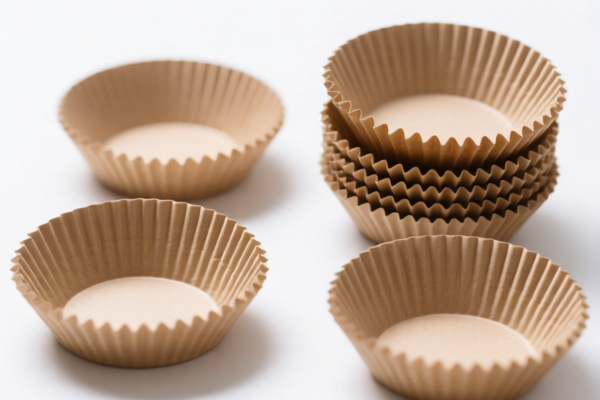
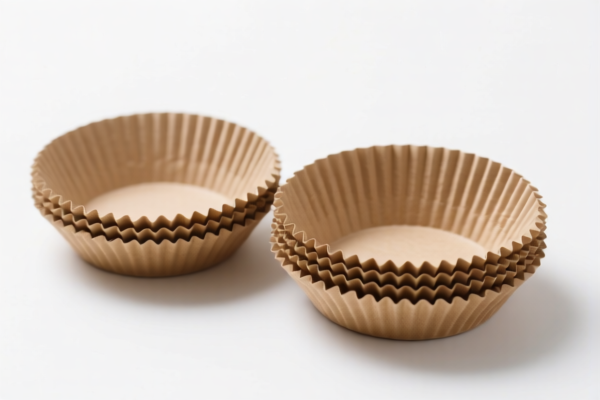
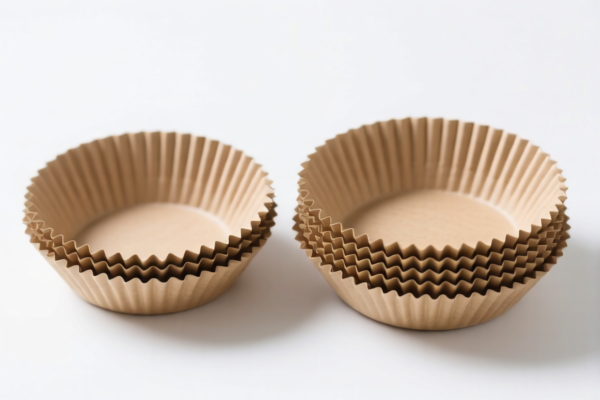
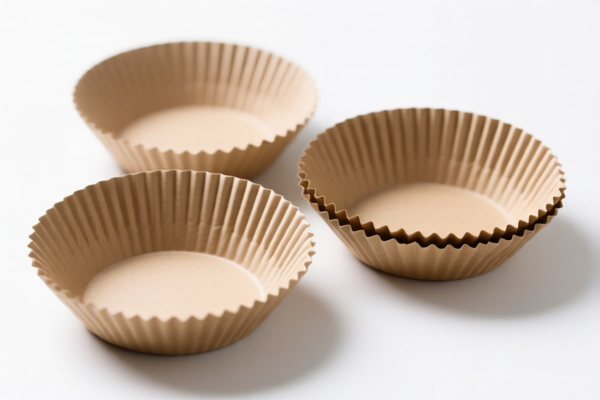
AI Analysis
🍰 Paper Single Layer Cake Tray (Paper & Paperboard Articles)
🌐 HS Code Reference & Customs Clearance Guide | 2026 Latest Tariff Analysis | Professional Entry Strategy
📌 One, Product Definition & Classification: What Exactly is a "Single Layer Cake Tray"?
A Paper Single Layer Cake Tray is an article of paper, paperboard, or cellulose wadding, cut to size or shape. In international trade, these items fall under Chapter 48 (Paper and Paperboard). They are distinct from plastic or metal bakeware and are primarily used for holding, transporting, or serving single-layer cakes, pies, or tarts.
Crucially, the classification depends on two main factors: 1. Material Composition: Specifically whether it is made of Bamboo or Other Materials (e.g., kraft paper, pulp, cardboard). 2. Shape/Type: Whether it is a standard tray or a Cup/Round Nested Container.
⚠️ Key Distinction Point: - If the material is Bamboo and designed as cups, round nested containers, or similar forms → Classified under 4823.61.00.20. - If the material is Non-Bamboo (e.g., recycled paper, pulp) and includes cups or round nested food containers → Classified under 4823.69.00.20.
📦 Two, HS Code Classification Details (2026 Latest Tariff Authority对照)
| HS Code | Product Description | Application Scenario | Material Origin |
|---|---|---|---|
4823.61.00.20 |
Trays, dishes, plates, cups, etc., of bamboo: Cups and round nested food containers | Bamboo cake trays, bamboo cup holders, nested bamboo containers | 🎋 Bamboo |
4823.69.00.20 |
Trays, dishes, plates, cups, etc., other: Cups and round nested food containers | Paper/Pulp cake trays, paper cups, nested paper containers | 📄 Paper/Pulp |
🔍 Important Note: - The term "Cake Tray" often overlaps with "Cups and round nested food containers" if the shape is cylindrical or circular and nested. - If the item is a flat square tray without the "nested" characteristic, it might fall under general trays (
.61.00or.69.00without.20), but based on the provided data, we focus on the nested/cup-type variants which carry the specific.20suffixes for tax purposes. - Bamboo vs. Other: This is the critical divider for the first two digits after the decimal. Bamboo is.61, Others are.69.
💰 Three, 2026 Latest Tariff Rate Details (Detailed Breakdown)
✅ Applicable Country: United States (US) ✅ Origin: China (CN) ✅ Effective Time: 2025/2026 (Current Trade War Status)
🎯 1. 4823.61.00.20 — Trays of Bamboo: Cups and Round Nested Containers
| Item | Content |
|---|---|
| Base Tariff | 0.0% |
| Section 301 Additional Tariff | 0.0% |
| Total Tariff | 0.0% |
| Tax Detail | Base: 0.0%, Additional: 0.0% |
| Legal Basis | HTSUS Chapter 48; Exempt from many Section 301 lists depending on specific bamboo processing origin, but per provided data: 0% Total. |
📌 Explanation: - Zero Duty Advantage: Currently, bamboo products in this specific subcategory enjoy 0% total tariff when imported from China under the provided dataset. - This is a significant cost advantage over non-bamboo paper products. - Note: Verify if the bamboo is processed in China or if it qualifies under any specific USMCA or other FTA rules if exported via other countries.
🎯 2. 4823.69.00.20 — Other Paper/Paperboard: Cups and Round Nested Food Containers
| Item | Content |
|---|---|
| Base Tariff | 0.0% |
| Section 301 Additional Tariff | +25.0% |
| Total Tariff | 25.0% |
| Tax Detail | Base: 0.0%, Additional: 25.0% |
| Legal Basis | HTSUS Chapter 48; Subject to USITC Section 301 List 4A/4B (Paper/Board articles). |
📌 Explanation: - High Duty Burden: Non-bamboo paper trays/cups are subject to a 25% additional tariff. - While the Base Tariff is 0%, the Additional 25% makes the landed cost significantly higher. - This applies to standard kraft paper, pulp, or recycled paper trays.
🛠️ Four, Customs Clearance Practical Advice (Real-World Pitfall Avoidance)
✅ 1. Documentation Checklist (Essential)
| Document | Required | Description |
|---|---|---|
| ✅ Product Specification Sheet | ✔️ | Must clearly state: Material (Bamboo vs. Paper/Pulp), Dimensions, Weight, Use (Food Contact). |
| ✅ Material Composition Statement | ✔️ | Critical for distinguishing between HS 4823.61 (Bamboo) and 4823.69 (Other). Specify % of bamboo. |
| ✅ Product Photos | ✔️ | Show full stack (if nested), individual tray, and any branding/packaging. |
| ✅ Commercial Invoice | ✔️ | Clearly describe as "Paper Cake Tray" or "Bamboo Cake Tray". Do NOT use vague terms like "Gift Box". |
| ✅ Packing List | ✔️ | Detail net/gross weight, number of pieces per carton. |
| ✅ FDA Compliance (if applicable) | ✔️ | If intended for direct food contact, ensure material meets FDA 21 CFR standards (especially for coated papers). |
✅ 2. Declaration Tips (Key Rules)
🔥 "Material Dictates Rate, Shape Dictates HS!"
| Scenario | Correct Declaration | Wrong Approach |
|---|---|---|
| Bamboo Tray | Declare as "Bamboo Cake Tray" or "Bamboo Food Container" HS: 4823.61.00.20Tax: 0% |
Declare as "Paper Tray" → May be reassigned to 4823.69 → 25% Tax |
| Paper/Pulp Tray | Declare as "Paper Cake Tray" or "Pulp Food Container" HS: 4823.69.00.20Tax: 25% |
Declare as "Bamboo" falsely → Fraud risk, fines, seizure |
| Nested Set | Emphasize "Nested" or "Cups" in description to match .20 suffix |
Describe as "Flat Trays" → May fall under different subcodes with different tax implications |
✅ 3. Special Situations
| Situation | Handling Advice |
|---|---|
| Mixed Materials (e.g., Paper with Bamboo Lining) | If bamboo content is >50% or defines essential character, argue for .61. Otherwise, default to .69 (25%). |
| Plastic-Coated Paper | Ensure coating is minimal and doesn't change essential character to plastic (Chapter 39). If it’s still primarily paper/board, it stays in Ch 48. |
| Custom Shapes | Even if square, if it’s a "tray of paperboard," it falls under 4823.6. The .20 suffix specifically targets "Cups and round nested," so ensure the shape description matches. |
🌍 Five, Global Market Comparison (2026 Update)
| Country/Region | Recommended HS Code | Tariff (China Origin) | Key Requirement | Remarks |
|---|---|---|---|---|
| 🇺🇸 USA | 4823.61.00.20 (Bamboo) |
0.0% | FDA, Section 301 Check | Best Option for Zero Duty |
| 🇺🇸 USA | 4823.69.00.20 (Paper) |
25.0% | FDA, Section 301 Check | High cost due to 301 Tariff |
| 🇪🇺 EU | 4823.61/69 | 0% (Most FTA) | REACH, Food Contact | No major trade war tariffs |
| 🇨🇳 China | 4823.61/69 | 5-10% (Import) | GB Standards | Not relevant for export |
📌 Conclusion: - USA is the most challenging market for paper/paperboard goods due to Section 301 tariffs. - Bamboo products offer a strategic advantage with 0% tariff in the US under the provided data. - Consider shifting supply chain or product material to bamboo if targeting the US market to save 25% in duties.
📌 Six, Common Errors & Pitfalls (Lessons Learned)
❌ Error 1: Mislabeling "Paper" trays as "Bamboo" to save taxes. 👉 Consequence: Customs audit reveals material mismatch → Penalties, fines, and potential blacklisting.
❌ Error 2: Ignoring the ".20" suffix requirement for "Cups/Nested". 👉 Consequence: If the tray is not "nested" or a "cup" shape, it might fall under a different, potentially more expensive general tray code, or cause declaration discrepancies.
❌ Error 3: Not disclosing FDA compliance for food-contact surfaces. 👉 Consequence: CBP holds shipment, requires re-export or destruction if material safety is not proven.
✅ Correct Practice:
"Bamboo Cake Tray, Single Layer, 10-inch Diameter, Food-Grade Coated, Stackable/Nested" OR "Recycled Paper Cake Tray, Round, Nesting Design, FDA Compliant"
🎯 Seven, Conclusion: Smart Classification Saves Money!
🎯 Remember the Mantra:
🔹 "Bamboo is Zero, Paper is Twenty-Five!" 🔹 "Material First, Shape Second, Tax Last!"
📌 Tips: - If you are importing Paper/Pulp trays into the US, budget for an extra 25% cost. - Consider sourcing Bamboo trays if available, as they are duty-free in this category. - Always provide material certificates to prove bamboo content if claiming the 0% rate.
📣 Immediate Action:
📞 Consult with your customs broker BEFORE shipment. 📋 Provide material specs and product photos. 🚀 Optimize your supply chain: Switch to Bamboo to eliminate the 25% tariff!
✨ Professional Clearance Starts with Accurate Classification! 💼 Every percentage point of duty is a percentage point of your profit!
Customer Reviews
About HS Code Classification
The Harmonized System (HS) is an internationally standardized nomenclature developed by the World Customs Organization (WCO) to classify traded products. Over 200 countries use the HS system as the basis for customs tariffs, trade statistics, and import/export regulations.
Each HS code follows a hierarchical structure:
- Chapter (2 digits) — Broad category of goods (e.g., Chapter 84: Machinery and Mechanical Appliances)
- Heading (4 digits) — More specific grouping within the chapter
- Subheading (6 digits) — Internationally standardized breakdown, used by all WCO member countries
- National subdivisions (8-10 digits) — Country-specific extensions for further classification, such as US HTSUS 10-digit codes
Correct HS code classification is essential for smooth customs clearance, accurate duty payment, and compliance with trade regulations. Misclassification can lead to customs delays, overpayment of duties, or penalties.
When importing from CN to US, the applicable tariff rates may include:
- Most-Favored-Nation (MFN) rate — The standard duty rate applied to WTO members
- General rate — Applied to countries without trade agreements
- Trade remedy duties — Additional tariffs such as Section 301 (anti-dumping), Section 232 (national security), or countervailing duties
The information provided on this page is for reference purposes only. For official classification, please consult with your local customs authority or a licensed customs broker.