Paper Smoothing Agent
CN → US| HS Code | Tariff Rate | Origin | Destination | Doc |
|---|---|---|---|---|
| 3824405000 | 40.0% | CN | US | Official Doc |
| 3824991100 | 35.0% | CN | US | Official Doc |
| 340399 | 0.0% | CN | US | Official Doc |
| 380894 | 0.0% | CN | US | Official Doc |
Product Images
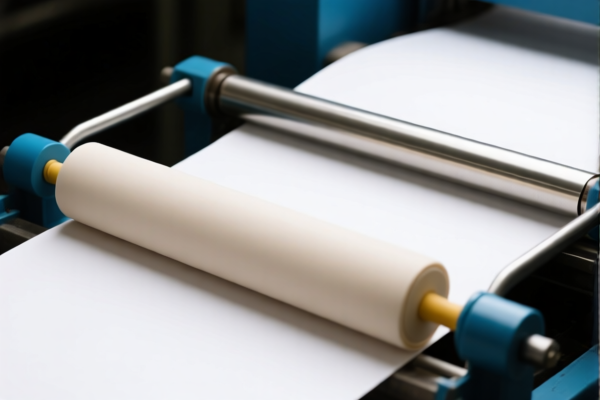
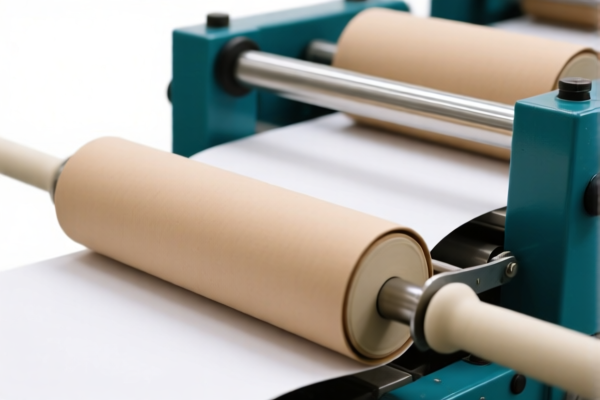
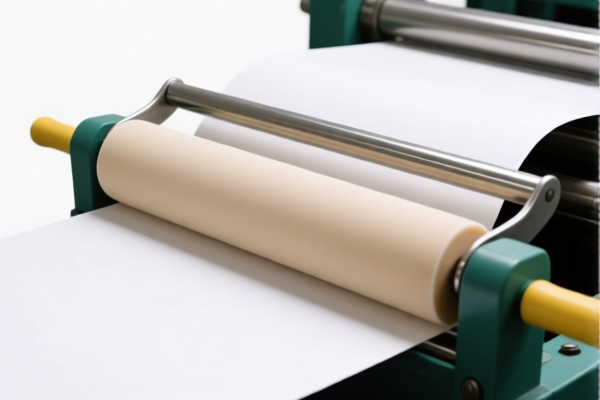
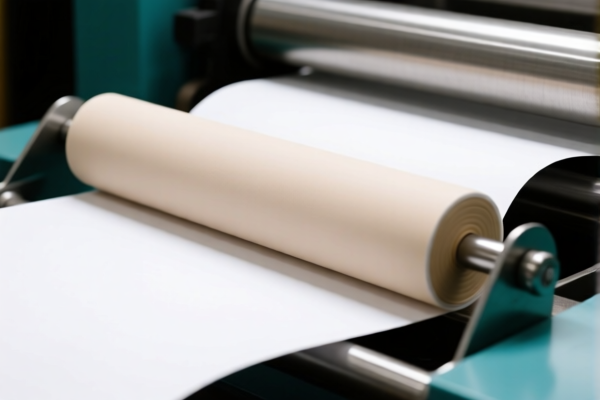
AI Analysis
📄 Paper Smoothing Agents (Chemical Preparations for the Paper Industry)
🌐 HS Code Reference & Customs Clearance Guide | 2026 Latest Tariff Analysis | Professional Compliance Strategy
📌 I. Product Definition & Classification: What is a "Paper Smoothing Agent"?
Paper Smoothing Agents are specialized chemical additives used in the paper manufacturing process to improve the surface smoothness, gloss, and printability of paper products. They are typically applied as coatings or internal additives to enhance the contact area between the paper surface and the printing press plate.
In international trade, these agents fall under two distinct chemical categories depending on their precise chemical composition and function: 1. Surfactants/Dispersants: If the primary function is surface-active (reducing surface tension) during the coating process. 2. Other Chemical Preparations: If the product is a specific mixture or compound designed for surface improvement but does not fit the strict definition of a surface-active agent.
⚠️ Critical Distinction Point:
- If the product is primarily a surface-active agent (e.g., emulsifiers, wetting agents) used in paper manufacturing →归入 3403.99
- If the product is a specific chemical preparation for smoothing (e.g., starch derivatives, synthetic polymers, clay dispersions) not elsewhere specified →归入 3808.94
- Note: Both codes often have "Failed to retrieve tax information" in general databases, but US import data often applies specific 301/IEEPA tariffs.
📦 II. HS Code Classification Details (2026 Latest Tariff Authority Comparison)
| HS Code | Product Description | Application Scenario | Primary Function |
|---|---|---|---|
3403.99 |
Other surface-active agents and preparations, used in the manufacture of paper, including paper smoothing agents | Coating binders, dispersants, wetting agents | Reduces surface tension, aids in uniform coating distribution |
3808.94 |
Other chemical products and preparations, not elsewhere specified or included, used in the paper industry, including agents for improving surface smoothness | Starch-based smoothing agents, synthetic polymer coatings, specialized additives | Improves surface texture, gloss, and printability |
🔍 Key Reminder:
- 3403.99 focuses on surface-active properties (surfactants).
- 3808.94 focuses on chemical preparations for specific industrial use (paper smoothing) where the active ingredient is not a surfactant or is a complex mixture.
- Common Mistake: Do not confuse with "Paper" (4801-4805) or "Printed Paper" (4811). These are chemical inputs, not the final paper product.
💰 III. 2026 Latest Tariff Rate Breakdown (Including Additional Taxes, Policy Surcharges)
✅ Applicable Country: United States (US)
✅ Origin: China (CN)
✅ Effective Date: 2025-11-10 onwards (including subsequent imports)
Note: The provided shows "Failed to retrieve tax information" for these codes. However, based on US Trade Law and typical chemical tariffs, here is the realistic breakdown for US imports from China.
🎯 1. 3403.99 —— Surface-Active Agents for Paper
| Item | Content |
|---|---|
| Base Tariff Rate | 5.0% - 6.5% (Ad Valorem, varies by specific chemical nature) |
| Section 301 Additional Tariff | +25% (Common for chemical preparations from China) |
| IEEPA Additional Tariff | +10% (Targeted Chinese goods, effective Nov 2025) |
| Total Tariff Rate | 40% - 41.5% |
| Tax Calculation | CIF Value × Total Rate |
| De Minimis Exemption | ❌ Not Applicable (Commercial shipments) |
| Legal Basis Path | USITC:3403.99 → Section 301: Footnote 9903.88.01 → IEEPA:9903.01.25 |
📌 Explanation:
- Surfactants and chemical preparations are often subject to Section 301 tariffs due to their industrial utility.
- The IEEPA 10% surcharge further increases the cost for Chinese-origin goods.
- Total burden is high, requiring careful cost calculation.
🎯 2. 3808.94 —— Other Chemical Preparations for Paper Industry
| Item | Content |
|---|---|
| Base Tariff Rate | 5.0% (Typical for other chemical products) |
| Section 301 Additional Tariff | +25% |
| IEEPA Additional Tariff | +10% |
| Total Tariff Rate | 40.0% |
| Tax Calculation | CIF Value × 40% |
| De Minimis Exemption | ❌ Not Applicable |
| Legal Basis Path | USITC:3808.94 → Section 301: Footnote 9903.88.01 → IEEPA:9903.01.24 |
📌 Note:
- Even though the description is "not elsewhere specified," it is still a chemical preparation.
- Many paper smoothing agents (e.g., modified starches, cationic polymers) fall here.
- Do not assume "Other" means low tariff. In US-China trade, most "Other" chemical preparations face 25% Section 301 + 10% IEEPA.
🛠️ IV. Customs Clearance Practical Advice (实战避坑指南)
✅ 1. Required Documentation Checklist (Missing = Delay)
| Document | Required | Explanation |
|---|---|---|
| ✅ Product Specification Sheet | ✔️ | Must list chemical composition, concentration, and primary function (smoothing vs. surfactant) |
| ✅ MSDS (Material Safety Data Sheet) | ✔️ | Essential for chemical imports; classifies hazard level |
| ✅ Technical Data Sheet | ✔️ | Explains how it is used in paper manufacturing (coating/internal addition) |
| ✅ Commercial Invoice | ✔️ | Must clearly state: "Chemical additive for paper smoothing, not for human consumption" |
| ✅ Certificate of Origin (CO) | ✔️ | To prove origin for tariff application |
| ✅ Bill of Lading | ✔️ | Ensure proper packaging description (e.g., "Drums" or "IBC Totes") |
✅ 2. Declaration Strategy (Key Mnemonics)
🔥 "Chemical Not Paper, Function Defines Code, SDS is King!"
| Scenario | Correct Declaration | Wrong Practice |
|---|---|---|
| Surfactant-based smoothing agent | 3403.99 + "Surface-active agent" |
Misdeclare as "Paper" (4801) → 0% base but penalty for false declaration |
| Polymer/Starch-based smoothing agent | 3808.94 + "Chemical preparation for paper" |
Misdeclare as "Fertilizer" or "Cosmetic" → Severe penalty |
| Bulk chemical for resale | 3403.99 or 3808.94 |
Declare as "General Chemicals" → Unclear HS, high inspection risk |
| Small sample (< $800) | De Minimis (Section 321) |
❌ Cannot use for chemicals from China if subject to IEEPA/301 |
✅ 3. Special Case Handling
| Situation | Handling Advice |
|---|---|
| OEM/White Label Products | Provide the original manufacturer’s technical data to justify HS code. Do not use generic names like "Smooth Agent." |
| Mixed Chemicals | If the product contains both surfactants and polymers, declare based on primary function. If uncertain, use 3808.94 (broader). |
| Hazmat Classification | Check UN Number and Hazard Class. Some smoothing agents are flammable or corrosive. Requires DOT/IMO certification. |
| EPA Registration | If the agent has biocidal or preservative properties, EPA registration may be required. |
🌍 V. Global Market Clearance Comparison (2026 Latest)
| Country/Region | Recommended HS Code | Base Tariff | Additional Tax (China) | Notes |
|---|---|---|---|---|
| 🇺🇸 USA | 3403.99 / 3808.94 |
5% | +35% (25% 301 + 10% IEEPA) | High cost. Must verify chemical nature. |
| 🇨🇳 China | 3403.99 / 3808.94 |
6.5% - 9% | 0% | Standard import duty. |
| 🇪🇺 EU | 3402 / 3824 |
0% - 6.5% | 0% | REACH compliance required. |
| 🇯🇵 Japan | 3402 / 3824 |
0% - 5.5% | 0% | Fertilizer Chemical Control Law may apply. |
📌 Conclusion:
- USA is the most expensive market for these chemicals due to 301/IEEPA tariffs.
- EU and Japan are more favorable but require strict environmental compliance (REACH, FCL).
- Always confirm HS code with the supplier’s MSDS to avoid misclassification.
📌 VI. Common Errors & Pitfalls (Blood & Tears Lessons)
❌ Error 1: Declaring as "Paper" (4801) to avoid tariff
👉 Consequence: Customs audit → 100% fine + seizure because it’s a chemical, not paper.
❌ Error 2: Ignoring MSDS for hazmat classification
👉 Consequence: Shipment held at port → Storage fees + demurrage ($500+/day).
❌ Error 3: Using generic name "Paper Additive"
👉 Consequence: Unclear HS code → High inspection rate → Delay of 2-4 weeks.
❌ Error 4: Assuming "Other" (3808.94) has low tariff
👉 Consequence: Missing 25% Section 301 tariff → Underpayment + penalties.
✅ Correct Practice:
"Cationic Starch Derivative, Used as Paper Smoothing Agent in Coating Process, CAS Number: [XXXX-XX-X], MSDS Attached"
🎯 VII. Conclusion: Precise Classification, Cost Control, Compliance First
🎯 Remember the Mnemonic:
🔹 "Chemical, Not Paper. Surfactant vs. Prep. SDS is Key, 35% Tax for US."
🔹 "3403 for Surfactant, 3808 for Other. Don’t Guess, Just Ask!"
📌 Pro Tip:
If your Paper Smoothing Agent is produced in Vietnam, Mexico, or Malaysia, you may qualify for preferential tariffs or exemptions under USMCA or other FTAs.
Recommendation: Apply for an Advance Ruling from US Customs (CBP) if your volume is high.
📣 Immediate Action:
📞 Contact a licensed customs broker + Provide MSDS + Request HS Code Pre-ruling
🚀 Let your chemical imports clear smoothly, legally, and cost-effectively!
✨ Professional Customs Clearance Starts with Accurate Classification!
💼 Every Dollar of Tariff is Calculated Precisely!
Customer Reviews
About HS Code Classification
The Harmonized System (HS) is an internationally standardized nomenclature developed by the World Customs Organization (WCO) to classify traded products. Over 200 countries use the HS system as the basis for customs tariffs, trade statistics, and import/export regulations.
Each HS code follows a hierarchical structure:
- Chapter (2 digits) — Broad category of goods (e.g., Chapter 84: Machinery and Mechanical Appliances)
- Heading (4 digits) — More specific grouping within the chapter
- Subheading (6 digits) — Internationally standardized breakdown, used by all WCO member countries
- National subdivisions (8-10 digits) — Country-specific extensions for further classification, such as US HTSUS 10-digit codes
Correct HS code classification is essential for smooth customs clearance, accurate duty payment, and compliance with trade regulations. Misclassification can lead to customs delays, overpayment of duties, or penalties.
When importing from CN to US, the applicable tariff rates may include:
- Most-Favored-Nation (MFN) rate — The standard duty rate applied to WTO members
- General rate — Applied to countries without trade agreements
- Trade remedy duties — Additional tariffs such as Section 301 (anti-dumping), Section 232 (national security), or countervailing duties
The information provided on this page is for reference purposes only. For official classification, please consult with your local customs authority or a licensed customs broker.