Paper Softener
CN → USProduct Images



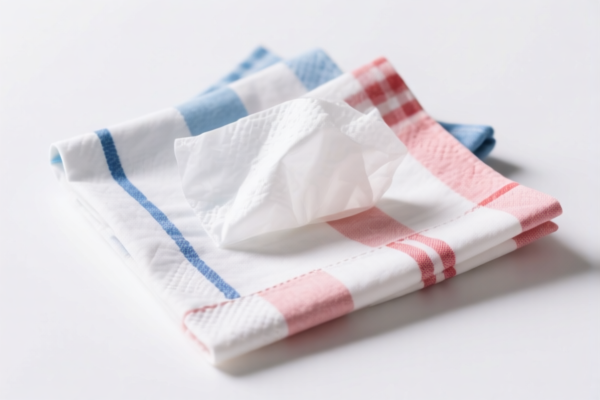
AI Analysis
🧻 Paper Softener (Tissue & Towel Softener Additives)
🌐 HS Code Reference & Clearance Guide | 2026 Latest Tariff Analysis | Professional Entry Strategy
📌 Part 1: Product Definition & Classification: What Exactly Is "Paper Softener"?
Paper softener is a chemical additive primarily used in the paper manufacturing process (specifically for tissue, toilet paper, and paper towels) to improve tactile feel, reduce static, and enhance bulkiness. It is not a consumer cleaning product (like laundry softener) but an industrial chemical intermediate.
In international trade, it is critically distinguished by its composition: * Cationic Softeners: Typically quaternary ammonium salts (e.g., Diethyl Hydrogen Ethyl Sulfosuccinate, DHESS, or Distearyldimethylammonium chloride, DSDMAC). * Non-Ionic/Other: Emulsions or synthetic polymers.
⚠️ Critical Distinction:
- If the product is a pure chemical substance or a simple mixture intended for industrial paper processing → Usually classified under Chapter 38 (Miscellaneous Chemical Products) or Chapter 29 (Organic Chemicals) depending on purity and specific chemical nature.
- If it is a finished consumer product (e.g., a bottle of "Laundry Fabric Softener") → It falls under 3808.94 (Insecticides, Rodenticides, Fungicides, Herbicides, Disinfectants and Similar Products; Retail Packs).
- Most "Paper Softener" inputs for factories are industrial chemicals, not retail consumer goods.
📦 Part 2: HS Code Classification Details (2026 Latest Tariff Alignment)
| HS Code | Product Description | Application Scenario | Chemical Nature |
|---|---|---|---|
3809.10.46.00 |
Finishing agents for paper, pulp, or textiles (e.g., softeners, sizing agents) | Most Common: Industrial paper softening agents sold in bulk/industrial packs | ✅ Industrial Chemical Mixture |
2920.10.00.00 |
Epoxides, epoxy-alcohols, epoxy-phenols and their halogenated, sulfonated, nitrated or nitrosated derivatives | Specific chemical precursors | ✅ Pure Organic Chemical |
3808.94.96.00 |
Other insecticides, rodenticides, fungicides, herbicides, disinfectants and similar products; retail pack | ❌ Misclassification Risk: Only if marketed as a "laundry softener" in retail bottles | ✅ Consumer Pack |
3402.90.40.00 |
Organic surface-active agents and preparations (including those as constituents of washing preparations) | If sold as a detergent additive for industrial washing | ✅ Surface Active Agent |
🔍 Key Warning:
- Do NOT classify industrial paper softener under3808.94(Consumer/Disinfectant) unless it is in retail packaging for end-consumer laundry use.
- Correct Classification: Most industrial paper softeners are classified under3809.10("Finishing agents for paper...").
- If the softener is a single defined chemical compound with >90% purity, it might fall under Chapter 29 (e.g.,2920for epoxides or2933for heterocyclic compounds), but this is rare for standard softening agents.
💰 Part 3: 2026 Latest Tariff Rate Breakdown (Including Surcharges & Policy Add-ons)
✅ Applicable Country: United States (US)
✅ Country of Origin: China (CN)
✅ Effective Date: November 10, 2025 (for subsequent imports)
🎯 1. 3809.10.46.00 —— Finishing Agents for Paper (Industrial Paper Softener)
| Item | Content |
|---|---|
| Base Tariff Rate | 0% (ad valorem) |
| USITC Surcharge | +25% (Under USITC Footnote 9903.88.01) |
| IEEPA Surcharge | +10% (For China/Hong Kong products, effective Nov 10, 2025) |
| Total Tariff Rate | 45% |
| Tax Calculation | CIF Value × 45% |
| De Minimis Eligibility | ❌ Not Eligible (deny_de_minimis) |
| Legal Basis Path | IEEPA:9903.01.25 → IEEPA:9903.01.24 → USITC:3809.10.46.00 → FOOTNOTE:9903.88.01 |
📌 Explanation:
- The 25% USITC surcharge is part of the Section 301 tariffs on Chinese imports.
- The 10% IEEPA surcharge is the new levy under the International Emergency Economic Powers Act targeting specific Chinese chemical and industrial goods.
- Total of 45% is extremely high. This is a high-cost import category.
🎯 2. 2920.10.00.00 —— Specific Organic Chemicals (If Applicable)
| Item | Content |
|---|---|
| Base Tariff Rate | 0% |
| USITC Surcharge | +25% |
| IEEPA Surcharge | +10% |
| Total Tariff Rate | 45% |
| Tax Calculation | CIF Value × 45% |
| De Minimis Eligibility | ❌ Not Eligible |
| Legal Basis Path | Same as above |
📌 Note:
- If customs determines your product is a "pure chemical" rather than a "mixture/finishing agent," the code changes, but the tariff impact remains identical (45%).
- Misclassification here can lead to penalties, as the duty rate is the same, but the regulatory compliance requirements (e.g., EPA TSCA registration) differ.
🛠️ Part 4: Clearance Operational Advice (Practical Pitfall Avoidance Guide)
✅ 1. Required Documentation Checklist (Non-negotiable)
| Document | Mandatory | Description |
|---|---|---|
| ✅ Safety Data Sheet (SDS) | ✔️ | Must be GHS compliant, specifying chemical composition. Customs will use this to verify HS Code. |
| ✅ Ingredient Declaration | ✔️ | List all components and percentages. Essential for determining if it’s a "mixture" (3809) or "pure chemical" (29xx). |
| ✅ Product Photo (Label & Container) | ✔️ | Show industrial packaging (drums/bulk) vs. retail. Industrial packaging supports 3809; retail supports 3808. |
| ✅ EPA TSCA Certification | ✔️ | Critical: All chemicals imported into the US must be TSCA compliant. Provide a "Certification of Compliance" from the manufacturer. |
| ✅ Commercial Invoice | ✔️ | Clearly state "Industrial Paper Softening Agent" not "Fabric Softener." |
| ✅ Packing List | ✔️ | Detail net/gross weights and container types. |
✅ 2. Declaration Strategy (Key Mnemonic)
🔥 "Industrial Drum, Code 3809; Retail Bottle, Code 3808; TSCA Proof, Avoid Delay!"
| Scenario | Correct Declaration | Wrong Practice |
|---|---|---|
| Industrial Bulk Drum (Factory Use) | 3809.10.46.00 |
Declaring as 3808.94.96.00 (Laundry Softener) → Misclassification Risk |
| Retail Bottles (Consumer Store) | 3808.94.96.00 |
Declaring as 3809.10 → Penalty for Wrong Packaging Declaration |
| Pure Chemical Powder (>90% Purity) | 2920.10.00.00 (or similar) |
Declaring as 3809 → May trigger EPA investigation for unregistered chemical |
| Liquid Concentrate (Mixture) | 3809.10.46.00 |
Vague description "Softener" → Customs Query/Delay |
✅ 3. Special Cases Handling
| Case | Handling Advice |
|---|---|
| OEM Custom Softener | Provide client order + formula sheet. Ensure "Confidential Business Information" (CBI) is claimed properly in documentation to protect IP while allowing customs review. |
| Multi-purpose Agent (Paper + Textile) | If marketed for both, declare based on primary intended use. If primary is paper, use 3809.10. If primary is textile, it may still be 3809.10 (since 3809 covers both). |
| Green/Organic Labeling | "Organic" does not exempt from tariffs. However, ensure no false advertising claims that could trigger FTC scrutiny alongside CBP. |
| Re-export from Third Country | If shipped from Vietnam/Malaysia, ensure Origin Certification proves substantial transformation. Direct shippers from China are still subject to 45%. |
🌍 Part 5: Global Market Comparison (2026 Latest)
| Country/Region | Recommended HS Code | Tariff | Certification Requirement | Notes |
|---|---|---|---|---|
| 🇺🇸 USA | 3809.10.46.00 |
45% (China) | EPA TSCA + SDS | Highest cost; strict chemical compliance. |
| 🇨🇳 China | 3809.10.46.00 |
0% | CCC (if applicable) | Low tariff; focus on environmental standards. |
| 🇪🇺 EU | 3809.10.99 |
0% (Most) | REACH Registration | No REACH = No Entry. High regulatory barrier. |
| 🇦🇺 Australia | 3809.10.00 |
5% | AICIS (Chemical Inventory) | Requires import permit for new substances. |
| 🇯🇵 Japan | 3809.10.000 |
0% | CSCL (Chemical Substances Control Law) | Registration required for existing chemicals. |
📌 Conclusion:
- USA: High tariff (45%) + Strict EPA TSCA.
- EU/Asia: Zero/Low tariff but high regulatory barrier (REACH, AICIS, CSCL).
- Strategy: For USA, consider supply chain diversification (e.g., sourcing from Malaysia/Vietnam with true transformation) to avoid Section 301/IEEPA tariffs. For EU/Asia, focus on chemical registration compliance.
📌 Part 6: Common Mistakes & Pitfalls (Blood Lesson)
❌ Mistake 1: Calling it "Fabric Softener" in invoice for paper industry use
👉 Consequence: Customs may classify as 3808.94 (0% base + 25% + 10% = 35%) or 3809 (45%). If misdeclared, penalties + back taxes.
👉 Fix: Use precise industrial terms: "Industrial Paper Softening Agent."
❌ Mistake 2: Missing EPA TSCA Certification
👉 Consequence: Shipment blocked at border. CBP will not release without TSCA compliance.
👉 Fix: Ensure manufacturer has valid TSCA certification for the chemical.
❌ Mistake 3: Declaring "Mixture" when it's a "Pure Compound"
👉 Consequence: Incorrect HS code → Potential audit for chemical inventory violations.
👉 Fix: Provide precise chemical composition. If >90% pure, consider Chapter 29.
✅ Correct Approach:
"Industrial Paper Softening Agent, Cationic Quaternary Ammonium Salt, 30% Solution in Water, Drum Package, EPA TSCA Compliant, Model XYZ."
🎯 Part 7: Conclusion: Precise Classification Saves Money!
🎯 Remember Mnemonic:
🔹 "Paper Industry, Code 3809; Retail Bottle, Code 3808; TSCA Proof, No Block!"
🔹 "45% Tariff for China, Split Supply Chain to Save 25%!"
📌 Tips:
- If your paper softener is originally from Vietnam, Malaysia, or Thailand (with proof of substantial transformation), you may qualify for 0%~5% tariff under USMCA or GSP (if applicable) or avoid Section 301/IEEPA duties.
- Apply for an Advance Ruling from CBP if the chemical composition is complex. This provides legal certainty before shipment.
📣 Immediate Action:
📞 Contact a licensed customs broker + Provide SDS + Obtain TSCA Certificate
🚀 Ensure your Paper Softener clears US customs smoothly, avoiding 45% tariff shock!
✨ Professional Clearance Starts with Accurate Classification!
💼 Your Chemical Import Costs Deserve Precision!
Customer Reviews
About HS Code Classification
The Harmonized System (HS) is an internationally standardized nomenclature developed by the World Customs Organization (WCO) to classify traded products. Over 200 countries use the HS system as the basis for customs tariffs, trade statistics, and import/export regulations.
Each HS code follows a hierarchical structure:
- Chapter (2 digits) — Broad category of goods (e.g., Chapter 84: Machinery and Mechanical Appliances)
- Heading (4 digits) — More specific grouping within the chapter
- Subheading (6 digits) — Internationally standardized breakdown, used by all WCO member countries
- National subdivisions (8-10 digits) — Country-specific extensions for further classification, such as US HTSUS 10-digit codes
Correct HS code classification is essential for smooth customs clearance, accurate duty payment, and compliance with trade regulations. Misclassification can lead to customs delays, overpayment of duties, or penalties.
When importing from CN to US, the applicable tariff rates may include:
- Most-Favored-Nation (MFN) rate — The standard duty rate applied to WTO members
- General rate — Applied to countries without trade agreements
- Trade remedy duties — Additional tariffs such as Section 301 (anti-dumping), Section 232 (national security), or countervailing duties
The information provided on this page is for reference purposes only. For official classification, please consult with your local customs authority or a licensed customs broker.