Paper Sorting Aid
CN → US| HS Code | Tariff Rate | Origin | Destination | Doc |
|---|---|---|---|---|
| 3926100000 | 15.3% | CN | US | Official Doc |
| 3926908800 | 0.0% | CN | US | Official Doc |
| 4820300040 | 35.0% | CN | US | Official Doc |
| 4820102060 | 35.0% | CN | US | Official Doc |
Product Images
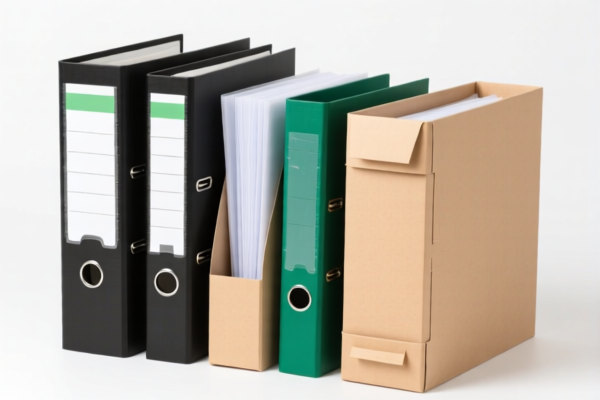
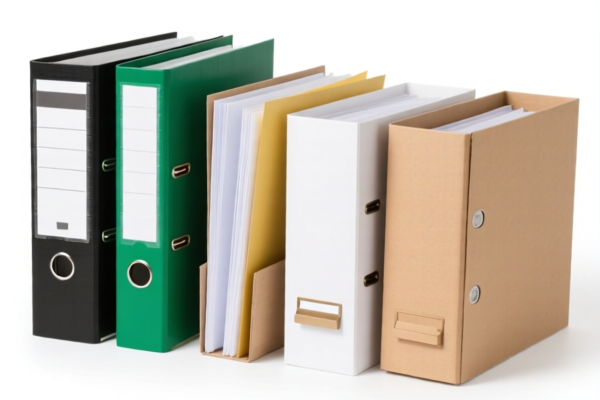
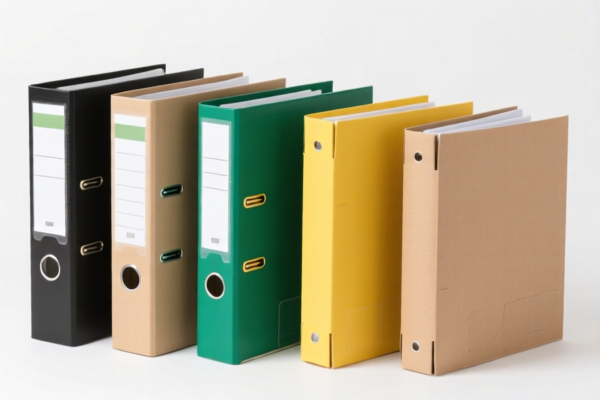
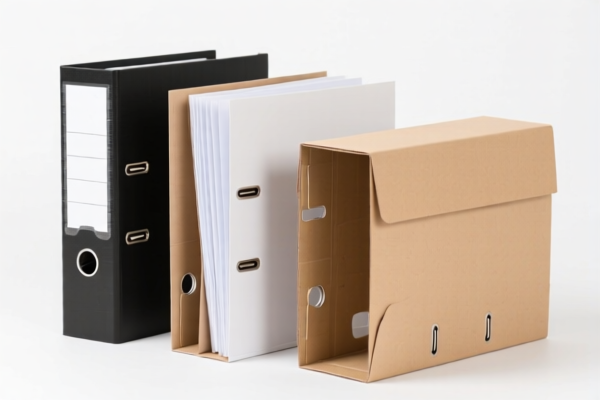
AI Analysis
📂 Paper Sorting Aid (Stationery & Office Supplies)
🌐 HS Code Reference & Customs Clearance Guide | 2026 Latest Tariff Analysis | Professional Strategy 📌 I. Product Definition & Classification: What Exactly is a "Paper Sorting Aid"?
A "Paper Sorting Aid" generally refers to devices or accessories designed to organize, separate, or manage sheets of paper, folders, or documents. In international trade, these items fall strictly under Paper Goods or Plastic Office Supplies. The correct HS Code depends entirely on the material and the specific form of the aid.
Key Distinction: * Paper-Based Aids: If the item is made of paper/paperboard (e.g., index cards, file dividers, tabbed inserts, memo pads) → Chapter 48. * Plastic-Based Aids: If the item is made of plastic (e.g., plastic ring binders, plastic document trays, plastic tab separators) → Chapter 39.
⚠️ Critical Classification Point: - If the product is a plastic binder or plastic file cover, it may fall under 3926.10.00.00 (Office Supplies) or 3926.90.88.00 (Other Plastic Articles). - If the product is a paper-based notebook, diary, or binder, it falls under 4820. - Misclassification Risk: Declaring a plastic binder as "Paper Stationery" or vice versa leads to immediate customs rejection or penalty.
📦 II. HS Code Classification Details (2026 Latest Tariff Alignment)
Based on the provided data, here are the relevant HS Codes for "Paper Sorting Aids" classified by material and function:
| HS Code | Product Description | Material | Applicable Scenario |
|---|---|---|---|
4820.30.00.40 |
Binders (other than book covers), folders, and file covers | Paper/Paperboard | Paper-based ring binders, paper folders, file covers for documents |
4820.10.20.60 |
Diaries, notebooks, address books, memo pads, letter pads | Paper/Paperboard | Memo pads, letter pads, diaries used for sorting/organizing notes |
3926.10.00.00 |
Office or school supplies (General) | Plastic | Plastic office accessories, general plastic sorting tools |
3926.90.88.00 |
Other articles of plastics: Flexible plastic document binders with tabs, rolled or flat | Plastic | Plastic tabbed dividers, flexible plastic document sleeves |
🔍 Key Reminder: -
4820Series: Specifically for paper-based binding and sorting aids. -3926.10: General plastic office supplies. This is a broad category. -3926.90.88.00: Specific for plastic document binders with tabs. If your "sorting aid" is a plastic tabbed divider, this is the most precise code.
💰 III. 2026 Latest Tariff Rate Details (Crucial for Cost Calculation)
✅ Applicable Country: United States (US) ✅ Origin: China (CN) ✅ Effective Date: 2025/2026 (Subject to current trade policies)
🎯 1. 4820.30.00.40 & 4820.10.20.60 (Paper-Based Aids)
| Item | Content |
|---|---|
| Base Tariff | 0.0% (Ad Valorem) |
| Additional Tariff (Section 301) | 25.0% |
| Total Tax Rate | 25.0% |
| Tax Calculation | CIF Value × 25% |
| De Minimis Exemption | ❌ Not Applicable (Section 301 tariffs generally apply to all covered goods from China) |
| Legal Basis | HTSUS Chapter 48 → Section 301 Footnote 9903.88.01 (if applicable) |
📌 Explanation: - Paper-based stationery from China is subject to a 25% additional tariff under Section 301. - Although the base rate is 0%, the effective duty paid is 25%. - No IEEPA 10% surcharge is listed in the provided data for these specific codes, but the 25% is significant.
🎯 2. 3926.10.00.00 (Plastic Office Supplies)
| Item | Content |
|---|---|
| Base Tariff | 0.0% |
| Additional Tariff | 0.0% (Per provided data) |
| Total Tax Rate | 0.0% |
| Tax Calculation | No duty applied |
| De Minimis Exemption | ✅ Possible (Under $800, if eligible under de minimis rules) |
| Legal Basis | HTSUS Chapter 39 |
📌 Explanation: - Plastic office supplies (
3926.10.00.00) currently show 0% total tax in the provided data. - This is a major cost advantage compared to paper-based aids. - Warning: Ensure the product truly qualifies as "Office Supplies" and not a "Container" or "Packaging" which might have different tariffs.
🎯 3. 3926.90.88.00 (Flexible Plastic Document Binders with Tabs)
| Item | Content |
|---|---|
| Base Tariff | N/A |
| Additional Tariff | N/A |
| Total Tax Rate | Error / Failed to Retrieve |
| Tax Calculation | Unknown |
| De Minimis Exemption | ⚠️ Check Carefully |
📌 Critical Warning: - The tax information for
3926.90.88.00failed to retrieve. - Do not assume 0%. Plastic products from China are often subject to Section 301 tariffs (25%). - Action Required: Verify this code with a customs broker or the USITC database. It is highly likely to be 25% if classified under Section 301 list.
🛠️ IV. Customs Clearance Practical Advice (Real-World Pitfalls)
✅ 1. Document Preparation Checklist
| Document | Required | Notes |
|---|---|---|
| ✅ Product Description | ✔️ | Must clearly state Material (Paper vs. Plastic) and Function (Sorting/Binding) |
| ✅ Material Breakdown | ✔️ | Specify % of paper, plastic, metal rings, etc. |
| ✅ Photos | ✔️ | Show tabs, binders, and overall structure |
| ✅ Commercial Invoice | ✔️ | HS Code must match the description exactly |
| ✅ Country of Origin | ✔️ | Must be "China" if applicable for tariff calculation |
✅ 2. Declaration Strategy (Key Tips)
🔥 "Material is King, Function is Queen!"
| Situation | Correct HS Code | Risk if Incorrect |
|---|---|---|
| Plastic Tabbed Dividers | 3926.90.88.00 (Likely 25%*) |
If misdeclared as 3926.10 (0%), you face heavy penalties + back duties |
| Plastic Binder | 3926.10.00.00 (0%) |
Ensure it's not a "container" or "packaging" |
| Paper Ring Binder | 4820.30.00.40 (25%) |
Cannot be declared as plastic to avoid tax |
| Memo Pad | 4820.10.20.60 (25%) |
Clearly labeled as "Memo Pad" |
Note:
3926.90.88.00tax is unknown, but plastic goods from China are frequently taxed at 25%. Always verify.
✅ 3. Special Cases & Handling
| Situation | Handling Advice |
|---|---|
| Mixed Material Items | (e.g., Plastic tabs on Paper binders) |
| OEM Custom Items | Provide client drawings to prove function |
| De Minimis Shipments (<$800) | 3926.10.00.00 may be duty-free |
🌍 V. Market Comparison & Clearance Strategy
| Market | Recommended HS Code | Est. Tax | Key Requirement |
|---|---|---|---|
| 🇺🇸 USA | 3926.10.00.00 (Plastic) |
0% | Verify 3926.90.88.00 is not 25% |
| 🇺🇸 USA | 4820.30.00.40 (Paper) |
25% | High duty cost; consider plastic alternatives |
| 🇪🇺 EU | Varies | 0-4% | CE marking if plastic |
| 🇨🇳 China | Varies | 0-6% | Standard import procedures |
📌 Strategic Insight: - Plastic (
3926.10) appears to have a 0% tariff advantage over Paper (4820) which has 25%. - However,3926.90.88.00(specific plastic binders) has unknown tax. If it is 25%, the advantage disappears. - Recommendation: For US exports,3926.10.00.00is the safest low-tariff option for plastic office supplies, but ensure the product fits the "Office Supplies" definition strictly.
📌 VI. Common Mistakes & Pitfalls
❌ Mistake 1: Declaring Plastic Binders as 4820 (Paper) to avoid 25% tax.
👉 Consequence: Customs inspection reveals plastic material → 25% duty + 10% penalty + seizure risk.
❌ Mistake 2: Assuming 3926.90.88.00 is 0% because it's not 3926.10.
👉 Consequence: If it is actually 25%, you underpay duties → Back taxes + Interest.
❌ Mistake 3: Vague Description ("Stationery") on Invoice. 👉 Consequence: Customs cannot classify → Hold shipment for 2-4 weeks for further documentation.
✅ Correct Approach:
"Plastic Document Binder with Tabs, Flexible, Model ABC, 100% Recycled Plastic, Made in China" HS Code:
3926.90.88.00(Verify Tax) OR3926.10.00.00if classified as general office supply.
🎯 VII. Conclusion: Smart Classification for Cost Efficiency
🎯 Remember the Golden Rule:
🔹 "Plastic Office Supplies (3926.10) = 0% Tax (Likely)" 🔹 "Paper Binders (4820) = 25% Tax" 🔹 "Plastic Specific Binders (3926.90) = UNKNOWN (Verify!)"
📌 Action Item: - If your "Paper Sorting Aid" can be redesigned to use plastic office supplies (
3926.10.00.00), you save 25% in tariffs. - If you must use paper, budget for 25% duty. - Always verify3926.90.88.00with a customs broker before shipping, as the tax data is missing.
📣 Immediate Action:
📞 Contact your customs broker with product photos and material specs. 📋 Request an Advance Ruling for
3926.90.88.00to confirm tax liability. 🚀 Optimize your supply chain by choosing 0% tariff materials where possible!
✨ Professional Clearance Starts with Precise Classification! 💼 Every percentage point in tax affects your bottom line!
Customer Reviews
About HS Code Classification
The Harmonized System (HS) is an internationally standardized nomenclature developed by the World Customs Organization (WCO) to classify traded products. Over 200 countries use the HS system as the basis for customs tariffs, trade statistics, and import/export regulations.
Each HS code follows a hierarchical structure:
- Chapter (2 digits) — Broad category of goods (e.g., Chapter 84: Machinery and Mechanical Appliances)
- Heading (4 digits) — More specific grouping within the chapter
- Subheading (6 digits) — Internationally standardized breakdown, used by all WCO member countries
- National subdivisions (8-10 digits) — Country-specific extensions for further classification, such as US HTSUS 10-digit codes
Correct HS code classification is essential for smooth customs clearance, accurate duty payment, and compliance with trade regulations. Misclassification can lead to customs delays, overpayment of duties, or penalties.
When importing from CN to US, the applicable tariff rates may include:
- Most-Favored-Nation (MFN) rate — The standard duty rate applied to WTO members
- General rate — Applied to countries without trade agreements
- Trade remedy duties — Additional tariffs such as Section 301 (anti-dumping), Section 232 (national security), or countervailing duties
The information provided on this page is for reference purposes only. For official classification, please consult with your local customs authority or a licensed customs broker.