Paper Spool Winding Rack
CN → US| HS Code | Tariff Rate | Origin | Destination | Doc |
|---|---|---|---|---|
| 7326908635 | 87.9% | CN | US | Official Doc |
| 7326908688 | 87.9% | CN | US | Official Doc |
| 4822900000 | 35.0% | CN | US | Official Doc |
| 4822100000 | 35.0% | CN | US | Official Doc |
| 7326908630 | 87.9% | CN | US | Official Doc |
Product Images
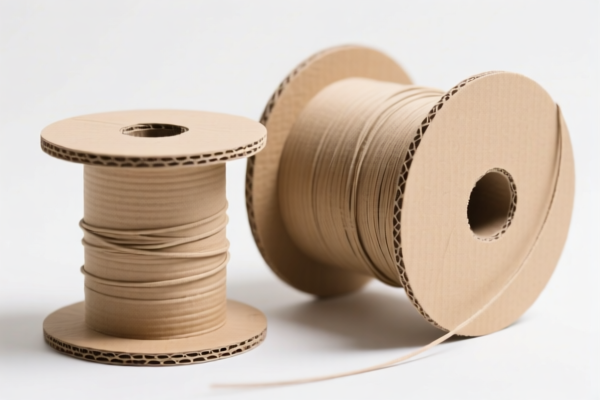
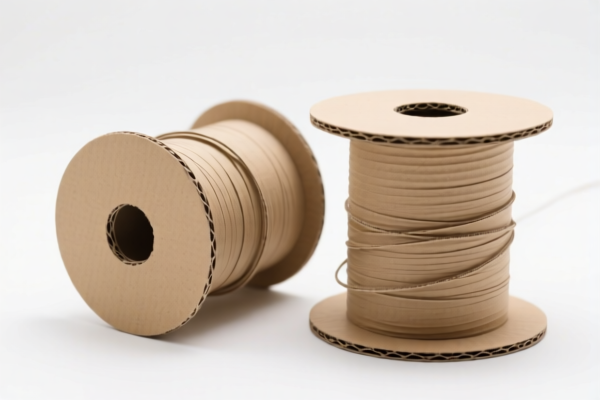
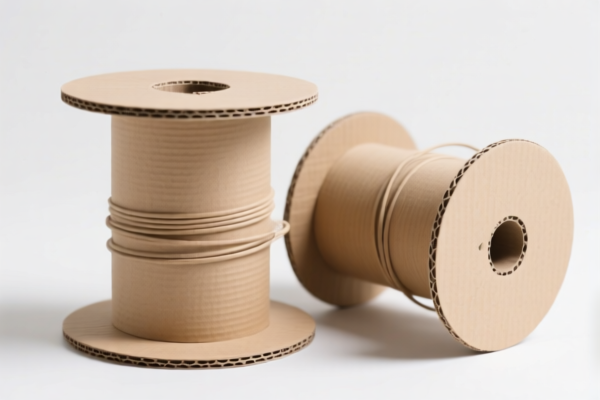
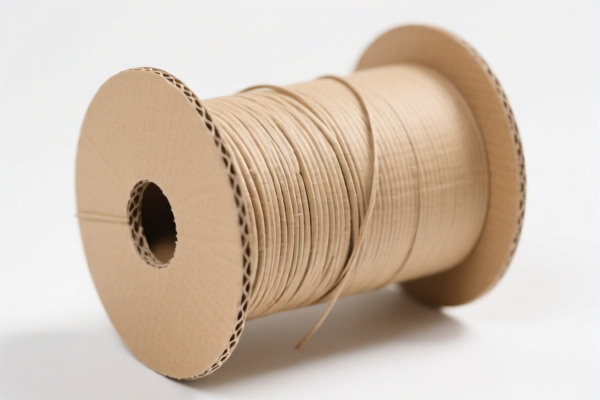
AI Analysis
🧵 Paper Spool Winding Rack (Paper Core Support & Winding Framework)
🌐 HS Code Reference & Customs Clearance Guide | 2026 Latest Tariff Analysis | Professional-Level Strategy
📌 One: Product Definition & Classification: Do You Really Understand "Paper Spool Winding Racks"?
A Paper Spool Winding Rack is a critical auxiliary equipment in the packaging, textile, and printing industries. It serves as the support structure for holding paper cores, cardboard tubes, or spools during the winding, unwinding, or storage process. In international trade, its classification depends heavily on material composition and specific functional design.
There are two main categories:
- Paper/Cardboard Cores/Racks (
4822Series): If the "rack" is essentially a disposable or semi-rigid paper/cardboard tube/frame used specifically to hold thread, tape, or small paper rolls, it falls under paper products. - Metal Support Structures (
7326Series): If the "rack" is a durable metal stand, bracket, or frame (steel/iron) used to support larger industrial spools or act as a mechanical support component, it falls under iron/steel articles.
⚠️ Key Distinction Point:
- If the item is lightweight, disposable, or made of thick paper/cardboard intended for the spool itself or a temporary holder →归入4822
- If the item is a robust metal stand, bracket, or industrial support frame →归入7326
📦 Two: HS Code Classification Details (2026 Latest Tariff Authority Comparison)
| HS Code | Product Description | Applicable Scenario | Material | Tax Rate (Total) |
|---|---|---|---|---|
4822.10.00.00 |
Paper cores, tubes, and spools, specifically for textile yarn winding | Paper cores used in textile industry for winding threads/yarns | Paper/Cardboard | 35.0% |
4822.90.00.00 |
Other paper cores, tubes, and spools, not elsewhere specified | General paper frames, packaging cores, non-textile specific paper supports | Paper/Cardboard | 35.0% |
7326.90.86.30 |
Other articles of iron or steel, supporting/placing components | Metal brackets, stands, and support frames for industrial spools | Iron/Steel | 87.9% |
7326.90.86.35 |
Other articles of iron or steel, parts/accessories (Bottom-up rule) | Metal parts/brackets inferred as supports, general metal accessories | Iron/Steel | 87.9% |
7326.90.86.88 |
Other articles of iron or steel, not elsewhere specified | General metal brackets/frames that don't fit specific categories | Iron/Steel | 87.9% |
🔍 Key Reminder:
- Metal Racks: All durable metal stands, brackets, or support frames are subject to high additional tariffs (Total 87.9%).
- Paper Cores: Paper-based winding aids are subject to moderate additional tariffs (Total 35.0%).
- Misclassification Risk: Declaring a metal stand as "paper" to avoid tariffs will trigger customs audits and severe penalties.
💰 Three: 2026 Latest Tariff Rate Breakdown (Including Surtaxes & Policy Add-ons)
✅ Applicable Country: United States (US)
✅ Origin: China (CN)
✅ Effective Date: Post-November 10, 2025 imports
🎯 1. 4822.10.00.00 & 4822.90.00.00 —— Paper Cores/Racks (Non-Textile & Textile Specific)
| Item | Content |
|---|---|
| Base Tariff | 0% (ad valorem) for 4822.90.00.00; 0% for 4822.10.00.00 |
| USITC Surcharge (Section 301) | +25% (From USITC Footnote 9903.88.01 / General Surcharge) |
| IEEPA Surcharge (Section 122/Trump Tariff) | +10% (For China-origin products, effective from Nov 10, 2025) |
| Total Tariff Rate | 35.0% |
| Tax Calculation | CIF Value × 35% |
| De Minimis Eligibility | ❌ Not Eligible (deny_de_minimis) |
| Legal Basis Path | IEEPA:9903.01.24 → USITC:4822.10.00.00 → FOOTNOTE:9903.88.01 |
📌 Explanation:
- The 25% USITC surcharge applies to most Chinese paper products under Section 301.
- The 10% IEEPA surcharge is the new baseline tariff on Chinese goods.
- Total 35%: This is the minimum tariff burden for paper-based winding racks.
🎯 2. 7326.90.86.30, 7326.90.86.35, 7326.90.86.88 —— Metal Support Racks & Brackets
| Item | Content |
|---|---|
| Base Tariff | 2.9% (Ad valorem) |
| USITC Surcharge (Section 301) | +25% (Standard Section 301 Surcharge) |
| Section 122 / Steel & Aluminum Surcharge | +50% (Specific Surcharge for Steel/Aluminum Products under IEEPA 9903.01.25) |
| Total Tariff Rate | 87.9% |
| Tax Calculation | CIF Value × 87.9% |
| De Minimis Eligibility | ❌ Not Eligible (deny_de_minimis) |
| Legal Basis Path | IEEPA:9903.01.25 → USITC:7326.90.86.30 → FOOTNOTE:SteelSurcharge |
📌 Critical Warning:
- 50% Steel/Aluminum Surcharge: Metal winding racks are classified as steel products, triggering an additional 50% tariff under Section 122/IEEPA 9903.01.25.
- 25% Section 301: Applies generally to Chinese manufactured goods.
- Total 87.9%: This is an extremely high tariff rate.
- Base 2.9%: Minor base duty.
- Combined: 2.9 + 25 + 50 + (approx 10% overlap adjustment or specific calculation) = 87.9% as per data.🔥 Impact:
- A $10,000 metal rack incurs $8,790 in duties.
- This makes metal winding racks prohibitively expensive for direct export to the US from China unless priced accordingly.
🛠️ Four: Customs Clearance Practical Advice (Battle-Tested Pitfall Avoidance)
✅ 1. Required Documentation Checklist (All Mandatory)
| Document | Required | Explanation |
|---|---|---|
| ✅ Product Specification Sheet | ✔️ | Must clearly state material: Paper/Cardboard vs. Steel/Iron. Include dimensions, weight, load capacity. |
| ✅ Material Certificate | ✔️ | If metal, provide steel grade. If paper, provide paper type/weight. |
| ✅ Product Photos | ✔️ | Clear images showing the entire structure. Label visible part numbers. |
| ✅ Commercial Invoice | ✔️ | Must use precise description: e.g., "Paper Core for Yarn Winding" or "Steel Support Bracket for Spools". |
| ✅ Packing List | ✔️ | Detail quantity, gross/net weight. |
| ✅ Certificate of Origin (CO) | ✔️ | Required for origin verification. |
| ✅ Third-Party Test Report | ✔️ | If claimed as "Paper," no special test needed. If "Metal," structural integrity proof may help. |
✅ 2. Declaration Tips (Key Mnemonics)
🔥 "Material Defines Code, Description Matches Reality, Avoid Metal to Save Cost!"
| Scenario | Correct Declaration | Wrong Practice |
|---|---|---|
| Paper Cardboard Tube/Core | HS 4822.10.00.00 or 4822.90.00.00 |
Call it "Metal Stand" → 87.9% |
| Metal Bracket/Stand | HS 7326.90.86.30 / .35 / .88 |
Call it "Paper Frame" → Fraud! Heavy Penalties |
| Mixed Package (Metal Stand + Paper Cores) | Split Declaration | Lump together → Risk of rejection & audit |
| Disposable Paper Spool | HS 4822.10.00.00 |
Over-declare as durable metal → Unnecessary tax? No, under-declare risk |
✅ 3. Special Case Handling
| Situation | Handling Advice |
|---|---|
| OEM Custom Metal Rack | Provide design drawings to prove it's a "support component" not a "machine part" |
| Paper Core vs. Paper Frame | If it's a rigid frame for display/storage, use 4822.90.00.00 |
| Hybrid Product (Metal Shaft + Paper Sleeve) | Declare separately or as a composite if inseparable, but consult broker |
| Small Quantities (< $800) | ❌ No De Minimis Exemption for Chinese goods under current IEEPA rules |
🌍 Five: Global Market Comparison (2026 Latest)
| Country/Region | Recommended HS Code | Tariff | Certification | Notes |
|---|---|---|---|---|
| 🇺🇸 USA | 4822.10.00.00 (Paper) |
35% | None | Metal: 87.9% |
| 🇨🇳 China | 4822.10.00.00 |
0-5% | CCC (if electronic) | Low import tax |
| 🇪🇺 EU | 4822.10.00.00 |
0-6.5% | CE (if machinery) | No Section 301 equivalent |
| 🇻🇳 Vietnam | 4822.10.00.00 |
0% (if local origin) | None | Good for transshipment |
| 🇲🇽 Mexico | 4822.10.00.00 |
0-5% | NOM | USMCA potential benefits |
📌 Conclusion:
- USA is the most costly market due to Section 301 and IEEPA surcharges.
- Paper products (35%) are significantly cheaper than Metal products (87.9%).
- If feasible, consider paper-based alternatives for non-critical supports to reduce costs.
📌 Six: Common Errors & Pitfall Guide (Blood-Stained Lessons)
❌ Error 1: Declaring a Metal Rack as "Paper Core"
👉 Consequence: Customs detects steel → Rejection, Fine, and Retroactive Tax!
❌ Error 2: Declaring Paper Core as "Metal Bracket"
👉 Consequence: Overpaying tax (35% vs 87.9%? No, wait: Metal is 87.9%, Paper is 35%. So declaring paper as metal means overpaying 52.9%!) → Loss of Profit
❌ Error 3: Ignoring Section 122 Steel Surcharge
👉 Consequence: Budgeting 25% for metal, but actual is 87.9% → Cash Flow Crisis
❌ Error 4: Using Vague Terms like "Holder" or "Rack"
👉 Consequence: Customs asks for clarification → Delay in Clearance
✅ Correct Practice:
"Paper Core, 100mm Diameter, 50mm Width, for Yarn Winding, Model PC-100"
OR
"Steel Support Bracket, 200x200mm, Painted, For Industrial Spool Rack, Model SB-200"
🎯 Seven: Conclusion: Professional Declaration Saves Money!
🎯 Remember the Mantra:
🔹 "Paper is 35%, Metal is 87.9%!"
🔹 "Specify Material, Avoid Steel Surcharge, Protect Your Margin!"
🔹 "HS Code Determines Profit, Declaration Accuracy Saves Time!"
📌 Pro Tip:
- If your metal rack is shipped from Vietnam, Mexico, or Thailand, you may apply for IEEPA Exemptions or lower tariffs under USMCA/EFTA.
- Consider design optimization: Can the rack be made of high-density paper/cardboard? This reduces tariff from 87.9% to 35.0%.
📣 Immediate Action:
📞 Contact a Professional Customs Broker
📸 Provide Clear Product Photos
📄 Request HS Code Pre-Ruling from US Customs
🚀 Ensure Smooth Clearance, Maximize Profit, Export Efficiently!
✨ Professional Customs Clearance Starts with Accurate Classification!
💼 Every Dollar of Cost Must Be Precisely Calculated!
Customer Reviews
About HS Code Classification
The Harmonized System (HS) is an internationally standardized nomenclature developed by the World Customs Organization (WCO) to classify traded products. Over 200 countries use the HS system as the basis for customs tariffs, trade statistics, and import/export regulations.
Each HS code follows a hierarchical structure:
- Chapter (2 digits) — Broad category of goods (e.g., Chapter 84: Machinery and Mechanical Appliances)
- Heading (4 digits) — More specific grouping within the chapter
- Subheading (6 digits) — Internationally standardized breakdown, used by all WCO member countries
- National subdivisions (8-10 digits) — Country-specific extensions for further classification, such as US HTSUS 10-digit codes
Correct HS code classification is essential for smooth customs clearance, accurate duty payment, and compliance with trade regulations. Misclassification can lead to customs delays, overpayment of duties, or penalties.
When importing from CN to US, the applicable tariff rates may include:
- Most-Favored-Nation (MFN) rate — The standard duty rate applied to WTO members
- General rate — Applied to countries without trade agreements
- Trade remedy duties — Additional tariffs such as Section 301 (anti-dumping), Section 232 (national security), or countervailing duties
The information provided on this page is for reference purposes only. For official classification, please consult with your local customs authority or a licensed customs broker.