Paper Surface Strength Agent
CN → US| HS Code | Tariff Rate | Origin | Destination | Doc |
|---|---|---|---|---|
| 3809925000 | 41.0% | CN | US | Official Doc |
| 3809921000 | 41.5% | CN | US | Official Doc |
| 2933798500 | 41.5% | CN | US | Official Doc |
| 3914006000 | 38.9% | CN | US | Official Doc |
| 2933999701 | 16.5% | CN | US | Official Doc |
Product Images

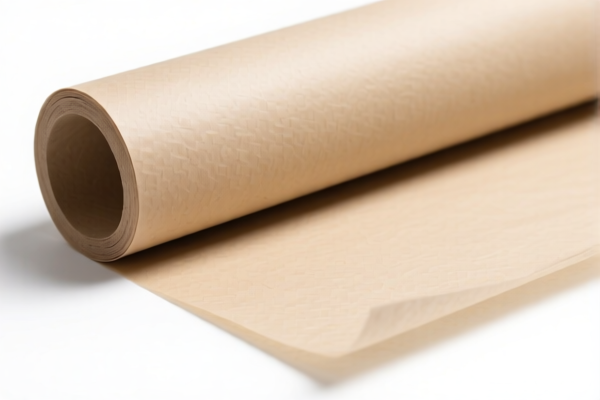

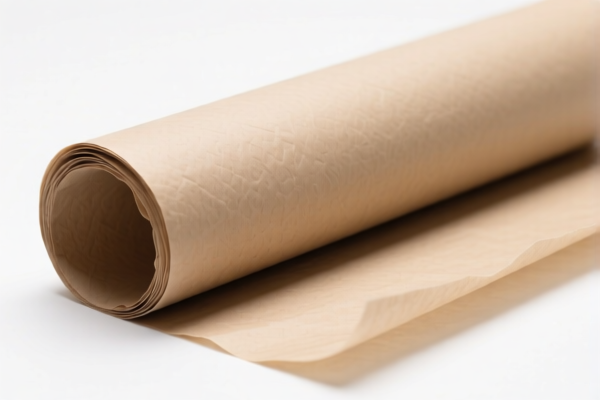
AI Analysis
🏭 Paper Surface Strength Agent (Surface Sizing Agent)
🌐 HS Code Reference & Customs Clearance Guide | 2026 Latest Tariff Analysis | Professional Clearance Strategy
📌 I. Product Definition & Classification: What is a "Paper Surface Strength Agent"?
A Paper Surface Strength Agent (often referred to as a Surface Sizing Agent or Surface Strengthening Agent) is a specialized chemical additive used in the papermaking industry. Its primary function is to improve the surface strength, abrasion resistance, and printability of paper or cardboard by forming a film on the paper surface.
Key Characteristics: * Industry: Paper & Paperboard Manufacturing. * Function: Surface treatment/finishing aid (not a bulk additive mixed into the pulp). * Chemical Nature: Typically polymers (e.g., starch derivatives, synthetic polymers like PVA, or nitrogen-containing heterocyclic compounds).
⚠️ Critical Distinction:
- If the product is explicitly a chemical preparation for surface sizing in papermaking → It falls under HS 3809 (Finishing Agents).
- If the product is a raw chemical compound (e.g., pure organic heterocyclic chemical) not yet formulated as a specific industrial aid → It may fall under HS 2933 (Heterocyclic Compounds).
- If the product is a pure polymer in primary form → It may fall under HS 3914 (Polymers).
📦 II. HS Code Classification Details (2026 Latest Tariff Authority Comparison)
Based on the provided data, here are the 5 potential HS Codes and the rationale for each classification:
| HS Code | Product Description | Application/Logic | Total Tax Rate* |
|---|---|---|---|
3809.92.50.00 |
Paper Surface Sizing Agents | ✅ Best Fit: Explicitly matches "Surface sizing agent" for the papermaking industry. Matches usage and chemical nature of finishing agents. | 41.0% |
3809.92.10.00 |
Other Finishing Agents for Papermaking | ✅ Strong Fit: "Paper Surface" matches the paper industry; "Strength Agent" is a chemical preparation. Fits the definition of "finishing agents, dye carriers, etc." | 41.5% |
2933.79.85.00 |
Heterocyclic Compounds with Nitrogen Only | 🔍 Chemical Basis: Inferred as a synthetic organic compound (e.g., lactam derivative). Matches HS 2933 logic for nitrogen heterocyclic structures. | 41.5% |
3914.00.60.00 |
Other Ion-Exchange Agents / Polymers | 🔍 Polymer Basis: Inferred as a polymer-based chemical. Matches HS 3914 logic for polymers in primary form. No conflict with "ion-exchange" material logic. | 38.9% |
2933.99.97.01 |
Other Heterocyclic Compounds (Fallback) | 🔍 Chemical Fallback: Based on material inference, it’s a chemical additive with nitrogen heterocyclic structures. Fits the "catch-all" logic for heterocyclic compounds. | 16.5% |
🔍 Key Takeaway:
- The most accurate classification is likely HS 3809.92.50.00 because it directly addresses the industrial application (Papermaking) and function (Surface Sizing).
- HS 2933 codes are applicable if the product is declared as a raw chemical material rather than a formulated industrial aid.
- HS 3914 is less common for surface agents unless the product is purely a polymer in primary form without other functional additives.
💰 III. 2026 Latest Tariff Rate Breakdown (Including Surtaxes & Policy Add-ons)
✅ Applicable Country: United States (US)
✅ Country of Origin: China (CN)
✅ Effective Date: November 10, 2025 (and subsequent imports)
🎯 1. 3809.92.50.00 — Paper Surface Sizing Agents
| Item | Details |
|---|---|
| Base Tariff | 6.0% (Ad Valorem) |
| USITC Surtax (Section 301) | +25.0% |
| IEEPA Surtax (Section 122) | +10.0% (Specific to China) |
| Total Effective Rate | 41.0% |
| Tax Calculation | CIF Value × 41.0% |
| De Minimis Exemption | ❌ Not Eligible (Subject to full duties) |
| Legal Basis Path | IEEPA:9903.01.25 → USITC:3809.92.50.00 → FOOTNOTE:9903.88.01 |
📌 Explanation:
- The 6.0% base rate applies to "finishing agents" for papermaking.
- The 25% Section 301 surtax is applied to most Chinese chemical products.
- The 10% IEEPA surtax is an additional penalty on Chinese imports.
- Total 41.0% is a high tariff burden. Proper classification is critical to avoid overpayment or misclassification penalties.
🎯 2. 3809.92.10.00 — Other Finishing Agents for Papermaking
| Item | Details |
|---|---|
| Base Tariff | 6.5% |
| USITC Surtax (Section 301) | +25.0% |
| IEEPA Surtax (Section 122) | +10.0% |
| Total Effective Rate | 41.5% |
| Tax Calculation | CIF Value × 41.5% |
| De Minimis Exemption | ❌ Not Eligible |
| Legal Basis Path | IEEPA:9903.01.25 → USITC:3809.92.10.00 → FOOTNOTE:9903.88.01 |
📌 Note:
- This code is slightly more expensive (0.5% higher) than3809.92.50.00.
- Use this only if the product does not fit the specific "surface sizing" description but is still a finishing agent for paper.
🎯 3. 2933.79.85.00 — Heterocyclic Compounds (Nitrogen Only)
| Item | Details |
|---|---|
| Base Tariff | 6.5% |
| USITC Surtax (Section 301) | +25.0% |
| IEEPA Surtax (Section 122) | +10.0% |
| Total Effective Rate | 41.5% |
| Tax Calculation | CIF Value × 41.5% |
| De Minimis Exemption | ❌ Not Eligible |
| Legal Basis Path | IEEPA:9903.01.25 → USITC:2933.79.85.00 → FOOTNOTE:9903.88.01 |
📌 Risk Warning:
- If customs officials determine the product is a finished industrial aid (not a raw chemical), this classification is incorrect.
- Misclassification can lead to back duties, penalties, and shipment delays.
🎯 4. 3914.00.60.00 — Polymers / Ion-Exchange Agents
| Item | Details |
|---|---|
| Base Tariff | 3.9% |
| USITC Surtax (Section 301) | +25.0% |
| IEEPA Surtax (Section 122) | +10.0% |
| Total Effective Rate | 38.9% |
| Tax Calculation | CIF Value × 38.9% |
| De Minimis Exemption | ❌ Not Eligible |
| Legal Basis Path | IEEPA:9903.01.25 → USITC:3914.00.60.00 → FOOTNOTE:9903.88.01 |
📌 Strategy:
- This is the lowest total tariff (38.9%) among the high-tax options.
- However, it is only valid if the product is strictly a polymer in primary form and not formulated as a specific "sizing agent."
- Risk: High risk of misclassification if the product is clearly a formulated chemical aid.
🎯 5. 2933.99.97.01 — Other Heterocyclic Compounds (Fallback)
| Item | Details |
|---|---|
| Base Tariff | 6.5% |
| USITC Surtax (Section 301) | +0.0% (Exempt?) |
| IEEPA Surtax (Section 122) | +10.0% |
| Total Effective Rate | 16.5% |
| Tax Calculation | CIF Value × 16.5% |
| De Minimis Exemption | ❌ Not Eligible |
| Legal Basis Path | IEEPA:9903.01.25 → USITC:2933.99.97.01 → FOOTNOTE:9903.88.01 |
📌 Critical Note:
- This code has the lowest total tariff (16.5%) because it appears to be exempt from the 25% Section 301 surtax (possibly due to a specific exclusion or different footnote).
- However, this is a high-risk classification. It is a "catch-all" for heterocyclic compounds.
- If the product is a papermaking aid, customs may reclassify it to HS 3809, leading to back taxes of ~25% (difference between 16.5% and 41.0%).
- Only use if you have strong chemical evidence that the product is not primarily a finishing agent but a generic chemical intermediate.
🛠️ IV. Customs Clearance Practical Advice (Real-World Pitfall Guide)
✅ 1. Required Documentation Checklist (Non-Negotiable)
| Document | Required | Explanation |
|---|---|---|
| ✅ Product Specification Sheet | ✔️ | Must detail chemical composition, concentration, and primary use (Papermaking Surface Sizing). |
| ✅ Safety Data Sheet (SDS) | ✔️ | Must align with HS Code classification (e.g., if HS 2933, SDS should emphasize chemical structure; if HS 3809, emphasize industrial application). |
| ✅ Product Photos | ✔️ | Clear images of packaging, labels, and any technical diagrams. |
| ✅ Commercial Invoice | ✔️ | Must clearly state: "Paper Surface Strength Agent (Surface Sizing Agent) for Papermaking Industry." |
| ✅ Certificate of Origin (CO) | ✔️ | To confirm China origin and apply appropriate surtaxes. |
| ✅ Packing List | ✔️ | Ensure consistency with invoice. |
✅ 2. Declaration Strategy (Key Principles)
🔥 "Be Specific, Be Accurate, Avoid Ambiguity!"
| Scenario | Correct Declaration | Wrong Declaration | Consequence |
|---|---|---|---|
| Formulated Surface Agent | 3809.92.50.00 - "Surface Sizing Agent for Papermaking" |
"Chemical Additive" or "Polymer" | High risk of reclassification to HS 3809 with penalties. |
| Raw Chemical Material | 2933.79.85.00 - "Heterocyclic Compound, Pure Form" |
"Paper Sizing Agent" | Misleading; customs may suspect it’s a finished product. |
| Polymer Resin | 3914.00.60.00 - "Polymer in Primary Form" |
"Surface Strength Agent" | Risk of rejection if not clearly a raw polymer. |
| Low-Tariff Fallback | 2933.99.97.01 - "Other Heterocyclic Compound" |
"Paper Chemical" | High Audit Risk. Only use if chemically defensible. |
✅ 3. Special Situation Handling
| Situation | Handling Advice |
|---|---|
| OEM Custom Product | Provide client order + technical formula. Avoid generic names like "Chemical A." |
| Mixed Product (Agent + Carrier) | Declare as "Surface Sizing Agent" (HS 3809). Do not split into components. |
| Chemical vs. Industrial Aid | If the product is pre-formulated for papermaking, HS 3809 is mandatory. Do not try to classify as raw chemical to save taxes. |
| Dispute on Tariff Rate | If declared as HS 2933 (16.5%) but customs insists on HS 3809 (41.0%), be prepared to pay the difference. Pre-ruling is highly recommended. |
🌍 V. Global Market Customs Comparison (2026 Latest)
| Country/Region | Recommended HS Code | Base Tariff | Surtax (China) | Total Tax | Notes |
|---|---|---|---|---|---|
| 🇺🇸 USA | 3809.92.50.00 |
6.0% | +35% (301 + 122) | 41.0% | Highest duty burden. |
| 🇨🇳 China | 3809.92.50.00 |
6.0% | 0% | 6.0% | No additional surtaxes. |
| 🇪🇺 EU | 3809.92.50.00 |
4.0% | 0% | 4.0% | Favorable for Chinese exports. |
| 🇬🇧 UK | 3809.92.50.00 |
4.0% | 0% | 4.0% | Post-Brexit tariff aligned with EU. |
| 🇯🇵 Japan | 3809.92.50.00 |
3.9% | 0% | 3.9% | Low duty, but requires JIS certification. |
📌 Conclusion:
- USA is the most costly market for this product due to Section 301 and IEEPA surtaxes.
- EU/UK/Japan are significantly more favorable.
- Consider supply chain diversification (e.g., produce in Vietnam or Mexico) if exporting to the US to avoid high tariffs.
📌 VI. Common Errors & Pitfall Guide (Lessons from Experience)
❌ Error 1: Declaring "Surface Strength Agent" as a generic "Chemical" without specifying papermaking use.
👉 Result: Customs may classify under HS 2933 or 3809, leading to delays and audits.
❌ Error 2: Using HS 2933.99.97.01 (16.5%) to avoid higher duties, but providing insufficient chemical evidence.
👉 Result: Customs reclassifies to HS 3809 (41.0%), resulting in back taxes + penalties.
❌ Error 3: Failing to provide SDS or technical data.
👉 Result: Customs cannot verify classification → Shipment held for inspection.
❌ Error 4: Splitting a single product into multiple HS Codes (e.g., polymer + chemical).
👉 Result: Complex clearance, higher administrative costs, and potential misclassification.
✅ Correct Approach:
"Paper Surface Strength Agent (Surface Sizing Agent) for Papermaking Industry. Chemical Formula: [Provide]. Primary Use: Surface Treatment of Paper. HS Code: 3809.92.50.00."
🎯 VII. Conclusion: Professional Classification, Cost Optimization, Risk Mitigation
🎯 Key Principles:
🔹 "Function Dictates Code": If it’s a finishing aid for paper, HS 3809 is the safest and most accurate choice.
🔹 "Tax Difference is Significant": 16.5% vs. 41.0% is a 24.5% gap. Do not gamble without solid chemical justification.
🔹 "Pre-Ruling is Power": Apply for an Advance Ruling from US Customs (CBP) to lock in the HS Code and tax rate.
📌 Pro Tip:
If your product is produced in Vietnam, Mexico, or Thailand, you may qualify for IEEPA exemption or lower Section 301 rates.
Consider restructuring your supply chain to optimize US import costs.
📣 Immediate Action:
📞 Contact a professional customs broker.
📄 Provide full technical data and SDS.
🚀 Apply for an Advance Ruling to secure the correct HS Code and avoid post-import audits.
✨ Professional Clearance Starts with Accurate Classification!
💼 Every percentage point of tax difference impacts your bottom line!
Customer Reviews
About HS Code Classification
The Harmonized System (HS) is an internationally standardized nomenclature developed by the World Customs Organization (WCO) to classify traded products. Over 200 countries use the HS system as the basis for customs tariffs, trade statistics, and import/export regulations.
Each HS code follows a hierarchical structure:
- Chapter (2 digits) — Broad category of goods (e.g., Chapter 84: Machinery and Mechanical Appliances)
- Heading (4 digits) — More specific grouping within the chapter
- Subheading (6 digits) — Internationally standardized breakdown, used by all WCO member countries
- National subdivisions (8-10 digits) — Country-specific extensions for further classification, such as US HTSUS 10-digit codes
Correct HS code classification is essential for smooth customs clearance, accurate duty payment, and compliance with trade regulations. Misclassification can lead to customs delays, overpayment of duties, or penalties.
When importing from CN to US, the applicable tariff rates may include:
- Most-Favored-Nation (MFN) rate — The standard duty rate applied to WTO members
- General rate — Applied to countries without trade agreements
- Trade remedy duties — Additional tariffs such as Section 301 (anti-dumping), Section 232 (national security), or countervailing duties
The information provided on this page is for reference purposes only. For official classification, please consult with your local customs authority or a licensed customs broker.