Paper Takeout Tray
CN → US| HS Code | Tariff Rate | Origin | Destination | Doc |
|---|---|---|---|---|
| 4823610020 | 35.0% | CN | US | Official Doc |
| 4823690040 | 35.0% | CN | US | Official Doc |
| 4819100020 | 35.0% | CN | US | Official Doc |
| 4819200020 | 35.0% | CN | US | Official Doc |
Product Images
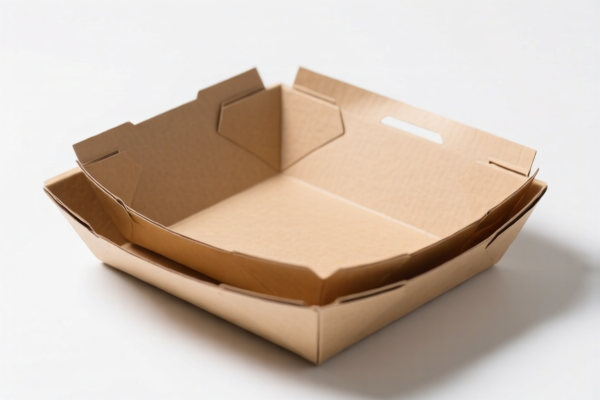
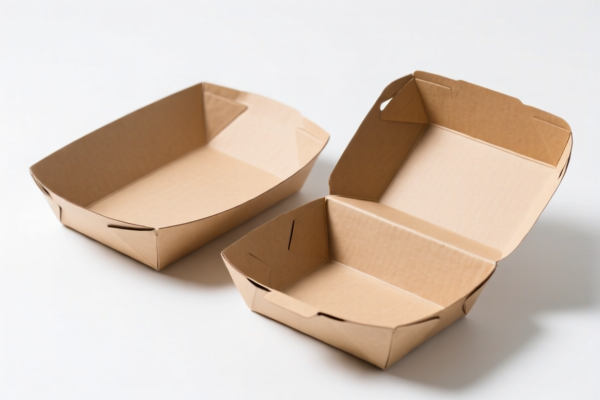
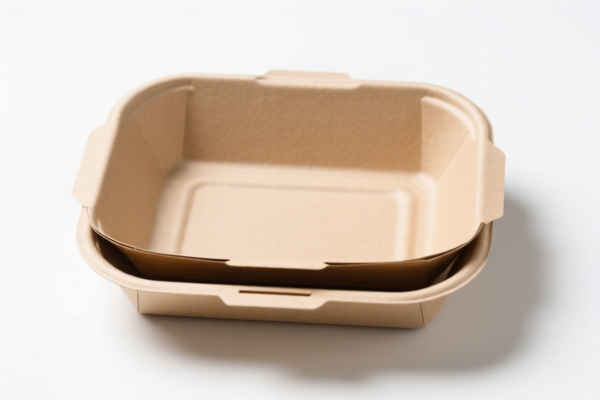
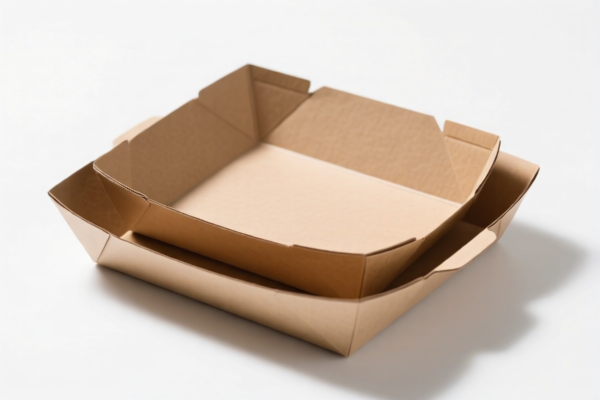
AI Analysis
📦 Paper Takeout Tray (Sanitary Food & Beverage Containers / Trays)
🌐 HS Code Reference & Customs Clearance Guide | 2026 Latest Tariff Analysis | Professional Clearance Strategy
📌 I. Product Definition & Classification: Do You Really Know What "Paper Takeout Tray" Is?
Paper takeout trays are disposable or semi-disposable packaging solutions used primarily in the food service industry for serving food, beverages, or dry goods. In international trade, these products are not a single unified entity but are strictly categorized based on material structure (corrugated vs. non-corrugated) and manufacturing form (folded vs. molded). Misclassification is the most common cause of customs delays and tariff overpayments.
1. Corrugated Paper Cartons/Boxes:
Made from multi-layered paperboard with a fluted inner layer, providing high strength for stacking and transport. Often used for bulk takeout, pizza boxes, or heavy-duty meal kits.
2. Folding Cartons (Non-Corrugated):
Made from single-layer solid board or paperboard, folded into shapes. Used for lighter items, sushi boxes, or standard fast-food containers.
3. Molded Fiber Trays (Bamboo/Pulp):
Made from pulp or bamboo fibers, molded into specific shapes (round nested, square, etc.). Often marketed as "eco-friendly" or "biodegradable" alternatives to plastic.
⚠️ Critical Distinction:
- If the item is corrugated (has the wavy inner layer) → It is a Carton/Box (HS 4819.10).
- If the item is folded but not corrugated → It is a Folding Carton (HS 4819.20).
- If the item is molded from pulp/bamboo into a tray shape → It is a Paper Tray (HS 4823.61 or 4823.69).
📦 II. HS Code Classification Details (2026 Latest Tariff Authoritative Comparison)
| HS Code | Product Description | Application Scenario | Key Feature |
|---|---|---|---|
4819.10.00.20 |
Cartons, boxes, cases of corrugated paper or paperboard; Sanitary food and beverage containers | Pizza boxes, bulk takeout containers, heavy-duty food packaging | ✅ Corrugated (Wavy inner layer) |
4819.20.00.20 |
Folding cartons, boxes and cases of non-corrugated paper or paperboard; Sanitary food and beverage containers | Sushi boxes, cake boxes, lightweight food carriers | ❌ Non-corrugated (Solid board) |
4823.61.00.20 |
Trays, dishes, plates, cups of paper/paperboard: Of bamboo; Cups and round nested food containers | Eco-friendly bamboo fiber trays, molded fiber bowls, round nested containers | ✅ Bamboo/Molded Pulp |
4823.69.00.40 |
Trays, dishes, plates, cups of paper/paperboard: Other (Non-bamboo, non-specified) | Standard molded paper pulp trays, generic fiber trays not made of bamboo | ❌ Other Fiber/Pulp (Not Bamboo) |
🔍 Key Reminder:
- "Corrugated" vs. "Folding": If you press the side of the box and it has visible flutes, it is 4819.10. If it is smooth and stiff like a cereal box, it is 4819.20.
- "Bamboo" vs. "Other Fiber": If the material is explicitly bamboo fiber, it qualifies for 0% Additional Tax (4823.61). If it is generic paper pulp or mixed fiber, it may fall under 4823.69 with a 25% additional tax.
💰 III. 2026 Latest Tariff Rate Details (Including Additional Taxes)
✅ Applicable Country: United States (US)
✅ Country of Origin: China (CN)
✅ Effective Date: Post-2025 Policy Implementation
🎯 1. 4819.10.00.20 —— Corrugated Paper Cartons/Boxes (Sanitary Food Containers)
| Item | Detail |
|---|---|
| Basic Duty Rate | 0% (ad valorem) |
| USITC Additional Tax | +25% (Section 301 Tariff) |
| Total Tax Rate | 25.0% |
| Tax Calculation | CIF Value × 25% |
| De Minimis Eligibility | ❌ Not Eligible (High risk for low-value shipments if not consolidated properly) |
| Legal Basis Path | USITC:4819.10.00.20 → FOOTNOTE:301 |
📌 Explanation:
- Corrugated packaging is heavily targeted due to its high volume in trade.
- Even though the basic duty is 0%, the 25% additional tax makes the landed cost significantly higher.
- Customs Warning: Ensure the description clearly states "Corrugated" and "Sanitary Food Container" to avoid being miscategorized.
🎯 2. 4819.20.00.20 —— Folding Cartons (Non-Corrugated)
| Item | Detail |
|---|---|
| Basic Duty Rate | 0% |
| USITC Additional Tax | +25% |
| Total Tax Rate | 25.0% |
| Tax Calculation | CIF Value × 25% |
| De Minimis Eligibility | ❌ Not Eligible |
| Legal Basis Path | USITC:4819.20.00.20 → FOOTNOTE:301 |
📌 Note:
- Same tax burden as corrugated boxes.
- Common for Sushi boxes, Noodle bowls, and Pastry boxes.
- Do not confuse with "Folding Cartons for non-food items" which might have different sub-headings, but sanitary food containers are explicitly listed here.
🎯 3. 4823.61.00.20 —— Trays of Bamboo (Eco-Friendly)
| Item | Detail |
|---|---|
| Basic Duty Rate | 0% |
| USITC Additional Tax | +0% (Exempt from Section 301 Additional Tax) |
| Total Tax Rate | 0.0% |
| Tax Calculation | CIF Value × 0% |
| De Minimis Eligibility | ✅ Potentially Eligible (If value < $800 and properly declared) |
| Legal Basis Path | USITC:4823.61.00.20 → Tax Exemption |
📌 Strategic Advantage:
- Bamboo fiber products enjoy 0% additional tax!
- This is a major cost-saving opportunity for exporters.
- Requirement: The material must be confirmed as Bamboo. If it is "paper pulp" or "bagasse" (sugarcane fiber) without bamboo content, it does NOT qualify for this rate.
🎯 4. 4823.69.00.40 —— Other Paper/Pulp Trays (Non-Bamboo)
| Item | Detail |
|---|---|
| Basic Duty Rate | 0% |
| USITC Additional Tax | +25% |
| Total Tax Rate | 25.0% |
| Tax Calculation | CIF Value × 25% |
| De Minimis Eligibility | ❌ Not Eligible |
| Legal Basis Path | USITC:4823.69.00.40 → FOOTNOTE:301 |
📌 Warning:
- Generic paper pulp trays, bagasse trays, or recycled fiber trays fall here.
- Despite being "eco-friendly," they are not exempt from the 25% tariff unless specifically made of bamboo.
- Many exporters mistakenly label generic pulp trays as "bamboo" to avoid taxes, which constitutes fraud and can lead to severe penalties.
🛠️ IV. Customs Clearance Practical Advice (Battle-Tested Pitfall Guide)
✅ 1. Preparation Checklist (Non-Negotiable)
| Document | Must Provide | Explanation |
|---|---|---|
| ✅ Material Composition Certificate | ✔️ | Must specify: Corrugated, Folding Board, Bamboo Fiber, or Paper Pulp. This is the #1 factor for HS Code. |
| ✅ Product Photos | ✔️ | Clear shots showing cross-section (to prove corrugation) and texture (to prove bamboo vs. pulp). |
| ✅ Commercial Invoice | ✔️ | Must include: "Paper Takeout Tray," Material (e.g., "100% Bamboo Fiber"), Use (e.g., "For Food Service"). |
| ✅ Packing List | ✔️ | Show quantity, weight, and dimensions. |
| ✅ Third-Party Test Report | ✔️ | FDA/LFGB compliance for food contact safety (if applicable). |
✅ 2. Declaration Tips (Key Mnemonic)
🔥 “Corrugated 25%, Folding 25%, Bamboo 0%, Other Pulp 25%!”
| Scenario | Correct HS Code | Common Mistake | Consequence |
|---|---|---|---|
| Pizza Box / Bulk Takeout | 4819.10.00.20 |
Misdeclare as 4819.20 |
No tax saving, but risk of audit |
| Sushi Box / Cake Box | 4819.20.00.20 |
Misdeclare as 4819.10 |
No tax saving, but risk of audit |
| Eco-Friendly Bamboo Tray | 4823.61.00.20 |
Misdeclare as 4823.69.00.40 |
Pay 25% extra tax unnecessarily! |
| Bagasse/Pulp Tray | 4823.69.00.40 |
Misdeclare as 4823.61.00.20 |
Customs Fraud! Penalty + Back Taxes! |
✅ 3. Special Case Handling
| Situation | Handling Advice |
|---|---|
| Mixed Containers (Bamboo + Paper) | If a box contains both bamboo trays and paper cups, declare separately if possible. If mixed, the higher tax rate (25%) may apply to the whole batch if not properly segregated. |
| Coated vs. Uncoated | Both corrugated and folding cartons for food are often coated with PE or PLA. This does not change the HS Code under the provided data, but must be declared for safety compliance. |
| Sample Shipments | Even for samples, if classified under 4819 or 4823.69, the 25% tax may still apply. Use 4823.61 (Bamboo) if possible to save costs. |
🌍 V. Global Market Comparison (2026 Latest)
| Country/Region | Recommended HS Code | Tariff Rate (China Origin) | Remarks |
|---|---|---|---|
| 🇺🇸 USA | 4819.10.00.20 / 4819.20.00.20 |
25% | High tariff burden. |
| 🇺🇸 USA | 4823.61.00.20 (Bamboo) |
0% | Strategic Advantage |
| 🇪🇺 EU | Similar codes | 0-4% | No Section 301 equivalent, but CBAM (Carbon Border Tax) may apply to paper products in future. |
| 🇨🇳 China (Import) | 4819.10 / 4819.20 |
0-5% | Low import duty, but focus on domestic consumption. |
📌 Conclusion:
- USA is the only major market with 25% additional tariffs on these paper products.
- Bamboo fiber products are the only "winners" with 0% additional tax.
- Paper pulp/bagasse products suffer the same 25% tax as traditional paper boxes.
📌 VI. Common Errors & Pitfall Guide (Blood & Tears Lessons)
❌ Mistake 1: Calling all "Eco-Friendly Trays" "Bamboo" to get 0% tax.
👉 Result: Customs lab test proves it's paper pulp. Fine + 25% Back Tax + Blacklist Risk.
❌ Mistake 2: Declaring "Corrugated Box" as "Folding Carton" to confuse customs.
👉 Result: Both have 25% tax. No savings, but delayed clearance due to inspection.
❌ Mistake 3: Ignoring the "Sanitary Food Container" clause.
👉 Result: If used for food, it must be classified under the sanitary sub-headings (...20 or ...40). Misclassification can lead to FDA compliance issues in addition to tariff issues.
✅ Correct Declaration Example:
"Paper Takeout Tray, 100% Bamboo Fiber, Molded, Round Shape, for Food Service Use. HS Code: 4823.61.00.20. Country of Origin: China."
🎯 VII. Conclusion: Professional Declaration Saves Money!
🎯 Remember the Mnemonic:
🔹 "Bamboo is 0%, Paper is 25%. Don't lie about material, or you'll lose big money!"
🔹 "Corrugated vs. Folding doesn't change tax rate, but changes HS Code. Get it right!"
📌 Pro Tip:
If you are exporting to the US and your product is Bamboo Fiber, ensure your Bill of Materials (BOM) and Supplier Declarations explicitly state "100% Bamboo" or "Bamboo Pulp". Generic terms like "Plant Fiber" are rejected by US Customs.
📣 Action Required:
📞 Verify material composition with your factory.
🚀 If not bamboo, consider redesigning with bamboo content to save 25% in tariffs.
💼 Accurate classification is not just compliance; it's profit optimization.
✨ Professional Clearance, Starting with Precise Classification!
💼 Every dollar saved in tariffs is pure profit!
Customer Reviews
About HS Code Classification
The Harmonized System (HS) is an internationally standardized nomenclature developed by the World Customs Organization (WCO) to classify traded products. Over 200 countries use the HS system as the basis for customs tariffs, trade statistics, and import/export regulations.
Each HS code follows a hierarchical structure:
- Chapter (2 digits) — Broad category of goods (e.g., Chapter 84: Machinery and Mechanical Appliances)
- Heading (4 digits) — More specific grouping within the chapter
- Subheading (6 digits) — Internationally standardized breakdown, used by all WCO member countries
- National subdivisions (8-10 digits) — Country-specific extensions for further classification, such as US HTSUS 10-digit codes
Correct HS code classification is essential for smooth customs clearance, accurate duty payment, and compliance with trade regulations. Misclassification can lead to customs delays, overpayment of duties, or penalties.
When importing from CN to US, the applicable tariff rates may include:
- Most-Favored-Nation (MFN) rate — The standard duty rate applied to WTO members
- General rate — Applied to countries without trade agreements
- Trade remedy duties — Additional tariffs such as Section 301 (anti-dumping), Section 232 (national security), or countervailing duties
The information provided on this page is for reference purposes only. For official classification, please consult with your local customs authority or a licensed customs broker.