Paper Towel Holder
CN → US| HS Code | Tariff Rate | Origin | Destination | Doc |
|---|---|---|---|---|
| 3924104000 | 13.4% | CN | US | Official Doc |
| 4420110030 | 13.2% | CN | US | Official Doc |
| 4420110010 | 13.2% | CN | US | Official Doc |
| 3924905650 | 20.9% | CN | US | Official Doc |
| 7323999030 | 88.4% | CN | US | Official Doc |
Product Images
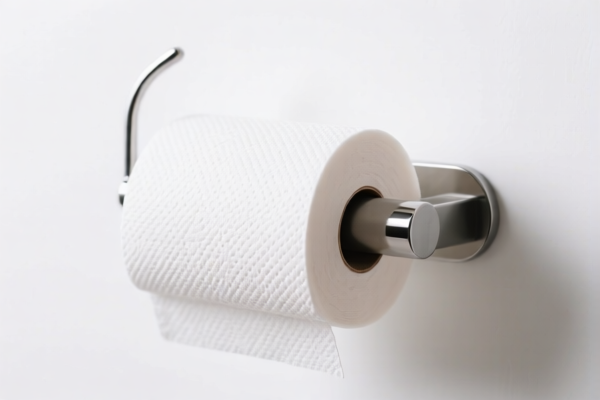
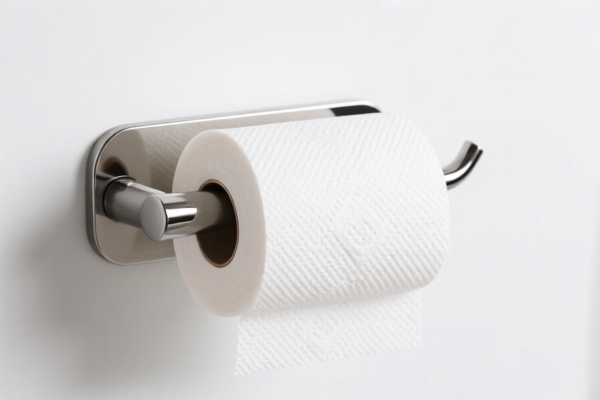
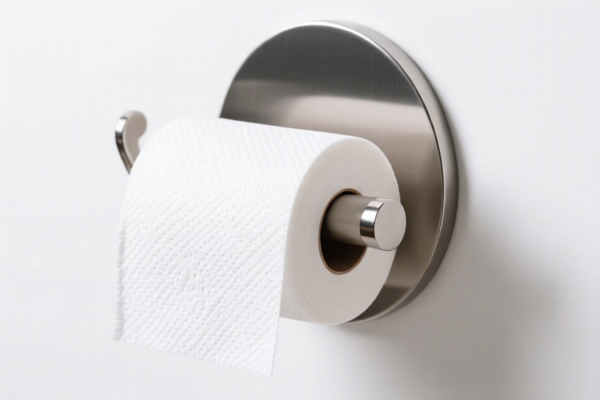
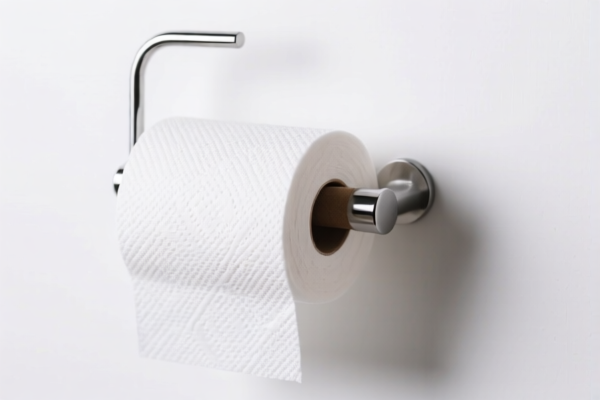
AI Analysis
🏠 Paper Towel Holder (Kitchen Utensils & Accessories)
🌐 HS Code Reference & Customs Clearance Guide | 2026 Latest Tariff Analysis | Professional Clearance Strategy
📌 I. Product Definition & Classification: Do You Truly Understand "Paper Towel Holders"?
Paper towel holders are essential kitchen accessories designed to hold rolls of paper towels. In international trade, classification is strictly determined by the material of the holder. Incorrect material declaration can lead to significant tariff discrepancies, especially under current US trade policies (Section 301 and Section 122).
There are four primary material categories: 1. Plastic Holders: Most common, lightweight, molded plastic. 2. Wooden/Bamboo Holders: Natural materials, often treated or lacquered. 3. Metal Holders: Stainless steel, aluminum, copper, or other metal alloys. 4. Plastic Accessories: Parts or components made of plastic, not the complete holder.
⚠️ Key Distinction Point: - If the product is a complete unit made of plastic → Classified under 3924. - If the product is a complete unit made of wood/bamboo → Classified under 4420. - If the product is made of metal → Classified under 7323. - If it is a part/component of plastic → Classified under 3924.90.
📦 II. HS Code Classification Details (2026 Latest Tariff Authority Comparison)
Based on the provided data, here are the specific HS Codes and their corresponding tariff structures. Note that all rates include a 10% Section 122 Duty (likely referring to recent US administrative actions) and applicable Section 301 tariffs.
| HS Code | Product Description | Material | Total Tariff Rate | Tax Breakdown |
|---|---|---|---|---|
3924.10.40.00 |
Plastic Kitchen Paper Towel Holders | Plastic | 13.4% | Base: 3.4% Section 301: 0.0% Sec 122: 10% |
4420.11.00.30 |
Wooden/Bamboo Kitchen Paper Towel Holders | Wood/Bamboo | 13.2% | Base: 3.2% Section 301: 0.0% Sec 122: 10% |
4420.11.00.10 |
Wooden/Bamboo Paper Towel Holder Accessories | Wood/Bamboo | 13.2% | Base: 3.2% Section 301: 0.0% Sec 122: 10% |
3924.90.56.50 |
Other Plastic Kitchen Paper Towel Holders | Plastic | 20.9% | Base: 3.4% Section 301: 7.5% Sec 122: 10% |
7323.99.90.30 |
Metal Kitchen Paper Towel Holders | Metal (Steel, Al, Cu) | 88.4% | Base: 3.4% Section 301: 25.0% Sec 122: 10% Note: Steel/Al/Cu may face additional 50% |
🔍 Critical Reminder: - Metal holders are subject to the highest tariff (88.4%). This includes steel, aluminum, and copper products. The base duty is 3.4%, plus a significant 25% Section 301 tariff, and the mandatory 10% Section 122 tariff. - Plastic and Wooden holders are significantly cheaper to import, with total rates around 13.2% - 13.4%. - "Other Plastic" (
3924.90.56.50) carries a 7.5% Section 301 tariff, making it more expensive than standard plastic holders (3924.10.40.00). Ensure the product fits the specific description of the lower-tariff code.
💰 III. 2026 Latest Tariff Rate Breakdown (Including Surcharges & Policy Add-ons)
✅ Applicable Country: United States (US)
✅ Origin: China (CN)
✅ Effective Date: Current rates apply (including Section 122 and 301 provisions)
🎯 1. 3924.10.40.00 – Standard Plastic Paper Towel Holders
| Item | Content |
|---|---|
| Base Duty Rate | 3.4% (ad valorem) |
| USITC Additional Duty (Sec 301) | 0.0% |
| Section 122 Duty | 10.0% |
| Total Effective Rate | 13.4% |
| Tax Calculation | CIF Value × 13.4% |
| De Minimis Eligibility | ❌ No (Valuable goods subject to full duties) |
| Legal Basis Path | USITC:3924.10.40.00 → Section 122: 10% |
📌 Explanation:
- This is the most cost-effective classification for plastic holders.
- The "0.0%" Section 301 rate indicates these specific plastic items may have been excluded or are not subject to the standard 25% tariff, keeping the total low.
- Strategy: Ensure the product is clearly a "complete holder" to qualify for this code rather than "other plastic" parts.
🎯 2. 4420.11.00.30 – Wooden/Bamboo Paper Towel Holders
| Item | Content |
|---|---|
| Base Duty Rate | 3.2% (ad valorem) |
| USITC Additional Duty (Sec 301) | 0.0% |
| Section 122 Duty | 10.0% |
| Total Effective Rate | 13.2% |
| Tax Calculation | CIF Value × 13.2% |
| De Minimis Eligibility | ❌ No |
| Legal Basis Path | USITC:4420.11.00.30 → Section 122: 10% |
📌 Note:
- Wooden and bamboo products face the same low additional tariff structure as standard plastic holders.
- Ensure the wood is not highly processed or combined with other major materials (like metal) that might shift classification to metal codes.
🎯 3. 3924.90.56.50 – Other Plastic Paper Towel Holders
| Item | Content |
|---|---|
| Base Duty Rate | 3.4% (ad valorem) |
| USITC Additional Duty (Sec 301) | 7.5% |
| Section 122 Duty | 10.0% |
| Total Effective Rate | 20.9% |
| Tax Calculation | CIF Value × 20.9% |
| De Minimis Eligibility | ❌ No |
| Legal Basis Path | USITC:3924.90.56.50 → Section 301: 7.5% → Section 122: 10% |
📌 Warning:
- If your product does not fit the specific "primary function" or "design" criteria of3924.10.40.00, it may be categorized here.
- This incurs an extra 7.5% tariff compared to the standard plastic holder.
- Strategy: Verify with customs if your design qualifies for3924.10.40.00to save 7.5%.
🎯 4. 7323.99.90.30 – Metal Paper Towel Holders
| Item | Content |
|---|---|
| Base Duty Rate | 3.4% (ad valorem) |
| USITC Additional Duty (Sec 301) | 25.0% |
| Section 122 Duty | 10.0% |
| Additional Metal Surcharge | +50% (for Steel, Aluminum, Copper) |
| Total Effective Rate | 88.4% |
| Tax Calculation | CIF Value × 88.4% |
| De Minimis Eligibility | ❌ No |
| Legal Basis Path | USITC:7323.99.90.30 → Section 301: 25% → Section 122: 10% → Metal Surcharge: 50% |
📌 Critical Alert:
- This is a high-risk category. The total tax rate is nearly 90%.
- The 50% surcharge for steel, aluminum, and copper is severe.
- Strategy: If possible, avoid importing metal holders from China due to prohibitive costs. Consider alternative materials (plastic/wood) or non-China origins if exempt from these tariffs.
🛠️ IV. Customs Clearance Practical Advice (Avoid Pitfalls Guide)
✅ 1. Required Documentation Checklist (Mandatory)
| Document | Required | Description |
|---|---|---|
| ✅ Product Specifications | ✔️ | Material composition (e.g., 100% PP Plastic, Bamboo, Stainless Steel). |
| ✅ Product Photos | ✔️ | Clear images showing the entire unit, including any mounting hardware. |
| ✅ Commercial Invoice | ✔️ | Must clearly state "Paper Towel Holder" and material (e.g., "Plastic Holder"). |
| ✅ Packing List | ✔️ | Detailed weight and dimensions. |
| ✅ Material Declaration | ✔️ | Explicitly declare if metal parts are present, as this triggers the 88.4% rate. |
| ✅ Origin Certificate | ✔️ | Proof of origin (China) to apply correct Section 301 and 122 tariffs. |
✅ 2. Declaration Tips (Key Mantra)
🔥 "Material Defines the Code, Metal Means High Cost, Plastic/Wood is Low."
| Scenario | Correct Declaration | Incorrect Practice |
|---|---|---|
| Standard Plastic Holder | 3924.10.40.00 |
Calling it "Other Plastic" → 20.9% |
| Bamboo Holder | 4420.11.00.30 |
Calling it "Plastic" → Misdeclaration penalty |
| Metal Holder | 7323.99.90.30 |
Hiding metal parts → Severe penalties & back taxes |
| Plastic Part/Accessory | 4420.11.00.10 (if wood) or 3924.90.56.50 (if plastic) |
Claiming it's a complete holder |
✅ 3. Special Case Handling
| Situation | Handling Advice |
|---|---|
| Mixed Material Holders | If a holder has a plastic base and metal rod, it may be classified as Metal (7323) or Wood (4420) depending on which component gives the essential character. Always consult a broker. |
| Plastic Holder with Metal Springs | If metal is minor (e.g., a spring), it may still qualify as Plastic (3924). Do not let minor metal parts trigger the 88.4% rate without verification. |
| Custom Design | Provide 3D renders or samples to prove the material composition and function. |
| Origin Shift | If the holder is made in Vietnam or Malaysia, check if it qualifies for IEEPA exemptions or lower tariffs. China-origin metal holders are heavily taxed. |
🌍 V. Global Market Clearance Comparison (2026 Latest)
| Country/Region | Recommended HS Code | Tariff (China Origin) | Certification | Remarks |
|---|---|---|---|---|
| 🇺🇸 USA | 3924.10.40.00 |
13.4% | FDA (Food Contact) | Highest risk for Metal (88.4%) |
| 🇨🇳 China | 3924.10.40.00 |
5% | CCC (if applicable) | Low tariff for domestic consumption |
| 🇪🇺 EU | 3924.10.40.00 |
0% - 3% | LFGB, BPA-Free | No Section 122/301 |
| 🇬🇧 UK | 3924.10.40.00 |
0% - 4% | UKCA | Post-Brexit rules apply |
| 🇦🇺 Australia | 3924.10.40.00 |
5% | SAA | Low tariffs, stable policy |
📌 Conclusion:
- The USA is the most complex market for paper towel holders due to Section 122 and Section 301 tariffs.
- Metal holders are almost prohibitively expensive to import from China to the US (88.4%).
- Plastic and Wood remain viable with low single-digit additional tariffs (10-13.4%).
📌 VI. Common Errors & Pitfall Guide (Lessons Learned)
❌ Error 1: Declaring a Metal Holder as "Plastic"
👉 Consequence: Audit found, back taxes of 75%+, fines, and potential seizure.
❌ Error 2: Splitting a Complete Holder into "Base" and "Rod"
👉 Consequence: If the rod is metal and the base is plastic, customs may classify the entire set as Metal or demand separate classification, increasing complexity and cost.
❌ Error 3: Ignoring Section 122
👉 Consequence: Assuming only Section 301 applies. The 10% Section 122 is mandatory for all these items from China, regardless of material.
❌ Error 4: Misclassifying Accessories as Complete Units
👉 Consequence: If you import just a plastic clip meant to hold the paper towel roll, it might be classified as an accessory (4420.11.00.10 or 3924.90.56.50), which may have different duty implications.
✅ Correct Approach:
"Kitchen Paper Towel Holder, Made of [Material], Plastic/Wood/Metal, Model XYZ, Food-Safe Certified"
🎯 VII. Conclusion: Professional Declaration Saves Money!
🎯 Remember the Mantra:
🔹 "Plastic & Wood: 13% | Other Plastic: 21% | Metal: 88%! Choose Materials Wisely!"
🔹 "Section 122 is 10% Always. Section 301 Varies by Code!"
📌 Pro Tip:
If you are importing metal holders, consider:
1. Re-engineering the product to use plastic or bamboo.
2. Sourcing from countries exempt from Section 301 (e.g., Vietnam, Thailand) – Note: Section 122 may still apply depending on current enforcement.
3. Applying for Exclusions if available under specific USITC lists.
📣 Immediate Action:
📞 Contact a licensed customs broker
📸 Provide clear photos of the material composition
📝 File for Advance Ruling if unsure about mixed materials
🚀 Ensure Smooth Customs Clearance, Minimize Duties, Maximize Profit!
✨ Professional Customs Clearance Starts with Accurate Classification!
💼 Every Percent of Tax Matters!
Customer Reviews
About HS Code Classification
The Harmonized System (HS) is an internationally standardized nomenclature developed by the World Customs Organization (WCO) to classify traded products. Over 200 countries use the HS system as the basis for customs tariffs, trade statistics, and import/export regulations.
Each HS code follows a hierarchical structure:
- Chapter (2 digits) — Broad category of goods (e.g., Chapter 84: Machinery and Mechanical Appliances)
- Heading (4 digits) — More specific grouping within the chapter
- Subheading (6 digits) — Internationally standardized breakdown, used by all WCO member countries
- National subdivisions (8-10 digits) — Country-specific extensions for further classification, such as US HTSUS 10-digit codes
Correct HS code classification is essential for smooth customs clearance, accurate duty payment, and compliance with trade regulations. Misclassification can lead to customs delays, overpayment of duties, or penalties.
When importing from CN to US, the applicable tariff rates may include:
- Most-Favored-Nation (MFN) rate — The standard duty rate applied to WTO members
- General rate — Applied to countries without trade agreements
- Trade remedy duties — Additional tariffs such as Section 301 (anti-dumping), Section 232 (national security), or countervailing duties
The information provided on this page is for reference purposes only. For official classification, please consult with your local customs authority or a licensed customs broker.