Paper UV Resistant Agent
CN → US| HS Code | Tariff Rate | Origin | Destination | Doc |
|---|---|---|---|---|
| 4823201000 | 35.0% | CN | US | Official Doc |
| 4823209000 | 35.0% | CN | US | Official Doc |
| 3921904010 | 39.2% | CN | US | Official Doc |
| 3921905010 | 39.8% | CN | US | Official Doc |
Product Images
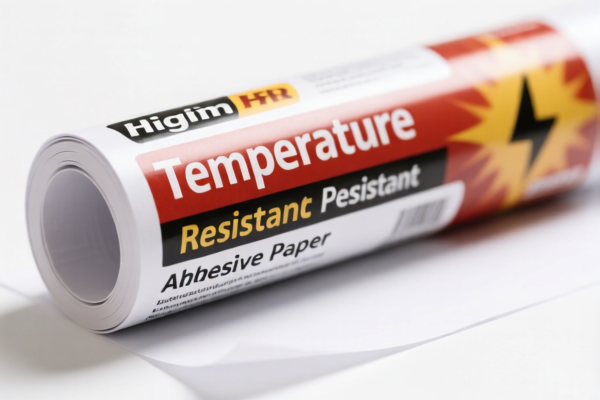
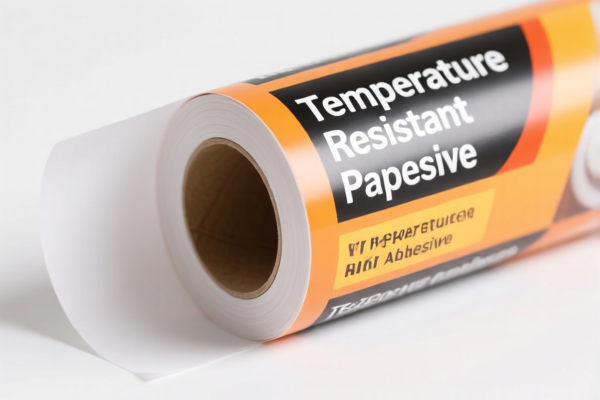
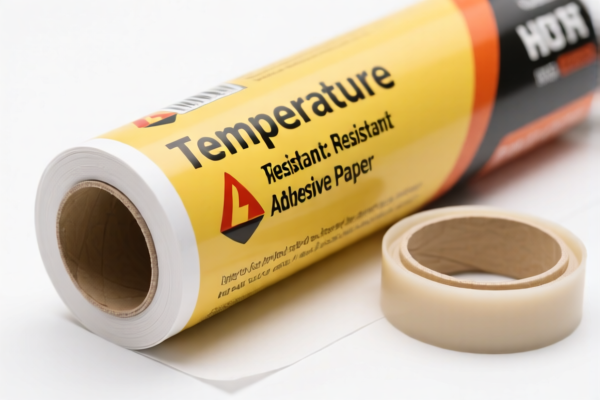
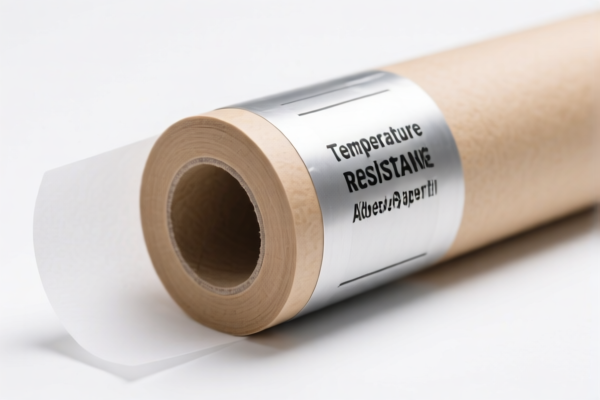
AI Analysis
🧪 Paper UV Resistant Agent (Functional Paper Products)
🌐 HS Code Reference & Customs Clearance Guide | 2026 Latest Tariff Analysis | Professional Compliance Strategy
📌 I. Product Definition & Classification: Do You Really Understand "Paper UV Resistant Agents"?
In international trade, "Paper UV Resistant Agent" is not a single commodity but a functional attribute applied to various paper and paperboard products. It refers to paper materials treated with chemical agents to resist yellowing, degradation, and brittleness caused by ultraviolet (UV) light exposure. The HS Code classification depends strictly on the physical form (sheet, roll, board), material composition (pure paper vs. paper-reinforced plastic), and specific application (filtering, lamination, or general paper product).
⚠️ Key Distinction Point:
- If the product is pure paper/paperboard with UV resistance → Classify under Chapter 48.
- If the product is paper-reinforced plastic/composite (e.g., high-pressure laminates, specialized membranes) → Classify under Chapter 39.
- Do not classify as "Chemical Agents" (Chapter 38) if the agent is already incorporated into the paper structure during manufacturing. The final product is the paper/cardboard itself.
📦 II. HS Code Classification Details (2026 Latest Tariff Authority Cross-Reference)
| HS Code | Product Description | Application Scenario | Material Nature | UV Resistance Feature |
|---|---|---|---|---|
4823.20.10.00 |
Paper products,符合纸、纸板材质要求,耐化学剂功能 (Paper/Paperboard products meeting material requirements, chemical resistant function) | General paper goods, packaging, technical paper with UV/Chemical resistance | Pure Paper/Paperboard | ✅ Yes (Integrated) |
4823.20.90.00 |
Paper material, extension of filtering paper/board uses, chemical resistant characteristics (Paper material, filtering paper & board use extension, chemical resistant traits) | Filtration paper, technical paperboard, specialized industrial paper | Pure Paper/Paperboard | ✅ Yes (Integrated) |
3921.90.40.10 |
Paper-reinforced material, special board/sheet/film/foil function, chemical resistant attribute (Paper-reinforced material, specialized board/sheet/film/foil function, chemical resistant attribute) | Composite materials, specialized films, industrial foils | Paper-Plastic Composite | ✅ Yes (Integrated) |
3921.90.50.10 |
High-pressure paper-reinforced material, decorative laminate use, chemical resistant function (High-pressure paper-reinforced material, decorative laminate use, chemical resistant function) | High-pressure laminates (HPL), decorative boards, surface materials | Paper-Plastic Composite (High-Pressure) | ✅ Yes (Integrated) |
🔍 Key Reminder:
- Products in4823.20.10.00and4823.20.90.00are classified under Chapter 48 (Paper and Paperboard) because the primary characteristic is the paper material.
- Products in3921.90.40.10and3921.90.50.10are classified under Chapter 39 (Plastics and Articles Thereof) because they are plastic-based composite materials reinforced with paper.
- UV Resistance is a functional claim. Customs will inspect the material composition to determine if it falls under Chapter 48 or Chapter 39.
💰 III. 2026 Latest Tariff Rate Details (Including Surtaxes, Policy Add-ons)
✅ Applicable Country: United States (US)
✅ Origin: China (CN)
✅ Effective Date: From November 10, 2025 (including subsequent imports)
🎯 1. 4823.20.10.00 —— Paper Products (Chemical/UV Resistant)
| Item | Content |
|---|---|
| Base Tariff | 0.0% |
| USITC Surtax (Section 301) | +25.0% |
| IEEPA Surtax (Section 122/Other) | +10.0% |
| Total Tax Rate | 35.0% |
| Tax Calculation | CIF Value × 35% |
| De Minimis Exemption | ❌ Not Eligible (deny_de_minimis) |
| Legal Basis Path | Base: 0% → USITC: 25% → IEEPA: 10% → Total: 35% |
📌 Explanation:
- The 25% surtax is applied under Section 301 of the Trade Act for certain Chinese goods.
- The 10% surtax is applied under IEEPA (International Emergency Economic Powers Act) or specific Section 122 provisions for Chinese-origin products.
- Total Rate: 35%. This is a high tariff burden. No exemption for small packages.
🎯 2. 4823.20.90.00 —— Paper Filter/Board Materials (Chemical/UV Resistant)
| Item | Content |
|---|---|
| Base Tariff | 0.0% |
| USITC Surtax (Section 301) | +25.0% |
| IEEPA Surtax (Section 122/Other) | +10.0% |
| Total Tax Rate | 35.0% |
| Tax Calculation | CIF Value × 35% |
| De Minimis Exemption | ❌ Not Eligible (deny_de_minimis) |
| Legal Basis Path | Base: 0% → USITC: 25% → IEEPA: 10% → Total: 35% |
📌 Note:
- Same tariff structure as4823.20.10.00.
- Applies to filtering papers, technical paperboards, and other paper products that do not fit the specific description of4823.20.10.00.
- Total Rate: 35%.
🎯 3. 3921.90.40.10 —— Paper-Reinforced Composite Materials (Chemical/UV Resistant)
| Item | Content |
|---|---|
| Base Tariff | 4.2% |
| USITC Surtax (Section 301) | +25.0% |
| IEEPA Surtax (Section 122/Other) | +10.0% |
| Total Tax Rate | 39.2% |
| Tax Calculation | CIF Value × 39.2% |
| De Minimis Exemption | ❌ Not Eligible (deny_de_minimis) |
| Legal Basis Path | Base: 4.2% → USITC: 25% → IEEPA: 10% → Total: 39.2% |
📌 Explanation:
- The Base Tariff of 4.2% applies because this is a plastic composite (Chapter 39).
- The 25% surtax and 10% IEEPA surtax are still applicable to Chinese-origin goods.
- Total Rate: 39.2%. This is the highest tariff rate in this dataset.
🎯 4. 3921.90.50.10 —— High-Pressure Paper-Reinforced Laminates (Chemical/UV Resistant)
| Item | Content |
|---|---|
| Base Tariff | 4.8% |
| USITC Surtax (Section 301) | +25.0% |
| IEEPA Surtax (Section 122/Other) | +10.0% |
| Total Tax Rate | 39.8% |
| Tax Calculation | CIF Value × 39.8% |
| De Minimis Exemption | ❌ Not Eligible (deny_de_minimis) |
| Legal Basis Path | Base: 4.8% → USITC: 25% → IEEPA: 10% → Total: 39.8% |
📌 Note:
- The Base Tariff of 4.8% applies to high-pressure laminates.
- Total Rate: 39.8%. This is the highest possible rate for these products.
🛠️ IV. Customs Clearance Practical Advice (Real-World Pitfall Avoidance)
✅ 1. Required Documentation Checklist (Non-Negotiable)
| Document | Must Provide | Explanation |
|---|---|---|
| ✅ Product Specification Sheet | ✔️ | Must detail UV resistance properties, chemical composition, and material type (Pure Paper vs. Composite). |
| ✅ Material Composition Proof | ✔️ | Certificate of Analysis (COA) showing the ratio of paper to plastic/resin. Crucial for Chapter 48 vs. Chapter 39 classification. |
| ✅ Product Photos (Including Label) | ✔️ | Clear images showing texture, layers, and any UV-resistant coating. |
| ✅ Third-Party Test Report | ✔️ | UV aging test results (e.g., ISO 4892), chemical resistance test reports. |
| ✅ Commercial Invoice | ✔️ | Must clearly state "Paper Product with UV Resistance" or "Composite Material," NOT just "UV Resistant Agent." |
| ✅ Packing List | ✔️ | Detail dimensions, weight, and layer structure. |
✅ 2. Declaration Tips (Key Mantra)
🔥 "Composition Defines Code, Not Function! Pure Paper = Ch 48, Composite = Ch 39!"
| Scenario | Correct Declaration | Wrong Practice |
|---|---|---|
| Pure Paper with UV Coating | 4823.20.10.00 or 4823.20.90.00 |
Declaring as Chemical Agent (Ch 38) → Incorrect |
| Paper-Reinforced Plastic Film | 3921.90.40.10 |
Declaring as Paper → Risk of Re-classification & Penalties |
| High-Pressure Laminate Board | 3921.90.50.10 |
Declaring as 3921.90.40.10 → Underpayment Risk |
| "UV Resistant Agent" (Powder/Liquid) | NOT IN DATASET | If you are shipping the chemical agent itself, it does not fall under these HS Codes. These codes are for finished paper products. |
📌 Critical Warning:
- If you are shipping the chemical agent (liquid/powder) to be applied later, it is NOT covered by this data. This data applies to finished paper products that already have UV resistance.
- Misdeclaring a chemical agent as paper products can lead to severe penalties.
✅ 3. Special Case Handling
| Situation | Handling Advice |
|---|---|
| OEM Custom Paper | Provide customer order + technical specs to prove material nature. |
| Mixed Shipments (Paper + Plastic) | Must be classified by principal material or as composite. Do not split unless legally permissible. |
| UV Resistance Claim | Provide test reports. Customs may verify if the claim justifies the specific subheading. |
| Small Package (De Minimis) | NO EXEMPTION. All these HS Codes are subject to 35%-39.8% tariffs, regardless of value. |
🌍 V. Global Market Comparison (2026 Latest)
| Country/Region | Recommended HS Code | Tariff (China Origin) | Certification Requirements | Notes |
|---|---|---|---|---|
| 🇺🇸 United States | 4823.20.10.00 / 3921.90.50.10 |
35.0% - 39.8% | None specific | High Tariff Burden. IEEPA + Section 301 apply. |
| 🇨🇳 China | 4823.20.10.00 / 3921.90.50.10 |
0% - 5% | RoHS (if applicable) | No surtaxes for export from China. |
| 🇪🇺 European Union | 4823.20.10.00 / 3921.90.50.10 |
0% - 6.5% | CE (if relevant) | No additional surtaxes. |
| 🇦🇺 Australia | 4823.20.10.00 / 3921.90.50.10 |
5% - 10% | None specific | Moderate tariff. |
| 🇯🇵 Japan | 4823.20.10.00 / 3921.90.50.10 |
0% - 3.2% | None specific | Low tariff. |
📌 Conclusion:
- The US is the only market with significant additional tariffs (35%+) for these paper/paperboard products from China.
- Cost Impact: For a $10,000 shipment, you will pay $3,500 - $3,980 in tariffs alone in the US. In the EU, it might be $0 - $650.
- Strategy: Consider supply chain relocation or alternative markets if US entry is not cost-effective.
📌 VI. Common Errors & Pitfall Avoidance (Blood-Led Lessons)
❌ Error 1: Declaring "UV Resistant Agent" as a chemical (Ch 38)
👉 Consequence: If the product is paper, it will be re-classified by Customs, leading to back taxes + penalties.
👉 Correct: Classify as paper product (4823.20.xx.00 or 3921.90.xx.10).
❌ Error 2: Confusing 4823.20.10.00 (Pure Paper) with 3921.90.40.10 (Composite)
👉 Consequence: If you declare a composite as pure paper, you may underpay tariff (35% vs 39.2%), leading to audit risk.
👉 Correct: Provide material composition proof.
❌ Error 3: Assuming De Minimis Exemption applies
👉 Consequence: Small samples still face 35%+ tariffs. Do not use this method to avoid taxes.
👉 Correct: Pay tariffs upfront.
❌ Error 4: Ignoring IEEPA 10% Surtax
👉 Consequence: Many importers only account for the 25% Section 301 tax, underestimating total cost by 10%.
👉 Correct: Calculate 35% - 39.8% total rate.
✅ Correct Declaration Example:
"Paper Product, UV Resistant, 100% Wood Pulp, Coated, for Industrial Filtration, Model XYZ" →
4823.20.90.00
"High-Pressure Decorative Laminate, Paper-Reinforced Plastic, UV Resistant, Model ABC" →3921.90.50.10
🎯 VII. Conclusion: Professional Declaration, Cost Savings, Risk Reduction
🎯 Remember the Mantra:
🔹 "Composition is King, Function is Secondary!"
🔹 "Pure Paper = 35%, Composite = 39.2%-39.8%! US Tariffs are High!"
🔹 "No De Minimis Exemption for Chinese Paper/Composite Products in the US!"
📌 Pro Tip:
- If your product is not from China (e.g., Vietnam, Malaysia), you may avoid the 25% + 10% surtaxes, reducing the tariff to 0% - 4.8%.
- Pre-Apply for Advance Ruling: Submit product samples and specs to US Customs for a binding classification opinion to avoid post-clearance disputes.
📣 Immediate Action:
📞 Contact Professional Customs Broker + Provide Material Composition Report + Apply for HS Code Advance Ruling
🚀 Ensure your UV Resistant Paper clears customs smoothly, avoiding unexpected 40% costs!
✨ Professional Clearance Starts with Accurate Classification!
💼 Every Cent of Tariff is Calculated Precisely!
Customer Reviews
About HS Code Classification
The Harmonized System (HS) is an internationally standardized nomenclature developed by the World Customs Organization (WCO) to classify traded products. Over 200 countries use the HS system as the basis for customs tariffs, trade statistics, and import/export regulations.
Each HS code follows a hierarchical structure:
- Chapter (2 digits) — Broad category of goods (e.g., Chapter 84: Machinery and Mechanical Appliances)
- Heading (4 digits) — More specific grouping within the chapter
- Subheading (6 digits) — Internationally standardized breakdown, used by all WCO member countries
- National subdivisions (8-10 digits) — Country-specific extensions for further classification, such as US HTSUS 10-digit codes
Correct HS code classification is essential for smooth customs clearance, accurate duty payment, and compliance with trade regulations. Misclassification can lead to customs delays, overpayment of duties, or penalties.
When importing from CN to US, the applicable tariff rates may include:
- Most-Favored-Nation (MFN) rate — The standard duty rate applied to WTO members
- General rate — Applied to countries without trade agreements
- Trade remedy duties — Additional tariffs such as Section 301 (anti-dumping), Section 232 (national security), or countervailing duties
The information provided on this page is for reference purposes only. For official classification, please consult with your local customs authority or a licensed customs broker.