Paper Wetting Agent
CN → US| HS Code | Tariff Rate | Origin | Destination | Doc |
|---|---|---|---|---|
| 3824999397 | 40.0% | CN | US | Official Doc |
| 3824997510 | 38.7% | CN | US | Official Doc |
Product Images
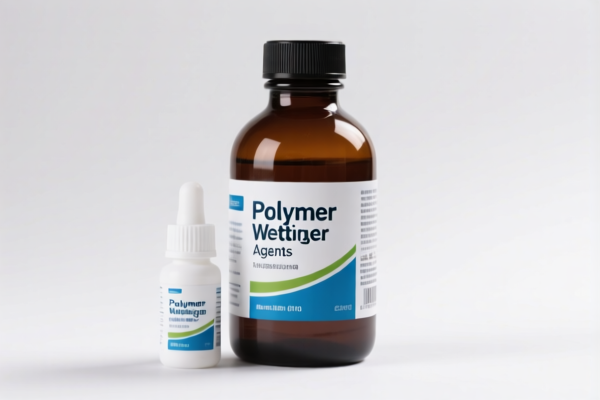
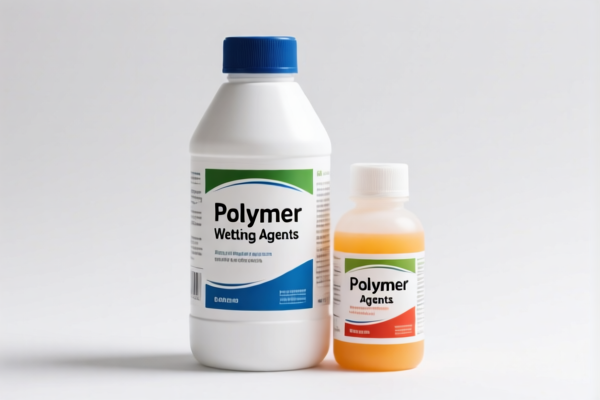


AI Analysis
💧 Paper Wetting Agent (Paper Making Chemicals)
🌐 HS Code Reference & Customs Clearance Guide | 2026 Latest Tariff Analysis | Professional Compliance Strategy
📌 I. Product Definition & Classification: What is a "Paper Wetting Agent"?
A Paper Wetting Agent is a chemical additive used in the papermaking process (especially for low-grade papers, corrugated board, or recycled fibers) to reduce surface tension. It improves the penetration of water or sizing agents into the fiber network, enhancing drainage, reducing drying energy, and improving the uniformity of the paper sheet.
In international trade, these products are rarely classified under specific "Paper Chemicals" headings because Chapter 48 (Paper) typically excludes chemicals unless they are specific coatings or primers. Instead, they fall under Chapter 38 (Miscellaneous Chemical Products).
⚠️ Critical Classification Point:
The classification depends entirely on the chemical composition and primary function: - If the product is a generic preparation or mixture not elsewhere specified → HS 3824.99 - If the product consists primarily of Naphthenic Acids or their salts/esters (used as specific wetting/dispersing agents) → HS 3824.99.75
📦 II. HS Code Classification Details (2026 Latest Tariff Authority Match)
Based on the provided <DATA>, there are two distinct HS codes for Paper Wetting Agents, differentiated by specific chemical content.
| HS Code | Product Description | Applicability | Key Chemical Feature |
|---|---|---|---|
3824.99.93.97 |
Prepared binders for foundry molds or cores; Chemical products not elsewhere specified: Other: Other: Other: Other: Other: Other | Generic wetting agents, mixtures of surfactants, polymers, or non-specified chemical preparations used in papermaking or other industries. | General Mixture: No specific primary component like Naphthenic acids. |
3824.99.75.10 |
Prepared binders for foundry molds or cores; Chemical products not elsewhere specified: Naphthenic acids, their water-insoluble salts and their esters | Wetting agents where the active ingredient is derived from Naphthenic Acids. | Specific Component: Contains Naphthenic acids or their esters/salts as the defining characteristic. |
🔍 Key Reminder:
- Generic Agents: If your wetting agent is a standard surfactant blend (e.g., fatty alcohol ethoxylates, silicones, or proprietary polymer mixes) and does not primarily consist of Naphthenic acids, it falls under3824.99.93.97.
- Naphthenic-Based Agents: If the product is specifically formulated with Naphthenic acids or their derivatives for wetting/dispersing purposes, it must be declared under3824.99.75.10. Misclassifying a Naphthenic-based agent as a "generic" mixture will lead to customs discrepancies.
💰 III. 2026 Latest Tariff Rate Breakdown (Including Additional Duties)
✅ Applicable Country: United States (US)
✅ Origin: China (CN)
✅ Effective Time: Ongoing (Subject to USITC 301 Section Duties)
🎯 1. 3824.99.93.97 —— Generic Prepared Chemical Products / Wetting Agents
| Item | Content |
|---|---|
| Base Tariff Rate | 5.0% (Ad Valorem) |
| Additional Tariff (Section 301) | +25.0% |
| Total Tariff Rate | 30.0% |
| Tax Calculation | CIF Value × 30.0% |
| De Minimis Exemption | ❌ Not Eligible (Value > $800 threshold usually applies, but Section 301 duties apply regardless of de minimis status for most commercial imports) |
| Legal Basis Path | HTSUS:3824.99.93.97 → USITC Footnote: Section 301 |
📌 Explanation:
- This is the default category for "catch-all" chemical preparations.
- The 30% total duty is significant. Importers should verify if any duty-eligibility programs (like HTSUS exclusions) apply, though Naphthenic-based products have fewer exclusions.
🎯 2. 3824.99.75.10 —— Naphthenic Acids, Salts, and Esters
| Item | Content |
|---|---|
| Base Tariff Rate | 3.7% (Ad Valorem) |
| Additional Tariff (Section 301) | +25.0% |
| Total Tariff Rate | 28.7% |
| Tax Calculation | CIF Value × 28.7% |
| De Minimis Exemption | ❌ Not Eligible |
| Legal Basis Path | HTSUS:3824.99.75.10 → USITC Footnote: Section 301 |
📌 Note:
- Even though the base rate is lower (3.7% vs 5.0%), the 25% Section 301 duty is the dominant factor.
- Cost Saving: By correctly classifying Naphthenic-acid-based wetting agents under3824.99.75.10, you save 1.3% on the base tariff compared to the generic category.
- Critical: If you declare a Naphthenic-based product as3824.99.93.97, you pay an extra 1.3% unnecessarily. If you declare a generic product as3824.99.75.10, you face penalties for false classification.
🛠️ IV. Customs Clearance Practical Advice (Real-World Pitfall Avoidance)
✅ 1. Required Documentation Checklist (Non-Negotiable)
| Document | Must Provide | Explanation |
|---|---|---|
| ✅ Product Specification Sheet (TDS) | ✔️ | Must list chemical composition (percentages of active ingredients). Critical for distinguishing between Naphthenic acids vs. general surfactants. |
| ✅ Safety Data Sheet (SDS) | ✔️ | Must comply with OSHA/GHS standards. Section 3 (Composition) is vital for HS Code verification. |
| ✅ Product Photo (Label & Container) | ✔️ | Clear view of the name, batch number, and any "For Industrial Use Only" warnings. |
| ✅ Commercial Invoice | ✔️ | Must specify "Paper Wetting Agent" or "Chemical Preparation for Papermaking" and include HS Code. |
| ✅ Certificate of Origin (CO) | ✔️ | Proves CN origin for Section 301 duty assessment. |
| ✅ Bill of Lading (B/L) | ✔️ | Consistent with invoice description. |
✅ 2. Declaration Tips (Key Mantra)
🔥 "Composition Determines Code, Naphthenic is Specific, Generic is Catch-All, 301 Duty Applies!"
| Scenario | Correct Declaration | Incorrect Declaration |
|---|---|---|
| Generic Surfactant Mix | 3824.99.93.97 |
3824.99.75.10 (False Claim) |
| Naphthenic Acid Based | 3824.99.75.10 |
3824.99.93.97 (Overpaying 1.3%) |
| Foundry Binder (Unrelated) | 3824.99.93.97 |
Mislabeling as "Wetting Agent" |
| Small Samples (<$800) | De Minimis (If eligible) | Full Declaration (Unnecessary Cost) |
📌 Warning:
- Do not use vague terms like "Chemical Additive" on the invoice. Use precise terms: "Prepared Chemical Wetting Agent for Paper Industry, Based on [Specific Chemical Family]."
- If the product is a mixture where Naphthenic acids are not the primary defining feature, do not use3824.99.75.10.
✅ 3. Special Case Handling
| Case | Handling Advice |
|---|---|
| Private Label Wetting Agents | Provide the original manufacturer’s specification to prove chemical composition. Custom labels can confuse customs if no TDS is provided. |
| Concentrated Formulations | Declare based on the concentrate's composition. Dilution does not change HS Code. |
| Mixed Shipments | If shipping both Naphthenic-based and Generic wetting agents in one container, separate lines on the commercial invoice are required to avoid blanket misclassification. |
| Used/Reclaimed Agents | If the product is "used oil" or "recycled solvent," different HS codes (e.g., Chapter 27 or 38 waste chapters) may apply. Not covered in this Data. |
🌍 V. Global Market Comparison (2026 Latest)
| Country/Region | Recommended HS Code | Base Duty | Additional Duty (China) | Total Duty | Remarks |
|---|---|---|---|---|---|
| 🇺🇸 USA | 3824.99.93.97 or 3824.99.75.10 |
3.7% - 5.0% | +25% | 28.7% - 30.0% | Section 301 duties are mandatory. |
| 🇨🇳 China | 3824.99.99.90 |
5.0% | 0% | 5.0% | Import duties may differ; check local tariff. |
| 🇪🇺 EU | 3824.99.99 |
0% - 6.5% | 0% | 0% - 6.5% | No Section 301 equivalent. |
| 🇮🇳 India | 3824.99.90 |
0% - 10% | 0% | 0% - 10% | Check Anti-Dumping Duties. |
📌 Conclusion:
- USA is the most expensive market due to Section 301 duties.
- Cost Optimization: For Naphthenic-based agents, using3824.99.75.10saves $0.13 per $10 imported compared to the generic code.
📌 VI. Common Errors & Pitfall Guide (Lessons Learned)
❌ Error 1: Declaring all wetting agents under one generic code.
👉 Consequence: If Customs audits and finds Naphthenic acids, you pay a penalty for under-declaring the specific code. If they find it’s generic, you overpaid base duty.
❌ Error 2: Ignoring Section 301 Duties.
👉 Consequence: Customs will assess 25% additional duty retroactively + interest + penalties.
❌ Error 3: Vague Invoice Description ("Chemical").
👉 Consequence: Customs may detain shipment for "Insufficient Information," leading to storage fees and delays.
❌ Error 4: Misidentifying Naphthenic Acids.
👉 Consequence: Naphthenic acids have specific uses. If the product is primarily a corrosion inhibitor or metalworking fluid, it might fall under 3402 (Surface-active agents) or 3824.99.93 differently. Consult a chemist for exact composition.
✅ Correct Approach:
"Paper Wetting Agent, Chemical Preparation, Contains Naphthenic Acids (XX%), Esterified Derivatives, For Use in Papermaking Process, Model XYZ, SDS Available"
🎯 VII. Conclusion: Precision Classification Saves Money!
🎯 Remember the Mantra:
🔹 "Naphthenic? Use 75.10 (28.7%). Generic? Use 93.97 (30.0%). Section 301 Always Applies (+25%)."
🔹 "HS Code Dictates Duty, TDS Dictates HS Code, Documentation Dictates Clearance Speed!"
📌 Pro Tip:
If your supplier can provide a Chemical Abstract Service (CAS) registry number for the primary active ingredient, use it to cross-reference with the USITC Harmonized Tariff Schedule to confirm if it explicitly lists Naphthenic acids.
📣 Immediate Action:
📞 Contact your supplier for TDS/SDS
📋 Verify Naphthenic Acid Content
🚀 Declare correctly to avoid 1.3% penalty and smooth customs clearance.
✨ Professional Customs Clearance Starts with Precise Classification!
💼 Your Every Dollar is Worth Calculating!
Customer Reviews
About HS Code Classification
The Harmonized System (HS) is an internationally standardized nomenclature developed by the World Customs Organization (WCO) to classify traded products. Over 200 countries use the HS system as the basis for customs tariffs, trade statistics, and import/export regulations.
Each HS code follows a hierarchical structure:
- Chapter (2 digits) — Broad category of goods (e.g., Chapter 84: Machinery and Mechanical Appliances)
- Heading (4 digits) — More specific grouping within the chapter
- Subheading (6 digits) — Internationally standardized breakdown, used by all WCO member countries
- National subdivisions (8-10 digits) — Country-specific extensions for further classification, such as US HTSUS 10-digit codes
Correct HS code classification is essential for smooth customs clearance, accurate duty payment, and compliance with trade regulations. Misclassification can lead to customs delays, overpayment of duties, or penalties.
When importing from CN to US, the applicable tariff rates may include:
- Most-Favored-Nation (MFN) rate — The standard duty rate applied to WTO members
- General rate — Applied to countries without trade agreements
- Trade remedy duties — Additional tariffs such as Section 301 (anti-dumping), Section 232 (national security), or countervailing duties
The information provided on this page is for reference purposes only. For official classification, please consult with your local customs authority or a licensed customs broker.