Paper Wicker Baskets
CN → US| HS Code | Tariff Rate | Origin | Destination | Doc |
|---|---|---|---|---|
| 4602110700 | 35.0% | CN | US | Official Doc |
| 4602110900 | 45.0% | CN | US | Official Doc |
| 3924104000 | 13.4% | CN | US | Official Doc |
| 3924905650 | 20.9% | CN | US | Official Doc |
| 7323999040 | 88.4% | CN | US | Official Doc |
Product Images
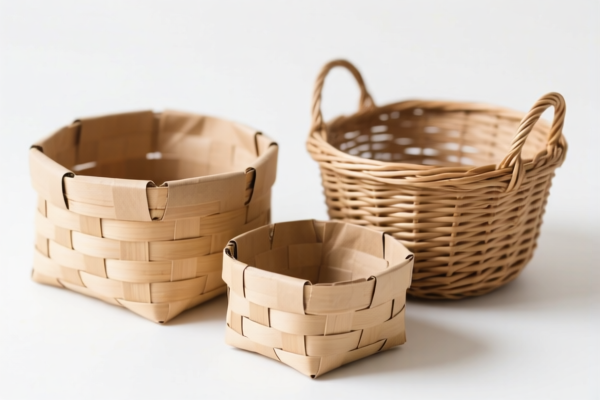
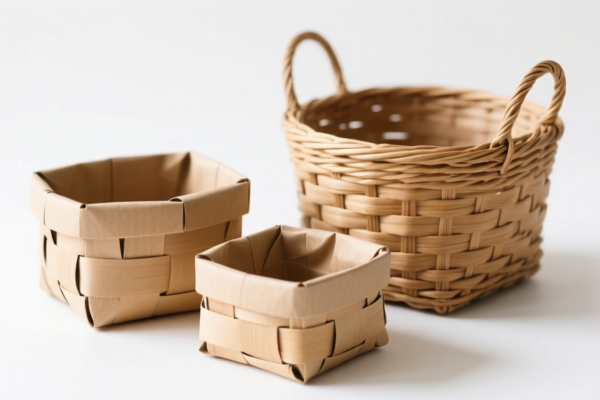
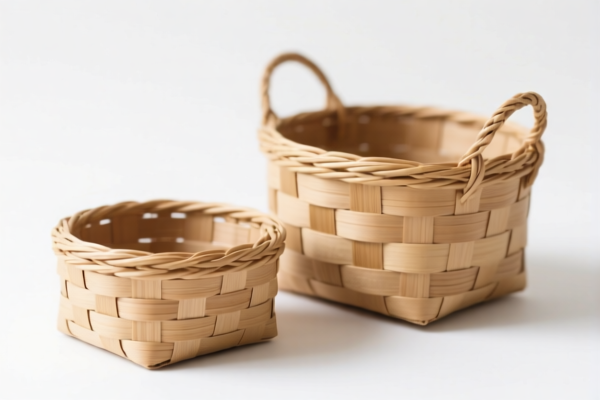
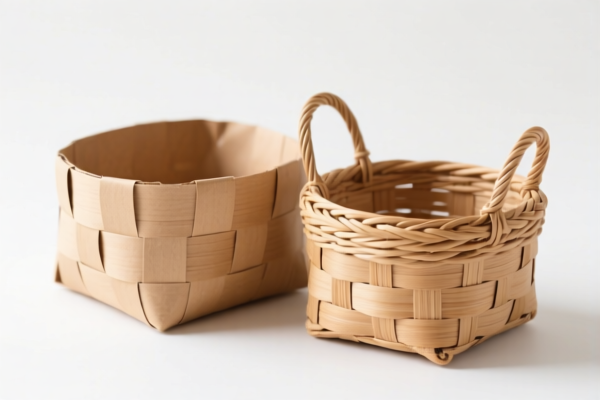
AI Analysis
🧺 Paper Wicker Baskets (Paper Wicker Baskets)
🌐 HS Code Reference & Customs Clearance Guide | 2026 Latest Tariff Analysis | Professional Clearance Strategy
📌 I. Product Definition & Classification: Do You Really Understand "Paper Wicker"?
"Paper Wicker" is an artificial material made by twisting, weaving, or laminating paper fibers. Although it mimics the appearance of traditional natural rattan or reed, it is fundamentally classified based on its material composition rather than just its shape. In international trade, the classification depends heavily on whether the basket is deemed a "plant fiber product" (like real bamboo/reed) or a "paper/plastic product."
⚠️ Key Distinction Point:
- If classified strictly as woven plant-like material (often interpreted broadly under HS 46.02 for baskets regardless of specific fiber type, though technically paper is 48/49): → HS 4602.11
- If classified strictly as Paper Products: → HS 4813/4823 (Note: The provided data does not list these, but relies on inference to 39 or 46).
- If classified as Plastic/Artificial due to binding agents/coatings: → HS 3924.🔍 Critical Insight from Data:
The provided dataset suggests a "Reasonable Inference" strategy. Even though the product is "Paper Wicker," customs authorities may accept HS 4602.11 (Baskets of bamboo, rattan, etc.) if the paper weaving structure is deemed analogous to plant fibers, OR HS 3924 if the binding material makes it functionally a plastic/household item. Misclassification here leads to massive tax differences (from 13.4% to 88.4%).
📦 II. HS Code Classification Details (Based on Provided Data)
| HS Code | Product Description | Rationale for Classification | Total Tax Rate |
|---|---|---|---|
4602.11.07.00 |
Baskets, of Bamboo or Rattan (or analogized Paper Wicker) | Inference: Based on common sense, "baskets" are woven containers. Without explicit material conflict, it fits the form requirement of 4602.11. | 35.0% |
4602.11.09.00 |
Other Baskets of Bamboo, Rattan, etc. | Inference: Matches form; inferred as plant-fiber-like material. No obvious conflict with "bamboo" attributes. | 45.0% |
3924.10.40.00 |
Tableware/Kitchenware/Household Articles of Plastic | Inference: Baskets are household items. Inferred as plastic (paper wicker often has plastic coatings/bindings). Fits "Other" category. | 13.4% |
3924.90.56.50 |
Other Tableware/Kitchenware of Plastic | Inference: Matches household form. "Bottom-line" category for non-specific plastic items. Inferred as possible plastic material. | 20.9% |
7323.99.90.40 |
Steel Tableware (Non-Fencing/Non-Food Contact) | Inference: High Risk/Unlikely. Unless the "paper wicker" has a steel frame, this is a misclassification. Included in data for comparison only. | 88.4% |
📌 Note on Data Context:
The data implies a US Import scenario (indicated by "122 Clause Tax" and specific additional duties). The "Inference" logic highlights that without explicit material declaration, customs may apply broad interpretations, leading to significant tax variance.
💰 III. 2026 Latest Tariff Rate Breakdown (Including Additional Taxes)
✅ Applicable Country: United States (US)
✅ Origin: China (CN)
✅ Effective Time: Post-November 2025 policies
🎯 1. 4602.11.07.00 – Baskets (Bamboo/Rattan Category)
| Item | Content |
|---|---|
| Base Duty | 0.0% |
| Section 301 Additional Duty | +25.0% |
| Section 122 Duty | +10.0% |
| Total Duty | 35.0% |
| Tax Calculation | CIF Value × 35% |
| De Minimis Exemption | ❌ Not Applicable (Section 301/122 duties usually apply regardless of value for these categories) |
📌 Explanation:
- 0% Base Duty: HS 4602 typically has low base duties for woven baskets.
- +25% Section 301: Standard tariff for Chinese-made goods in this category.
- +10% Section 122: Recent additional duty on certain Chinese imports.
- Total 35%: A moderate-high rate, but significantly lower than metal/plastic options in this dataset.
🎯 2. 4602.11.09.00 – Other Baskets (Bamboo/Rattan Category)
| Item | Content |
|---|---|
| Base Duty | 10.0% |
| Section 301 Additional Duty | +25.0% |
| Section 122 Duty | +10.0% |
| Total Duty | 45.0% |
| Tax Calculation | CIF Value × 45% |
📌 Explanation:
- 10% Base Duty: Higher base rate for "other" baskets in this subheading.
- Total 45%: This is a high-cost classification. Avoid if possible.
🎯 3. 3924.10.40.00 – Plastic Household Articles (Tableware)
| Item | Content |
|---|---|
| Base Duty | 3.4% |
| Section 301 Additional Duty | 0.0% |
| Section 122 Duty | +10.0% |
| Total Duty | 13.4% |
| Tax Calculation | CIF Value × 13.4% |
📌 Explanation:
- Lowest Total Tax (13.4%).
- Key Advantage: Section 301 additional duty is 0% for some plastic household items (check specific USITC lists).
- Risk: Must prove material is "plastic" or treated as such. If customs insists it's "paper," they may reassess to 4602 or 4813.
🎯 4. 3924.90.56.50 – Other Plastic Household Articles
| Item | Content |
|---|---|
| Base Duty | 3.4% |
| Section 301 Additional Duty | +7.5% |
| Section 122 Duty | +10.0% |
| Total Duty | 20.9% |
| Tax Calculation | CIF Value × 20.9% |
📌 Explanation:
- Moderate cost.
- Section 301 applies at 7.5% for this specific subheading.
- Better than 4602.11.09 (45%) but worse than 3924.10 (13.4%).
🎯 5. 7323.99.90.40 – Steel Tableware (Incorrect Classification)
| Item | Content |
|---|---|
| Base Duty | 3.4% |
| Section 301 Additional Duty | +25.0% |
| Section 122 Duty | +10.0% |
| Steel/Aluminum/Copper Additional Duty | +50.0% |
| Total Duty | 88.4% |
| Tax Calculation | CIF Value × 88.4% |
📌 Explanation:
- Extremely High Risk.
- Only applicable if the basket is metal.
- Do NOT use for Paper Wicker Baskets unless they have a significant steel structural component.
- Penalty for misclassification is severe.
🛠️ IV. Customs Clearance Practical Advice (Real-World Pitfall Guide)
✅ 1. Preparation Checklist (Must-Have)
| Document | Required | Explanation |
|---|---|---|
| ✅ Product Composition Certificate | ✔️ | Must explicitly state: "Made of Paper Wicker (Paper core + Plastic binding)" or "100% Paper." |
| ✅ Photos (Close-up of Texture) | ✔️ | Show the paper weave structure vs. plastic sheen. |
| ✅ Commercial Invoice | ✔️ | Describe as "Paper Wicker Basket, Household Use, Model XYZ." Do NOT write "Plastic Basket" if it's paper. |
| ✅ Material Safety Data Sheet (MSDS) | ✔️ | If treated with flame retardants or coatings. |
✅ 2. Declaration Strategy (Key Tips)
🔥 "Declare Material, Not Just Shape: Paper is Not Bamboo, Plastic is Not Paper!"
| Scenario | Recommended HS Code | Reasoning |
|---|---|---|
| 100% Paper Wicker (Natural binding) | 4602.11.07.00 | Closest analog in data. Tax: 35%. Best balance of accuracy and cost if accepted. |
| Paper Wicker with Plastic Coating/Binding | 3924.10.40.00 | If the plastic content is significant or defines the "household" nature. Tax: 13.4%. Lowest Cost. |
| Unspecified Material (Risky) | 4602.11.09.00 | Customs infers "plant-like." Tax: 45%. Avoid if you can specify material. |
| Metal Frame Paper Basket | 7323.99.90.40 | Only if metal is primary. Tax: 88.4%. Avoid. |
✅ 3. Special Handling
| Situation | Advice |
|---|---|
| "Paper Wicker" vs. "Rattan" | If you declare "Rattan," but it's paper, you risk fraud penalties. If you declare "Paper," customs may shift to HS 4813 (not in data) or 3924. |
| Plastic Binding Agents | If >50% of the weight is plastic binding, 3924.10.40.00 is defensible and cheaper (13.4%). |
| Customs Inquiry | If asked "What is the material?", answer: "Paper fiber woven with plastic binder." This supports the 3924 classification. |
🌍 V. Global Market Comparison (2026)
| Market | Recommended HS Code | Est. Duty (China Origin) | Notes |
|---|---|---|---|
| 🇺🇸 USA | 3924.10.40.00 |
13.4% | Best if plastic binding is present. 4602 is 35%. |
| 🇺🇸 USA | 4602.11.07.00 |
35.0% | If declared as "woven basket" without plastic emphasis. |
| 🇪🇺 EU | 4602.11 |
~2.7% + VAT | EU generally treats paper wicker as paper/wood. Lower duties than US. |
| 🇨🇳 China | 4602.11 |
0% - 10% | Export from China has low duty. Import into US is the main cost driver. |
📌 Conclusion for US Imports:
- Aim for3924.10.40.00(13.4%) if your paper wicker has any plastic components (binding, coating, lining).
- Accept4602.11.07.00(35%) if it is 100% natural paper with natural binding.
- Avoid7323.99.90.40(88.4%) unless it's metal.
📌 VI. Common Errors & Pitfalls (Lessons Learned)
❌ Error 1: Declaring "Paper Wicker" as "Rattan"
👉 Consequence: Customs may seize goods for material mismatch. Even if duty is similar, fines apply.
❌ Error 2: Declaring "Paper Wicker" as "Plastic" when it's 90% Paper
👉 Consequence: Customs may reclassify to 4602 (35%) or 4813 (not in data). If they suspect fraud, penalties arise.
❌ Error 3: Using 3924.10.40.00 for 100% Paper without Plastic
👉 Consequence: High risk of audit. If proven false, you owe the difference + interest.
✅ Correct Approach:
"Paper Wicker Basket, 100% Paper Fiber, Woven, Household Use, Model XYZ"
→ Declare under4602.11.07.00(35%) for safety.
OR
"Household Basket, Paper Core with Plastic Binding, Model XYZ"
→ Declare under3924.10.40.00(13.4%) if plastic content is substantial.
🎯 VII. Conclusion: Precision Saves Money!
🎯 Remember:
🔹 "Paper is Paper, Plastic is Plastic: Don't Hide Material, Declare It!"
🔹 "13.4% vs 88.4%: One classification choice can save 75% of your tax!"
🔹 "35% is safe, 45% is expensive, 88.4% is a trap."
📌 Pro Tip:
- If your paper wicker baskets are coated with a plastic film for water resistance, explicitly declare "Plastic-Coated Paper Wicker Basket." This strongly supports 3924.10.40.00 (13.4%).
- Always request a Pre-Ruling (Advance Ruling) from US CBP if your shipment volume is high.
📣 Take Action Now:
📞 Consult your customs broker with the material breakdown.
🚀 Optimize your HS Code choice to minimize duty from 88.4% to 13.4% or 35%.
✨ Professional Clearance Starts with Accurate Classification!
💼 Every Percent of Duty Saved is Pure Profit!
Customer Reviews
About HS Code Classification
The Harmonized System (HS) is an internationally standardized nomenclature developed by the World Customs Organization (WCO) to classify traded products. Over 200 countries use the HS system as the basis for customs tariffs, trade statistics, and import/export regulations.
Each HS code follows a hierarchical structure:
- Chapter (2 digits) — Broad category of goods (e.g., Chapter 84: Machinery and Mechanical Appliances)
- Heading (4 digits) — More specific grouping within the chapter
- Subheading (6 digits) — Internationally standardized breakdown, used by all WCO member countries
- National subdivisions (8-10 digits) — Country-specific extensions for further classification, such as US HTSUS 10-digit codes
Correct HS code classification is essential for smooth customs clearance, accurate duty payment, and compliance with trade regulations. Misclassification can lead to customs delays, overpayment of duties, or penalties.
When importing from CN to US, the applicable tariff rates may include:
- Most-Favored-Nation (MFN) rate — The standard duty rate applied to WTO members
- General rate — Applied to countries without trade agreements
- Trade remedy duties — Additional tariffs such as Section 301 (anti-dumping), Section 232 (national security), or countervailing duties
The information provided on this page is for reference purposes only. For official classification, please consult with your local customs authority or a licensed customs broker.