Paper Wrinkle Resistant Agent
CN → US| HS Code | Tariff Rate | Origin | Destination | Doc |
|---|---|---|---|---|
| 3809910000 | 41.0% | CN | US | Official Doc |
| 3304910050 | 35.0% | CN | US | Official Doc |
| 3304995000 | 35.0% | CN | US | Official Doc |
| 3402905050 | 38.7% | CN | US | Official Doc |
| 3402905030 | 38.7% | CN | US | Official Doc |
Product Images
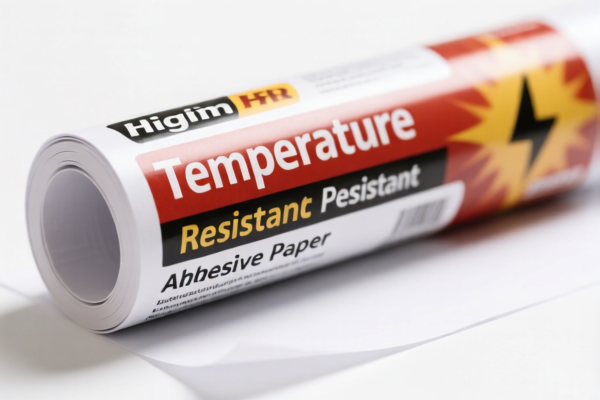
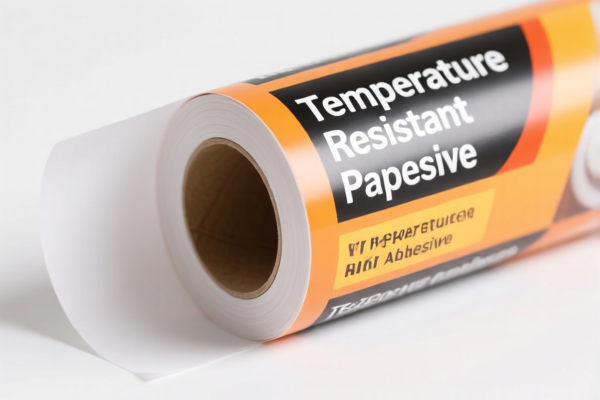
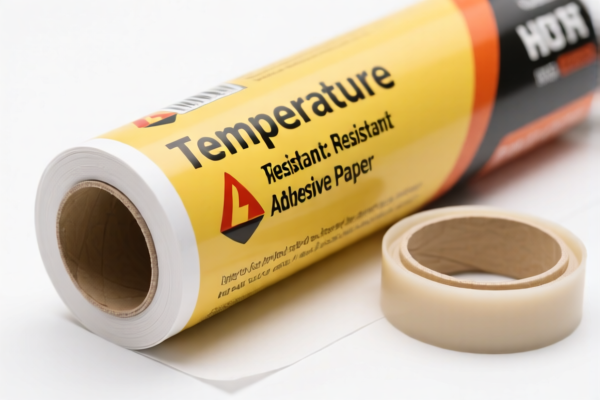
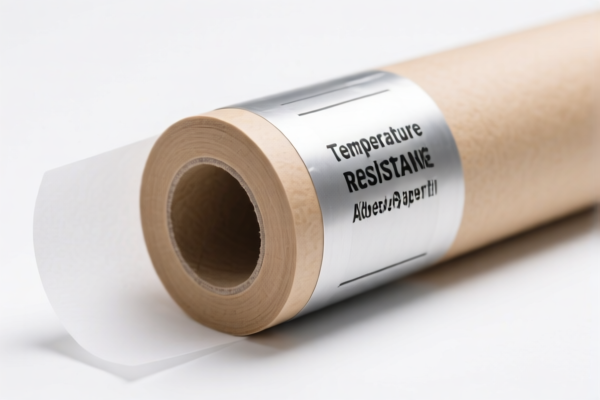
AI Analysis
🧪 Paper Wrinkle Resistant Agent: HS Code Classification & US Customs Clearance Guide (2026)
🌐 HS Code Reference & Clearance Guide | 2026 Latest Tariff Analysis | Professional Strategy
📌 Product Definition: What is a "Paper Wrinkle Resistant Agent"?
A Paper Wrinkle Resistant Agent (often used in textile finishing or specialized paper coatings) is a chemical additive designed to prevent creasing, improve drape, and maintain the smooth appearance of fabrics or paper products during manufacturing and use.
In international trade, its classification is critical because the tariff rate varies drastically depending on whether it is viewed as a textile auxiliary, a cosmetic/skin care product, or a general chemical preparation.
⚠️ Key Distinction:
- If used for textiles/paper: Falls under Chapter 38 (Miscellaneous Chemical Products).
- If used for skin/makeup (e.g., anti-aging serums): Falls under Chapter 33 (Essential Oils/Cosmetics).
- If used as a general chemical binder: Falls under Chapter 34 (Surface Active Agents/Preparations).
📦 Section I: HS Code Classification Matrix (2026 US Harmonized Tariff Schedule)
Based on the functional analysis of "Wrinkle Resistance," here are the five most relevant HS Codes with their respective tax implications.
| HS Code | Classification Logic | Total Tax Rate (US) | Tax Breakdown |
|---|---|---|---|
| 3809.91.00.00 | Textile/Paper Auxiliaries Specifically for finishing textiles or similar industries. |
41.0% | Base: 6.0% Sec 301: 25.0% IEEPA 122: 10.0% |
| 3304.91.00.50 | Cosmetic/Skin Care (Powder/Liquid) Inferred as skin care preparation due to "anti-wrinkle" marketing. |
35.0% | Base: 0.0% Sec 301: 25.0% IEEPA 122: 10.0% |
| 3304.99.50.00 | Cosmetic/Skin Care (Other) Broad category for cosmetic/preparations not elsewhere specified. |
35.0% | Base: 0.0% Sec 301: 25.0% IEEPA 122: 10.0% |
| 3402.90.50.50 | Chemical Preparations (Non-Washing) General chemical auxiliary, non-detergent, non-cleaning. |
38.7% | Base: 3.7% Sec 301: 25.0% IEEPA 122: 10.0% |
| 3402.90.50.30 | Chemical Auxiliaries (General) Chemical binder/agent logically consistent with cleaning agents. |
38.7% | Base: 3.7% Sec 301: 25.0% IEEPA 122: 10.0% |
💰 Section II: Detailed Tariff Analysis & Legal Basis
✅ Applicable Country: United States (US)
✅ Origin: China (CN)
✅ Effective Date: Post-November 2025 Tariff Regime
🎯 1. The "Textile" Route: HS 3809.91.00.00
🔥 Highest Tax Bracket: 41.0%
- Logic: This is the most accurate classification for agents specifically formulated for textile or paper finishing. It falls under Chapter 38, Heading 3809 (Finishing, Dyeing, Printing, etc.).
- Tax Breakdown:
- Base Duty: 6.0% (Standard MFN rate for textile auxiliaries).
- Section 301 Duty: +25% (Trade war tariffs on Chinese chemical products).
- IEEPA Section 122 Duty: +10% (New tariff on specific Chinese imports effective late 2025).
- Total: 6% + 25% + 10% = 41%
⚠️ Warning: If your product is clearly marketed for fabrics, curtains, or non-woven papers, this is the correct code. Expect the highest tax liability.
🎯 2. The "Cosmetic" Route: HS 3304.91.00.50 / 3304.99.50.00
💸 Moderate Tax Bracket: 35.0%
- Logic: If the "anti-wrinkle" agent is marketed as a skin care product (e.g., facial serum, anti-aging cream) or contains cosmetic ingredients (hyaluronic acid, peptides), it may be misclassified or intentionally classified under Chapter 33.
- Tax Breakdown:
- Base Duty: 0.0% (Cosmetics often have zero base duty).
- Section 301 Duty: +25%.
- IEEPA Section 122 Duty: +10%.
- Total: 0% + 25% + 10% = 35%
⚠️ Risk: Customs Audits are High. If you declare a chemical as "Cosmetic" but it is actually a textile finish, CBP will reclassify it under 3809 and charge back taxes + penalties. Only use this if the product is genuinely for skin application.
🎯 3. The "General Chemical" Route: HS 3402.90.50.50 / 3402.90.50.30
⚖️ Balanced Tax Bracket: 38.7%
- Logic: If the product is a generic chemical binder or surfactant used in industrial processes but not specifically labeled for textiles or cosmetics, it may fall under Chapter 34 (Surface Active Agents).
- Tax Breakdown:
- Base Duty: 3.7% (Standard rate for chemical preparations).
- Section 301 Duty: +25%.
- IEEPA Section 122 Duty: +10%.
- Total: 3.7% + 25% + 10% = 38.7%
🛠️ Section III: Customs Clearance Practical Advice
✅ 1. Documentation Requirements (Must-Haves)
| Document | Purpose | Critical Details |
|---|---|---|
| Technical Data Sheet (TDS) | Proves Chemical Nature | Must list active ingredients, pH, viscosity, and intended use. |
| Safety Data Sheet (SDS) | Compliance | Ensure Section 2 (Hazards) and Section 15 (Regulatory) are complete. |
| Statement of Use | Clarifies Intent | Explicitly state: "This product is for [Textile/Paper/Skin] finishing only. Not for human application." |
| Commercial Invoice | Valuation | Clearly describe item as "Chemical Wrinkle Resistant Agent, HS 3809.91.00.00". |
| Form A (Certificate of Origin) | Tariff Determination | Must confirm Chinese origin to apply 301/122 duties accurately. |
✅ 2. Strategic Classification Tips
🔥 Golden Rule: "Match the Description to the Reality, Not the Tax."
| Scenario | Recommended HS Code | Reason |
|---|---|---|
| Textile Factory Use | 3809.91.00.00 |
Most legally accurate. No risk of "false declaration." |
| Cosmetic Brand Use | 3304.99.50.00 |
Only if ingredients are FDA-compliant for skin. |
| Industrial General Use | 3402.90.50.50 |
If use is ambiguous (e.g., glue additive), this is a safer middle ground. |
⚠️ Avoid Misclassification:
- Do NOT label a textile chemical as "Cosmetic" to save 6% in base duty. CBP uses AI to cross-check SDS and invoices. If the SDS lists "formaldehyde-free textile finish," you will be caught.
- Do NOT use3402for pure textile finishes if3809is more specific. Chapter 38 is the lex specialis for finishing agents.
✅ 3. Special Considerations for 2026
- IEEPA Section 122 Tariffs: Since Nov 2025, a 10% surcharge applies to most Chinese chemical imports. This is non-negotiable and applies to all HS codes listed above.
- Section 301 (25%): Still in effect. Ensure your supplier provides a valid COO to prove origin. If transshipped through Vietnam, strict rules of origin apply.
- No De Minimis Exemption: These are industrial/commercial chemicals. Section 321 (De Minimis) does NOT apply. You must file a formal entry (Type 6 or Type 13).
🌍 Section IV: Global Market Comparison (2026)
| Market | Recommended HS Code | Base Tax | Sec 301/Extra | Total Est. Tax | Notes |
|---|---|---|---|---|---|
| 🇺🇸 USA | 3809.91.00.00 |
6.0% | +35% | 41.0% | Highest barrier. Plan cash flow. |
| 🇨🇳 China | 3809.91.00.00 |
6.0% | 0% | 6.0% | Importing into China? Lower tax. |
| 🇪🇺 EU | 3809.91.00 |
6.5% | 0% | 6.5% | No Section 301. Standard EU duty. |
| 🇬🇧 UK | 3809.91.00 |
6.0% | 0% | 6.0% | Post-Brexit, no US tariffs apply. |
| 🇻🇳 Vietnam | 3809.91.00 |
5.0% | 0% | 5.0% | Potential hub for re-export. |
📌 Insight:
- If your customer is in the US, the tax burden is massive (41%). Consider pricing adjustments or exploring duty drawback programs.
- If exporting to EU/UK/Vietnam, taxes are significantly lower (5-6.5%).
📌 Section V: Common Mistakes & Pitfalls (Lessons Learned)
❌ Mistake 1: Declaring "Anti-Wrinkle Spray" as a Cosmetic without FDA compliance.
👉 Consequence: Cargo detained, fines up to $10,000 per violation, product destroyed.
❌ Mistake 2: Using HS Code 3402 for a product clearly labeled for "Denim Finishing."
👉 Consequence: CBP reclassifies to 3809, charges 41% instead of 38.7%, plus penalties for under-declaration.
❌ Mistake 3: Ignoring the IEEPA 122 Tariff.
👉 Consequence: Underpayment by 10%. CBP will assess back taxes + interest + 50% penalty.
✅ Best Practice:
"Provide a Detailed SDS. State the Exact Application. Pay the Correct Duty."
🎯 Section VI: Conclusion & Action Plan
🎯 Key Takeaway:
For a Paper/Textile Wrinkle Resistant Agent, the most accurate and legally defensible HS Code is 3809.91.00.00 with a total tax of 41.0%. While cosmetic codes (35.0%) appear cheaper, they carry extreme legal risk if not genuinely for skin use.
Action Steps for Importers: 1. Verify Ingredients: Is it textile-grade or cosmetic-grade? 2. Check SDS: Ensure "Intended Use" matches the HS Code. 3. Apply for Pre-Ruling: If uncertain, file a CBP Pre-Ruling to lock in the HS Code before shipment. 4. Budget for 41%: Factor the full 41% into your landed cost for US imports.
📣 Need Help?
📞 Contact a licensed Customs Broker for Pre-Ruling.
🚀 Ensure your SDS and Invoice are aligned to avoid delays.
💡 Don’t let 10% IEEPA tax surprise you! Plan ahead!
✨ Accurate Classification = Predictable Costs = Profit Protection!
💼 Your Supply Chain, Your Competitiveness.
Customer Reviews
About HS Code Classification
The Harmonized System (HS) is an internationally standardized nomenclature developed by the World Customs Organization (WCO) to classify traded products. Over 200 countries use the HS system as the basis for customs tariffs, trade statistics, and import/export regulations.
Each HS code follows a hierarchical structure:
- Chapter (2 digits) — Broad category of goods (e.g., Chapter 84: Machinery and Mechanical Appliances)
- Heading (4 digits) — More specific grouping within the chapter
- Subheading (6 digits) — Internationally standardized breakdown, used by all WCO member countries
- National subdivisions (8-10 digits) — Country-specific extensions for further classification, such as US HTSUS 10-digit codes
Correct HS code classification is essential for smooth customs clearance, accurate duty payment, and compliance with trade regulations. Misclassification can lead to customs delays, overpayment of duties, or penalties.
When importing from CN to US, the applicable tariff rates may include:
- Most-Favored-Nation (MFN) rate — The standard duty rate applied to WTO members
- General rate — Applied to countries without trade agreements
- Trade remedy duties — Additional tariffs such as Section 301 (anti-dumping), Section 232 (national security), or countervailing duties
The information provided on this page is for reference purposes only. For official classification, please consult with your local customs authority or a licensed customs broker.