Paper and Cardboard Cutter
CN → US| HS Code | Tariff Rate | Origin | Destination | Doc |
|---|---|---|---|---|
| 4823908680 | 35.0% | CN | US | Official Doc |
| 4823908000 | 35.0% | CN | US | Official Doc |
| 8205595510 | 40.3% | CN | US | Official Doc |
| 8441100000 | 35.0% | CN | US | Official Doc |
Product Images
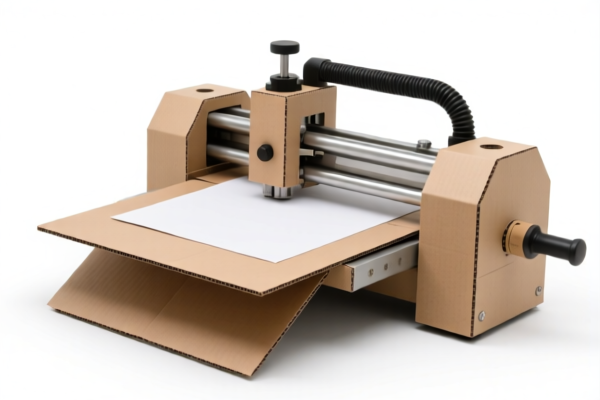
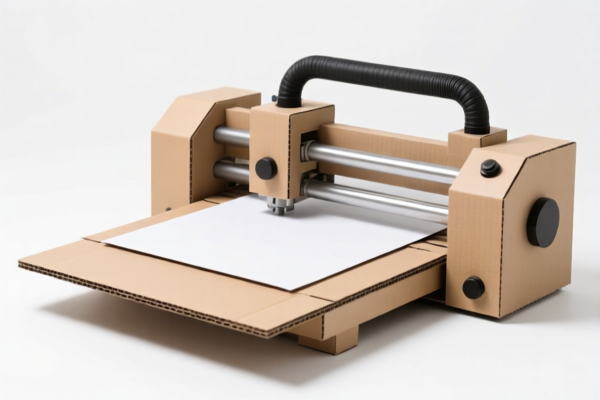

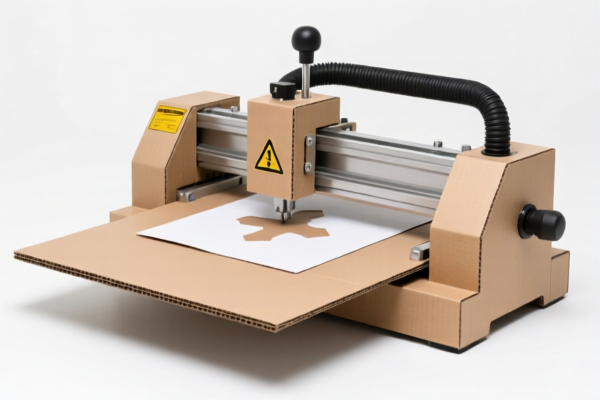
AI Analysis
📄✂️ Paper and Cardboard Cutter
🌐 HS Code Reference & Clearance Guide | 2026 Latest Tariff Analysis | Professional Customs Strategy
📌 I. Product Definition & Classification: Do You Really Understand "Cutters"?
Paper and Cardboard Cutters are a broad category in international trade, encompassing everything from finished products (the tools themselves) to intermediate goods (paper shapes) and industrial machinery. The critical distinction lies in the material and the function:
- Manual Metal Tools: Hand-held knives, rotary cutters, or straight-edge blades used for cutting. These are classified as metal hand tools.
- Finished Paper Products: Pre-cut paper shapes (like gaskets, washers, or specific shapes) ready for use. These are classified as processed paper articles.
- Machinery: Motorized or industrial-grade cutting machines (guillotines, slitters). These are classified as machinery for making paper products.
⚠️ Key Distinction Point:
- If it is a metal blade/knife held by hand → It is a Metal Hand Tool (Chapter 82).
- If it is a machine that automates the cutting → It is Machinery (Chapter 84).
- If it is the paper itself already cut into shape → It is a Paper Product (Chapter 48).
📦 II. HS Code Classification Details (2026 Latest Tariff Authority Comparison)
| HS Code | Product Description | Application Scenario | Category |
|---|---|---|---|
8205.59.55.10 |
Metal hand tools with cutting edges, for cutting paper or cardboard | Manual rotary cutters, craft knives, box cutters | 🛠️ Tool |
8441.10.00.00 |
Paper-cutting machines, for pulp, paper, or cardboard manufacturing | Industrial guillotines, automated slitters, heavy-duty cutters | 🏭 Machine |
4823.90.86.80 |
Paper and cardboard, cut into specific shapes, other than those of 4823.90.80 | Die-cut paper pads, shaped paper inserts, custom-cut paper shapes | 📝 Paper Product |
4823.90.80.00 |
Articles of paper or paperboard, of other kinds | Paper gaskets, washers, packing blanks, generic cut paper items | 📦 Paper Article |
🔍 Key Reminder:
- Never mix "Machinery" with "Tools." A motorized cutter goes to8441, not8205.
- Never misclassify a "blank sheet of paper" as a "cut product" if it hasn't been shaped.
- Never classify a "knife" as a "paper product." The material (metal vs. paper) dictates the chapter.
💰 III. 2026 Latest Tariff Rate Details (Including Surcharges & Policy Add-ons)
✅ Applicable Country: United States (US)
✅ Origin: China (CN)
✅ Effective Date: November 10, 2025 (and onwards)
🎯 1. 8205.59.55.10 —— Metal Hand Tools for Cutting Paper
| Item | Content |
|---|---|
| Base Tariff | 5.3% (ad valorem) |
| USITC Additional Tariff | +25% (Under USITC Footnote 9903.88.01 / Section 301) |
| IEEPA Additional Tariff | +10% (Targeting Chinese/Hong Kong products, effective Nov 10, 2025) |
| Total Rate | 40.3% |
| Tax Calculation | CIF Value × 40.3% |
| De Minimis Exemption? | ❌ No (deny_de_minimis) |
| Legal Basis Path | USITC:8205.59.55.10 → FOOTNOTE:9903.88.01 → IEEPA:9903.01.24 |
📌 Explanation:
- Metal hand tools are considered Section 301 goods, attracting the 25% surcharge.
- The 10% IEEPA tariff is a new layer for Chinese-origin metal tools.
- Total 40.3% is very high. Importers must account for this in landed cost calculations.
🎯 2. 8441.10.00.00 —— Paper-Cutting Machines
| Item | Content |
|---|---|
| Base Tariff | 0.0% (ad valorem) |
| USITC Additional Tariff | +25% (Under USITC Footnote 9903.88.01 / Section 301) |
| IEEPA Additional Tariff | +10% (Targeting Chinese/Hong Kong products, effective Nov 10, 2025) |
| Total Rate | 35.0% |
| Tax Calculation | CIF Value × 35.0% |
| De Minimis Exemption? | ❌ No (deny_de_minimis) |
| Legal Basis Path | USITC:8441.10.00.00 → FOOTNOTE:9903.88.01 → IEEPA:9903.01.24 |
📌 Note:
- Although the base rate is 0%, the 35% total surcharge makes it expensive.
- Machinery is also subject to Section 301.
- Ensure the machine is not primarily for "plastic" or "metal" cutting; if it does, the HS code changes.
🎯 3. 4823.90.86.80 & 4823.90.80.00 —— Cut Paper & Paper Articles
| Item | Content |
|---|---|
| Base Tariff | 0.0% (ad valorem) |
| USITC Additional Tariff | +25% (Under USITC Footnote 9903.88.01 / Section 301) |
| IEEPA Additional Tariff | +10% (Targeting Chinese/Hong Kong products, effective Nov 10, 2025) |
| Total Rate | 35.0% |
| Tax Calculation | CIF Value × 35.0% |
| De Minimis Exemption? | ❌ No (deny_de_minimis) |
| Legal Basis Path | USITC:4823.90.80.00 → FOOTNOTE:9903.88.01 → IEEPA:9903.01.24 |
📌 Explanation:
- Paper products often have low base duties, but Section 301 applies heavily to Chinese paper goods.
- Difference between86.80and80.00:
-86.80: Specific shapes/cuts (e.g., die-cut gaskets).
- `80.00: Other general paper articles (e.g., cut sheets, packing material).
- Both attract the same 35% total tariff**.
🛠️ IV. Clearance Practical Advice (Real-World Pitfall Avoidance Guide)
✅ 1. Documentation Checklist (Essential)
| Document | Must Provide | Description |
|---|---|---|
| ✅ Product Specification Sheet | ✔️ | Details: Material (Metal/Paper), Function (Cutting/Tool/Machine), Dimensions. |
| ✅ Product Photos | ✔️ | Clear images showing: Brand, Model, Power Source (for machines), Blades (for tools). |
| ✅ Commercial Invoice | ✔️ | Must clearly state: "Paper Cutter (Tool)" or "Paper Cutting Machine" or "Cut Paper Gaskets". |
| ✅ Bill of Materials (BOM) | ✔️ | For machines: List all parts to justify HS Code 8441. |
| ✅ Origin Certificate (CO) | ✔️ | Essential for proving Chinese origin to apply IEEPA/Section 301 accurately. |
| ✅ Technical Manual | ✔️ | For machines: To prove it is indeed for paper/cardboard, not plastic or metal. |
✅ 2. Declaration Tips (Critical Keywords)
🔥 "Tool vs. Machine vs. Product: Name Matters, Tax Varies!"
| Scenario | Correct Declaration | Incorrect Practice | Consequence |
|---|---|---|---|
| Manual Knife | "Metal Hand Cutter for Paper" | "Paper Tool" or "Knife" | Misclassification → Penalty |
| Electric Guillotine | "Paper Cutting Machine" | "Paper Cutter" (Vague) | Customs may ask for clarification → Delay |
| Die-cut Gasket | "Paper Gasket, Cut to Shape" | "Paper Sheet" | Rate differs? No, but description must match. |
| Mixed Shipment | Separate HS Codes for Tool & Paper | Bundle as "Paper Supplies" | High Risk of Audit/Fine |
✅ 3. Special Cases Handling
| Scenario | Handling Advice |
|---|---|
| Rotary Cutter with Plastic Handle | Still 8205 (Metal Blade is essential part). Do not classify as "Plastic Tool." |
| Machine that Cuts Paper + Plastic | If primarily for paper → 8441. If primarily for plastic → Different HS Code (e.g., 8477). Must prove primary function. |
| Sample vs. Commercial Quantity | Both subject to tariffs. No de minimis exemption for China origin. |
| Used Machinery | Must declare as "Used." Additional inspection required. |
🌍 V. Global Market Clearance Comparison (2026 Latest)
| Country/Region | Recommended HS Code | Tariff Rate | Certification Requirements | Notes |
|---|---|---|---|---|
| 🇺🇸 USA | 8205.59.55.10 / 8441.10.00.00 |
35% - 40.3% | None specific for HS, but general safety | High tariffs due to Section 301 & IEEPA. |
| 🇨🇳 China | 8205.59.55.10 / 8441.10.00.00 |
Varies (0-5%) | CCC (for some electronics) | Lower entry barrier. |
| 🇪🇺 EU | 8205.59.55.10 / 8441.10.00.00 |
Varies (0-10%) | CE Marking (for machinery/tools) | No Section 301 equivalent. |
| 🇬🇧 UK | 8205.59.55.10 / 8441.10.00.00 |
Varies (0-10%) | UKCA Marking | Post-Brexit rules apply. |
| 🇦🇺 Australia | 8205.59.55.10 / 8441.10.00.00 |
5% | RCM (if electrical) | Moderate tariffs. |
📌 Conclusion:
- USA is the most challenging market due to the 35-40.3% tariff burden.
- EU/UK/Australia are more favorable for paper/cutting products.
- Consider supply chain diversification if targeting the US market heavily.
📌 VI. Common Mistakes & Pitfall Guide (Lessons Learned)
❌ Mistake 1: Calling a "Paper Cutting Machine" a "Paper Cutter" without specifying "Machine."
👉 Result: Customs may misclassify as 4823 (Paper Product) if they think it's a finished good, leading to incorrect duty assessment.
❌ Mistake 2: Classifying a "Rotary Cutter" (Tool) as 8441 (Machine).
👉 Result: Overpayment of duties or audit flags. Manual tools are 8205.
❌ Mistake 3: Ignoring the "IEEPA 10%" tariff for Chinese-origin goods.
👉 Result: Underpayment by 10%. This is a new layer effective Nov 2025. Failure to pay leads to penalties + interest.
❌ Mistake 4: Mixing "Cut Paper Gaskets" (4823) with "Paper Rolls" (4803) in one line item.
👉 Result: Customs Rejection. Each line item must be distinct.
✅ Correct Practice:
"Manual Metal Paper Cutter, Model X, 10-inch Blade" →
8205.59.55.10
"Industrial Paper Cutting Machine, Hydraulic, 1.5m Width" →8441.10.00.00
"Pre-cut Paper Gaskets, 5mm Thickness, Round Shape" →4823.90.86.80
🎯 VII. Conclusion: Professional Declaration, Save Cost, Ensure Clearance!
🎯 Remember the Mantra:
🔹 "Tool is Metal, Machine is Electric, Paper is Shape. Name it right, avoid the fright!"
🔹 "US Tariff is 35-40%, Plan your cost, or it'll haunt your cost!"
📌 Pro Tip:
If your product is exported to the US, ensure your Commercial Invoice explicitly states:
"Country of Origin: China"
"HS Code: [Code] – Subject to Section 301 & IEEPA Tariffs"
This transparency can prevent post-clearance audits.
📣 Immediate Action:
📞 Consult a Licensed Customs Broker
📸 Provide Clear Photos of Blades/Blades
📋 Apply for Advance Ruling if Shipments are Large
🚀 Ensure Smooth Clearance, Maximize Profit, Avoid Surprises!
✨ Professional Clearance Starts with Accurate Classification!
💼 Every Percent of Duty Counts!
Customer Reviews
About HS Code Classification
The Harmonized System (HS) is an internationally standardized nomenclature developed by the World Customs Organization (WCO) to classify traded products. Over 200 countries use the HS system as the basis for customs tariffs, trade statistics, and import/export regulations.
Each HS code follows a hierarchical structure:
- Chapter (2 digits) — Broad category of goods (e.g., Chapter 84: Machinery and Mechanical Appliances)
- Heading (4 digits) — More specific grouping within the chapter
- Subheading (6 digits) — Internationally standardized breakdown, used by all WCO member countries
- National subdivisions (8-10 digits) — Country-specific extensions for further classification, such as US HTSUS 10-digit codes
Correct HS code classification is essential for smooth customs clearance, accurate duty payment, and compliance with trade regulations. Misclassification can lead to customs delays, overpayment of duties, or penalties.
When importing from CN to US, the applicable tariff rates may include:
- Most-Favored-Nation (MFN) rate — The standard duty rate applied to WTO members
- General rate — Applied to countries without trade agreements
- Trade remedy duties — Additional tariffs such as Section 301 (anti-dumping), Section 232 (national security), or countervailing duties
The information provided on this page is for reference purposes only. For official classification, please consult with your local customs authority or a licensed customs broker.