Paper and Paperboard (including Crepe Paper, Crinkled Paper, Embossed Paper, Perforated Paper)
CN → US| HS Code | Tariff Rate | Origin | Destination | Doc |
|---|---|---|---|---|
| 4817202000 | 35.0% | CN | US | Official Doc |
| 4823400000 | 35.0% | CN | US | Official Doc |
| 4911996000 | 17.5% | CN | US | Official Doc |
| 4817204000 | 35.0% | CN | US | Official Doc |
| 4911998000 | 17.5% | CN | US | Official Doc |
Product Images
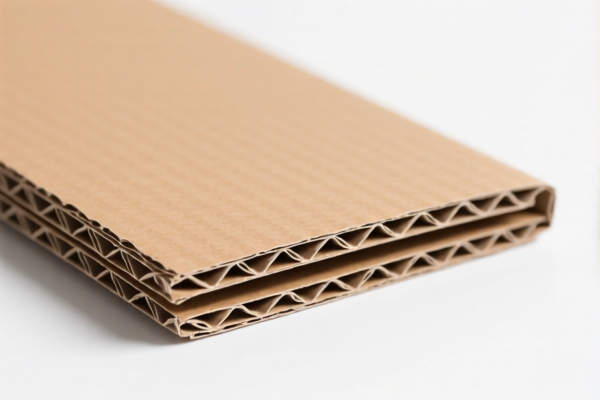
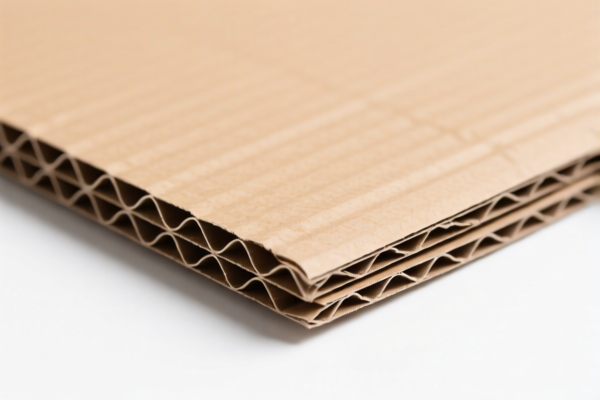
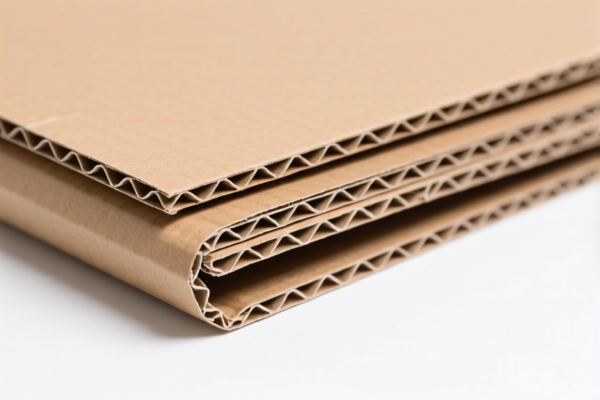
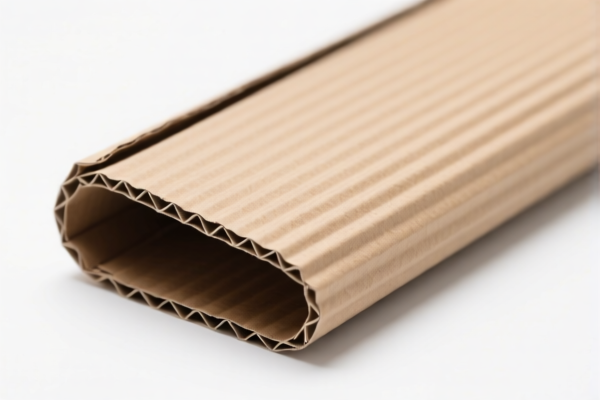
AI Analysis
📄 Paper & Paperboard Products (Crepe, Crinkled, Embossed, Perforated, Printed)
🌐 HS Code Reference & Customs Clearance Guide | 2026 Latest Tariff Analysis | Professional Clearance Strategy
📌 I. Product Definition: What Exactly Are "Processed Papers"?
This product category encompasses Paper and Paperboard that has undergone specific physical or chemical treatments beyond simple manufacturing. Key characteristics include: * Textural Modifications: Crepe, Crinkled, Embossed (raised patterns), Perforated (punctured with holes). * Surface Treatments: Printed (using offset or other printing processes).
⚠️ Critical Distinction:
- Is the primary function structural/material (e.g., hygiene, packaging, communication cards)? → Look at Chapter 48.
- Is the primary function informational/printed matter (e.g., brochures, ads, books)? → Look at Chapter 49.
- Note: The presence of "Perforation" or "Embossing" alone does not automatically move it to Chapter 49; the end-use and printing status are decisive.
📦 II. HS Code Classification Details (2026 Latest Tariff Authority)
Based on the provided data, here are the precise matches for Paper/Paperboard with embossed, perforated, or printed features:
| HS Code | Product Description | Key Matching Features | Applicability |
|---|---|---|---|
4817.20.20.00 |
Envelope Linings, Window Panels, etc. | Material: Paper/Paperboard. Feature: Perforated ("带有...穿孔"). | High match for perforated paper products like window envelopes or specialized liners. |
4823.40.00.00 |
Other Paper/Cardboard, Cut to Size/Shape | Material: Paper/Paperboard. Features: Embossed, Perforated, OR Printed. Form: Cut to specific dimensions/shapes. | Best fit for generic processed paper sheets, napkins, or industrial paper parts that are cut/perforated/embossed. |
4911.99.60.00 |
Other Printed Matter | Material: Paper/Paperboard. Feature: Printed ("全部或部分采用平版印刷工艺印在纸上的产品"). | Specific fit for printed items that are not books/newspapers (e.g., printed cards, labels, posters). |
4817.20.40.00 |
Paper/Paperboard Articles (e.g., Comm. Cards) | Material: Paper/Paperboard. Feature: Embossed/Perforated/Printed. | Fits items like communication cards, postcards, or similar paper articles where material integrity is key. |
4911.99.80.00 |
Other Printed Articles (Catch-all) | Material: Paper/Paperboard. Feature: Printed ("印刷品"). | General catch-all for other printed paper products not specified elsewhere in Chapter 49. |
🔍 Key Insight:
-4817.20.20.00&4823.40.00.00rely heavily on physical processing (perforation/embossing).
-4911.99.xxxxrelies heavily on printing status. If the product is heavily printed (e.g., marketing material), Chapter 49 is more appropriate. If it's structurally modified (perforated/embossed) with minimal printing, Chapter 48 is better.
💰 III. 2026 Latest Tariff Rate Breakdown (Including Surtaxes)
✅ Applicable Country: United States (US)
✅ Country of Origin: China (CN)
✅ Effective Date: From Nov 10, 2025 (and subsequent imports)
🎯 1. 4817.20.20.00 / 4817.20.40.00 / 4823.40.00.00
(Chapter 48: Processed Paper Articles)
| Item | Detail |
|---|---|
| Base Duty Rate | 0.0% |
| Section 301 Surcharge | +25.0% (USITC Footnote for Chinese goods) |
| Section 122 Surcharge | +10.0% (IEEPA-based additional duty) |
| Total Duty Rate | 35.0% |
| Calculation Basis | CIF Value × 35% |
| De Minimis Exemption | ❌ Not Eligible (deny_de_minimis) |
| Legal Basis Path | IEEPA:9903.01.10 → USITC:4817/4823 → FOOTNOTE:122 |
📌 Explanation:
- These codes fall under Section 301 tariffs (25%) due to their classification as processed Chinese goods.
- The additional 10% is applied under Section 122 (or similar IEEPA provisions for specific categories).
- Total Impact: You pay 35 cents for every $1.00 of value. This is a high tariff barrier.
🎯 2. 4911.99.60.00 / 4911.99.80.00
(Chapter 49: Printed Matter)
| Item | Detail |
|---|---|
| Base Duty Rate | 0.0% |
| Section 301 Surcharge | +7.5% (Lower surcharge rate for specific printed items) |
| Section 122 Surcharge | +10.0% |
| Total Duty Rate | 17.5% |
| Calculation Basis | CIF Value × 17.5% |
| De Minimis Exemption | ❌ Not Eligible (deny_de_minimis) |
| Legal Basis Path | IEEPA:9903.01.07 → USITC:4911 → FOOTNOTE:122 |
📌 Explanation:
- Some printed matters under Chapter 49 benefit from a lower Section 301 rate (7.5%) compared to general processed paper (25%).
- However, the 10% Section 122 surcharge still applies.
- Total Impact: 17.5% total duty. This is half the cost of Chapter 48 classifications!
🛠️ IV. Customs Clearance Practical Advice (Pitfall Avoidance Guide)
✅ 1. Documentation Checklist (Mandatory)
| Document | Required? | Notes |
|---|---|---|
| ✅ Product Specification Sheet | ✔️ | Must clearly state: "Embossed," "Perforated," "Crepe," or "Printed." |
| ✅ High-Resolution Photos | ✔️ | Show texture (embossing), holes (perforation), and print quality. |
| ✅ Commercial Invoice | ✔️ | Must match the HS code description precisely. Avoid vague terms like "Paper." |
| ✅ Packing List | ✔️ | Weight and dimensions must align with paper density calculations. |
| ✅ Certificate of Origin | ✔️ | Proof of Chinese origin triggers the surcharges. |
| ✅ Print Samples (if Ch. 49) | ✔️ | If claiming 4911, provide proof of printing method (e.g., offset printing evidence). |
✅ 2. Classification Strategy (Key Tactics)
🔥 “Printed Matter vs. Processed Paper: The 17.5% vs. 35% Decision!”
| Scenario | Recommended HS Code | Total Tax | Why? |
|---|---|---|---|
| Plain Perforated Paper (No/Light Print) | 4817.20.20.00 or 4823.40.00.00 |
35% | Physical processing dominates. |
| Embossed Paper Napkins/Toilet Paper | 4823.40.00.00 |
35% | Hygiene/structural use. |
| Heavily Printed Brochures/Cards | 4911.99.60.00 or 4911.99.80.00 |
17.5% | Informational/Printed purpose dominates. |
| Communication Cards (Postcards) | 4817.20.40.00 |
35% | Specific article category in Ch. 48. |
📌 Strategic Tip:
- If your product is printed, try to classify it under Chapter 49 (4911.99.xxxx) if it fits the legal definition of "printed matter." This saves 17.5% in duties!
- If it is only perforated/embossed/crinkled with no significant printing, you are stuck with Chapter 48 (35%).
✅ 3. Special Considerations
| Situation | Handling Advice |
|---|---|
| Mixed Products (e.g., Printed + Perforated) | Argue for Chapter 49 if the printing is the primary commercial feature. Provide sample layouts. |
| Crepe Paper (Decorative/Hygiene) | Usually 4823.40.00.00 (35%). Ensure it’s not classified as "wadding" (different code). |
| Small Parcels (De Minimis) | ❌ Risk Alert: All these codes are excluded from the $800 de minimis exemption for Chinese goods. Small shipments are NOT tax-free. |
| Packaging Materials | If used purely as packaging, some may qualify for exemptions, but processed paper often does not. Check with a broker. |
🌍 V. Global Market Comparison (2026 Update)
| Region | Recommended HS Code | Est. Total Duty | Notes |
|---|---|---|---|
| 🇺🇸 USA | 4817.20.20.00 / 4911.99.60.00 |
17.5% - 35% | High surcharges (301 + 122). |
| 🇨🇳 China (Import) | 4817.20.20.00 |
~5-10% | Lower base rates, no 301/122. |
| 🇪🇺 EU | 4817.20.20.00 |
0-6% | Standard MFN rates. No 301 equivalent. |
| 🇬🇧 UK | 4817.20.20.00 |
0-6% | Post-Brexit tariffs. No US-style surcharges. |
📌 Conclusion:
- The USA is the most expensive market for these goods due to the 35% cap.
- For US exports, Chapter 49 (4911.99.xxxx) is the golden ticket at 17.5%.
📌 VI. Common Mistakes & Pitfalls
❌ Mistake 1: Classifying all "Paper" as 4817 (35%) when it could be 4911 (17.5%).
👉 Fix: If it’s printed, emphasize the printing content in the description.
❌ Mistake 2: Assuming small shipments are tax-free under de minimis.
👉 Fix: False. Chinese-origin goods in these categories are explicitly excluded from the $800 exemption.
❌ Mistake 3: Describing products vaguely as "Paper Products."
👉 Fix: Be specific: "Embossed Perforated Paper Cards, Printed."
✅ Correct Declaration Example:
"Embossed and Perforated Paper Cards, Offset Printed, for Marketing Use, HS 4911.99.60.00"
(This targets the 17.5% rate)
🎯 VII. Conclusion: Maximize Profit, Minimize Tax!
🎯 Remember the Golden Rule:
🔹 "Printed? Go Chapter 49 (17.5%).
Perforated/Embossed Only? Chapter 48 (35%).
Never Trust De Minimis for China!"
📌 Pro Tip:
- If your product is lightly printed, consult a customs broker to see if it qualifies for Chapter 49.
- If highly printed, Chapter 49 is your best friend for saving 17.5%.
📣 Action Item:
📞 Contact a licensed customs broker to review your product samples.
📄 Prepare high-res photos showing the print and texture.
🚀 Optimize your HS Code to save thousands in duties!
✨ Precision Classification Saves Money!
💼 Every percentage point counts in the US market.
Customer Reviews
About HS Code Classification
The Harmonized System (HS) is an internationally standardized nomenclature developed by the World Customs Organization (WCO) to classify traded products. Over 200 countries use the HS system as the basis for customs tariffs, trade statistics, and import/export regulations.
Each HS code follows a hierarchical structure:
- Chapter (2 digits) — Broad category of goods (e.g., Chapter 84: Machinery and Mechanical Appliances)
- Heading (4 digits) — More specific grouping within the chapter
- Subheading (6 digits) — Internationally standardized breakdown, used by all WCO member countries
- National subdivisions (8-10 digits) — Country-specific extensions for further classification, such as US HTSUS 10-digit codes
Correct HS code classification is essential for smooth customs clearance, accurate duty payment, and compliance with trade regulations. Misclassification can lead to customs delays, overpayment of duties, or penalties.
When importing from CN to US, the applicable tariff rates may include:
- Most-Favored-Nation (MFN) rate — The standard duty rate applied to WTO members
- General rate — Applied to countries without trade agreements
- Trade remedy duties — Additional tariffs such as Section 301 (anti-dumping), Section 232 (national security), or countervailing duties
The information provided on this page is for reference purposes only. For official classification, please consult with your local customs authority or a licensed customs broker.