Paper and Paperboard Articles
CN → US| HS Code | Tariff Rate | Origin | Destination | Doc |
|---|---|---|---|---|
| 4819600000 | 35.0% | CN | US | Official Doc |
| 4819504060 | 35.0% | CN | US | Official Doc |
| 4820900000 | 35.0% | CN | US | Official Doc |
| 4820104000 | 10.0% | CN | US | Official Doc |
| 4823908680 | 35.0% | CN | US | Official Doc |
| 4823901000 | 35.0% | CN | US | Official Doc |
Product Images
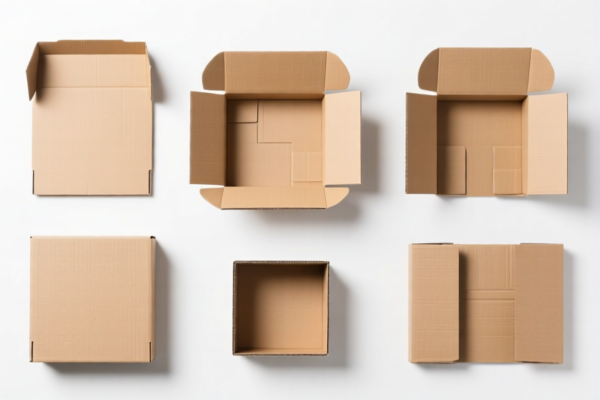
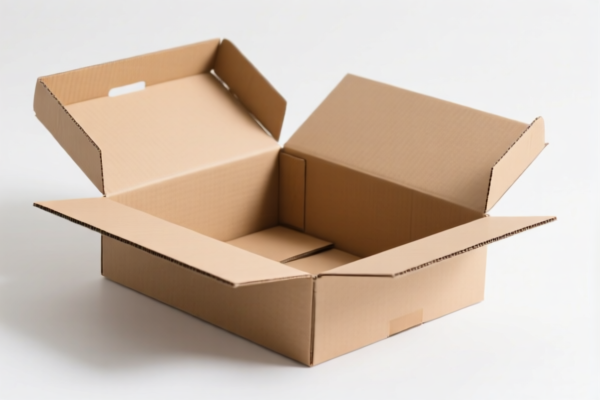
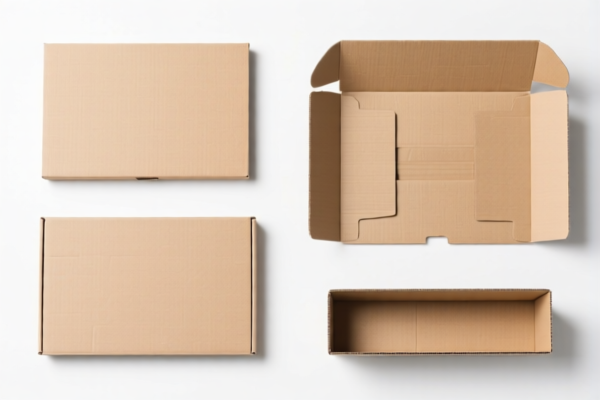
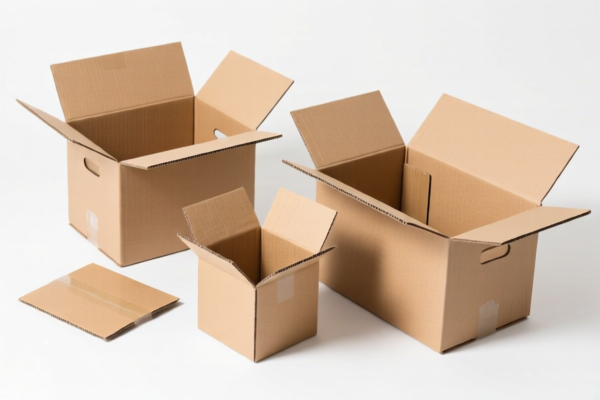
AI Analysis
📄 Paper and Paperboard Articles
🌐 HS Code Classification & Tariff Guide | 2026 Latest Tariff Rules | Expert Customs Clearance Strategy
📌 One-Stop Reference for Exporters & Importers | Accurate HS Code + Tax Breakdown + Pro Tips
📦 I. Product Definition & Classification: What Exactly Are "Paper and Paperboard Articles"?
In international trade, "paper and paperboard articles" refer to finished or semi-finished goods made from paper, paperboard, cellulose wadding, or webs of cellulose fibers — cut to size or shape, or used as functional items in daily life, offices, packaging, or stationery.
These include: - Packaging containers (boxes, cartons, bags) - Stationery & office supplies (notebooks, diaries, folders, binders) - Cut-to-size paper products (e.g., sheets, pads, labels) - Other articles not covered under specific subheadings
⚠️ Key Distinction: - If the item is just raw pulp or uncut paper → not classified here. - If it’s cut, shaped, or assembled into a functional product → likely falls under this category.
📊 II. HS Code Breakdown (2026 Official Tariff Table – China/US Focus)
| HS Code | Product Description | Use Case | Key Feature |
|---|---|---|---|
4823.90.86.80 |
Other paper, paperboard, cellulose wadding, and webs of cellulose fibers, cut to size or shape; other articles of paper pulp, paper, paperboard, etc.: Other: Other: Other: Other Other | General-purpose cut paper products, custom shapes, non-specific items | No specific use defined |
4823.90.10.00 |
Of paper pulp (raw material form, but processed into articles) | Industrial paper products, specialty pulp-based items | Made from pulp, not finished paper |
4820.90.00.00 |
Registers, account books, notebooks, letter pads, diaries, exercise books, blotting pads, binders, folders, file covers, manifold forms, interleaved carbon sets, stationery, book covers, album covers (paper/paperboard): Other | General stationery & office supplies | Not specifically listed elsewhere |
4820.10.40.00 |
Registers, account books, notebooks, receipt books, letter pads, diaries, etc.: Other | Common notebooks, ledgers, memo pads | Excludes branded or premium types |
4819.60.00.00 |
Cartons, boxes, cases, bags, packing containers (paper/paperboard); box files, letter trays, storage boxes for offices/shops | Packaging & office organization | Includes corrugated boxes, file organizers |
4819.50.40.60 |
Other packing containers (including record sleeves): Other Other: Other | Non-standard or custom packaging | E.g., protective sleeves, decorative boxes |
🔍 Important Note:
- All items listed are cut, shaped, or assembled — not raw material. - The "Other" subcategory applies when no more specific HS code fits. - No distinction between recycled or virgin paper — tax applies regardless.
💰 III. 2026 Tariff & Tax Breakdown (US-China Trade Context)
✅ Applicable Country: United States (US)
✅ Origin: China (CN)
✅ Effective Date: November 10, 2025 (with ongoing enforcement)
🎯 1. 4823.90.86.80 — Other Paper Articles (Cut to Size/Shape)
| Item | Detail |
|---|---|
| Base Duty Rate | 0.0% (ad valorem) |
| USITC Section 301 Additional Duty | +25.0% |
| IEEPA Emergency Economic Powers Act Duty | +10.0% (applies to Chinese-origin goods) |
| Total Effective Duty | 35.0% |
| Tax Calculation | CIF Value × 35.0% |
| De Minimis Threshold | ❌ Not applicable (denied) |
| Legal Basis Path | IEEPA:9903.01.25 → USITC:4823.90.86.80 → FOOTNOTE:9903.88.01 |
📌 Explanation:
- Despite being "other" articles, all items from China are subject to USITC 301 + IEEPA tariffs. - Even if the product seems minor (e.g., custom-shaped paper pads), it still triggers 35% total duty.
🎯 2. 4823.90.10.00 — Articles of Paper Pulp
| Item | Detail |
|---|---|
| Base Duty Rate | 0.0% |
| USITC Section 301 Additional Duty | +25.0% |
| IEEPA Emergency Economic Powers Act Duty | +10.0% |
| Total Effective Duty | 35.0% |
| Tax Calculation | CIF × 35.0% |
| De Minimis | ❌ Not allowed |
| Legal Basis | IEEPA:9903.01.25 → USITC:4823.90.10.00 → FOOTNOTE:9903.88.01 |
📌 Note:
- This includes pulp-based molded items (e.g., egg cartons, trays), even if they look like paperboard. - Do not assume “pulp” means “low value” — it still attracts 35% total tariff.
🎯 3. 4820.90.00.00 — Other Stationery & Office Articles (General)
| Item | Detail |
|---|---|
| Base Duty Rate | 0.0% |
| USITC 301 Duty | +25.0% |
| IEEPA Duty | +10.0% |
| Total Duty | 35.0% |
| Tax Calculation | CIF × 35.0% |
| De Minimis | ❌ Not eligible |
| Legal Path | IEEPA:9903.01.25 → USITC:4820.90.00.00 → FOOTNOTE:9903.88.01 |
📌 Use Case:
- Applies to generic notebooks, pads, folders, book covers not covered by more specific codes. - Even plain paper diaries or blank notepads fall here.
🎯 4. 4820.10.40.00 — Registers, Account Books, Notebooks, etc. (Other)
| Item | Detail |
|---|---|
| Base Duty Rate | 0.0% |
| USITC 301 Duty | +25.0% |
| IEEPA Duty | +10.0% |
| Total Duty | 35.0% |
| Tax Calculation | CIF × 35.0% |
| De Minimis | ❌ Not allowed |
| Legal Basis | IEEPA:9903.01.25 → USITC:4820.10.40.00 → FOOTNOTE:9903.88.01 |
📌 Important:
- This is not for branded or premium notebooks (those may have different codes). - Applies to basic, unbranded, or custom-sized notebooks.
🎯 5. 4819.60.00.00 — Packing Containers & Office Storage Boxes
| Item | Detail |
|---|---|
| Base Duty Rate | 0.0% |
| USITC 301 Duty | +25.0% |
| IEEPA Duty | +10.0% |
| Total Duty | 35.0% |
| Tax Calculation | CIF × 35.0% |
| De Minimis | ❌ Not eligible |
| Legal Path | IEEPA:9903.01.25 → USITC:4819.60.00.00 → FOOTNOTE:9903.88.01 |
📌 Examples: - Cardboard boxes for shipping - Office file folders - Letter trays - Storage boxes for desks or shops
✅ Even if used for personal storage, if made of paper/paperboard and used in office/shop — still taxed at 35%.
🎯 6. 4819.50.40.60 — Other Packing Containers (Including Record Sleeves)
| Item | Detail |
|---|---|
| Base Duty Rate | 0.0% |
| USITC 301 Duty | +25.0% |
| IEEPA Duty | +10.0% |
| Total Duty | 35.0% |
| Tax Calculation | CIF × 35.0% |
| De Minimis | ❌ Not allowed |
| Legal Basis | IEEPA:9903.01.25 → USITC:4819.50.40.60 → FOOTNOTE:9903.88.01 |
📌 Special Cases: - Record sleeves (for vinyl records) - Custom-shaped packaging - Decorative or promotional boxes - Non-standard containers
❗ Warning: Even "artistic" or "gift" packaging is taxed at 35% if made of paper/paperboard.
🛠️ IV. Customs Clearance Best Practices (Pro Tips to Avoid Penalties)
✅ 1. Essential Documentation Checklist
| Document | Required? | Why It Matters |
|---|---|---|
| ✅ Commercial Invoice | ✔️ | Must clearly state product description, HS code, and CIF value |
| ✅ Packing List | ✔️ | Shows quantity, weight, packaging type |
| ✅ Product Photos (with labels) | ✔️ | Proves shape, size, use — avoids misclassification |
| ✅ Technical Specs / Drawings | ✔️ | Helps prove if it’s “cut to size” or “custom shape” |
| ✅ Certificate of Origin (CO) | ✔️ | Needed for tariff eligibility (e.g., if from Vietnam, may qualify for lower rates) |
| ✅ Third-Party Test Reports (e.g., RoHS, REACH) | ✔️ | Optional but recommended for compliance |
| ✅ HS Code Pre-Ruling (Advance Ruling) | ✔️ | Highly recommended for high-value or complex shipments |
✅ 2.申报技巧(Key Rules to Remember)
🔥 "Shape Matters, Use Matters, Origin Matters!"
| Scenario | Correct HS Code | Mistake to Avoid |
|---|---|---|
| Custom-cut paper sheets (e.g., for crafts) | 4823.90.86.80 |
Don’t say “paper” — say “cut to size” |
| Plain notebooks (no brand) | 4820.10.40.00 |
Don’t use 4820.90.00.00 — too broad |
| Cardboard boxes for e-commerce | 4819.60.00.00 |
Don’t split into “box” + “tape” → each gets 35% |
| Record sleeves (vinyl) | 4819.50.40.60 |
Not 4819.60.00.00 — it’s “other” |
| Pulp-based molded trays | 4823.90.10.00 |
Not “paperboard” — it’s “pulp” |
✅ 3. Special Cases & How to Handle Them
| Situation | Solution |
|---|---|
| Mixed shipment (e.g., notebooks + boxes + sleeves) | Declare as one consignment with full breakdown — don’t split by HS code |
| Custom-designed packaging | Provide drawings + photos — claim “cut to size” to justify 4823.90.86.80 |
| Re-export or return | Must still declare HS code — 35% duty applies unless exempt |
| Samples or gifts | Still subject to 35% duty — de minimis does not apply |
| Goods from Vietnam/Mexico | Can apply for IEEPA exemption — 0% tariff possible |
🌍 V. Global Market Comparison (2026 Update)
| Country | Recommended HS Code | Tariff | Certification Required | Notes |
|---|---|---|---|---|
| 🇺🇸 USA | All listed above | 35.0% (China origin) | None (but documentation critical) | No de minimis |
| 🇨🇳 China | All listed | 5% (general) | CCC, RoHS | No extra tariffs |
| 🇪🇺 EU | 4820.90.00.00, 4819.60.00.00 |
0% (if CE compliant) | CE, REACH | No 301/IEEPA |
| 🇦🇺 Australia | 4820.90.00.00 |
5% | RCM | No extra duties |
| 🇯🇵 Japan | 4820.90.00.00 |
0% | PSE | No additional taxes |
📌 Insight:
- Only the U.S. applies 35% tariff on these items from China. - Shifting production to Vietnam, Thailand, or Mexico can reduce risk.
🚨 VI. Common Mistakes & Real-World Risks
❌ Mistake 1: Splitting a shipment into "notebooks", "boxes", "sleeves"
👉 Result: Each item gets 35% duty → total 105%+ on same goods → huge cost overrun
❌ Mistake 2: Labeling "paper" instead of "cut to size" or "custom shape"
👉 Result: Customs may reclassify → higher tariff or delay
❌ Mistake 3: Assuming "recycled paper" is exempt
👉 Result: No difference in tariff — same 35% applies
❌ Mistake 4: Not providing photos or drawings
👉 Result: Customs delays or refuses clearance
✅ Correct Approach:
Use precise language:
"Custom-cut paper pads, 15x20 cm, 50 sheets per pad, for office use, made from recycled paperboard"
→ Clearly supports4823.90.86.80or4820.90.00.00
🎯 VII. Final Summary: The 3 Golden Rules of Paper & Paperboard Clearance
🔹 Rule 1: All paper articles from China to the U.S. pay 35% total duty — no exceptions.
🔹 Rule 2: Do NOT split shipments — it multiplies the tax burden.
🔹 Rule 3: Use precise descriptions + photos — avoid “paper” or “stationery” alone.
📌 VIII. Pro Tips & Action Plan
✅ Step 1: Confirm origin — if from Vietnam/Mexico, apply for IEEPA exemption
✅ Step 2: Request HS Code Pre-Ruling from U.S. CBP
✅ Step 3: Prepare detailed product specs + photos
✅ Step 4: Use professional customs broker experienced in paper goods
✅ Step 5: Calculate total cost = CIF × 35% + freight + handling
📣 🚀 Take Action Now!
📞 Contact a customs broker with experience in paper & packaging goods
📄 Request HS Code pre-ruling for your product line
💼 Avoid costly delays, penalties, or rejections
✨ Professional Customs Starts with Accurate Classification!
💼 Your next shipment could save thousands — if you get the HS code right.
📌 Remember:
"A single wrong HS code can cost 35% more — and ruin your profit margin."
Get it right from the start.
Customer Reviews
About HS Code Classification
The Harmonized System (HS) is an internationally standardized nomenclature developed by the World Customs Organization (WCO) to classify traded products. Over 200 countries use the HS system as the basis for customs tariffs, trade statistics, and import/export regulations.
Each HS code follows a hierarchical structure:
- Chapter (2 digits) — Broad category of goods (e.g., Chapter 84: Machinery and Mechanical Appliances)
- Heading (4 digits) — More specific grouping within the chapter
- Subheading (6 digits) — Internationally standardized breakdown, used by all WCO member countries
- National subdivisions (8-10 digits) — Country-specific extensions for further classification, such as US HTSUS 10-digit codes
Correct HS code classification is essential for smooth customs clearance, accurate duty payment, and compliance with trade regulations. Misclassification can lead to customs delays, overpayment of duties, or penalties.
When importing from CN to US, the applicable tariff rates may include:
- Most-Favored-Nation (MFN) rate — The standard duty rate applied to WTO members
- General rate — Applied to countries without trade agreements
- Trade remedy duties — Additional tariffs such as Section 301 (anti-dumping), Section 232 (national security), or countervailing duties
The information provided on this page is for reference purposes only. For official classification, please consult with your local customs authority or a licensed customs broker.