Paper and cardboard for packaging
CN → US| HS Code | Tariff Rate | Origin | Destination | Doc |
|---|---|---|---|---|
| 4805121000 | 35.0% | CN | US | Official Doc |
| 4805191000 | 35.0% | CN | US | Official Doc |
| 4823690040 | 35.0% | CN | US | Official Doc |
| 4819100020 | 35.0% | CN | US | Official Doc |
| 4819100040 | 35.0% | CN | US | Official Doc |
Product Images
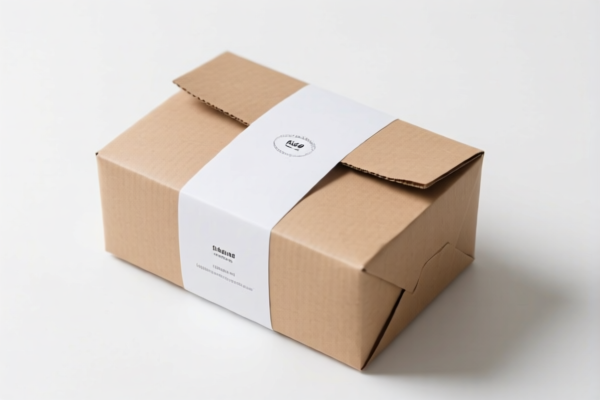
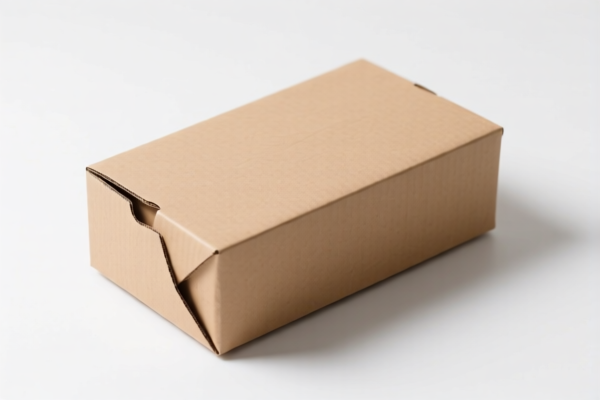
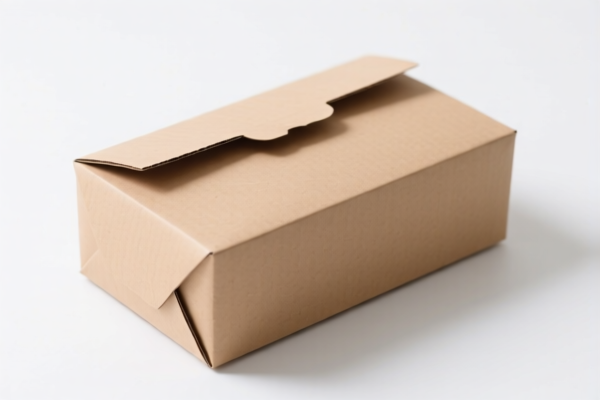
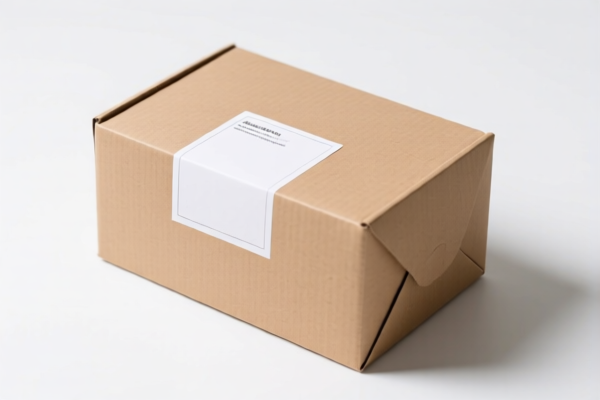
AI Analysis
📦 Paper and Cardboard for Packaging
🌐 HS Code Reference & Customs Clearance Guide | 2026 Latest Tariff Analysis | Professional Clearance Strategy
📌 I. Product Definition & Classification: Do You Really Understand "Packaging Paper"?
Paper and cardboard for packaging are the backbone of global logistics and retail. In international trade, they are not a single monolithic category but are split based on state of processing (unwoven/just cut) vs. converted status (boxes, sacks, containers). The classification hinges on whether the item is a raw sheet/roll or a finished packaging container.
⚠️ Key Distinction Point:
- Raw/Unconverted Paper: Large rolls, sheets, or cut sizes not yet formed into specific containers → Typically Chapter 4801-4805.
- Converted Packaging (Boxes/Sacks): Folded boxes, cartons, sacks, or containers ready for use → Typically Chapter 4819.
- Other Paper Products: Cut-to-size items, paperboard goods not strictly "boxes" → Chapter 4823.
📦 II. HS Code Classification Details (2026 Latest Tariff Authority Comparison)
| HS Code | Product Description | Application Scenario | Material/State |
|---|---|---|---|
4805.12.10.00 |
Wood pulp paper, in rolls or sheets | Unconverted packaging paper base, known as "linerboard" or "kraft paper" in rolls | ✅ Paper/Paperboard |
4805.19.10.00 |
Other paper/paperboard, in rolls/sheets | "Other" category for paper not meeting specific 4805.12 criteria; a catch-all for packaging paper stock | ✅ Paper/Paperboard |
4823.69.00.40 |
Other cut-to-size paper/paperboard products | Paper goods cut to specific sizes but not formed into boxes; general paper products | ✅ Paper Products |
4819.10.00.20 |
Sacks and bags, of kraft paper or of other wood pulp | Heavy-duty packaging sacks, multi-wall bags, industrial paper sacks | ✅ Packaging Containers |
4819.10.00.40 |
Other boxes, cartons, cases, of corrugated paper | Corrugated boxes, folding cartons, shipping containers | ✅ Packaging Containers |
🔍 Key Reminder:
- Corrugated Boxes fall under 4819.10; if it's just flat kraft paper rolls, it falls under 4805.
- Sacks/Bags are specifically 4819.10.
- Misclassifying a finished box as raw paper (or vice versa) leads to significant tariff discrepancies and customs delays.
💰 III. 2026 Latest Tariff Rate Details (Including Surtaxes & Policy Surcharges)
✅ Applicable Country: United States (US)
✅ Origin: China (CN)
✅ Effective Date: From November 10, 2025 (including subsequent imports)
🎯 1. 4805.12.10.00 & 4805.19.10.00 —— Raw Paper/Paperboard (Unconverted)
| Item | Content |
|---|---|
| Basic Tariff | 0% (ad valorem) |
| USITC Surtax | +25% (under USITC Footnote 9903.88.01 / Section 301) |
| IEEPA Surtax | +10% (Targeting China/HK products, effective Nov 10, 2025) |
| Total Rate | 35.0% |
| Tax Calculation | CIF Value × 35% |
| De Minimis Eligibility | ❌ Not Eligible (deny_de_minimis) |
| Legal Basis Path | IEEPA:9903.01.25 → IEEPA:9903.01.24 → USITC:4805.xxxx → FOOTNOTE:9903.88.01 |
📌 Explanation:
- "25% USITC Surtax": From Section 301 tariffs on Chinese goods.
- "10% IEEPA Surtax": Additional surcharge under the International Emergency Economic Powers Act.
- Total 35%: High cost for raw paper imports. Must be factored into supply chain pricing.
🎯 2. 4823.69.00.40 —— Other Cut-to-Size Paper Products
| Item | Content |
|---|---|
| Basic Tariff | 0% |
| USITC Surtax | +25% |
| IEEPA Surtax | +10% |
| Total Rate | 35.0% |
| Tax Calculation | CIF × 35% |
| De Minimis Eligibility | ❌ Not Eligible |
| Legal Basis Path | IEEPA:9903.01.25 → IEEPA:9903.01.24 → USITC:4823.69 → FOOTNOTE:9903.88.01 |
📌 Note:
- Same tariff structure as raw paper.
- Applies to paper products cut to size but not formed into boxes.
🎯 3. 4819.10.00.20 & 4819.10.00.40 —— Packaging Containers (Boxes, Sacks, Bags)
| Item | Content |
|---|---|
| Basic Tariff | 0% |
| USITC Surtax | +25% |
| IEEPA Surtax | +10% |
| Total Rate | 35.0% |
| Tax Calculation | CIF × 35% |
| De Minimis Eligibility | ❌ Not Eligible |
| Legal Basis Path | IEEPA:9903.01.25 → IEEPA:9903.01.24 → USITC:4819.10 → FOOTNOTE:9903.88.01 |
📌 Note:
- Even though these are "packaging," they are NOT exempt from Section 301/IEEPA surcharges.
- Corrugated boxes (4819.10.00.40) and Kraft sacks (4819.10.00.20) both carry the 35% total rate.
- Crucial: Do not assume "packaging materials" are exempt from China surtaxes.
🛠️ IV. Customs Clearance Practical Advice (Battle-Tested Pitfall Guide)
✅ 1. Required Document Checklist (All Mandatory)
| Document | Required | Explanation |
|---|---|---|
| ✅ Product Specification Sheet | ✔️ | Detail material type (Kraft, Corrugated, Liner), GSM (grams per square meter), dimensions |
| ✅ Product Photos (with Label) | ✔️ | Clear images of the product, including any printing or branding |
| ✅ Commercial Invoice | ✔️ | Clearly state "Paper for Packaging" or "Corrugated Box" – Be Specific |
| ✅ Packing List | ✔️ | Indicate whether items are rolls, sheets, or folded boxes |
| ✅ Certificate of Origin (CO) | ✔️ | If applicable for non-China origin (though surtaxes may still apply depending on trade routes) |
✅ 2. Declaration Tips (Key Mantra)
🔥 "Correct Category Saves Money, Wrong Name Causes Delay!"
| Situation | Correct Declaration | Wrong Practice |
|---|---|---|
| Corrugated Boxes | 4819.10.00.40 (Corrugated Paper Board Boxes) |
Declaring as "Paper" (4805) → 35% vs. Potential Different Duty if misclassified as gift wrap |
| Kraft Paper Rolls | 4805.12.10.00 or 4805.19.10.00 |
Declaring as "Boxes" (4819) → 35% but incorrect description leads to scrutiny |
| Paper Sacks/Bags | 4819.10.00.20 |
Declaring as "General Paper" → 35% but mismatch with physical goods |
| Cut Paper Sheets (Non-Packaging) | 4823.69.00.40 |
Declaring as "Packaging" → 35% but may trigger additional regulatory checks |
✅ 3. Special Circumstances Handling
| Situation | Handling Advice |
|---|---|
| OEM Custom Printed Boxes | Provide print templates and order details. Ensure HS code reflects "Corrugated" if applicable. |
| Mixed Shipment (Paper + Boxes) | Do Not Split unless necessary. Declare each item type accurately. Splitting incorrectly can lead to 89.5% rates on accessories. |
| Recycled Paper | If made from recycled pulp, ensure specs match HS 4805/4819 criteria. Some recycled goods may have different duty treatments if originating from non-China countries. |
| Small Samples (De Minimis) | ❌ Warning: Paper/Paper products from China are DENIED de minimis entry under current IEEPA/USITC rules. Do not rely on $800 exemption. |
🌍 V. Global Market Customs Comparison (2026 Latest)
| Country/Region | Recommended HS Code | Tariff (China Origin) | Certification Req. | Notes |
|---|---|---|---|---|
| 🇺🇸 USA | 4819.10.00.40 (Boxes) / 4805 (Paper) |
35% (0% Base + 25% Sec 301 + 10% IEEPA) | None Specific | High Tariff, strict enforcement. |
| 🇨🇳 China | 4819.10 / 4805 |
5%-10% | None | Low import duty, no surtaxes. |
| 🇪🇺 EU | 4819.10 / 4805 |
0% - 4% | REACH (if treated with chemicals) | No Section 301 equivalents. |
| 🇬🇧 UK | 4819.10 / 4805 |
0% - 4% | UKCA (if applicable) | Post-Brexit tariffs similar to EU. |
| 🇯🇵 Japan | 4819.10 / 4805 |
0% - 5% | FSC (if wood-based) | No major surtaxes on paper. |
📌 Conclusion:
- USA is the only major market imposing the 35% cumulative surtax on Chinese paper/packaging.
- Supply Chain Impact: For US-bound goods, consider sourcing paper/boxes from Vietnam, Mexico, or Thailand to potentially mitigate IEEPA/Section 301 tariffs (subject to rules of origin).
📌 VI. Common Mistakes & Pitfall Guide (Lessons from Tears)
❌ Mistake 1: Declaring "Corrugated Boxes" as "Paper Rolls" (4805)
👉 Consequence: Physical inspection reveals boxes → Delay, Penalty, or Re-classification to 35% anyway, but with administrative hassle.
❌ Mistake 2: Assuming "Packaging" is exempt from Section 301
👉 Consequence: Customs rejects entry or demands back-taxes of 35%. Paper/Packaging is NOT exempt.
❌ Mistake 3: Ignoring IEEPA 10% Surtax in Cost Calculations
👉 Consequence: Profit margins wiped out. Total Tax = 35%, not 25%.
❌ Mistake 4: Using "De Minimis" ($800) for Small Paper Shipments
👉 Consequence: Entry Denied. Current policy explicitly denies de minimis for China-origin IEEPA/301 goods.
✅ Correct Practice:
"Corrugated Shipping Boxes, 12x12x12 inches, 32ECT, Brown, 1000 pcs, Model X, Made in China"
HS Code:4819.10.00.40
Tax: 35%
🎯 VII. Conclusion: Professional Declaration, Save Time & Money!
🎯 Remember the Mantra:
🔹 "Paper Rolls go to 4805, Boxes to 4819, Sacks to 4819.20. Total Tax is 35%, don't get caught in the net!"
🔹 "No De Minimis for China Paper, 35% is the real bill. Declare accurately, stay well."
📌 Pro Tip:
If your packaging is originally from Vietnam, Mexico, or Thailand, you may apply for IEEPA Exemptions, potentially reducing the rate to 0%~5%.
Recommend Advance Ruling (Pre-classification) with CBP to avoid clearance risks.
📣 Immediate Action:
📞 Contact a Professional Customs Broker + Provide Product Photos + Apply for HS Code Pre-Ruling
🚀 Ensure your packaging, clears smoothly, avoids delays, and protects your profits!
✨ Professional Clearance Starts with Precise Classification!
💼 Every cent of your cost deserves precise calculation!
Customer Reviews
About HS Code Classification
The Harmonized System (HS) is an internationally standardized nomenclature developed by the World Customs Organization (WCO) to classify traded products. Over 200 countries use the HS system as the basis for customs tariffs, trade statistics, and import/export regulations.
Each HS code follows a hierarchical structure:
- Chapter (2 digits) — Broad category of goods (e.g., Chapter 84: Machinery and Mechanical Appliances)
- Heading (4 digits) — More specific grouping within the chapter
- Subheading (6 digits) — Internationally standardized breakdown, used by all WCO member countries
- National subdivisions (8-10 digits) — Country-specific extensions for further classification, such as US HTSUS 10-digit codes
Correct HS code classification is essential for smooth customs clearance, accurate duty payment, and compliance with trade regulations. Misclassification can lead to customs delays, overpayment of duties, or penalties.
When importing from CN to US, the applicable tariff rates may include:
- Most-Favored-Nation (MFN) rate — The standard duty rate applied to WTO members
- General rate — Applied to countries without trade agreements
- Trade remedy duties — Additional tariffs such as Section 301 (anti-dumping), Section 232 (national security), or countervailing duties
The information provided on this page is for reference purposes only. For official classification, please consult with your local customs authority or a licensed customs broker.