Paper and cardboard for packaging, in rolls or sheets
CN → US| HS Code | Tariff Rate | Origin | Destination | Doc |
|---|---|---|---|---|
| 4819504060 | 35.0% | CN | US | Official Doc |
| 4819502000 | 35.0% | CN | US | Official Doc |
Product Images
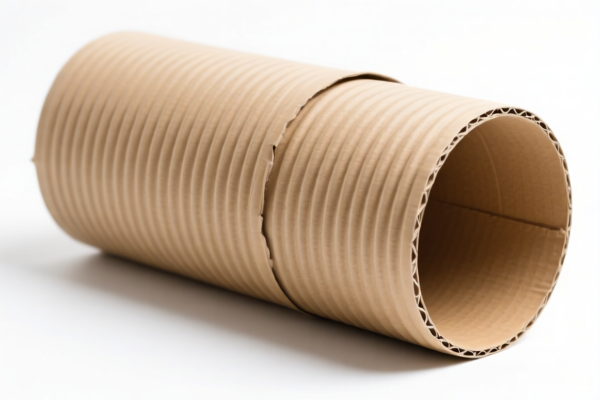
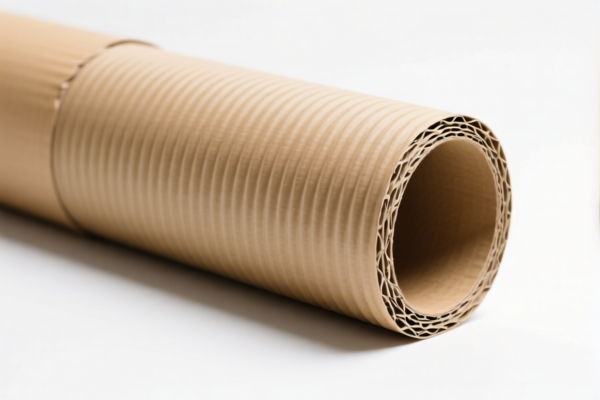
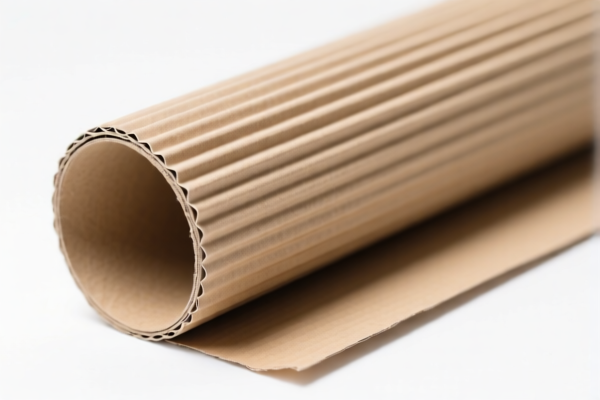
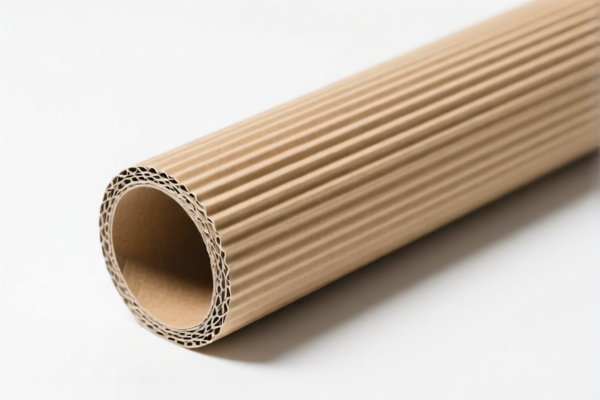
AI Analysis
📦 Paper & Cardboard for Packaging (Rolls or Sheets)
🌐 HS Code Reference & Customs Clearance Guide | 2026 Latest Tariff Analysis | Professional Entry Strategy
📌 I. Product Definition and Classification: Do You Really Know “Packaging Paper”?
Paper and cardboard for packaging, supplied in rolls or sheets, serve as the foundational material for creating boxes, cartons, bags, and other packing containers. In international trade, these materials are primarily classified under Chapter 48 (Paper and Paperboard; Articles of Paper Clulpulp, of Paper or of Paperboard).
Specifically, the destination depends on the form and end-use: - Raw Material State: Rolls or sheets intended for further processing (cutting, folding, printing) into containers. - Finished Container State: If already formed into a specific container (e.g., a pre-made box or bag), it may fall under Chapter 48.19 or Chapter 48.20.
⚠️ Key Distinction:
- If the product is raw material (rolls/sheets) → Likely 4804, 4805, or 4810.
- If the product is a packaging container (made from paper/board) → Likely 4819.
- The data provided focuses on 4819.50, which refers to "Other packing containers" made from paper/paperboard.
📦 II. HS Code Classification Details (2026 Latest Tariff Authority Comparison)
Based on the provided <DATA>, the relevant HS Codes are for "Other packing containers, including record sleeves" made of paper or paperboard. These are finished or semi-finished containers, not raw rolls/sheets in the traditional sense, but often referred to as "packaging paper products."
| HS Code | Product Description | Application Scenario | Tax Rate (China to US) |
|---|---|---|---|
4819.50.40.60 |
Other packing containers (including record sleeves): Other | General paper cartons, boxes, cases, bags, cellulosic wadding containers | 25.0% |
4819.50.20.00 |
Sanitary food and beverage containers | Eco-friendly or specialized sanitary containers for food/drink | 25.0% |
🔍 Critical Reminder:
- These codes apply to containers (boxes, bags, sleeves), not raw rolls of blank paper.
- If you are importing raw rolls/sheets to be cut into boxes later, you might look at 4804 or 4805. However, based on the provided data, we focus on 4819.50 items.
- "Sanitary food and beverage containers" (4819.50.20.00) may have specific regulatory requirements (FDA, etc.) beyond tariffs.
💰 III. 2026 Latest Tariff Rate Details (Including Surcharges & Policy Add-ons)
✅ Applicable Country: United States (US)
✅ Origin: China (CN)
✅ Effective Time: Ongoing (as per 301 Section and current trade policies)
🎯 1. 4819.50.40.60 —— Other Packing Containers (General)
| Item | Content |
|---|---|
| Base Tariff | 0.0% (ad valorem) |
| Section 301 Surcharge | +25.0% |
| Total Tariff | 25.0% |
| Tax Calculation | CIF Value × 25% |
| De Minimis Eligibility | ❌ Not Eligible (Section 301 goods are generally excluded from de minimis treatment if value exceeds threshold, but 301 tariffs apply to most commercial imports) |
| Legal Basis | USITC:4819.50.40.60 → Footnote 9903.88.01 (Section 301) |
📌 Explanation:
- Base Rate 0%: Paper packaging materials often have low base tariffs to encourage recycling and packaging efficiency.
- 301 Tariff 25%: All goods from China in HS Chapter 48 (specifically 4819.50) are subject to the 25% additional duty under Section 301 of the Trade Act of 1974.
- No IEEPA 10%: Based on the provided data, only the 25% Section 301 tariff is listed. Unlike electronics, paper packaging does not currently carry an additional IEEPA 10% surcharge in this specific dataset.
🎯 2. 4819.50.20.00 —— Sanitary Food and Beverage Containers
| Item | Content |
|---|---|
| Base Tariff | 0.0% |
| Section 301 Surcharge | +25.0% |
| Total Tariff | 25.0% |
| Tax Calculation | CIF Value × 25% |
| De Minimis Eligibility | ❌ Not Eligible |
| Legal Basis | USITC:4819.50.20.00 → Footnote 9903.88.01 |
📌 Note:
- Same tariff structure as general packing containers.
- Additional Compliance: Food-contact materials require FDA 21 CFR 176 compliance. Ensure your supplier provides FDA correspondence or test reports.
🛠️ IV. Customs Clearance Practical Advice (Real-World Pitfall Avoidance Guide)
✅ 1. Required Documentation Checklist (None Can Be Missing)
| Document | Required | Notes |
|---|---|---|
| ✅ Commercial Invoice | ✔️ | Must clearly state "Paper/Cardboard Packaging Containers" and HS Code. |
| ✅ Packing List | ✔️ | Detail weight, dimensions, and number of boxes/bags. |
| ✅ Product Description | ✔️ | Specify material (e.g., "Kraft Paper," "Corrugated Board," "Cellulose Wadding"). |
| ✅ FDA Compliance (if food contact) | ✔️ | For 4819.50.20.00, provide FDA letter of compliance or test reports. |
| ✅ Bill of Lading/Air Waybill | ✔️ | Standard shipping document. |
| ✅ Certificate of Origin | ✔️ | Proof of Chinese origin to apply correct tariff. |
✅ 2. Declaration Tips (Key Mantra)
🔥 “Material Matters, Use Defines Code, FDA for Food, 25% Always!”
| Scenario | Correct Declaration | Wrong Practice |
|---|---|---|
| Paper Bags/Boxes | 4819.50.40.60 |
Misdeclare as "Paper Rolls" (4804) → Risk of misclassification penalty. |
| Food-Grade Containers | 4819.50.20.00 |
Forget FDA documentation → Customs Hold & FDA Rejection. |
| Record Sleeves | 4819.50.40.40 (or similar) |
Ensure description matches "Sleeves," not generic boxes. |
| Raw Paper Rolls | 4804.xxxx or 4805.xxxx |
Do NOT use 4819 if not yet formed into containers. |
📌 Warning:
- If you import unprinted, unformed paper rolls, do not use4819.50. Use 4804 (Machine-made paper) or 4805 (Other paper/board).
-4819is for articles (containers). If the goods are rolls meant for further manufacturing, they are raw materials, not containers.
✅ 3. Special Situation Handling
| Situation | Handling Advice |
|---|---|
| OEM Packaging with Client’s Brand | Include client’s PO and artwork approval. Ensure no IP infringement. |
| Mixed Containers (Food + Non-Food) | Declare separately or use the highest regulatory standard (Food). |
| Recycled Content | Highlight if >50% recycled content for marketing, but no tariff benefit unless specific green policies apply. |
| Low-Value Shipments | Section 301 tariffs apply regardless of value for most commercial imports. |
🌍 V. Global Market Customs Clearance Comparison (2026 Latest)
| Country/Region | Recommended HS Code | Tariff (China) | Certification | Notes |
|---|---|---|---|---|
| 🇺🇸 USA | 4819.50.xxxx |
25% | FDA (if food) | 25% Section 301 applies. |
| 🇨🇳 China | 4819.50 |
~5-10% | None | Low import tariff. |
| 🇪🇺 EU | 4819.20 / 4819.40 |
0-6.5% | FSC/PEFC (optional) | Lower tariffs, strict environmental standards. |
| 🇬🇧 UK | 4819.20 |
0-6.5% | UKCA (if applicable) | Post-Brexit rules apply. |
| 🇯🇵 Japan | 4819.20 |
0-3% | FSC | Moderate tariffs. |
📌 Conclusion:
- USA has the highest barrier due to the 25% Section 301 tariff.
- Food-contact items require strict FDA compliance regardless of destination.
📌 VI. Common Mistakes & Pitfall Guide (Lessons Learned)
❌ Mistake 1: Declaring raw paper rolls as packaging containers (4819).
👉 Consequence: Misclassification. Customs may reclassify to 4804/4805, leading to delays or penalties if the original declaration was intentionally misleading.
❌ Mistake 2: Forgetting FDA compliance for food-grade containers.
👉 Consequence: FDA Refusal. Goods may be destroyed or re-exported. No tariff dispute, but total loss of cargo.
❌ Mistake 3: Assuming de minimis (Section 321) applies.
👉 Consequence: Section 301 tariffs often block de minimis for Chinese goods. Always check current CBP directives.
❌ Mistake 4: Using vague descriptions like "Paper Box."
👉 Consequence: Customs Examination. Must specify material, type (e.g., corrugated, solid board), and use.
✅ Correct Practice:
"Corrugated Paper Boxes for Electronics Packaging, 3-Ply, Kraft Material, No Food Contact, HS 4819.50.40.60"
🎯 VII. Conclusion: Professional Declaration Saves Money!
🎯 Remember the Mantra:
🔹 “Raw Rolls are 4804/4805, Containers are 4819, 25% Tariff for China, FDA for Food!”
🔹 “HS Code 4819.50 means containers, not rolls. Check your product form!”
📌 Pro Tip:
If you are importing large volumes, consider Section 301 Exclusions. Check if your specific paper product type is on the exclusion list (rare for general packaging, but possible for specialized materials).
Always request pre-classification rulings from CBP for new product lines.
📣 Immediate Action:
📞 Consult a licensed customs broker + Provide product specs + Verify FDA status (if food)
🚀 Ensure smooth clearance, avoid 25% surprises, and maximize profit margins!
✨ Professional Customs Clearance Starts with Accurate Classification!
💼 Every Cent of Tariff Matters!
Customer Reviews
About HS Code Classification
The Harmonized System (HS) is an internationally standardized nomenclature developed by the World Customs Organization (WCO) to classify traded products. Over 200 countries use the HS system as the basis for customs tariffs, trade statistics, and import/export regulations.
Each HS code follows a hierarchical structure:
- Chapter (2 digits) — Broad category of goods (e.g., Chapter 84: Machinery and Mechanical Appliances)
- Heading (4 digits) — More specific grouping within the chapter
- Subheading (6 digits) — Internationally standardized breakdown, used by all WCO member countries
- National subdivisions (8-10 digits) — Country-specific extensions for further classification, such as US HTSUS 10-digit codes
Correct HS code classification is essential for smooth customs clearance, accurate duty payment, and compliance with trade regulations. Misclassification can lead to customs delays, overpayment of duties, or penalties.
When importing from CN to US, the applicable tariff rates may include:
- Most-Favored-Nation (MFN) rate — The standard duty rate applied to WTO members
- General rate — Applied to countries without trade agreements
- Trade remedy duties — Additional tariffs such as Section 301 (anti-dumping), Section 232 (national security), or countervailing duties
The information provided on this page is for reference purposes only. For official classification, please consult with your local customs authority or a licensed customs broker.