Paper and cardboard rolls or sheets
CN → US| HS Code | Tariff Rate | Origin | Destination | Doc |
|---|---|---|---|---|
| 4810131900 | 35.0% | CN | US | Official Doc |
| 4810291025 | 35.0% | CN | US | Official Doc |
Product Images
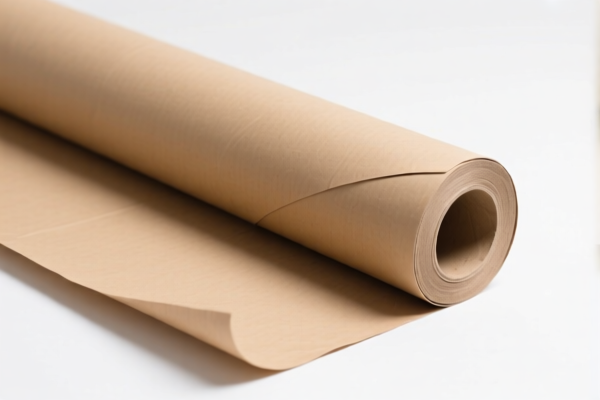
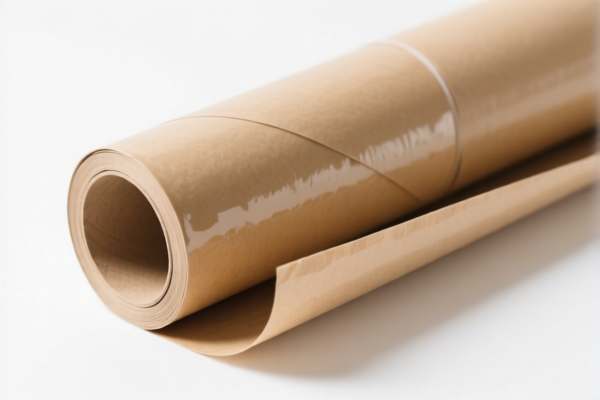
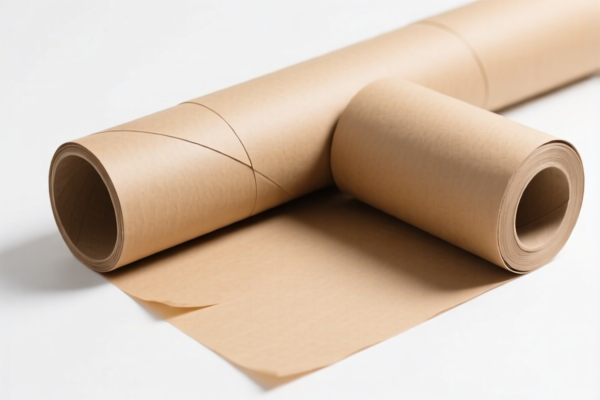
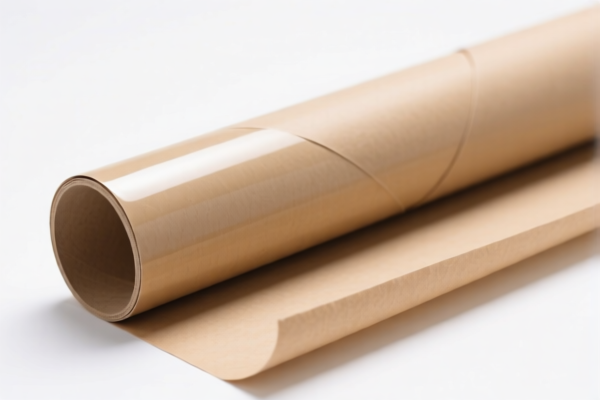
AI Analysis
📜 Kaolin-Coated Paper & Paperboard Rolls/Sheets (Printing/Graphic Use)
🌐 HS Code Reference & Clearance Guide | 2026 Latest Tariff Analysis | Professional Clearance Strategy
📌 I. Product Definition & Classification: Do You Really Understand "Coated Paper"?
Kaolin-coated paper and paperboard are ubiquitous in modern printing, packaging, and graphic communications. In international trade, they are strictly categorized based on fiber content and manufacturing process. The two HS codes provided in the dataset represent the critical split between:
- "High-Quality" Paper: Contains ≤10% mechanical/chemi-mechanical fibers (e.g., high-grade offset paper, fine art paper).
- "Standard/Industrial" Paper: Contains >10% mechanical/chemi-mechanical fibers (e.g., newsprint-grade coated paper, lower-cost catalog paper).
⚠️ Key Distinction Point:
- If the fiber content is ≤10% mechanical/chemi-mechanical → Classify under 4810.13.19.00
- If the fiber content is >10% mechanical/chemi-mechanical → Classify under 4810.29.10.25
📦 II. HS Code Classification Details (2026 Latest Tariff Authority Comparison)
| HS Code | Product Description | Applicable Scenario | Mechanical Fiber Content |
|---|---|---|---|
4810.13.19.00 |
Kaolin-coated paper (writing/printing/graphic use), rolls >15cm width, ≤150 g/m², Other | High-quality offset paper, premium printing paper, graphic arts paper | ✅ ≤ 10% |
4810.29.10.25 |
Kaolin-coated paper (writing/printing/graphic use), rolls/strips >15cm, Other | Standard coated paper, lower-cost printing paper, bulk graphic paper | ✅ > 10% |
🔍 Critical Reminder:
- Both codes apply specifically to paper coated with kaolin (China clay) or other inorganic substances, with no other coating (like plastic or polymer).
- Both codes apply to rectangular sheets (unfolded >36cm x >15cm) or rolls (width >15cm).
- The weight limit (≤150 g/m²) is explicitly mentioned only in the description for4810.13.19.00, implying this code is for lighter-weight, higher-grade paper.
- Misclassification based on fiber content is the most common error.
💰 III. 2026 Latest Tariff Rate Breakdown (Including Surtaxes)
✅ Applicable Country: United States (US)
✅ Origin: China (CN) (Inferred from "25% surtax" which is typical for US-China trade)
✅ Effective Date: Current 301 Tariffs Apply
🎯 1. 4810.13.19.00 —— High-Quality Kaolin-Coated Paper (≤10% Mech. Fibers)
| Item | Content |
|---|---|
| Base Tariff Rate | 0.0% (ad valorem) |
| Section 301 Surcharge | +25.0% (List 4A) |
| Total Tax Rate | 25.0% |
| Tax Calculation | CIF Value × 25% |
| De Minimis Exemption | ❌ Not Applicable (Section 301 goods are excluded from de minimis) |
| Legal Basis Path | HTSUS:4810.13.19.00 → USITC Section 301: List 4A |
📌 Explanation:
- The 0% base tariff reflects the duty-free status of many paper products under normal MFN rates.
- However, the +25% Section 301 surtax applies to all Chinese-origin goods in this category.
- Total effective duty is 25%. This is a significant cost burden for high-volume printing paper imports.
🎯 2. 4810.29.10.25 —— Standard Kaolin-Coated Paper (>10% Mech. Fibers)
| Item | Content |
|---|---|
| Base Tariff Rate | 0.0% (ad valorem) |
| Section 301 Surcharge | +25.0% (List 4A) |
| Total Tax Rate | 25.0% |
| Tax Calculation | CIF Value × 25% |
| De Minimis Exemption | ❌ Not Applicable |
| Legal Basis Path | HTSUS:4810.29.10.25 → USITC Section 301: List 4A |
📌 Note:
- Despite different HS codes, the tariff treatment is identical.
- Both codes fall under the same 25% surtax.
- The distinction is purely for statistical and regulatory tracking, not tariff savings.
🛠️ IV. Clearance Practical Advice (Real-World Pitfall Avoidance Guide)
✅ 1. Preparation Checklist (All Documents Required)
| Document | Mandatory | Description |
|---|---|---|
| ✅ Product Specification Sheet | ✔️ | Must clearly state: Kaolin coating, fiber content % (mechanical vs. non-mechanical), weight (g/m²), width |
| ✅ Certificate of Origin | ✔️ | Proves Chinese origin (triggers 301 surtax) |
| ✅ Commercial Invoice | ✔️ | Must accurately describe: "Kaolin-Coated Paper, Printing Use, Roll >15cm, Weight ≤150g/m²" |
| ✅ Packing List | ✔️ | Detail roll dimensions, weight, and number of rolls |
| ✅ Fiber Content Test Report | ✔️ | Crucial: Third-party lab report proving % mechanical fiber content to support HS code choice |
✅ 2. Declaration Tips (Key Mnemonic)
🔥 "Coating matters, fiber defines, weight limits, surtax survives!"
| Scenario | Correct Declaration | Wrong Action |
|---|---|---|
| Paper with ≤10% mech. fiber, ≤150g/m² | 4810.13.19.00 |
Misdeclare as 4810.29... → No tax saving, but wrong stats |
| Paper with >10% mech. fiber | 4810.29.10.25 |
Misdeclare as 4810.13... → Risk of customs audit, penalties |
| Paper coated with plastic/polymer | NOT these codes | Must use other 4810 subheadings or 4823 → Different tax |
| Sheets ≤15cm width | NOT these codes | Must use other 4810 subheadings (e.g., 4810.11/4810.21) |
✅ 3. Special Case Handling
| Situation | Handling Advice |
|---|---|
| Mixed Lots | If a shipment contains both types, declare separately. Do not average fiber content. |
| "Other" Coating | If any plastic, wax, or polymer coating is present, these HS codes are invalid. |
| Surface Decorated/Printed | These codes cover surface-colored/decorated/printed paper. No additional classification needed for printing. |
| Weight Threshold | If >150 g/m², 4810.13.19.00 may not apply. Check other 4810.13 subheadings. |
🌍 V. Global Main Market Clearance Comparison (2026 Latest)
| Country/Region | Recommended HS Code | Tariff (China Origin) | Certification Requirement | Notes |
|---|---|---|---|---|
| 🇺🇸 United States | 4810.13.19.00 / 4810.29.10.25 |
25% (301 Surtax) | None specific | Base 0% + 25% surtax |
| 🇨🇳 China | Same HS Codes | 5-10% (Import Duty) | N/A | Export from China |
| 🇪🇺 European Union | 4810.13 / 4810.29 |
0-6.5% | N/A | No surtax |
| 🇬🇧 United Kingdom | Same HS Codes | 0-6.5% | N/A | Post-Brexit rules apply |
| 🇨🇦 Canada | Same HS Codes | 0-5% | N/A | No surtax |
📌 Conclusion:
- The US is the only major market with a 25% surtax on these paper products.
- Cost Impact: For a $100,000 shipment, expect $25,000 in additional tariffs for US imports.
- EU/UK/Canada: Significantly lower duty burden. Consider supply chain optimization if US market is targeted.
📌 VI. Common Mistakes & Pitfalls (Lessons Learned)
❌ Mistake 1: Assuming all coated paper is the same
👉 Consequence: Misclassification leads to customs holds, audits, and potential penalties.
👉 Fix: Get a fiber content test report.
❌ Mistake 2: Ignoring the "No Other Coating" clause
👉 Consequence: If paper has a plastic coating, it’s not 4810.13/4810.29.
👉 Fix: Verify coating composition. Plastic-coated paper falls under different HS codes (e.g., 4811, 4823).
❌ Mistake 3: Overlooking Weight Thresholds
👉 Consequence: 4810.13.19.00 is for ≤150 g/m². Heavier paper may fall under different subheadings.
👉 Fix: Check paper weight specifications carefully.
❌ Mistake 4: Failing to Declare Section 301 Eligibility
👉 Consequence: Incorrect tariff calculation.
👉 Fix: Always apply 25% surtax for Chinese-origin goods to the US.
✅ Correct Declaration Example:
"Kaolin-Coated Paper, Printing Use, Roll Width 20cm, Weight 120g/m², Fiber Content: 5% Mechanical, Origin: China"
🎯 VII. Conclusion: Precision Classification, Cost Efficiency!
🎯 Remember the Mnemonic:
🔹 "Coating = Kaolin, Fiber = Key, Weight = Limit, Surtax = 25%!"
🔹 "HS Code determines tax, misclassification costs dearly!"
📌 Pro Tip:
- If you import into the US, factor in the 25% surtax in your pricing strategy.
- For non-US markets, these paper products are significantly cheaper to import.
- Consider pre-clearance rulings from US CBP if fiber content is borderline.
📣 Immediate Action:
📞 Contact a customs broker + Provide product specs + Obtain fiber test report
🚀 Ensure smooth clearance, avoid penalties, and optimize costs!
✨ Professional clearance starts with accurate classification!
💼 Every percentage point matters!
Customer Reviews
About HS Code Classification
The Harmonized System (HS) is an internationally standardized nomenclature developed by the World Customs Organization (WCO) to classify traded products. Over 200 countries use the HS system as the basis for customs tariffs, trade statistics, and import/export regulations.
Each HS code follows a hierarchical structure:
- Chapter (2 digits) — Broad category of goods (e.g., Chapter 84: Machinery and Mechanical Appliances)
- Heading (4 digits) — More specific grouping within the chapter
- Subheading (6 digits) — Internationally standardized breakdown, used by all WCO member countries
- National subdivisions (8-10 digits) — Country-specific extensions for further classification, such as US HTSUS 10-digit codes
Correct HS code classification is essential for smooth customs clearance, accurate duty payment, and compliance with trade regulations. Misclassification can lead to customs delays, overpayment of duties, or penalties.
When importing from CN to US, the applicable tariff rates may include:
- Most-Favored-Nation (MFN) rate — The standard duty rate applied to WTO members
- General rate — Applied to countries without trade agreements
- Trade remedy duties — Additional tariffs such as Section 301 (anti-dumping), Section 232 (national security), or countervailing duties
The information provided on this page is for reference purposes only. For official classification, please consult with your local customs authority or a licensed customs broker.