Paper and paperboard (excluding specific headings)
CN → US| HS Code | Tariff Rate | Origin | Destination | Doc |
|---|---|---|---|---|
| 4819200020 | 35.0% | CN | US | Official Doc |
| 4818100000 | 35.0% | CN | US | Official Doc |
| 4811909035 | 35.0% | CN | US | Official Doc |
| 4811909080 | 35.0% | CN | US | Official Doc |
| 4819100020 | 35.0% | CN | US | Official Doc |
Product Images
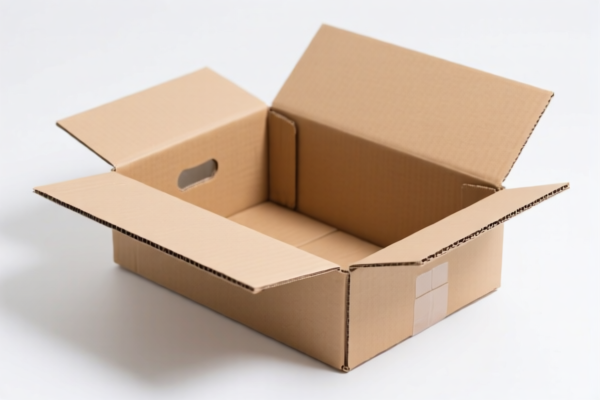
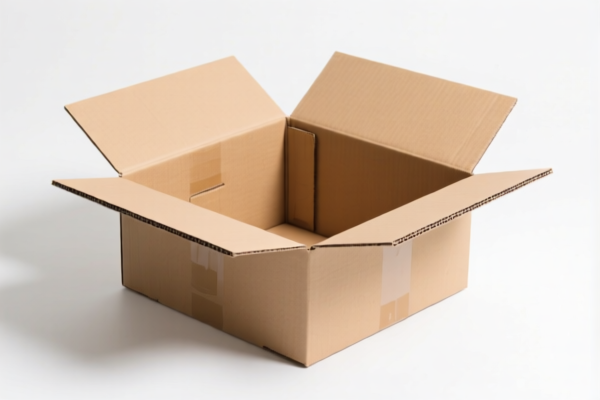
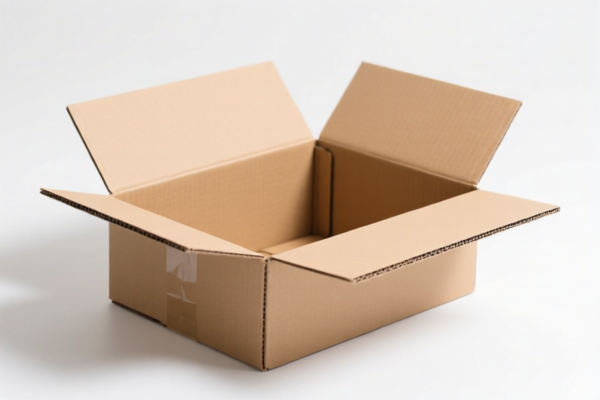
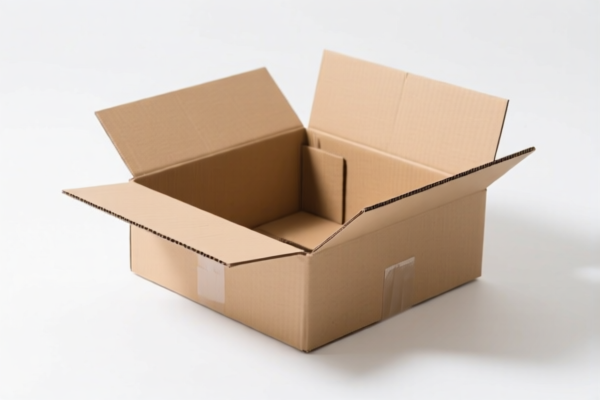
AI Analysis
📄 Paper & Paperboard (Excluding Specific Headings) – US Customs Clearance Guide 2026
🌐 HS Code Reference & Customs Strategy | 2026 Tariff Analysis | High-Tariff Compliance Protocol
📌 I. Product Definition & Classification Logic
Paper and paperboard are versatile materials used in packaging, printing, hygiene, and industrial applications. In US customs terminology, this category is a "catch-all" for paper products that do not fall under specific headings like writing paper (4802), newsprint (4801), or technical paper like filter paper (4803).
Key Classification Criteria: * Material Consistency: Must meet the general definition of paper/paperboard (cellulose fibers). * Exclusions: Items specifically listed in Chapters 4803, 4809, or 4810 are excluded from these codes. * Usage: If the paper is for a specific purpose (e.g., tissue, filter, carbon paper), it may belong to a different chapter. If it is a generic or unclassified paper product, it falls here.
⚠️ Critical Distinction:
- Generic/Unclassified Paper: If it doesn't fit 4803, 4809, or 4810, look to 4811 or 4819.
- Specific Use (e.g., Tissue, Wipes): May fall under 4818 or 4819.
- Misclassification Risk: Declaring generic paper as "tissue" (4818) to seek lower tariffs is a common audit trigger.
📦 II. HS Code Classification Matrix (2026 Latest Tariff Schedule)
| HS Code | Product Description | Summary Logic | Total Tariff Rate |
|---|---|---|---|
4811.90.90.35 |
Paper & Paperboard (Generic/Bottom-line) | Material consistency; fits "bottom-line" logic for excluded items. | 35.0% |
4811.90.90.80 |
Paper & Paperboard (Precise Exclusion Match) | Matches material/scope; explicitly excludes Chapters 4803, 4809, 4810. | 35.0% |
4819.10.00.20 |
Paper & Paperboard (Chapter 4819 Attributes) | Fits 4819 material attributes; other paper products after specific exclusions. | 35.0% |
4818.90.00.20 |
Paper/Pulp/Cellose (Other Unclassified) | Fits pulp/paper/cellulose attributes; other unclassified items in this subheading. | 17.5% |
4819.20.00.20 |
Paper & Paperboard (Non-specific Use) | Fits paper/board material; "bottom-line" attribute for non-specific uses. | 35.0% |
🔍 Key Insight:
- Most generic paper products attract a 35% total tariff due to USITC and IEEPA surcharges.
- 4818.90.00.20 is an anomaly with a 17.5% total tariff, but only applies to specific "other" items under 4818 (e.g., certain hygiene products or cellulose wads), not general paper.
- Never use 4811/4819 codes for products that clearly belong to 4803/4809/4810.
💰 III. 2026 Tariff Rate Breakdown (Including Surcharges & Policy Add-ons)
✅ Applicable Country: United States (US)
✅ Country of Origin: China (CN)
✅ Effective Date: November 10, 2025 (and onwards)
🎯 1. 4811.90.90.35, 4811.90.90.80, 4819.10.00.20, 4819.20.00.20
(Generic Paper & Paperboard - The 35% Bracket)
| Item | Detail |
|---|---|
| Base Tariff | 0.0% (ad valorem) |
| USITC Additional Tariff | +25.0% (Section 301 Duties) |
| IEEPA Additional Tariff | +10.0% (China/HK Specific, from Nov 10, 2025) |
| Total Effective Rate | 35.0% |
| Calculation Basis | CIF Value × 35% |
| De Minimis Eligibility | ❌ Not Eligible (deny_de_minimis applies) |
| Legal Authority Path | IEEPA:9903.01.25 → IEEPA:9903.01.24 → USITC:[HS_Code] → FOOTNOTE:9903.88.01 |
📌 Explanation:
- The 25% USITC tariff is under Section 301 of the Trade Act.
- The 10% IEEPA tariff is a new/additional surcharge on Chinese-origin goods effective late 2025.
- 35% is a high cost factor. Importers must budget accordingly or seek exemptions.
🎯 2. 4818.90.00.20
(Other Paper/Pulp Items - The 17.5% Bracket)
| Item | Detail |
|---|---|
| Base Tariff | 0.0% |
| USITC Additional Tariff | +7.5% (Reduced Section 301 rate for specific 4818 items) |
| IEEPA Additional Tariff | +10.0% (China/HK Specific) |
| Total Effective Rate | 17.5% |
| Calculation Basis | CIF Value × 17.5% |
| De Minimis Eligibility | ❌ Not Eligible |
| Legal Authority Path | IEEPA:9903.01.25 → IEEPA:9903.01.24 → USITC:4818.90.00.20 |
📌 Note:
- This lower rate only applies if the product strictly qualifies under 4818.90.00.20 (e.g., certain tissue or cellulose products).
- Do not misclassify generic paper as 4818 to save 17.5%. Customs will audit and penalize.
🛠️ IV. Customs Clearance Practical Advice (Pitfall Avoidance)
✅ 1. Documentation Checklist (Mandatory)
| Document | Required? | Description |
|---|---|---|
| ✅ Product Specification | ✔️ | Material composition (wood pulp, recycled, etc.), GSM, size. |
| ✅ Product Photos | ✔️ | Clear shots of rolls, sheets, packaging, and labels. |
| ✅ Commercial Invoice | ✔️ | Must state "Paper and Paperboard" with precise HS Code. |
| ✅ Packing List | ✔️ | Detail net/gross weight, dimensions. |
| ✅ Certificate of Origin | ✔️ | Confirm CN origin for IEEPA calculation. |
| ❌ Misleading Descriptions | ❌ | Avoid vague terms like "cardboard" without HS specificity. |
✅ 2. Declaration Strategy (Key Rules)
🔥 "Be Precise: Generic Paper = 35%, Specific 4818 = 17.5%."
| Scenario | Correct HS Code | Common Error | Consequence |
|---|---|---|---|
| Generic paperboard for packaging | 4811.90.90.35 or 4811.90.90.80 |
Declaring as 4818 | Underpayment + Penalties |
| Tissue paper/hygiene wipes | 4818.90.00.20 (if applicable) |
Declaring as 4811 | Overpayment (Loss of savings) |
| Filter paper (4803) | Do Not Use Above Codes | Using 4811 | Seizure for Misclassification |
| Carbon paper (4809) | Do Not Use Above Codes | Using 4811 | Seizure for Misclassification |
✅ 3. Special Cases & Exemptions
| Situation | Handling Advice |
|---|---|
| OEM Custom Paper | Provide print specs and design files to prove it's not a standard generic product. |
| Paper with Coatings | If coated with resin, wax, or plastic, ensure it doesn't fall under Chapter 39. |
| Paper for Medical Use | If it's sterile gauze or wipes, it may be 4818; if it's just plain paper, it's 4811/4819. |
| Transshipment via Vietnam | High Risk! US Customs scrutinizes transshipment. Ensure substantial transformation occurred. |
🌍 V. Global Market Comparison (2026 Update)
| Country/Region | Recommended HS Code | Tariff (CN Origin) | Certification | Notes |
|---|---|---|---|---|
| 🇺🇸 USA | 4811.90.90.80 |
35% | No special certs | Highest tariff due to IEEPA+301 |
| 🇨🇳 China | 4811.90.90.80 |
5-10% | CNCA | Lower tariff, no surcharges |
| 🇪🇺 EU | 4811.90.90 |
0-6.5% | CE/RoHS (if coated) | Lower base tariffs, no US-style surcharges |
| 🇬🇧 UK | 4811.90.90 |
0-5% | UKCA | Post-Brexit tariffs may vary |
| 🇦🇺 Australia | 4811.90.90 |
5% | RCM | No major surcharges |
📌 Conclusion:
- USA is the most expensive market for Chinese paper products due to the 35% total tariff.
- China/EU/Australia offer significant cost advantages.
- Consider supply chain diversification if targeting the US market.
📌 VI. Common Mistakes & Pitfalls (Lessons Learned)
❌ Mistake 1: Declaring generic paper as "Tissue Paper" (4818) to pay 17.5% instead of 35%.
👉 Result: Customs audit finds product doesn't meet 4818 criteria → Back taxes + 25% penalty.
❌ Mistake 2: Ignoring IEEPA 10% surcharge.
👉 Result: Underpayment of 10% on CIF value → Payment demand + Interest.
❌ Mistake 3: Using vague descriptions like "Paper Goods."
👉 Result: Customs assigns highest possible rate or flags for review → Delay in clearance.
❌ Mistake 4: Forgetting that 4803/4809/4810 items are excluded.
👉 Result: Misclassification of technical papers → Seizure.
✅ Best Practice:
"Describe by Material & Use: 'Recycled Paperboard, Uncoated, for Packaging, HS 4811.90.90.80'"
🎯 VII. Final Advice: Professional Compliance, Cost Efficiency
🎯 Remember the Mantra:
🔹 "Generic Paper = 35%, Specific 4818 = 17.5%, Technical Papers = 4803/09/10."
🔹 "HS Code determines life or death of profit margins."
🔹 "35% tariff is a game-changer. Plan accordingly."
📌 Pro Tip:
If your paper products are originating from Vietnam, Mexico, Thailand, or Malaysia, you may qualify for IEEPA Exemptions or FTZ benefits, reducing tariffs to 0%-5%.
Recommendation:
📞 Consult a licensed customs broker.
📄 Apply for a Binding Ruling from CBP before shipping.
🚀 Optimize your supply chain to avoid US tariffs!
✨ Precision in Classification, Precision in Profit!
💼 Every percent of tariff saved is pure profit!
Customer Reviews
About HS Code Classification
The Harmonized System (HS) is an internationally standardized nomenclature developed by the World Customs Organization (WCO) to classify traded products. Over 200 countries use the HS system as the basis for customs tariffs, trade statistics, and import/export regulations.
Each HS code follows a hierarchical structure:
- Chapter (2 digits) — Broad category of goods (e.g., Chapter 84: Machinery and Mechanical Appliances)
- Heading (4 digits) — More specific grouping within the chapter
- Subheading (6 digits) — Internationally standardized breakdown, used by all WCO member countries
- National subdivisions (8-10 digits) — Country-specific extensions for further classification, such as US HTSUS 10-digit codes
Correct HS code classification is essential for smooth customs clearance, accurate duty payment, and compliance with trade regulations. Misclassification can lead to customs delays, overpayment of duties, or penalties.
When importing from CN to US, the applicable tariff rates may include:
- Most-Favored-Nation (MFN) rate — The standard duty rate applied to WTO members
- General rate — Applied to countries without trade agreements
- Trade remedy duties — Additional tariffs such as Section 301 (anti-dumping), Section 232 (national security), or countervailing duties
The information provided on this page is for reference purposes only. For official classification, please consult with your local customs authority or a licensed customs broker.