Paper and paperboard articles (HS 4823903100)
CN → US| HS Code | Tariff Rate | Origin | Destination | Doc |
|---|---|---|---|---|
| 4810991050 | 35.0% | CN | US | Official Doc |
| 4810991050 | 35.0% | CN | US | Official Doc |
| 4810142090 | 35.0% | CN | US | Official Doc |
| 4819100020 | 35.0% | CN | US | Official Doc |
| 4810131140 | 35.0% | CN | US | Official Doc |
Product Images
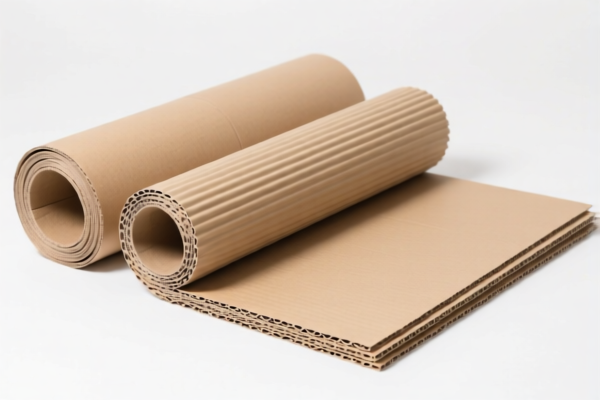
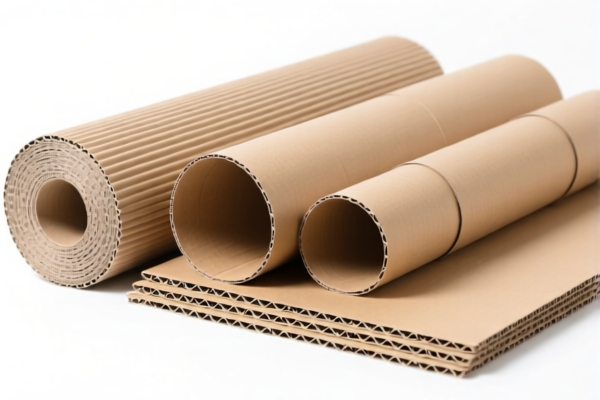
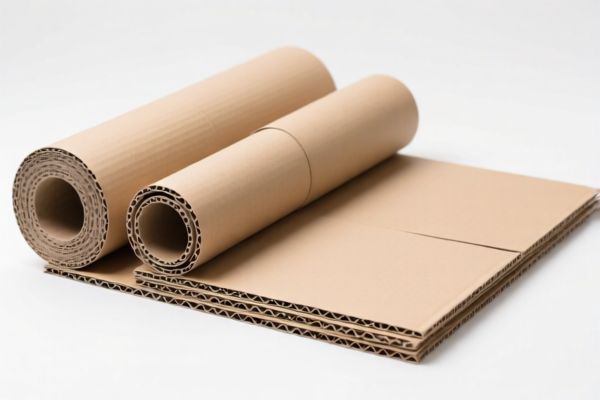
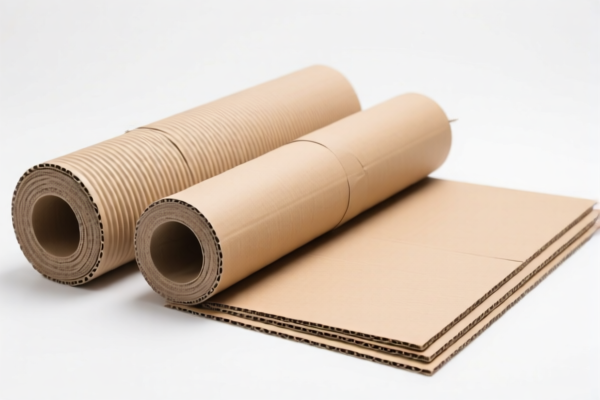
AI Analysis
📜 Paper & Paperboard Articles (HS 4823.90.31.00)
🌐 HS Code Reference & Clearance Guide | 2026 Latest Tariff Analysis | Professional Clearance Strategy
📌 I. Product Definition & Classification: Do You Truly Understand "Paper Articles"?
"Paper and paperboard articles" refer to finished or semi-finished products made from paper/paperboard, excluding items specifically classified elsewhere in Chapter 48 (e.g., newsprint, coated paper, specific boxes like 4819).
In international trade, these are often generic categories requiring precise sub-classification based on material composition, coating status, weight (GSM), and specific use.
⚠️ Critical Distinction:
- If the product is a raw sheet/roll without specific finishing → It may belong to 4810 or 4823 sub-headings depending on coating/weight.
- If it is a cut-to-size article (e.g., labels, blanks, industrial liners) → It likely falls under 4823.90.
- 4823.90.31.00 typically refers to Paper/Paperboard, other than those of subheading 4810.13, 4810.14, 4810.21 to 4810.29, 4810.92 to 4810.99, 4811.10, 4811.40, 4811.51 to 4811.59, 4811.60, 4811.90, 4812, 4813, 4814, 4815, 4816, 4817, 4818, 4819, 4820, 4821, 4822, or 4823.10 to 4823.69, cut to size or shape, other.
📦 II. HS Code Classification Details (Based on Provided Data)
Note: The provided DATA contains conflicting HS codes (4810 series and 4819) for the query "Paper and paperboard articles". Below is the analysis of why the system suggested these codes and how they relate to the user's query of 4823.90.31.00.
| HS Code (from DATA) | Product Description & Match Logic | Relevance to "Paper Articles" |
|---|---|---|
4810.99.10.50 |
Summary: Direct match for material (Paper/Paperboard). Classified as Folding Cartons due to lack of specific use in name. | ⚠️ Specific Use: Folding cartons are a subset of paper articles. If your product is a carton, this is highly relevant. |
4810.14.20.90 |
Summary: Matches 4810 material attributes (Paper/Paperboard). Generic category match despite lack of coating/size details. | ⚠️ Material Only: 4810 generally covers paper coated with inorganic substances (e.g., talc, calcium carbonate). If uncoated, this might be a fallback "other" category. |
4819.10.00.20 |
Summary: Successful match. Material is paper/paperboard, fitting 4819 scope. | ✅ Broader Category: 4819 covers Paper Pulp, Paper, Paperboard and articles thereof (boxes, bags, etc.). This is a very common classification for finished paper goods like boxes or bags. |
4810.13.11.40 |
Summary: Matches 4810 category (Paper/Paperboard). "Other" category judgment due to lack of specific coating/weight specs. | ⚠️ Uncertainty: High reliance on "no conflict" assumption. Requires verification of coating type. |
🔍 Key Insight:
- The provided data does not explicitly list 4823.90.31.00.
- Instead, it suggests codes in 4810 (coated paper/boards) and 4819 (articles of paper/paperboard, like boxes).
- HS 4823.90.31.00 is a US HTSUS code for "Other" paper/paperboard articles not elsewhere specified. If your product is a generic cut paper item (e.g., paper blanks, labels, industrial liners) that doesn't fit the "carton" (4819.10) or "coated sheet" (4810) definitions, 4823.90.31.00 is the correct bucket.
- Why the discrepancy? The system may have defaulted to 4819 or 4810 due to broader keyword matching ("Paper and Paperboard Articles"). You must verify if your product is a finished article (4819/4823) or a semi-finished sheet/board (4810).
💰 III. 2026 Latest Tariff Rate Details (Including Surtaxes, Policy Add-ons)
✅ Applicable Country: United States (US)
✅ Origin: China (CN)
✅ Effective Date: From November 10, 2025 (including subsequent imports)
🎯 1. General Rate for Paper Articles (Based on 4819/4810 examples in DATA)
| Item | Content |
|---|---|
| Base Tariff Rate | 0% (ad valorem) |
| USITC Surtax (Section 301) | +25% |
| IEEPA Surtax | +10% (Targeting China/HK products, effective from Nov 10, 2025) |
| Total Tariff Rate | 35% |
| Tax Calculation | CIF Value × 35% |
| De Minimis Exemption Eligibility | ❌ Not Eligible (deny_de_minimis) |
| Legal Authority Path | IEEPA:9903.01.25 → IEEPA:9903.01.24 → USITC:4819.10.00.20/4810.* → FOOTNOTE:9903.88.01 |
📌 Explanation:
- "USITC Surtax 25%": From Section 301 of the Trade Act; - "IEEPA 10%": Emergency economic powers surcharge on Chinese goods; - Total 35%: This is a very high tariff for paper products. Cost impact must be pre-calculated!⚠️ Note on 4823.90.31.00:
If your product is correctly classified under 4823.90.31.00, it generally falls under the same Section 301/IEEPA surtaxes as other Chinese-origin paper products. Therefore, the 35% total rate is likely applicable unless a specific exemption applies to your exact sub-heading (check USITC Footnotes).
🛠️ IV. Clearance Practical Advice (实战避坑指南)
✅ 1. Preparation Checklist (Non-negotiable)
| Material | Must Provide | Description |
|---|---|---|
| ✅ Product Specification Sheet | ✔️ | Dimensions, GSM (weight), coating type (if any), number of plies, material composition (e.g., 100% virgin pulp, recycled) |
| ✅ Product Photos (including label) | ✔️ | Clear view of texture, packaging, and any branding |
| ✅ Commercial Invoice | ✔️ | Must explicitly state: "Paper Articles, HS Code [Correct Code], Origin: China" |
| ✅ Packing List | ✔️ | Detail weights (Gross/Net), dimensions, and number of pieces |
| ✅ Material Safety Data Sheet (MSDS) | ❓ | Only if treated with chemicals (e.g., waterproof coatings); otherwise not required for plain paper |
✅ 2. Declaration Tips (Key Mantra)
🔥 "Material Clear, Use Specific, Weight Defined, Tariff Avoided!"
| Scenario | Correct Declaration | Wrong Action |
|---|---|---|
| Plain Paper Sheets/Rolls | Classify under 4802/4803 or 4810/4811 depending on coating/weight. | Misdeclare as "Articles" (4823/4819) → Higher scrutiny. |
| Folding Cartons/Boxes | Classify under 4819.10 (Cartons/Boxes). | Misdeclare as generic "Paper Articles" (4823) → Potential duty rate mismatch. |
| Generic Cut Paper Items (e.g., labels, blanks) | Classify under 4823.90. | Use vague terms like "Paper Stuff" → Customs delay. |
| Coated Paper Sheets | Classify under 4810 or 4811. | Declare as uncoated → Inspection failure. |
✅ 3. Special Case Handling
| Situation | Handling Advice |
|---|---|
| OEM Custom Paper Products | Provide client orders + design drawings. Avoid "generic" descriptions. |
| Paper Products with Packaging | Declare main product only (Paper Articles). Packaging is incidental. |
| Imported as Samples | Still subject to 35% tariff if value exceeds de minimis ($800). No exemption for Section 301/IEEPA. |
| Transshipment via Third Country | High Risk! US Customs will trace origin. If origin is China, surtax applies regardless of transshipment route. |
🌍 V. Global Market Clearance Comparison (2026 Latest)
| Country/Region | Recommended HS Code | Tariff (China Origin) | Certification | Notes |
|---|---|---|---|---|
| 🇺🇸 USA | 4819.10.00.20 / 4823.90.31.00 |
35% (Base 0% + 25% + 10%) | No specific certification | High surtax. Critical to declare accurately. |
| 🇨🇳 China | 4819 / 4823 |
0-5% (Import tariff) | None | Low import barrier. |
| 🇪🇺 EU | 4819 / 4823 |
0% (Most Favored Nation) | REACH (if coated) | No Section 301 equivalent, but REACH may apply for coated papers. |
| 🇬🇧 UK | 4819 / 4823 |
0% | UKCA (if applicable) | Post-Brexit rules similar to EU for paper. |
| 🇦🇺 Australia | 4819 / 4823 |
5% | No special certification | Moderate tariff. |
📌 Conclusion:
- USA is the only major market with punitive 35% tariffs on Chinese paper articles;
- Accurate classification is key: Misclassifying a carton (4819) as generic paper (4823) or vice versa may not change the duty rate significantly here (both 35%), but it will cause customs delays and potential penalties for inaccurate data.
📌 VI. Common Mistakes & Pitfalls (Lessons Learned)
❌ Mistake 1: Using vague terms like "Paper Goods"
👉 Consequence: Customs may classify under the highest duty rate or hold shipment for inspection.
❌ Mistake 2: Ignoring Coating Status
👉 Consequence: Coated paper (4810) vs. Uncoated (4802/4803) have different codes. Misclassification leads to re-classification and fines.
❌ Mistake 3: Failing to Declare Origin Correctly
👉 Consequence: If origin is China, the 35% tariff is automatic. Hiding origin leads to fraud penalties.
❌ Mistake 4: Treating Paper Articles as "De Minimis" Exempt
👉 Consequence: Section 301 and IEEPA surtaxes do NOT apply to de minimis exemptions. Every shipment over $800 from China is subject to 35%.
✅ Correct Practice:
"Paper Folding Cartons, White, Recycled Pulp, 300 GSM, HS Code 4819.10.00.20, Origin: China, Section 301/IEEPA Applicable"
🎯 VII. Conclusion: Professional Declaration, Cost Control!
🎯 Remember the Mantra:
🔹 "Paper is Heavy, Tariffs are High. 35% is the Price. Be Precise or Pay Twice."
🔹 "4819 for Boxes, 4810 for Sheets, 4823 for Others. Know Your Code."
📌 Pro Tip:
If your paper articles are packaging materials for other goods, consider if the final product classification offers any savings. However, for standalone paper articles, the 35% tariff is unavoidable for Chinese origin.
Recommendation:
📞 Consult a licensed customs broker for Advance Ruling if your product is unique.
🚀 Optimize supply chain: Consider if sourcing from non-China origins (e.g., Vietnam, Malaysia) can bypass the 35% surtax, provided Rules of Origin are met.
✨ Professional Clearance Starts with Accurate Classification!
💼 Your Every Cent Matters – Calculate the 35% Impact Now!
Customer Reviews
About HS Code Classification
The Harmonized System (HS) is an internationally standardized nomenclature developed by the World Customs Organization (WCO) to classify traded products. Over 200 countries use the HS system as the basis for customs tariffs, trade statistics, and import/export regulations.
Each HS code follows a hierarchical structure:
- Chapter (2 digits) — Broad category of goods (e.g., Chapter 84: Machinery and Mechanical Appliances)
- Heading (4 digits) — More specific grouping within the chapter
- Subheading (6 digits) — Internationally standardized breakdown, used by all WCO member countries
- National subdivisions (8-10 digits) — Country-specific extensions for further classification, such as US HTSUS 10-digit codes
Correct HS code classification is essential for smooth customs clearance, accurate duty payment, and compliance with trade regulations. Misclassification can lead to customs delays, overpayment of duties, or penalties.
When importing from CN to US, the applicable tariff rates may include:
- Most-Favored-Nation (MFN) rate — The standard duty rate applied to WTO members
- General rate — Applied to countries without trade agreements
- Trade remedy duties — Additional tariffs such as Section 301 (anti-dumping), Section 232 (national security), or countervailing duties
The information provided on this page is for reference purposes only. For official classification, please consult with your local customs authority or a licensed customs broker.