Paper and paperboard coated with plastics
CN → US| HS Code | Tariff Rate | Origin | Destination | Doc |
|---|---|---|---|---|
| 4810996500 | 35.0% | CN | US | Official Doc |
| 4811596000 | 35.0% | CN | US | Official Doc |
| 4823906000 | 35.0% | CN | US | Official Doc |
| 4823906700 | 35.0% | CN | US | Official Doc |
| 4811516000 | 35.0% | CN | US | Official Doc |
Product Images
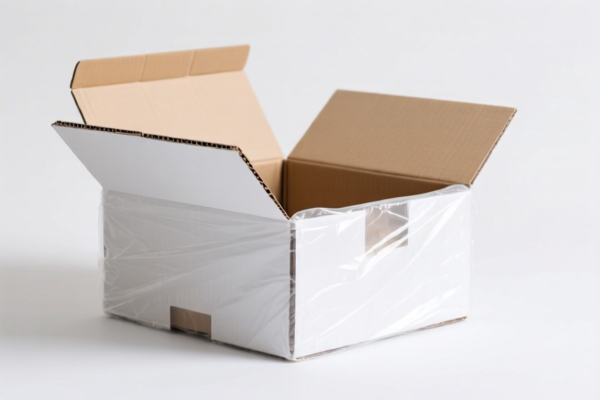
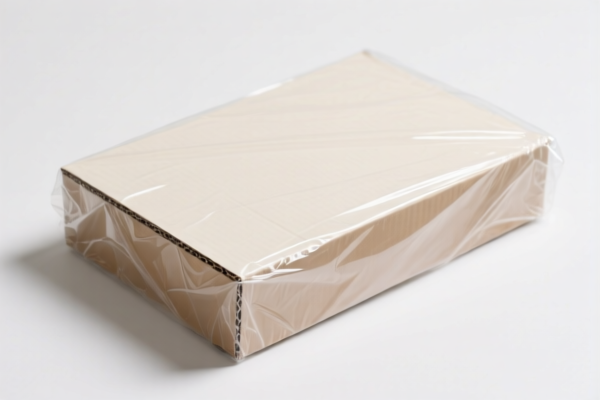
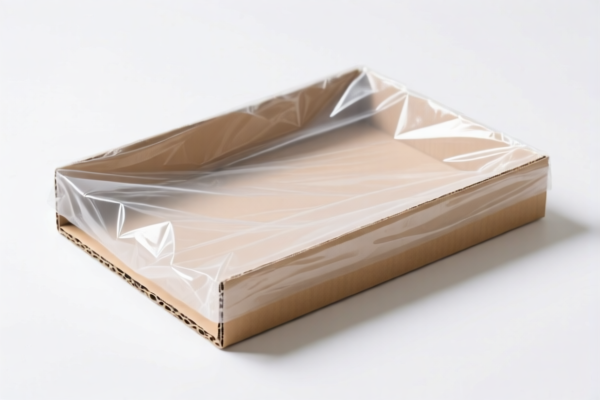
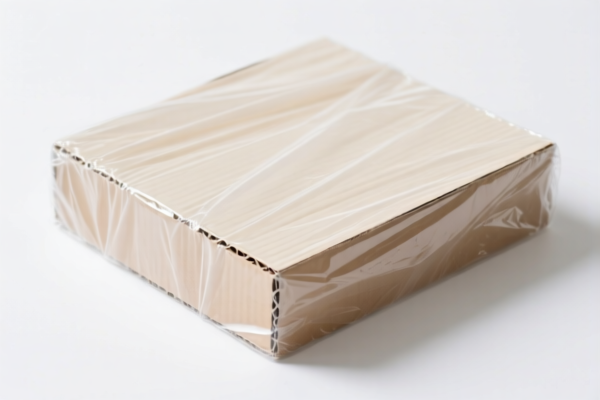
AI Analysis
📄 Paper & Paperboard Coated with Plastics (Plastic-Coated Paper Products)
🌐 HS Code Reference & Customs Clearance Guide | 2026 Latest Tariff Analysis | Professional Compliance Strategy
📌 I. Product Definition & Classification: What Exactly Are "Plastic-Coated Paper Products"?
Plastic-coated paper and paperboard are composite materials where a plastic film, layer, or coating is applied to paper or paperboard to provide moisture resistance, durability, or specific functional properties. In international trade, these products are primarily classified under Chapter 48 of the Harmonized System (HS), specifically within headings 4810 (Paper with coating of chalk or similar substances), 4811 (Paper, paperboard, and articles thereof, coated, impregnated, covered, surface-coloured, surface-decorated or printed), and 4823 (Other articles of paper pulp, paper, paperboard, cellulose wadding and webs of cellulose fibres).
⚠️ Key Distinction Point:
- If the plastic coating is merely a surface treatment (e.g., lamination, film coating) without changing the fundamental nature of the paper → Likely 4811 or 4823;
- If the product is primarily paper with a minor plastic backing → Likely 4810 or 4811;
- All items below are subject to a total tax rate of 35.0% due to US-China trade measures.
📦 II. HS Code Classification Details (2026 Latest Tariff Authority Mapping)
| HS Code | Product Description | Application Scenario | Tax Breakdown |
|---|---|---|---|
4810.99.65.00 |
Plastic-coated paper and paperboard, matching plastic coating with paper/board material | General industrial use, packaging base layers | ✅ 35.0% Total |
4811.59.60.00 |
Plastic-coated paper and paperboard, corresponding to plastic-coated material and paper/board basis | Laminated sheets, composite packaging materials | ✅ 35.0% Total |
4823.90.60.00 |
Plastic-coated paper and paperboard, matching coated paper/board material and form | Cut shapes, industrial components, non-standard forms | ✅ 35.0% Total |
4823.90.67.00 |
Plastic-coated paper and paperboard, belonging to the category of coated paper or coated paperboard | Finished articles, specialized cut products | ✅ 35.0% Total |
4811.51.60.00 |
Plastic-coated paper and paperboard, corresponding to coated, impregnated, or covered plastic with paper or paperboard | Impregnated paper, heavy-duty coated boards | ✅ 35.0% Total |
🔍 Important Note:
- All five HS codes listed above share the same total tariff rate of 35.0% for US imports from China.
- The specific HS code depends on the exact manufacturing process (coating vs. impregnation vs. lamination) and product form (rolls vs. cut pieces).
- Misclassification can lead to customs delays, even if the total tax rate is identical.
💰 III. 2026 Latest Tariff Rate Details (Including Surtaxes & Policy Add-ons)
✅ Applicable Country: United States (US)
✅ Origin: China (CN)
✅ Effective Time: November 10, 2025 onwards (including subsequent imports)
🎯 1. 4810.99.65.00 – Plastic-Coated Paper and Paperboard (General)
| Item | Content |
|---|---|
| Base Tariff | 0.0% (ad valorem) |
| Section 301 Surcharge | +25.0% (from USITC Footnote 9903.88.01) |
| Section 122 Tariff | +10.0% (Targeted Chinese Products) |
| Total Tariff Rate | 35.0% |
| Tax Calculation | CIF Value × 35.0% |
| De Minimis Eligibility | ❌ Not Eligible (deny_de_minimis) |
| Legal Basis Path | IEEPA:9903.01.25 → USITC:4810.99.65.00 → FOOTNOTE:9903.88.01 |
📌 Explanation:
- The 25% surcharge is imposed under Section 301 of the Trade Act of 1974;
- The 10% Section 122 tariff applies specifically to certain Chinese-origin goods under separate legal authority;
- Total 35% is a significant cost factor that must be factored into pricing strategies.
🎯 2. 4811.59.60.00 – Plastic-Coated Paper (Laminated/Covered)
| Item | Content |
|---|---|
| Base Tariff | 0.0% |
| Section 301 Surcharge | +25.0% |
| Section 122 Tariff | +10.0% |
| Total Tariff Rate | 35.0% |
| Tax Calculation | CIF × 35.0% |
| De Minimis Eligibility | ❌ Not Eligible |
| Legal Basis Path | IEEPA:9903.01.24 → USITC:4811.59.60.00 → FOOTNOTE:9903.88.01 |
📌 Note:
- This code covers paper that has been laminated, covered, or impregnated with plastic;
- Common in food packaging, disposable cups, and industrial liners.
🎯 3. 4823.90.60.00 – Plastic-Coated Paper Articles (Non-Standard Forms)
| Item | Content |
|---|---|
| Base Tariff | 0.0% |
| Section 301 Surcharge | +25.0% |
| Section 122 Tariff | +10.0% |
| Total Tariff Rate | 35.0% |
| Tax Calculation | CIF × 35.0% |
| De Minimis Eligibility | ❌ Not Eligible |
| Legal Basis Path | IEEPA:9903.01.25 → USITC:4823.90.60.00 → FOOTNOTE:9903.88.01 |
📌 Note:
- Applies to cut or shaped plastic-coated paper products (e.g., labels, gaskets, custom shapes);
- Not roll stock.
🎯 4. 4823.90.67.00 – Coated Paperboard Articles
| Item | Content |
|---|---|
| Base Tariff | 0.0% |
| Section 301 Surcharge | +25.0% |
| Section 122 Tariff | +10.0% |
| Total Tariff Rate | 35.0% |
| Tax Calculation | CIF × 35.0% |
| De Minimis Eligibility | ❌ Not Eligible |
| Legal Basis Path | IEEPA:9903.01.24 → USITC:4823.90.67.00 → FOOTNOTE:9903.88.01 |
📌 Note:
- Specifically for paperboard (thicker, stiffer paper) coated with plastic;
- Used in rigid packaging, boxes, and display materials.
🎯 5. 4811.51.60.00 – Impregnated Plastic-Coated Paper
| Item | Content |
|---|---|
| Base Tariff | 0.0% |
| Section 301 Surcharge | +25.0% |
| Section 122 Tariff | +10.0% |
| Total Tariff Rate | 35.0% |
| Tax Calculation | CIF × 35.0% |
| De Minimis Eligibility | ❌ Not Eligible |
| Legal Basis Path | IEEPA:9903.01.25 → USITC:4811.51.60.00 → FOOTNOTE:9903.88.01 |
📌 Note:
- Impregnation means the plastic is absorbed into the paper fibers, not just surface-coated;
- Common in heavy-duty industrial uses, electrical insulation, or waterproofing.
🛠️ IV. Customs Clearance Practical Advice (Battle-Proven Pitfall Avoidance)
✅ 1. Documentation Checklist (No Exceptions)
| Document | Mandatory | Description |
|---|---|---|
| ✅ Product Specification Sheet | ✔️ | Details: plastic type (PE, PP, PVC, etc.), coating weight, paper basis weight, dimensions |
| ✅ Manufacturing Process Flowchart | ✔️ | Shows whether coating, lamination, or impregnation is used |
| ✅ Product Photos (Including Label) | ✔️ | Clear shots of roll edges, cross-sections, and any printed info |
| ✅ Bill of Materials (BOM) | ✔️ | Breakdown of paper and plastic components |
| ✅ Commercial Invoice | ✔️ | Must state: "Plastic-Coated Paper," HS Code, Origin: China |
| ✅ Packing List | ✔️ | Include gross/net weight, dimensions, number of rolls/pieces |
| ✅ Certificate of Origin (CO) | ✔️ | Required to prove Chinese origin (triggers tariffs) |
✅ 2. Declaration Tips (Key Mnemonics)
🔥 "Coating Type Matters, Process Defines Code, Name It Right, Avoid Fines!"
| Scenario | Correct Declaration | Wrong Practice |
|---|---|---|
| Plastic film laminated on paper | 4811.59.60.00 or 4811.51.60.00 |
Vague: "Paper Product" → Risk of audit |
| Plastic impregnated into paper fibers | 4811.51.60.00 |
Call it "laminated" → Misclassification |
| Cut pieces of coated paper | 4823.90.60.00 or 4823.90.67.00 |
Declare as "rolls" → Discrepancy |
| Paperboard with plastic coating | 4823.90.67.00 |
Use 4810 codes → Incorrect chapter |
✅ 3. Special Circumstances Handling
| Situation | Recommendation |
|---|---|
| OEM Custom Coating | Provide customer specs + coating formula to justify specific HS code |
| Mixed Paper Types | Declare each type separately; do not bundle coated and uncoated paper |
| Return Goods (Non-Conforming) | Apply for Return of Goods duty relief within 3 years; document defects |
| Samples for Testing | Still subject to 35% tax; no de minimis exemption for Chinese origin |
🌍 V. Global Market Clearance Comparison (2026 Latest)
| Country/Region | Recommended HS Code | Tariff | Certification Requirements | Notes |
|---|---|---|---|---|
| 🇺🇸 USA | 4811.59.60.00 etc. |
35.0% | None specific for paper | High tariff; no exemption |
| 🇨🇳 China | Same HS Codes | 5–10% | CCC (if applicable) | Lower tariff for domestic use |
| 🇪🇺 EU | 4811 or 4823 |
0–6.5% | REACH (plastic contact) | Depends on plastic type |
| 🇯🇵 Japan | 4811 or 4823 |
3–6% | Food Safety (if food contact) | Strict plastic migration tests |
| 🇬🇧 UK | 4811 or 4823 |
3–6% | UKCA Marking | Post-Brexit rules apply |
📌 Conclusion:
- The US is the most expensive market for plastic-coated paper from China due to the 35% total tariff;
- EU and Japan have lower base tariffs but stricter chemical/safety regulations (REACH, Food Contact);
- Consider third-country manufacturing (e.g., Vietnam, Mexico) for US exports to avoid Section 301 + Section 122 tariffs.
📌 VI. Common Errors & Pitfall Guide (Lessons from the Field)
❌ Error 1: Declaring "Plastic-Coated Paper" as "Uncoated Paper"
👉 Consequence: Lower tariff applied initially, but customs audit reveals misdeclaration → Back taxes + Penalties.
❌ Error 2: Not specifying plastic type (PE, PP, etc.)
👉 Consequence: Customs requests additional info → Shipment delay at port.
❌ Error 3: Using "Packaging Material" as a generic description
👉 Consequence: Too vague → Customs may apply highest possible rate or reject clearance.
❌ Error 4: Ignoring Section 122 Tariff
👉 Consequence: Assuming only 25% tax → Underpayment by 10%, leading to debt collection.
✅ Correct Declaration Example:
"Plastic-Coated Paperboard, PE-Laminated, Cut to Size, For Packaging Use, HS Code: 4823.90.67.00, Origin: China, Total Duty: 35.0%"
🎯 VII. Conclusion: Professional Declaration Saves Time & Money
🎯 Key Takeaway:
🔹 "Process Defines Code, Plastic Type Matters, 35% Tax is Real, No De Minimis for China!"
🔹 "HS Code Precision Prevents Delays, Tariff Accuracy Prevents Debt!"
📌 Pro Tip:
If your plastic-coated paper is manufactured in Vietnam, Malaysia, or Thailand, you may avoid US tariffs entirely.
Consider supply chain diversification to mitigate the 35% tariff burden.
📣 Immediate Action:
📞 Consult a licensed customs broker + Provide product specs + Apply for Advance Ruling (US CBP)
🚀 Ensure smooth clearance, cost control, and market competitiveness!
✨ Professional clearance begins with precise classification!
💼 Every percentage point of duty impacts your bottom line!
Customer Reviews
About HS Code Classification
The Harmonized System (HS) is an internationally standardized nomenclature developed by the World Customs Organization (WCO) to classify traded products. Over 200 countries use the HS system as the basis for customs tariffs, trade statistics, and import/export regulations.
Each HS code follows a hierarchical structure:
- Chapter (2 digits) — Broad category of goods (e.g., Chapter 84: Machinery and Mechanical Appliances)
- Heading (4 digits) — More specific grouping within the chapter
- Subheading (6 digits) — Internationally standardized breakdown, used by all WCO member countries
- National subdivisions (8-10 digits) — Country-specific extensions for further classification, such as US HTSUS 10-digit codes
Correct HS code classification is essential for smooth customs clearance, accurate duty payment, and compliance with trade regulations. Misclassification can lead to customs delays, overpayment of duties, or penalties.
When importing from CN to US, the applicable tariff rates may include:
- Most-Favored-Nation (MFN) rate — The standard duty rate applied to WTO members
- General rate — Applied to countries without trade agreements
- Trade remedy duties — Additional tariffs such as Section 301 (anti-dumping), Section 232 (national security), or countervailing duties
The information provided on this page is for reference purposes only. For official classification, please consult with your local customs authority or a licensed customs broker.