Paper or Cardboard Cutting or Sorting Machine
CN → US| HS Code | Tariff Rate | Origin | Destination | Doc |
|---|---|---|---|---|
| 4823908680 | 35.0% | CN | US | Official Doc |
| 4823908000 | 35.0% | CN | US | Official Doc |
| 8441100000 | 35.0% | CN | US | Official Doc |
| 8205595510 | 40.3% | CN | US | Official Doc |
Product Images
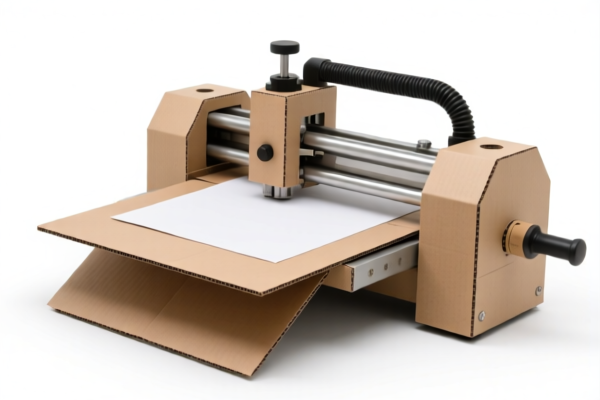
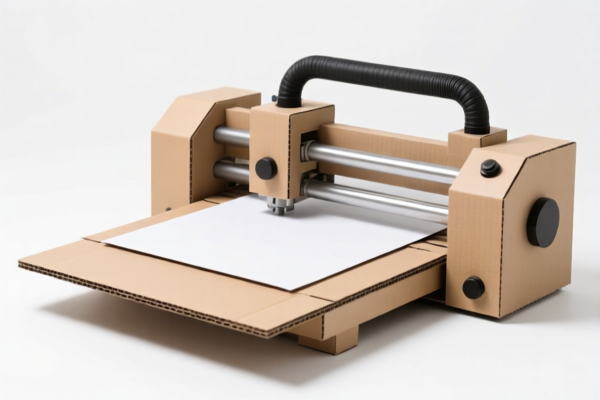

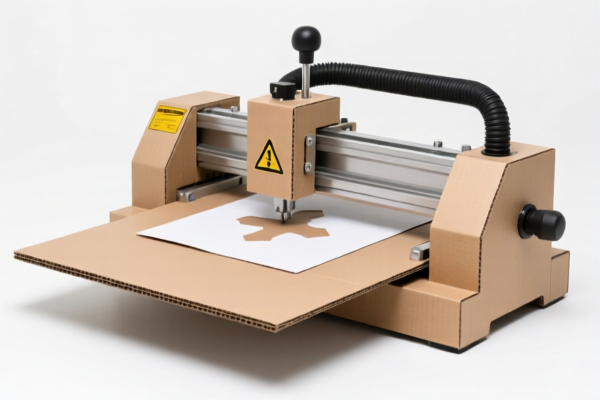
AI Analysis
✂️ Paper or Cardboard Cutting or Sorting Machine (切割纸张和纸板机器)
🌐 HS Code Reference & Customs Clearance Guide | 2026 Latest Tariff Analysis | Professional-Level Strategy
📌 I. Product Definition & Classification: Do You Really Understand "Paper/Cutting Machines"?
The term "Paper or Cardboard Cutting or Sorting Machine" is a broad commercial description that can refer to two distinct types of goods in international trade: 1. The Machine Itself: Equipment used to cut or sort paper/cardboard (e.g., guillotine cutters, sheeting machines). 2. The Product/Tool: The actual cutting tool or the cut material (less likely given the word "Machine," but often confused in supply chains).
⚠️ Key Distinction Point:
- If the item is a powered mechanical device with a motor, frame, and cutting mechanism → It is machinery (Chapter 84).
- If the item is a hand tool (manual knife/scissors) → It is a hand tool (Chapter 82).
- If the item is finished cut paper/cardboard → It is paper products (Chapter 48).
📦 II. HS Code Classification Details (2026 Latest Tariff Authority Comparison)
Based on the provided data, here are the three most likely HS Code classifications depending on the specific nature of the "machine" or "tool":
| HS Code | Product Description | Applicable Scenario | Key Feature |
|---|---|---|---|
8441.10.00.00 |
Machinery for Cutting Paper/Cardboard | Industrial shears, guillotine cutters, automated cutting lines | ✅ Machine (Powered, Motorized) |
8205.59.55.10 |
Manual Hand Tools (Metal, Edged) | Manual paper cutters, scissors, box cutters (if classified as hand tool) | ✅ Hand Tool (Non-powered, Metal) |
4823.90.86.80 |
Other Articles of Paper/Pulp | Pre-cut paper/cardboard sheets or shapes | ❌ Product (Finished Goods) |
🔍 Critical Note:
-8441.10.00.00is the primary classification for actual machines. The summary explicitly states: "Matches successfully. The 'cutting' in the product name aligns with the tariff definition of 'paper-cutting machines'." -8205.59.55.10applies if the "machine" is actually a manual metal tool (e.g., a manual guillotine paper trimmer that is not powered). The summary infers: "Inferred as metal-edged hand tool... fitting 'iron/steel' and 'edged hand tool' characteristics." -4823.90.86.80applies if the "machine" description is a mistranslation and the item is actually cut paper/cardboard products. The summary confirms: "Product name 'cutting paper and cardboard' matches material (paper/cardboard) and form (cut to size/shape)."
💰 III. 2026 Latest Tariff Rate Detailed Explanation (Including Surtaxes, Policy Add-ons)
✅ Applicable Country: USA (US)
✅ Country of Origin: China (CN)
✅ Effective Date: From November 10, 2025 (Including subsequent imports)
🎯 1. 8441.10.00.00 —— Machinery for Cutting Paper/Cardboard
| Item | Content |
|---|---|
| Base Tariff | 0% (ad valorem) |
| USITC Surtax (Section 301) | +25% (From USITC Footnote) |
| IEEPA Surtax (Section 122/301 Add-on) | +10% (Targeting China/HK products, from Nov 10, 2025) |
| Total Tariff Rate | 35.0% |
| Tax Calculation | CIF Value × 35% |
| De Minimis Exemption | ❌ Not Eligible (deny_de_minimis) |
| Legal Basis Path | IEEPA:9903.01.25 → IEEPA:9903.01.24 → USITC:8441.10.00.00 → FOOTNOTE |
📌 Interpretation:
- Although the base tariff for paper machinery is often low or zero, the 25% Section 301 surtax and 10% IEEPA surtax apply specifically to Chinese-origin goods. - Total 35% is a significant cost driver. Must be factored into landed cost calculations.
🎯 2. 8205.59.55.10 —— Metal Edged Hand Tools (Iron/Steel)
| Item | Content |
|---|---|
| Base Tariff | 5.3% (ad valorem) |
| USITC Surtax (Section 301) | +25% |
| IEEPA Surtax | +10% |
| Total Tariff Rate | 40.3% |
| Tax Calculation | CIF Value × 40.3% |
| De Minimis Exemption | ❌ Not Eligible |
| Legal Basis Path | IEEPA:9901.25 → IEEPA:9903.01.24 → USITC:8205.59.55.10 |
📌 Interpretation:
- If customs classifies the item as a manual tool rather than a machine, the base rate is higher (5.3% vs 0%). - Total 40.3% is even higher than the machinery classification. - Risk: Misclassifying a machine as a hand tool (or vice versa) can lead to penalties or delays.
🎯 3. 4823.90.86.80 / 4823.90.80.00 —— Other Paper/Cardboard Articles
| Item | Content |
|---|---|
| Base Tariff | 0% (ad valorem) |
| USITC Surtax (Section 301) | +25% |
| IEEPA Surtax | +10% |
| Total Tariff Rate | 35.0% |
| Tax Calculation | CIF Value × 35% |
| De Minimis Exemption | ❌ Not Eligible |
| Legal Basis Path | IEEPA:9903.01.25 → IEEPA:9903.01.24 → USITC:4823.90 |
📌 Interpretation:
- If the item is finished cut paper/cardboard (not the machine), it falls under Chapter 48. - Despite being a "simple" good, the 35% effective rate remains high due to US-China trade policies.
🛠️ IV. Customs Clearance Practical Advice (Real-World Pitfall Avoidance Guide)
✅ 1. Document Checklist (None Missing)
| Document | Required | Notes |
|---|---|---|
| ✅ Product Specification Sheet | ✔️ | Must clearly state: Is it powered? Motor HP? Cutting capacity? |
| ✅ Technical Drawings/Circuit Diagram | ✔️ | Crucial to prove it is a "Machine" (8441) and not a "Hand Tool" (8205). |
| ✅ Product Photos (Including Nameplate) | ✔️ | Show model number, brand, input voltage, and power switch. |
| ✅ Commercial Invoice | ✔️ | Use precise terminology: "Automatic Paper Cutting Machine, Model XYZ" vs "Paper Cutter" (ambiguous). |
| ✅ Packing List | ✔️ | Clearly separate machine parts from accessories (blades, guards). |
✅ 2. Declaration Tips (Key Mantra)
🔥 "Power defines Machine, Steel defines Tool, Paper defines Product. Accuracy saves 35%!"
| Scenario | Correct HS Code | Wrong Practice |
|---|---|---|
| Electric/Gas powered cutting machine | 8441.10.00.00 |
Misclassify as hand tool → 40.3% (Higher) |
| Manual metal guillotine (no power) | 8205.59.55.10 |
Misclassify as machine → 35% (Lower, but risk of penalty for false declaration) |
| Pre-cut paper/cardboard sheets | 4823.90.86.80 |
Misclassify as machine → 35% (Same rate, but wrong chapter risk) |
✅ 3. Special Case Handling
| Situation | Handling Advice |
|---|---|
| "Cutting Machine" but actually a blade replacement | Declare as Machine Parts (HS 8441.90 or 8205.90). Check if parts have different surtax rates. |
| Importing for R&D/Prototype | Provide R&D declaration to apply for Exemption Certificates if available. |
| Composite Shipment (Machine + Spare Blades) | Declare separately. Blades (8205/8215) may have different classification nuances. |
🌍 V. Global Major Market Comparison (2026 Latest)
| Country/Region | Recommended HS Code | Tariff (China Origin) | Certification Requirements | Notes |
|---|---|---|---|---|
| 🇺🇸 USA | 8441.10.00.00 |
35% (Machine) 40.3% (Tool) |
FCC, UL, OSHA (Safety) | High surtax due to Section 301 & IEEPA. |
| 🇨🇳 China | 8441.10.00.00 |
5% - 10% (Varies) | CCC (if applicable) | Lower base tariff, no US surtax. |
| 🇪🇺 EU | 8441.10.00.00 |
0% - 4.5% | CE, Machinery Directive 2006/42/EC | No US-style punitive tariffs. |
| 🇬🇧 UK | 8441.10.00.00 |
0% - 5% | UKCA Mark | Post-Brexit tariffs may differ slightly from EU. |
📌 Conclusion:
- USA imposes the highest barrier (35-40.3%).
- EU/UK are more favorable (0-5%).
- Strategy: If targeting US market, ensure accurate classification to avoid overpaying or underpaying (which leads to audits). Consider supply chain diversification to countries with free trade agreements (e.g., Vietnam, Mexico) if volume is high.
📌 VI. Common Mistakes & Pitfall Guide (Blood & Tears Lessons)
❌ Mistake 1: Declaring a powered machine as a "Paper Cutter" (ambiguous) without specifying power source.
👉 Consequence: Customs may reclassify as Hand Tool (8205) → 40.3% instead of 35%, or flag for inspection.
❌ Mistake 2: Shipping cut paper sheets but declaring as "Machine Parts".
👉 Consequence: Seizure for false declaration. Tariff rate might be same (35%), but penalties apply.
❌ Mistake 3: Ignoring the IEEPA 10% surtax.
👉 Consequence: Underestimating landed cost by 10%, leading to price competitiveness issues.
❌ Mistake 4: Confusing "Sorting Machine" with "Cutting Machine".
👉 Consequence: 8441 covers both, but ensure the description matches. If sorting involves labeling or packaging, it might shift to 8422 (Packaging Machinery), which has different tariffs.
✅ Correct Practice:
"Automatic Hydraulic Paper Cutting Machine, Model XYZ, 3600mm, AC 380V, CE & FCC Certified, for Industrial Paper Processing"
🎯 VII. Conclusion: Precise Classification, Cost Optimization, Smooth Customs!
🎯 Remember the Mantra:
🔹 "Power = Machine (35%), Steel Hand Tool (40.3%), Paper Product (35%).
🔹 Documentation is Key: Specs, Photos, and Clear Descriptions prevent 40.3% errors.
🔹 USA Tariff Shock**: 35% is the new normal for Chinese-origin paper machinery."
📌 Pro Tip:
If your machine is assembled in Vietnam or Mexico, you may apply for Tariff Engineering or Free Trade Agreement (FTA) benefits, potentially reducing the rate to 0%.
Recommend Advance Ruling with US CBP if the product is novel.
📣 Take Action Now:
📞 Consult a licensed customs broker.
📸 Provide clear product photos and electrical specs.
🚀 Ensure accurate HS Code to avoid 35-40.3% shocks and keep your supply chain profitable!
✨ Professional Customs Clearance Starts with Accurate Classification!
💼 Your every cent of cost is worth precise calculation!
Customer Reviews
About HS Code Classification
The Harmonized System (HS) is an internationally standardized nomenclature developed by the World Customs Organization (WCO) to classify traded products. Over 200 countries use the HS system as the basis for customs tariffs, trade statistics, and import/export regulations.
Each HS code follows a hierarchical structure:
- Chapter (2 digits) — Broad category of goods (e.g., Chapter 84: Machinery and Mechanical Appliances)
- Heading (4 digits) — More specific grouping within the chapter
- Subheading (6 digits) — Internationally standardized breakdown, used by all WCO member countries
- National subdivisions (8-10 digits) — Country-specific extensions for further classification, such as US HTSUS 10-digit codes
Correct HS code classification is essential for smooth customs clearance, accurate duty payment, and compliance with trade regulations. Misclassification can lead to customs delays, overpayment of duties, or penalties.
When importing from CN to US, the applicable tariff rates may include:
- Most-Favored-Nation (MFN) rate — The standard duty rate applied to WTO members
- General rate — Applied to countries without trade agreements
- Trade remedy duties — Additional tariffs such as Section 301 (anti-dumping), Section 232 (national security), or countervailing duties
The information provided on this page is for reference purposes only. For official classification, please consult with your local customs authority or a licensed customs broker.