Paper or Cardboard Pressing Machine
CN → US| HS Code | Tariff Rate | Origin | Destination | Doc |
|---|---|---|---|---|
| 8479909560 | 35.0% | CN | US | Official Doc |
| 8441800000 | 35.0% | CN | US | Official Doc |
| 8441400000 | 35.0% | CN | US | Official Doc |
| 8419909580 | 39.0% | CN | US | Official Doc |
| 8479300000 | 35.0% | CN | US | Official Doc |
Product Images
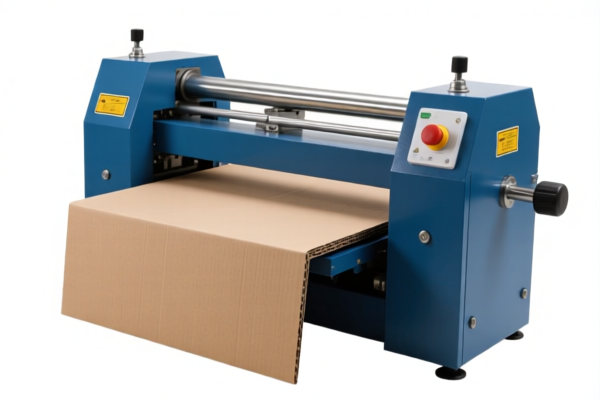
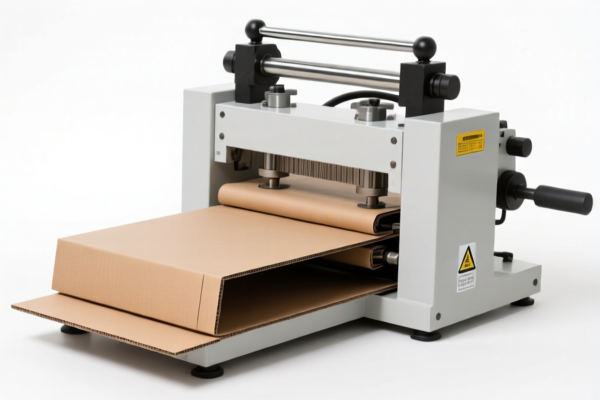
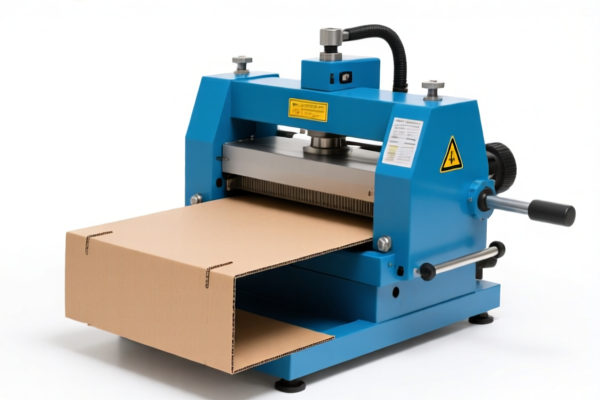
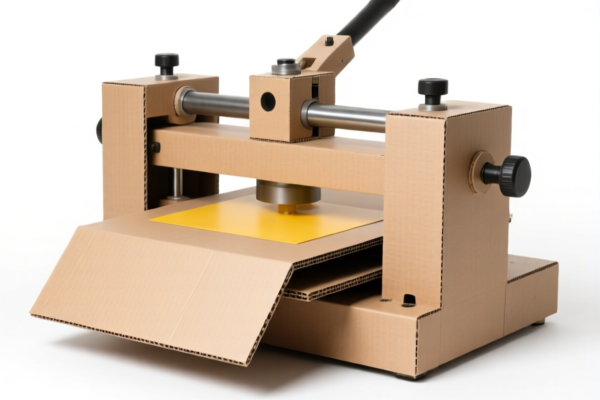
AI Analysis
🏭 Paper or Cardboard Pressing Machine
🌐 HS Code Reference & Customs Clearance Guide | 2026 Latest Tariff Analysis | Professional Strategy
📌 I. Product Definition & Classification: Understanding the "Pressing" Function
A Paper or Cardboard Pressing Machine is a specialized industrial apparatus used in the paper manufacturing and packaging industries. Its primary function is to compress, shape, or dry paper/cardboard products. However, in international trade classification, the specific application and mechanical structure determine the HS Code.
⚠️ Key Distinction:
- If the machine is specifically designed for papermaking processes (pulping, forming, pressing in paper mills) → It belongs to Chapter 84 (Machinery), specifically 8441.
- If the machine is a general-purpose hydraulic or mechanical press used for pressing板材 (boards/plates) or general materials, and not strictly part of the papermaking line → It may fall under 8479 (Other Machinery).
- If it is a component of a larger thermal processing machine (e.g., a dryer press) → It may fall under 8419.
📦 II. HS Code Classification Details (2026 Tariff Authority Comparison)
| HS Code | Product Description | Application Scenario | Logical Basis |
|---|---|---|---|
8441.80.00.00 |
Other machinery for making up paper pulp, paper or paperboard | General pressing machines in paper mills, finishing equipment | Fits "paper/cardboard manufacturing process" |
8441.40.00.00 |
Pressing or flattening machines for paper pulp, paper or paperboard | Specific presses for forming or drying paper sheets | "Pressing" is explicit in the heading |
8479.90.95.60 |
Parts/accessories of other machinery for processing plates, sheets, etc. | Presses used for boards/plates (non-paper specific) or general industrial pressing | Treated as "processing boards" similar to metal/wood presses |
8479.30.00.00 |
Other machinery for pressing (e.g., hydraulic presses, general purpose) | General industrial presses, not specific to papermaking lines | "Pressing machine" logic; functional match with 8479 |
8419.90.95.80 |
Parts/accessories of other machinery for heating, cooling, drying... | Thermal drying presses where pressing is combined with heat treatment | Functional overlap with "drying/processing materials" |
🔍 Critical Note:
- Chapter 8441 is the most accurate for machines explicitly used in the paper/cardboard manufacturing workflow (pulping to finished sheet).
- Chapter 8479 is for general presses that might press paper but are not integrated into a papermaking line (e.g., baling presses, general hydraulic presses).
- Chapter 8419 applies only if the machine’s primary function is thermal processing (drying) and pressing is secondary.
💰 III. 2026 Latest Tariff Rate Details (Including Surtaxes & Policy Add-ons)
✅ Applicable Country: USA (US)
✅ Country of Origin: China (CN)
✅ Effective Date: 2025.11.10 onwards
🎯 1. 8441.80.00.00 & 8441.40.00.00 — Paper/Cardboard Machinery
| Item | Content |
|---|---|
| Base Rate | 0.0% (Ad Valorem) |
| Section 301 Surtax | +25% (USITC Footnote 9903.88.01) |
| IEEPA Surtax | +10% (China/HK products, from 2025.11.10) |
| Total Rate | 35.0% |
| Tax Calculation | CIF Value × 35% |
| De Minimis Exemption | ❌ Not Available (deny_de_minimis) |
| Legal Path | IEEPA:9903.01.25 → IEEPA:9903.01.24 → USITC:8441.x0.00.00 → FOOTNOTE:9903.88.01 |
📌 Explanation:
- Even though the base rate is 0%, the 25% Section 301 tariff and 10% IEEPA tariff apply to all Chinese-origin machinery in this category.
- Total cost impact: 35%. This is a high-tax category due to the "China-specific" surcharges.
🎯 2. 8479.90.95.60 — Machinery for Processing Plates/Sheets
| Item | Content |
|---|---|
| Base Rate | 0.0% |
| Section 301 Surtax | +25% |
| IEEPA Surtax | +10% |
| Total Rate | 35.0% |
| Tax Calculation | CIF Value × 35% |
| De Minimis Exemption | ❌ Not Available |
| Legal Path | IEEPA:9903.01.25 → IEEPA:9903.01.24 → USITC:8479.90.95.60 → FOOTNOTE:9903.88.01 |
📌 Note:
- If the machine is classified as "pressing boards/plates" rather than "papermaking," it still falls under the 35% total rate.
- This is common if the machine is used for cardboard box pressing or non-pulp pressing.
🎯 3. 8479.30.00.00 — Other Pressing Machinery
| Item | Content |
|---|---|
| Base Rate | 0.0% |
| Section 301 Surtax | +25% |
| IEEPA Surtax | +10% |
| Total Rate | 35.0% |
| Tax Calculation | CIF Value × 35% |
| De Minimis Exemption | ❌ Not Available |
| Legal Path | IEEPA:9903.01.25 → IEEPA:9903.01.24 → USITC:8479.30.00.00 → FOOTNOTE:9903.88.01 |
📌 Note:
- General-purpose hydraulic presses, even if used for paper baling, are often classified here.
- Same 35% total tax rate as other 8441/8479 categories for Chinese origin.
🎯 4. 8419.90.95.80 — Parts of Thermal Processing Machinery
| Item | Content |
|---|---|
| Base Rate | 4.0% |
| Section 301 Surtax | +25% |
| IEEPA Surtax | +10% |
| Total Rate | 39.0% |
| Tax Calculation | CIF Value × 39% |
| De Minimis Exemption | ❌ Not Available |
| Legal Path | IEEPA:9903.01.25 → IEEPA:9903.01.24 → USITC:8419.90.95.80 → FOOTNOTE:9903.88.01 |
📌 Warning:
- This category has a higher base rate (4%), leading to a 39% total tax.
- Only apply if the machine is primarily a dryer/heater with pressing functionality (e.g., thermal laminating presses).
- Avoid this classification if the machine is primarily a mechanical press.
🛠️ IV. Customs Clearance Practical Advice (Pitfall Avoidance Guide)
✅ 1. Document Checklist (Essential)
| Document | Required | Notes |
|---|---|---|
| ✅ Product Specification Sheet | ✔️ | Must detail: machine type, capacity, pressure, power, dimensions |
| ✅ Process Flow Diagram | ✔️ | Show where the machine fits: is it in papermaking line (8441) or general pressing (8479)? |
| ✅ Product Photos (Clear) | ✔️ | Show nameplate, control panel, and any "Pressing" labels |
| ✅ Third-Party Test Report | ✔️ | CE, UL, ISO certifications (if any) |
| ✅ Commercial Invoice | ✔️ | Must specify: "Paper Making Pressing Machine" or "Industrial Press for Cardboard" |
| ✅ Packing List | ✔️ | List all parts, no missing components |
| ✅ Country of Origin Certificate | ✔️ | Critical for 301/IEEPA assessment |
✅ 2. Declaration Strategy (Key Tips)
🔥 “Functional Match, HS Code Right, Tax Saved!”
| Scenario | Correct HS Code | Incorrect Approach |
|---|---|---|
| Paper Mill Press (Pulp to Sheet) | 8441.40.00.00 or 8441.80.00.00 |
Declare as "General Press" → May trigger audit |
| Cardboard Box Pressing (Post-Production) | 8479.30.00.00 or 8479.90.95.60 |
Declare as "Papermaking Machine" → Misclassification |
| Thermal Drying Press (Heat + Press) | 8419.90.95.80 |
Declare as "Mechanical Press" → Under-tax risk |
| Baling Press for Waste Paper | 8479.30.00.00 |
Declare as "Recycling Machine" → Vague, high risk |
📌 Advice:
- If the machine is used within a paper mill to form/dry paper → Use 8441.
- If the machine is used after production to press/cardboard/boxes → Use 8479.
- Do not use "Recycling Machine" or "Waste Paper Press" without clear functional description.
✅ 3. Special Cases
| Case | Handling Suggestion |
|---|---|
| Used Machinery | Provide service history, age, and condition report. May qualify for duty reduction in some cases, but 301/IEEPA still apply. |
| Modular Equipment | If the pressing unit is a separate module, declare separately. Do not combine with unrelated parts. |
| Hydraulic vs. Mechanical | Specify type in declaration. Hydraulic presses are more likely to be 8479.30.00.00. |
| OEM for Paper Company | Provide OEM contract and design specs to prove 8441 classification. |
🌍 V. Global Market Clearance Comparison (2026 Latest)
| Country/Region | Recommended HS Code | Tariff (China Origin) | Certification | Notes |
|---|---|---|---|---|
| 🇺🇸 USA | 8441.80.00.00 / 8479.30.00.00 |
35% | UL, CE | High surtaxes apply |
| 🇨🇳 China | 8441.80.00.00 |
5-10% | CCC | Lower base rate |
| 🇪🇺 EU | 8441.80.00.00 |
0-3% | CE, RoHS | Free trade agreements may apply |
| 🇬🇧 UK | 8441.80.00.00 |
5% | UKCA | Post-Brexit rules apply |
| 🇦🇺 Australia | 8441.80.00.00 |
5% | RCM | No surtaxes |
| 🇯🇵 Japan | 8441.80.00.00 |
0-5% | PSE, JIS | Low tariffs |
📌 Conclusion:
- USA is the most expensive market due to 25% + 10% surtaxes.
- EU/Asia markets are more favorable with lower base rates.
- Consider supply chain diversification if targeting the US market heavily.
📌 VI. Common Mistakes & Pitfalls (Lessons Learned)
❌ Mistake 1: Declaring a Paper Mill Press as a "General Hydraulic Press" (8479)
👉 Result: May be accepted, but if customs audits and finds it’s used in papermaking, they may reassess under 8441. However, tax rate is similar (35%), so risk is low but compliance is better under 8441.
❌ Mistake 2: Declaring a Thermal Drying Press as a "Mechanical Press" (8479)
👉 Result: Base rate is 0% vs 4%. Under-taxation risk if deemed misclassification. Penalty + interest may apply.
❌ Mistake 3: Not providing Process Diagram
👉 Result: Customs cannot verify 8441 vs 8479 classification. May lead to delays or default classification (often 8479, which is safer but may not reflect true use).
❌ Mistake 4: Using vague terms like "Pressing Machine"
👉 Result: Customs may apply highest applicable rate or require additional documentation.
✅ Best Practice:
"Paper Making Pressing Machine, Hydraulic, 1000 Tons, Model XYZ, Used in Paper Mill Line, CE Certified"
🎯 VII. Conclusion: Precision Classification, Cost Control
🎯 Key Takeaways:
🔹 "Paper Mill Press → 8441 (35%)"
🔹 "General/Post-Press → 8479 (35%)"
🔹 "Thermal Press → 8419 (39%)"
🔹 "All Chinese Origin → +35% Total Tax in USA"
📌 Pro Tip:
If your machinery is used or modular, ensure documentation clearly states primary function. Apply for Advance Ruling from US Customs (CBP) to mitigate classification risk.
📣 Action Item:
📞 Consult Customs Broker + Provide Process Flow + Apply for Advance Ruling
🚀 Ensure Smooth Clearance, Avoid Delays, Control Costs!
✨ Professional Customs Clearance Starts with Accurate Classification!
💼 Every Percent in Tariff Matters!
Customer Reviews
About HS Code Classification
The Harmonized System (HS) is an internationally standardized nomenclature developed by the World Customs Organization (WCO) to classify traded products. Over 200 countries use the HS system as the basis for customs tariffs, trade statistics, and import/export regulations.
Each HS code follows a hierarchical structure:
- Chapter (2 digits) — Broad category of goods (e.g., Chapter 84: Machinery and Mechanical Appliances)
- Heading (4 digits) — More specific grouping within the chapter
- Subheading (6 digits) — Internationally standardized breakdown, used by all WCO member countries
- National subdivisions (8-10 digits) — Country-specific extensions for further classification, such as US HTSUS 10-digit codes
Correct HS code classification is essential for smooth customs clearance, accurate duty payment, and compliance with trade regulations. Misclassification can lead to customs delays, overpayment of duties, or penalties.
When importing from CN to US, the applicable tariff rates may include:
- Most-Favored-Nation (MFN) rate — The standard duty rate applied to WTO members
- General rate — Applied to countries without trade agreements
- Trade remedy duties — Additional tariffs such as Section 301 (anti-dumping), Section 232 (national security), or countervailing duties
The information provided on this page is for reference purposes only. For official classification, please consult with your local customs authority or a licensed customs broker.