Paper or Paperboard (under 1 square meter, HS 48)
CN → US| HS Code | Tariff Rate | Origin | Destination | Doc |
|---|---|---|---|---|
| 4823908000 | 35.0% | CN | US | Official Doc |
| 4811906010 | 35.0% | CN | US | Official Doc |
| 4823902000 | 35.0% | CN | US | Official Doc |
| 4811909010 | 35.0% | CN | US | Official Doc |
Product Images
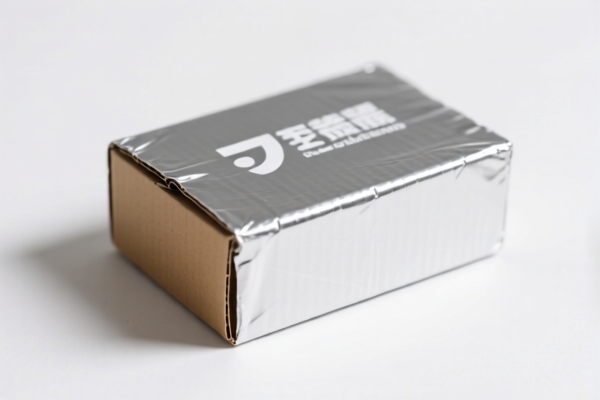
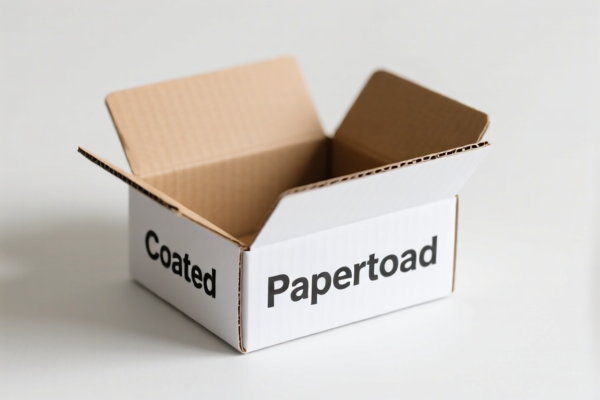
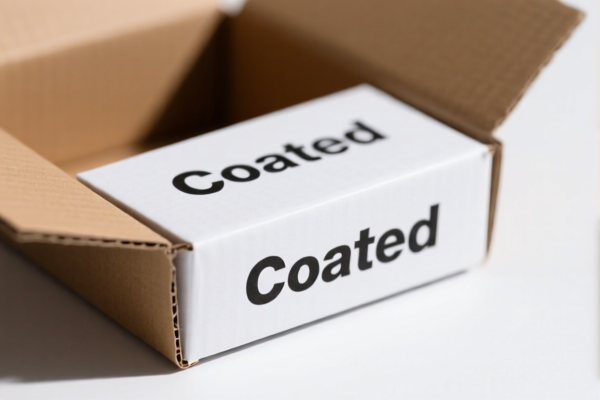
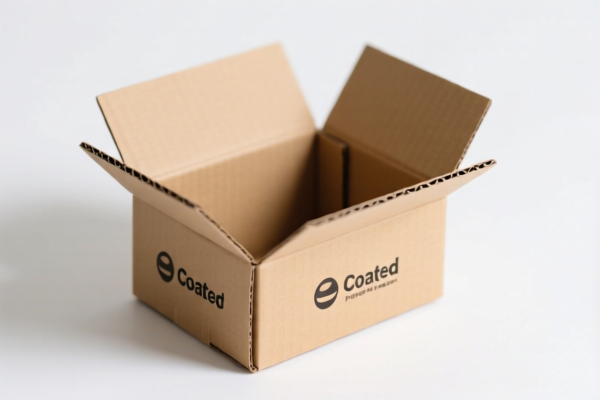
AI Analysis
📄 Paper & Paperboard (Under 1 m², HS 48 Series)
🌐 HS Code Reference & Customs Clearance Guide | 2026 Latest Tariff Analysis | Professional Clearance Strategy
📌 I. Product Definition & Classification: Do You Truly Understand "Small Paper Products"?
Paper and Paperboard (under 1 square meter) represent a diverse category of lightweight, cut-to-size paper products. In international trade, these items are generally classified under Chapter 48 of the Harmonized System. The key to correct classification lies in identifying the material composition and processing method (e.g., coated, uncoated, pulped, or printed).
Core Categories:
Uncoated/Basic Paper Products: Simple sheets, cards, or blanks not further processed than cutting.
Coated/Printed Paper Products: Sheets with surface treatments, printing, or specific functional layers.
Specialized Paper Forms*: Specific shapes or uses defined under residual categories.
⚠️ Critical Distinction:
- If the item is plain, uncoated paper/cardboard cut to size → Generally falls under 4823.90 series.
- If the item is coated, printed, or specially treated → Generally falls under 4811.90 series.
- Size Limit: All items must be under 1 square meter to qualify for these specific subheadings. Items larger than 1 m² fall under different chapters (e.g., 4801-4810 for rolls/sheets).
📦 II. HS Code Classification Details (2026 Latest Tariff Authority Comparison)
Based on the provided data, here are the specific HS Codes matched to the product description:
| HS Code | Product Description | Material/Processing State | Key Characteristics |
|---|---|---|---|
4823.90.80.00 |
Paper or Paperboard (under 1 m²) | Paper or Paperboard | General category for uncoated/special paper; fits basic classification requirements. |
4811.90.60.10 |
Paper or Paperboard (under 1 m²) | Paper/Cardboard | Coated, Printed, or Treated. Belongs to the category of processed papers. |
4823.90.20.00 |
Paper or Paperboard (under 1 m²) | Pulp/Paper/Cardboard | Matches specific subheading for paper products made from pulp/paper/cardboard. |
4811.90.90.10 |
Paper or Paperboard (under 1 m²) | Paper/Cardboard | Sheet Form. Belongs to coated/treated paper category, specifically sheet-shaped. |
4823.90.80.00 |
Paper or Paperboard (under 1 m²) | Paper or Paperboard | General category; confirms classification compliance for standard paper products. |
🔍 Key Reminder:
-4811Series applies if the paper has undergone coating, impregnation, covering, or printing processes.
-4823Series applies to paper/paperboard that is cut, folded, or molded but does not fall under the coated/printed categories of 4811.
- Size Constraint: Strictly < 1 m². If the product exceeds this, reclassification is required.
💰 III. 2026 Latest Tariff Rate Breakdown (Including Surtaxes & Policy Add-ons)
✅ Applicable Country: United States (US)
✅ Origin: China (CN)
✅ Effective Time: 2025+ (Current Trade War Tariffs Apply)
All HS Codes listed above carry the same tariff structure in the provided data, indicating a consistent trade policy impact for these paper products.
🎯 Unified Tariff Structure for All Listed HS Codes
| Item | Content |
|---|---|
| Base Tariff | 0.0% (ad valorem) |
| Section 301 Surtax | +25.0% (USITC Footnote applicable to Chinese goods) |
| 122 Clause Surtax | +10.0% (Specific policy add-on referenced as "122 Clause Tariff") |
| Total Tariff Rate | 35.0% |
| Tax Calculation | CIF Value × 35% |
| De Minimis Exemption | ❌ Not Eligible (High tariff rates typically exclude de minimis exemptions under current US enforcement) |
| Legal Basis Path | USITC:48xx.xx.xx.xx → Section 301: 25% → Policy Add-on: 10% → Total: 35% |
📌 Explanation:
- "Base Tariff 0%": Paper products generally have low base duties to facilitate trade.
- "Section 301 Surtax 25%": This is the standard penalty for Chinese-origin goods under US Trade Law Section 301.
- "122 Clause Surtax 10%": An additional policy-driven tariff applied to specific categories of Chinese imports.
- Total 35%: This is a significant cost factor. Importers must budget for this high duty burden.
- No De Minimis: Due to the high tariff rate, small shipments likely do not qualify for the $800 de minimis exemption, requiring full customs declaration and duty payment.
🛠️ IV. Customs Clearance Practical Advice (Battle-Tested Pitfall Guide)
✅ 1. Required Documentation Checklist (All Mandatory)
| Document | Must Provide | Description |
|---|---|---|
| ✅ Product Specification Sheet | ✔️ | Must detail: Dimensions (confirm < 1 m²), Material (Paper/Cardboard/Pulp), Processing Type (Coated/Uncoated), Weight. |
| ✅ Composition Statement | ✔️ | Explicitly state: "100% Paper" or "Paper/Cardboard with Coating." Avoid vague terms like "Office Supplies." |
| ✅ Product Photos | ✔️ | Clear images showing the item size, packaging, and any printed/coated surfaces. |
| ✅ Commercial Invoice | ✔️ | Must clearly state: "Paper or Paperboard (Under 1 m²)" and match HS Code exactly. |
| ✅ Packing List | ✔️ | Detail quantities and total weight. Ensure no other mixed items in the shipment unless declared separately. |
✅ 2. Declaration Tips (Key Mnemonics)
🔥 "Size Under 1m², Material Clear, Coating Declared, Tax Accurate!"
| Scenario | Correct Declaration | Incorrect Practice |
|---|---|---|
| Plain Cut Paper | HS 4823.90.80.00 / 4823.90.20.00 |
Misdeclare as "Printing Paper" (higher risk) |
| Coated/Printed Paper | HS 4811.90.60.10 / 4811.90.90.10 |
Declare as "Plain Paper" → Misclassification Penalty |
| Items > 1 m² | Reclassify (e.g., 4802/4803) | Declare as "Under 1 m²" → Customs Seizure/Return |
| Mixed Materials | Split Declaration | Declare as single HS Code → Customs Audit |
✅ 3. Special Case Handling
| Scenario | Handling Advice |
|---|---|
| OEM Custom Printed Paper | Must declare under 4811.90.60.10. Provide print design proofs if requested. |
| Paper with Glue/Adhesive | If the adhesive is a primary feature, it may still be 4811 if considered "impregnated." Verify with customs broker. |
| Sample Shipments | Even for samples, the 35% tariff applies. Do not assume "gifts" are exempt due to high tariff rates. |
| Returns | If returning defective goods, apply for Tariff Relief with proof of original export/import. |
🌍 V. Global Market Comparison (2026 Latest)
| Country/Region | Recommended HS Code | Tariff (China Origin) | Certification/Remarks |
|---|---|---|---|
| 🇺🇸 USA | 4823.90.80.00 / 4811.90.60.10 |
35% (0% Base + 25% Sec 301 + 10% Clause 122) | High duty burden. No de minimis. |
| 🇨🇳 China | Same HS Codes | 5% - 10% (Depends on specific type) | Standard import duties. |
| 🇪🇺 EU | 4823/4811 Series | 6.5% (General MFN) | VAT applies. No US-style surtaxes. |
| 🇬🇧 UK | Same HS Codes | 6.5% (Post-Brexit MFN) | VAT and customs declaration required. |
| 🇯🇵 Japan | Same HS Codes | 5% - 14% (Depends on type) | CEPA/EPA may offer reductions if eligible. |
📌 Conclusion:
- The US market is the most expensive for Chinese paper products due to the 35% total tariff.
- EU and Japan are more cost-effective, with standard MFN rates.
- Supply Chain Strategy: Consider sourcing paper products from non-China origins (e.g., Vietnam, Malaysia) if targeting the US market to avoid the 25% Section 301 tariff.
📌 VI. Common Errors & Pitfall Guide (Lessons Learned)
❌ Error 1: Misclassifying coated paper as plain paper
👉 Consequence: Incorrect HS Code (4823 vs 4811). While tax rate is same in this data, misclassification leads to fines and delays.
❌ Error 2: Ignoring the 1 m² size limit
👉 Consequence: Items over 1 m² declared as "under 1 m²" → Customs rejection, penalties, and return shipping costs.
❌ Error 3: Assuming de minimis exemption applies
👉 Consequence: Small shipments sent via courier (DHL/FedEx) without duty payment → Package held at customs, fees charged to recipient.
❌ Error 4: Vague description "Office Paper"
👉 Consequence: Customs cannot determine if it is coated or uncoated → Request for additional documentation, clearance delay.
✅ Correct Approach:
"Cut Paper Sheets, Uncoated, Paper Material, Size: 0.5m x 0.5m, HS Code 4823.90.80.00"
🎯 VII. Conclusion: Precise Classification Saves Costs!
🎯 Remember This Mantra:
🔹 "Under 1 m², Material Key, Coated vs Plain, Tax is 35%!"
🔹 "HS Code dictates duty, 35% is the US reality, plan your margins accordingly!"
📌 Pro Tip:
If your paper products are packaged with other items (e.g., notebooks, stationery), ensure they are separately valued and declared. Mixing high-tariff paper with low-tariff items can lead to complex audits.
Pre-clearance Ruling: Consider applying for an Advance Ruling from US CBP to confirm the exact HS Code, especially for borderline cases (e.g., slightly treated papers).
📣 Immediate Action:
📞 Contact your Customs Broker + Provide Product Specs + Verify HS Code
🚀 Ensure smooth clearance, accurate taxation, and profitable trade!
✨ Professional Clearance, Starting with Accurate Classification!
💼 Your Every Cent of Cost, Deserves Precise Calculation!
Customer Reviews
About HS Code Classification
The Harmonized System (HS) is an internationally standardized nomenclature developed by the World Customs Organization (WCO) to classify traded products. Over 200 countries use the HS system as the basis for customs tariffs, trade statistics, and import/export regulations.
Each HS code follows a hierarchical structure:
- Chapter (2 digits) — Broad category of goods (e.g., Chapter 84: Machinery and Mechanical Appliances)
- Heading (4 digits) — More specific grouping within the chapter
- Subheading (6 digits) — Internationally standardized breakdown, used by all WCO member countries
- National subdivisions (8-10 digits) — Country-specific extensions for further classification, such as US HTSUS 10-digit codes
Correct HS code classification is essential for smooth customs clearance, accurate duty payment, and compliance with trade regulations. Misclassification can lead to customs delays, overpayment of duties, or penalties.
When importing from CN to US, the applicable tariff rates may include:
- Most-Favored-Nation (MFN) rate — The standard duty rate applied to WTO members
- General rate — Applied to countries without trade agreements
- Trade remedy duties — Additional tariffs such as Section 301 (anti-dumping), Section 232 (national security), or countervailing duties
The information provided on this page is for reference purposes only. For official classification, please consult with your local customs authority or a licensed customs broker.