Paper or Paperboard Pressing Machine
CN → US| HS Code | Tariff Rate | Origin | Destination | Doc |
|---|---|---|---|---|
| 8441800000 | 35.0% | CN | US | Official Doc |
| 8479909560 | 35.0% | CN | US | Official Doc |
| 8441400000 | 35.0% | CN | US | Official Doc |
| 8479300000 | 35.0% | CN | US | Official Doc |
| 8439200010 | 35.0% | CN | US | Official Doc |
Product Images
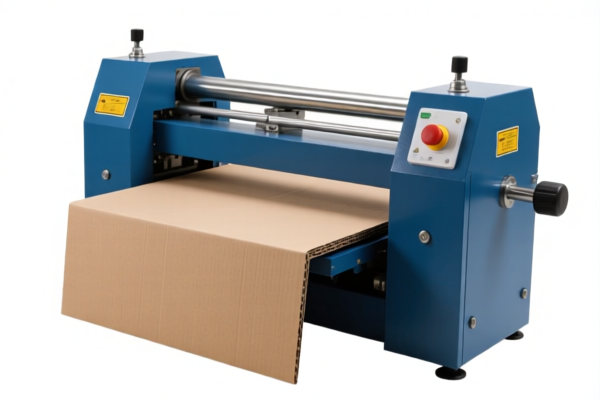
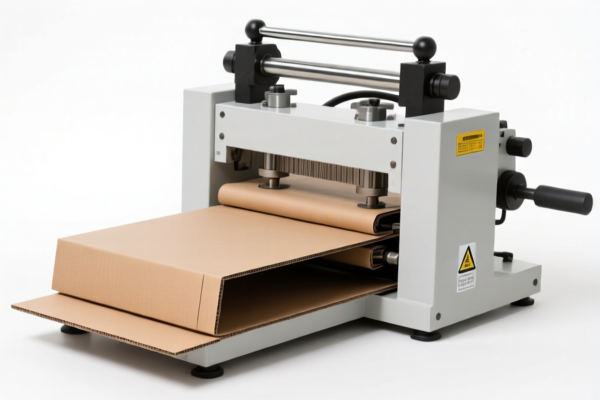
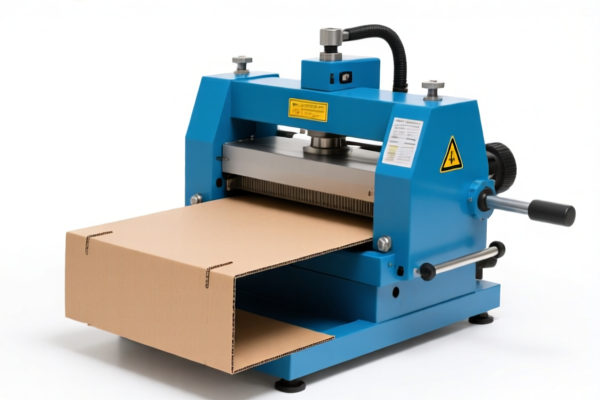
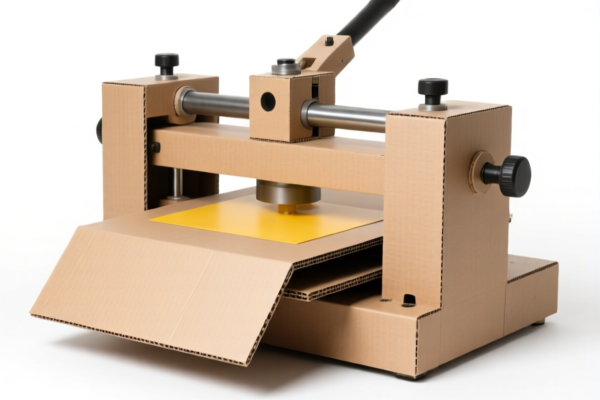
AI Analysis
📄 Paper or Paperboard Pressing Machine
🌐 HS Code Reference & Customs Clearance Guide | 2026 Latest Tariff Analysis | Professional Clearance Strategy
📌 1. Product Definition & Classification: What is a "Pressing Machine" in this Context?
The term "Paper or Paperboard Pressing Machine" refers to heavy industrial machinery used in the manufacturing, processing, or finishing of paper and paperboard. In international trade, the classification depends heavily on the specific function of the machine within the production line (e.g., forming, finishing, or general mechanical pressing).
Since the input description is broad, customs authorities often analyze three potential categories based on the machine's primary technical characteristic:
- Paper-Specific Machinery: Machines specifically designed for processing paper pulp, forming sheets, or pressing paperboard.
- General Pressing Machinery: Machines that function as hydraulic or mechanical presses, potentially used for板材 (boards/plates) or other materials, where the "paper" aspect is secondary or material-agnostic.
- Parts/Attachments: Components specifically designed for paper-making machinery.
⚠️ Key Distinction Point:
- If the machine is integral to the paper-making process (e.g., pressing pulp into sheets) → Likely 8439 or 8441.
- If the machine is a general-purpose press (e.g., hydraulic press) used occasionally for paper but structurally a general press → Likely 8479.
📦 2. HS Code Classification Details (2026 Latest Tariff Authority Comparison)
| HS Code | Product Description | Applicable Scenario | Key Classification Logic |
|---|---|---|---|
8441.80.00.00 |
Other machinery for making or finishing paper/paperboard | Manufacturing/Processing stage; general paper machinery | Machinery for paper/board manufacturing processes |
8479.90.95.60 |
Parts/Accessories for presses/machinery not specified elsewhere | General pressing machinery; structural similarity to plate presses | Press machinery logic; non-specific paper machinery |
8441.40.00.00 |
Machinery for cutting paper/paperboard to size or shape | Forming/cutting环节; specific to paper/board dimensions | Paper/board material focus; forming/processing |
8479.30.00.00 |
Machinery for mixing, kneading, crushing, grinding, screening, homogenizing, emulsifying or storing | Other processing machinery; press functionality | General processing/pressing logic; functional similarity |
8439.20.00.10 |
Machinery for making or finishing other cellulose pulp, paper or paperboard | Finishing stage; specific paper/board manufacturing | Direct paper/board manufacturing purpose |
🔍 Critical Reminder:
- "Pressing" (Pressing/Press): If the core function is applying pressure without specific paper-making mechanisms (like drying cans or felts), it may be classified as general machinery (8479 series).
- "Paper Making" (Papermaking): If the machine is part of the paper mill line (e.g., pressing the wet web), it falls under 8439/8441.
- Misclassification Risk: Declaring a general hydraulic press as "paper machinery" to avoid higher tariffs on general machinery (or vice versa) can lead to audits. The primary purpose and technical design determine the code.
💰 3. 2026 Latest Tariff Rate Breakdown (Including Surcharges & Policy Add-ons)
✅ Applicable Country: United States (US)
✅ Origin: China (CN)
✅ Effective Date: From November 10, 2025 (and subsequent imports)
🎯 1. 8441.80.00.00 —— Machinery for Making or Finishing Paper/Paperboard (Other)
| Item | Detail |
|---|---|
| Base Duty Rate | 0% (ad valorem) |
| USITC Surcharge | +25% (Under Section 301) |
| IEEPA Surcharge | +10% (China-specific, effective Nov 10, 2025) |
| Total Duty Rate | 35% |
| Calculation Basis | CIF Value × 35% |
| De Minimis Eligibility | ❌ Not Eligible (deny_de_minimis) |
| Legal Basis Path | Section 301: 8441.80.00.00 → IEEPA:9903.01.25 |
📌 Explanation:
- The 25% is the standard Section 301 tariff on Chinese industrial machinery.
- The 10% is the additional IEEPA surcharge for specific high-tech/industrial categories.
- Total 35% is a significant cost burden. Correct classification as "paper machinery" (8441) vs. "general machinery" (8479) is crucial as rates may differ slightly in base duties, but surcharges apply similarly.
🎯 2. 8479.90.95.60 —— Parts/Accessories for Presses (Other Machinery)
| Item | Detail |
|---|---|
| Base Duty Rate | 0% |
| USITC Surcharge | +25% |
| IEEPA Surcharge | +10% |
| Total Duty Rate | 35% |
| Calculation Basis | CIF Value × 35% |
| De Minimis Eligibility | ❌ Not Eligible |
| Legal Basis Path | Section 301: 8479.90.95.60 → IEEPA:9903.01.25 |
📌 Note:
- This code applies if the machine is considered a general press or its components are not specifically tailored for paper-making processes.
- The tariff structure is identical to the paper-specific machinery in this dataset, but the customs classification logic differs.
🎯 3. 8441.40.00.00 —— Machinery for Cutting Paper/Paperboard
| Item | Detail |
|---|---|
| Base Duty Rate | 0% |
| USITC Surcharge | +25% |
| IEEPA Surcharge | +10% |
| Total Duty Rate | 35% |
| Calculation Basis | CIF Value × 35% |
| De Minimis Eligibility | ❌ Not Eligible |
| Legal Basis Path | Section 301: 8441.40.00.00 → IEEPA:9903.01.25 |
📌 Note:
- If the "pressing machine" is actually a guillotine cutter or slitter that applies pressure to cut paper, it falls here.
- Emphasize "cutting/forming" in documentation, not just "pressing."
🎯 4. 8479.30.00.00 —— Other Processing Machinery
| Item | Detail |
|---|---|
| Base Duty Rate | 0% |
| USITC Surcharge | +25% |
| IEEPA Surcharge | +10% |
| Total Duty Rate | 35% |
| Calculation Basis | CIF Value × 35% |
| De Minimis Eligibility | ❌ Not Eligible |
| Legal Basis Path | Section 301: 8479.30.00.00 → IEEPA:9903.01.25 |
📌 Note:
- This is a "catch-all" for machinery that performs processing functions (like pressing) but doesn't fit neatly into paper-specific codes.
- Use this if the machine is a general industrial press used in a paper factory but not integral to paper formation.
🎯 5. 8439.20.00.10 —— Machinery for Making/Finishing Cellulose Pulp, Paper, Paperboard
| Item | Detail |
|---|---|
| Base Duty Rate | 0% |
| USITC Surcharge | +25% |
| IEEPA Surcharge | +10% |
| Total Duty Rate | 35% |
| Calculation Basis | CIF Value × 35% |
| De Minimis Eligibility | ❌ Not Eligible |
| Legal Basis Path | Section 301: 8439.20.00.10 → IEEPA:9903.01.25 |
📌 Note:
- This is the most precise code if the machine is a pressing section of a paper machine (e.g., pressing the wet web to remove water).
- Strongest argument for "paper-specific" classification.
🛠️ 4. Customs Clearance Practical Advice (Real-World Pitfall Guide)
✅ 1. Required Documentation Checklist (Essential)
| Document | Mandatory | Explanation |
|---|---|---|
| ✅ Product Specifications | ✔️ | Must detail: Pressure capacity, speed, material compatibility (paper/board only?). |
| ✅ Technical Diagrams | ✔️ | Highlight if the machine is part of a continuous paper line (supports 8439/8441) or a standalone press (supports 8479). |
| ✅ Product Photos | ✔️ | Show铭牌 (nameplate) with model number, manufacturer, and intended use. |
| ✅ Commercial Invoice | ✔️ | Description must be precise: e.g., "Paperboard Pressing Machine for Moisture Removal" vs. "Hydraulic Press." |
| ✅ Bill of Lading | ✔️ | Ensure HS Code matches invoice. |
| ✅ Origin Certificate | ✔️ | If non-China origin, may qualify for lower tariffs (but IEEPA may still apply depending on country). |
✅ 2. Declaration Tips (Key Mnemonics)
🔥 "Function Determines Code, Paper is Key, General Press is Risk!"
| Scenario | Recommended Declaration | Wrong Approach |
|---|---|---|
| Machine is part of a paper mill line | 8439.20.00.10 or 8441.80.00.00 |
Declaring as "Hydraulic Press" → 8479 |
| Machine is a standalone press used in paper factory | 8479.90.95.60 or 8479.30.00.00 |
Declaring as "Paper Machinery" → Audit risk |
| Machine cuts/finishes paper | 8441.40.00.00 |
Vague term "Pressing Machine" → Delay |
| Generic Industrial Press | 8479.90.95.60 |
Over-specifying "Paper" → Rejection |
✅ 3. Special Handling Cases
| Situation | Handling Advice |
|---|---|
| OEM Custom Machine | Provide design specs proving if it's for paper-specific processes. |
| Multi-Function Machine | Declare based on primary purpose. If primarily for paper, use 8441/8439. |
| Parts vs. Whole Machine | Do not split a complete machine into parts to avoid higher per-unit tariffs. |
| Non-China Origin | If from Vietnam/Malaysia, IEEPA 10% may not apply, but Section 301 might if transshipped from China. |
🌍 5. Global Market Comparison (2026 Latest)
| Country/Region | Recommended HS Code | Duty Rate | Certification | Notes |
|---|---|---|---|---|
| 🇺🇸 USA | 8439.20.00.10 / 8441.80.00.00 |
35% | No specific FDA, but CE/ISO helpful | High tariffs due to Section 301 + IEEPA |
| 🇨🇳 China | 8439.20.00.10 |
5-10% | CCC (if applicable) | Low import duty, but export controls may apply |
| 🇪🇺 EU | 8439.20.00.10 |
0-4.5% | CE, RoHS | Lower tariffs, strict environmental compliance |
| 🇯🇵 Japan | 8439.20.00.10 |
0-4.5% | PSE (if electrical) | No major surcharges |
📌 Conclusion:
- USA is the most challenging market due to 35% total tariff.
- EU/Asia offer significant cost advantages.
- Supply Chain Strategy: Consider sourcing from non-China countries if possible to mitigate IEEPA costs.
📌 6. Common Mistakes & Pitfalls (Lessons Learned)
❌ Mistake 1: Declaring a general hydraulic press as "Paper Machinery" to avoid scrutiny.
👉 Consequence: Customs audit, penalty for misclassification, potential seizure.
❌ Mistake 2: Using vague terms like "Machine" without specifying purpose.
👉 Consequence: Customs assigns a default code (often higher duty or flagged for inspection).
❌ Mistake 3: Ignoring IEEPA 10% surcharge.
👉 Consequence: Underpayment of duties, leading to back-taxes and fines.
❌ Mistake 4: Splitting a complete machine into parts (e.g., frame, motor, press unit).
👉 Consequence: Higher total duty, complex clearance, delays.
✅ Correct Action:
"Automatic Paperboard Pressing Machine, Model XYZ, Used for Water Removal in Paper Manufacturing, CE Certified, Made in China"
🎯 7. Conclusion: Precision in Classification, Savings in Cost!
🎯 Remember the Mantra:
🔹 "Function First, Paper Specifics Win!"
🔹 "35% Total Duty is the Rule, Not the Exception!"
🔹 "General Press vs. Paper Machine: Know the Difference!"
📌 Pro Tip:
- If your machine is not exclusively for paper, consider 8479 codes.
- If it is exclusively for paper, use 8439/8441 to show compliance with paper industry standards.
- Pre-ruling (Advance Ruling): Highly recommended for high-value machinery to avoid clearance delays.
📣 Immediate Action:
📞 Consult a Customs Broker + Provide Technical Specs + Apply for Advance Ruling
🚀 Ensure Smooth Clearance, Cost Control, and Compliance!
✨ Professional Customs Clearance Starts with Accurate Classification!
💼 Every Percent of Duty Counts!
Customer Reviews
About HS Code Classification
The Harmonized System (HS) is an internationally standardized nomenclature developed by the World Customs Organization (WCO) to classify traded products. Over 200 countries use the HS system as the basis for customs tariffs, trade statistics, and import/export regulations.
Each HS code follows a hierarchical structure:
- Chapter (2 digits) — Broad category of goods (e.g., Chapter 84: Machinery and Mechanical Appliances)
- Heading (4 digits) — More specific grouping within the chapter
- Subheading (6 digits) — Internationally standardized breakdown, used by all WCO member countries
- National subdivisions (8-10 digits) — Country-specific extensions for further classification, such as US HTSUS 10-digit codes
Correct HS code classification is essential for smooth customs clearance, accurate duty payment, and compliance with trade regulations. Misclassification can lead to customs delays, overpayment of duties, or penalties.
When importing from CN to US, the applicable tariff rates may include:
- Most-Favored-Nation (MFN) rate — The standard duty rate applied to WTO members
- General rate — Applied to countries without trade agreements
- Trade remedy duties — Additional tariffs such as Section 301 (anti-dumping), Section 232 (national security), or countervailing duties
The information provided on this page is for reference purposes only. For official classification, please consult with your local customs authority or a licensed customs broker.