Paper pulp, waste paper or paperboard
CN → US| HS Code | Tariff Rate | Origin | Destination | Doc |
|---|---|---|---|---|
| 4706200000 | 35.0% | CN | US | Official Doc |
| 4707200040 | 35.0% | CN | US | Official Doc |
| 4707200020 | 35.0% | CN | US | Official Doc |
| 4706920100 | 35.0% | CN | US | Official Doc |
| 4707900000 | 35.0% | CN | US | Official Doc |
Product Images
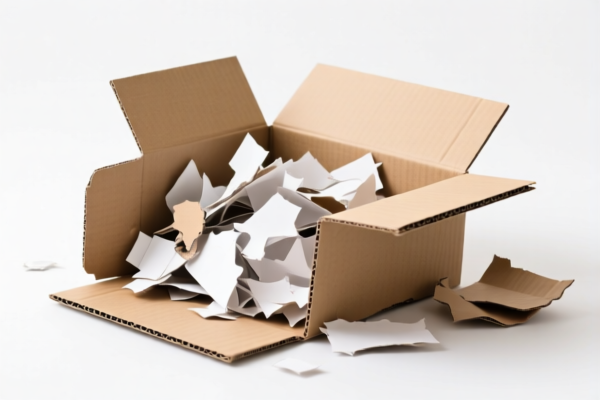
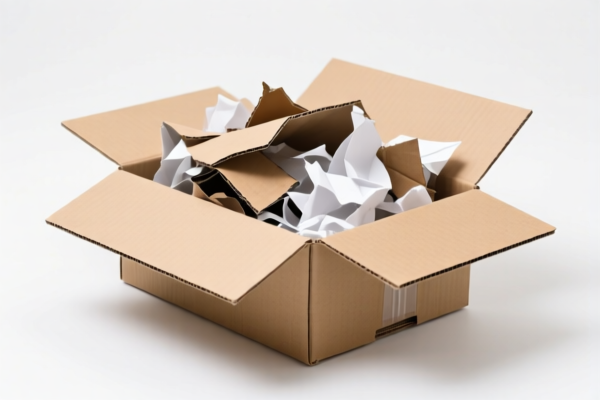

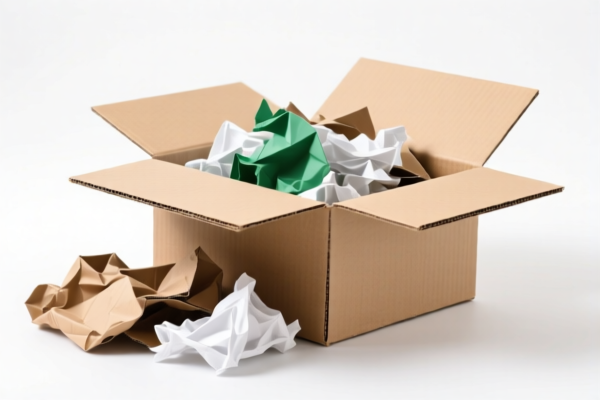
AI Analysis
📜 Waste Paper & Chemical Pulp (Paper Pulp, Waste Paper or Paperboard)
🌐 HS Code Reference & Customs Clearance Guide | 2026 Latest Tariff Analysis | Professional Entry Strategy
📌 I. Product Definition & Classification: What Exactly Is "Waste Paper"?
In international trade, "Waste Paper and Paperboard" is a broad category primarily governed by Chapter 47 of the HS Code (Paper and paperboard; articles of paper pulp, of paper or of paperboard). It covers recycled materials, chemical pulps derived from waste, and various forms of discarded paper products intended for reprocessing.
The key distinction lies in the processing state and origin of fibers: * Chemical Pulp (Chapter 47, Heading 47.06): Pulp obtained by chemical processes (e.g., bleached or unbleached wood pulp), including those derived from waste paper. * Waste and Scrap (Chapter 47, Heading 47.07): Used paper and paperboard, including waste and scrap of paper or paperboard.
⚠️ Critical Distinction:
- If the material is chemical pulp (even if made from recycled paper) → It falls under 47.06.
- If the material is raw waste/scrap (unprocessed or lightly processed waste paper/board) → It falls under 47.07.
📦 II. HS Code Classification Details (2026 Latest Tariff Authority Alignment)
Based on the provided data, all relevant HS codes for this category attract a total tax rate of 35.0% when imported into the US from China. Below is the detailed breakdown:
| HS Code | Product Description | Applicable Scenario | Key Attributes |
|---|---|---|---|
4706.20.00.00 |
Bleached Chemical Pulp of Waste Paper and Paperboard | Pulp made from recovered paper/board via chemical process; bleached. | ✅ Bleached Chemical Pulp ✅ From Recycled Source |
4707.20.00.40 |
Waste and Scrap of Bleached Chemical Pulp | Fully meets the definition of bleached chemical pulp waste/scrap. | ✅ Bleached Chemical Pulp ✅ Waste/Scrap Form |
4707.20.00.20 |
Waste and Scrap of Bleached Chemical Pulp | Primarily made of bleached chemical pulp; categorized under waste/board. | ✅ Bleached Chemical Pulp ✅ Waste/Scrap Form |
4706.92.01.00 |
Other Chemical Pulp of Waste Paper | Fits the criteria of recycled paper/cardboard material converted to chemical pulp. | ✅ Chemical Pulp ✅ From Recycled Source |
4707.90.00.00 |
Other Waste and Scrap of Paper or Paperboard | General waste paper/cardboard not specifically listed above; "Other" category. | ✅ Raw Waste/Scrap ✅ Non-Specific Type |
🔍 Key Reminder:
- All codes listed above exclusively apply to imports from China with a total effective tariff of 35.0%. - Bleached vs. Unbleached: Codes4706.20.00.00,4707.20.00.40, and4707.20.00.20specifically involve bleached chemical pulp. - Form Matters:4706.xxrefers to Pulp (processed fiber), while4707.xxrefers to Waste/Scrap (recyclable material).
💰 III. 2026 Latest Tariff Rate Breakdown (Including Surcharges & Policy Add-ons)
✅ Applicable Country: United States (US)
✅ Origin: China (CN)
✅ Effective Date: 2025 onwards (Current 2026 Tariff Schedule)
🎯 1. General Tariff Structure for All Listed HS Codes
| Item | Rate / Amount | Source / Legal Basis |
|---|---|---|
| Base Rate (MFN) | 0.0% | General MFN duty for these pulp/paper codes |
| Section 301 Surcharge | +25.0% | USITC Footnote: Section 301 duties on Chinese goods |
| 122 Clause Surcharge | +10.0% | Specific clause applicable to certain paper/pulp waste items |
| Total Effective Rate | 35.0% | 0% + 25% + 10% |
| Calculation Basis | CIF Value (Cost, Insurance, Freight) | Ad Valorem |
| De Minimis Eligibility | ❌ Denied | Section 301 duties apply even to low-value shipments |
📌 Explanation:
- Although the base duty for paper pulp/waste is often low or zero, the Section 301 tariff (+25%) significantly increases the cost for Chinese-origin goods. - The 122 Clause (+10%) is an additional layer affecting specific waste paper and pulp categories. - Total 35% is a high barrier, requiring precise classification and cost optimization.
🛠️ IV. Customs Clearance Practical Advice (Battle-Tested Pitfall Avoidance)
✅ 1. Documentation Checklist (Non-Negotiable)
| Document | Required? | Notes |
|---|---|---|
| ✅ Commercial Invoice | ✔️ | Must clearly state: "Bleached Chemical Pulp" OR "Waste Paper" |
| ✅ Packing List | ✔️ | Detail weight, volume, and number of bales/packages |
| ✅ Certificate of Origin | ✔️ | Essential to confirm Chinese origin for Section 301 application |
| ✅ Product Specification | ✔️ | Include moisture content, fiber type, bleach status (yes/no) |
| ✅ Photos of Goods | ✔️ | Show baling, labeling, and any visible contaminants (if waste) |
| ✅ Bill of Lading (B/L) | ✔️ | Match HS codes and descriptions exactly |
⚠️ Critical Tip:
Misdeclaring Chemical Pulp as Waste Paper (or vice versa) can lead to reclassification, penalties, and shipment delays. Ensure the physical form matches the HS code description.
✅ 2. Classification Strategy (Key Mnemonic)
🔥 "Pulp is Processed, Waste is Scrap; Bleached Changes the Code, 35% is the Cap."
| Scenario | Correct HS Code | Wrong Code | Consequence |
|---|---|---|---|
| Recycled paper → Chemically processed & bleached | 4706.20.00.00 or 4706.92.01.00 |
4707.xx |
Risk of misclassification; duties may still be 35%, but legal risk exists |
| Used office paper/cardboard (unprocessed) | 4707.90.00.00 |
4706.xx |
35% applies either way, but documentation must match |
| Bleached pulp waste (scrap from pulp mill) | 4707.20.00.40 or 4707.20.00.20 |
4706.xx |
Clarifies it is "waste" not "production pulp" |
✅ 3. Special Cases
| Case | Handling Advice |
|---|---|
| Contaminated Waste Paper | Must be declared under 4707.xx. Contamination levels (e.g., plastic, metal) must be disclosed. |
| Baled vs. Loose | Ensure baling density and dimensions are accurately reported for volumetric weight calculations. |
| Mixed Shipments | Do not mix 4706 (pulp) and 4707 (waste) in one line item. Declare separately. |
| Re-export Claims | No duty drawback available for Section 301 duties in most cases. |
🌍 V. Global Market Comparison (2026 Latest)
| Country/Region | Recommended HS Code | Total Tariff (CN Origin) | Certification Required | Notes |
|---|---|---|---|---|
| 🇺🇸 USA | 4706.20.00.00 / 4707.xx |
35.0% | None specific, but EPA rules apply to waste | High tariff; strict waste import controls |
| 🇨🇳 China | 4706.20.00.00 / 4707.xx |
0%~5% | N/A | Major importer of waste pulp |
| 🇪🇺 EU | 4706.20.00.00 / 4707.xx |
0%~6.5% | REACH, Waste Shipment Reg. | Strict environmental regulations |
| 🇻🇳 Vietnam | 4707.90.00.00 |
0%~5% | N/A | Growing hub for paper recycling |
📌 Conclusion:
- The US market imposes the highest tariff burden (35%) on Chinese paper pulp and waste paper. - EU and other markets have lower tariffs but stricter environmental and waste shipment regulations. - Cost-Benefit Analysis: Consider sourcing from non-China origins (e.g., Vietnam, EU, or domestic recycling) to avoid the 35% US tariff.
📌 VI. Common Errors & Pitfall Guide (Lessons Learned)
❌ Error 1: Declaring Bleached Chemical Pulp as Generic Waste Paper
👉 Consequence: Misclassification penalty; customs may reject entry due to inaccurate description.
❌ Error 2: Ignoring the 122 Clause
👉 Consequence: Underpayment of duties by 10%; back taxes + interest + fines.
❌ Error 3: Failing to specify Bleaching Status
👉 Consequence: Customs request for additional info; shipment delay.
❌ Error 4: Mixing Pulp and Waste in one container without proper segregation
👉 Consequence: Higher risk of inspection; potential rejection if contamination is found.
✅ Correct Practice:
"Bleached Chemical Pulp, 20% Yield, from Recycled Paper, Baled, HS 4706.20.00.00"
OR
"Mixed Waste Paper and Cardboard, Unbleached, Baled, HS 4707.90.00.00"
🎯 VII. Conclusion: Precision in Classification Saves Thousands!
🎯 Remember the Mnemonic:
🔹 "Pulp is 4706, Waste is 4707; Bleached or Not, 35% is the lot!"
🔹 "Section 301 + 122 Clause = 35%; Don’t get caught flat-footed!"
📌 Pro Tip:
If your goods are not from China, they may be eligible for lower or zero tariffs. Verify the Country of Origin carefully.
For large volumes, consider applying for a Binding Ruling from US Customs and Border Protection (CBP) to lock in the HS code and tariff rate.
📣 Immediate Action:
📞 Consult a licensed customs broker + Provide product specs + Apply for HS Code Advance Ruling
🚀 Minimize duty costs, ensure smooth clearance, and maximize your paper recycling profits!
✨ Professional clearance starts with precise classification!
💼 Every percentage point in duty affects your bottom line!
Customer Reviews
About HS Code Classification
The Harmonized System (HS) is an internationally standardized nomenclature developed by the World Customs Organization (WCO) to classify traded products. Over 200 countries use the HS system as the basis for customs tariffs, trade statistics, and import/export regulations.
Each HS code follows a hierarchical structure:
- Chapter (2 digits) — Broad category of goods (e.g., Chapter 84: Machinery and Mechanical Appliances)
- Heading (4 digits) — More specific grouping within the chapter
- Subheading (6 digits) — Internationally standardized breakdown, used by all WCO member countries
- National subdivisions (8-10 digits) — Country-specific extensions for further classification, such as US HTSUS 10-digit codes
Correct HS code classification is essential for smooth customs clearance, accurate duty payment, and compliance with trade regulations. Misclassification can lead to customs delays, overpayment of duties, or penalties.
When importing from CN to US, the applicable tariff rates may include:
- Most-Favored-Nation (MFN) rate — The standard duty rate applied to WTO members
- General rate — Applied to countries without trade agreements
- Trade remedy duties — Additional tariffs such as Section 301 (anti-dumping), Section 232 (national security), or countervailing duties
The information provided on this page is for reference purposes only. For official classification, please consult with your local customs authority or a licensed customs broker.