Paper ≤150g/m²
CN → US| HS Code | Tariff Rate | Origin | Destination | Doc |
|---|---|---|---|---|
| 4823908680 | 35.0% | CN | US | Official Doc |
| 4805919000 | 35.0% | CN | US | Official Doc |
| 4805917000 | 35.0% | CN | US | Official Doc |
| 4802574085 | 35.0% | CN | US | Official Doc |
| 4823906700 | 35.0% | CN | US | Official Doc |
| 4802554000 | 35.0% | CN | US | Official Doc |
Product Images
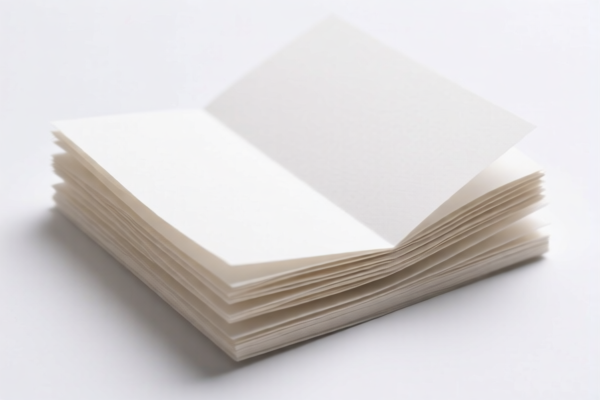
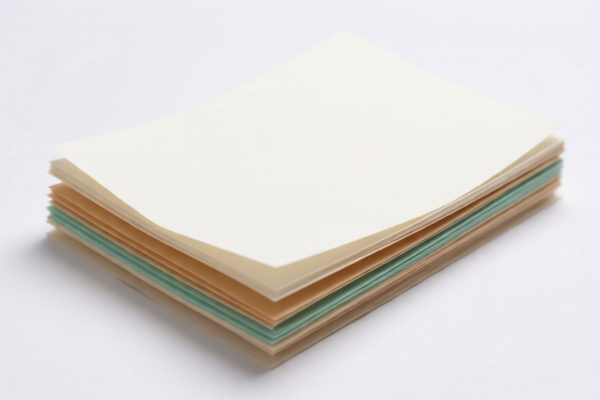
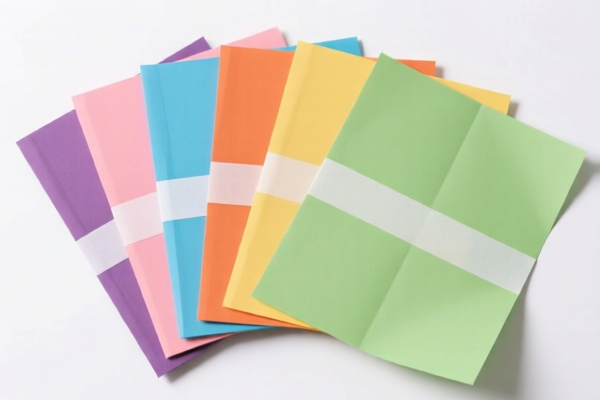
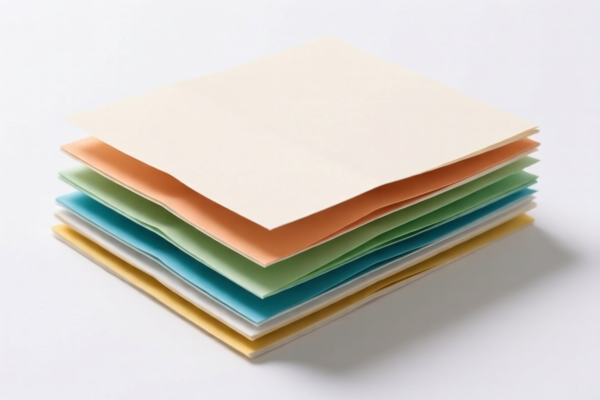
AI Analysis
📄 Paper Products ≤150g/m² (Paper Classification Guide)
🌐 HS Code Reference & Customs Clearance Guide | 2026 Latest Tariff Analysis | Professional Tier-1 Logistics Strategy
📌 1. Product Definition & Classification: Do You Really Understand "Paper"?
Paper with a grammage (weight) of ≤150 g/m² is a broad category in international trade. It primarily falls under two major headings depending on its coating status and specific use:
1.1 Uncoated Paper & Paperboard (Chapter 48, Heading 4802/4805)
Definition: Paper that has not been coated on one or both sides with substances like kaolin, calcium carbonate, or polymer emulsions.
Key Feature: The surface is unprocessed (raw). It includes newsprint, copying paper, tissue paper, and generic uncoated cardboard.
Grammage Limit: The specific HS codes below target the 30–150 g/m²* range.
1.2 Other Paper & Paperboard Products (Chapter 48, Heading 4823)
Definition: Paper products that do not fit into standard sheet/book formats or are further processed (cut, shaped, perforated).
Key Feature: "Miscellaneous" category. Includes paper cups, paper bags, labels, or specific cut shapes.
⚠️ Critical Distinction:
- If it is a standard sheet/roll with no coating → Likely 4802 or 4805.
- If it is custom-cut, used for packaging containers, or has special finishes → Likely 4823.
- Grammage is Key: All codes below strictly adhere to the ≤150 g/m² constraint provided in your query.
📦 2. HS Code Classification Details (Based on Provided Data)
| HS Code | Product Description & Match Logic | Key Attributes |
|---|---|---|
4823.90.86.80 |
Other Paper Articles (Miscellaneous) | Material: Paper. Form: "Other" paper products. Fit: Matches "Other" category completely. Grammage/Coating not strictly defined here but fits the "Paper ≤150g/m²" material base. |
4805.91.90.00 |
Uncoated Paper (30-150 g/m²) | Material: Paper. Form: Uncoated. Fit: Specifically targets the 30–150 g/m² range for uncoated paper. |
4805.91.70.00 |
Uncoated Paper (30-150 g/m²) | Material: Paper. Form: Uncoated. Fit: Explicitly mentions material and grammage range limit. Matches classification description for uncoated paper. |
4802.57.40.85 |
Uncoated Paper/Board (Other) | Material: Paper. Form: Uncoated. Fit: Grammaged compliance required. Classified as "Other" category for uncoated paper/board. |
4823.90.67.00 |
Other Paper Articles | Material: Paper/Paperboard. Form: "Other" category. Fit: Matches paper limitation. No conflict with coated/uncoated logic as it is a catch-all for other paper items. |
4802.55.40.00 |
Uncoated Paper (Writing/Printing) | Material: Paper. Use: Writing/Printing/Graphics. Fit: Grammage 40–150 g/m². Fits the "catch-all" or "Other" sub-category for standard uncoated paper. |
💰 3. 2026 Latest Tariff Rate Breakdown (Including Surcharges)
✅ Applicable Country: United States (US)
✅ Origin: China (CN)
✅ Effective Date: Current/2026 Trade Policy Era
All HS Codes in the provided data share the identical tariff structure due to Section 301 and IEEPA regulations.
🎯 Universal Tax Structure for Paper ≤150g/m²
| Tax Component | Rate | Legal Basis / Explanation |
|---|---|---|
| Base Tariff | 0.0% | Standard MFN (Most Favored Nation) duty for most paper products is often 0%. |
| Section 301 Surcharge | +25.0% | USITC Footnote: Additional duty on Chinese imports under Section 301 of the Trade Act. |
| 122 Clause Tariff (IEEPA) | +10.0% | International Emergency Economic Powers Act. Additional levy on specific Chinese goods. |
| TOTAL EFFECTIVE RATE | 35.0% | 0% + 25% + 10% |
📌 Calculation Example:
For a shipment valued at $10,000:
- Base Duty: $0
- Section 301 Duty: $10,000 × 25% = $2,500
- IEEPA Duty: $10,000 × 10% = $1,000
- Total Tax Payable: $3,500 (35%)⚠️ Note:
- These rates apply to all 6 HS Codes listed above.
- De Minimis Exemption ($800): Typically NOT AVAILABLE for Section 301/IEEPA goods from China. You must file a formal entry.
- Exclusions: Check if your specific product type (e.g., certain recycled papers or specialized technical papers) has an exclusion number, though most standard papers are included.
🛠️ 4. Customs Clearance Practical Advice
✅ 1. Documentation Checklist (Critical)
| Document | Required? | Details |
|---|---|---|
| Commercial Invoice | ✔️ | Must clearly state: "Paper, Uncoated, Grammage: XX g/m²". |
| Product Specification Sheet | ✔️ | Crucial: Must confirm Coating Status (Coated vs. Uncoated) and Grammage (g/m²). |
| Packing List | ✔️ | Weight and dimensions must match invoice. |
| Bill of Lading / Air Waybill | ✔️ | Standard shipping documents. |
| Certificate of Origin | ✔️ | Proof of Chinese origin (triggers the 35% tariff). |
✅ 2. Classification Strategy (How to Avoid Penalties)
| Scenario | Correct HS Code Approach | Risk if Wrong |
|---|---|---|
| Uncoated Copy Paper (A4) | 4805.91.90.00 or 4802.55.40.00 |
Misclassifying as Coated Paper (higher base duty) or Other Products. |
| Paper Bags/Cups | 4823.90.86.80 or 4823.90.67.00 |
Misclassifying as standard sheets → Rejection by CBP for "wrong form factor". |
| Grammage Error | Ensure document says ≤150 g/m² | If declared as >150 g/m², it may fall under different subheadings (e.g., cardboard) with different rules. |
| Coating Status | Must specify UNCOATED if using 4802/4805 | If it is actually coated, it falls under 4810/4811, changing the classification logic. |
✅ 3. Pro-Tips for Smooth Clearance
- Be Precise with "Grammage": US Customs (CBP) often requests proof of weight per square meter. Have lab test results ready if challenged.
- Define "Other" Clearly: For
4823codes, describe the specific use or shape (e.g., "cut into circles," "used for labels"). Vague descriptions lead to delays. - Section 301 Exclusion Search: Before shipping, check if your specific HS code has an Exclusion Number (e.g.,
Exclusion No. XXXX). If available, you can save the 25% surcharge. - Origin Marking: Ensure all paper products are marked "Made in China" to avoid origin-related seizures.
🌍 5. Global Market Comparison (2026)
| Region | Recommended HS Code | Tariff Rate (China Origin) | Key Requirements |
|---|---|---|---|
| 🇺🇸 USA | 4805.91.90.00 / 4823.90.86.80 etc. |
35% (0% Base + 25% Sec 301 + 10% IEEPA) | Strict grammmage/coating declaration. |
| 🇨🇳 China (Import) | 4802 / 4823 Series |
~0% - 5% | Standard customs clearance. |
| 🇪🇺 EU | 4802 / 4823 Series |
~0% - 6.5% | CE/REACH compliance for certain papers (e.g., recycled content limits). |
| 🇬🇧 UK | 4802 / 4823 Series |
~0% - 6.5% | Post-Brexit customs rules apply. |
📌 Conclusion:
The USA is the most expensive market for paper products due to the 35% combined tariff.
- Mitigation Strategy: Consider sourcing from countries with Free Trade Agreements (FTAs) with the US (e.g., Mexico, Canada, Australia) to reduce the 25% Section 301 duty.
📌 6. Common Mistakes & Pitfalls
❌ Mistake 1: Claiming "Paper" without specifying Coating or Grammage.
👉 Result: CBP may assign a higher default duty or request extensive testing, causing 2-4 week delays.
❌ Mistake 2: Using 4823 for standard uncoated sheets.
👉 Result: 4823 is for "Other" articles. Standard sheets belong in 4802/4805. Misclassification leads to audits.
❌ Mistake 3: Ignoring the 10% IEEPA Surcharge.
👉 Result: Many importers only budget for the 25% Section 301 tax, forgetting the extra 10%, leading to underpayment and penalties.
✅ Correct Practice:
"Uncoated Paper, Grammage: 80 g/m², Width: 60cm, Roll Form, for Printing Use. Origin: China."
🎯 7. Summary & Action Plan
🎯 Key Takeaway:
All paper products ≤150 g/m² from China entering the US face a 35% total duty.
- Uncoated Sheets: Look at 4805 and 4802 codes.
- Special/Cut Paper: Look at 4823 codes.
🚀 Immediate Actions:
1. Verify Coating & Grammage: Ensure your supplier provides exact specs.
2. Check Exclusions: Search for any Section 301 exclusions for your specific HS code.
3. Budget for 35%: Include the full tariff in your landed cost calculation.
4. Prepare Documentation: Have spec sheets ready for CBP verification.
✨ Professional Customs Clearance Starts with Precise Classification!
💼 Every percent of duty matters in the paper trade!
Customer Reviews
About HS Code Classification
The Harmonized System (HS) is an internationally standardized nomenclature developed by the World Customs Organization (WCO) to classify traded products. Over 200 countries use the HS system as the basis for customs tariffs, trade statistics, and import/export regulations.
Each HS code follows a hierarchical structure:
- Chapter (2 digits) — Broad category of goods (e.g., Chapter 84: Machinery and Mechanical Appliances)
- Heading (4 digits) — More specific grouping within the chapter
- Subheading (6 digits) — Internationally standardized breakdown, used by all WCO member countries
- National subdivisions (8-10 digits) — Country-specific extensions for further classification, such as US HTSUS 10-digit codes
Correct HS code classification is essential for smooth customs clearance, accurate duty payment, and compliance with trade regulations. Misclassification can lead to customs delays, overpayment of duties, or penalties.
When importing from CN to US, the applicable tariff rates may include:
- Most-Favored-Nation (MFN) rate — The standard duty rate applied to WTO members
- General rate — Applied to countries without trade agreements
- Trade remedy duties — Additional tariffs such as Section 301 (anti-dumping), Section 232 (national security), or countervailing duties
The information provided on this page is for reference purposes only. For official classification, please consult with your local customs authority or a licensed customs broker.