Paraffin Surfactant
CN → US| HS Code | Tariff Rate | Origin | Destination | Doc |
|---|---|---|---|---|
| 2712902000 | 35.0% | CN | US | Official Doc |
| 3402422050 | 39.0% | CN | US | Official Doc |
| 3402422010 | 39.0% | CN | US | Official Doc |
| 2712200000 | 17.5% | CN | US | Official Doc |
| 3824994900 | 41.5% | CN | US | Official Doc |
Product Images


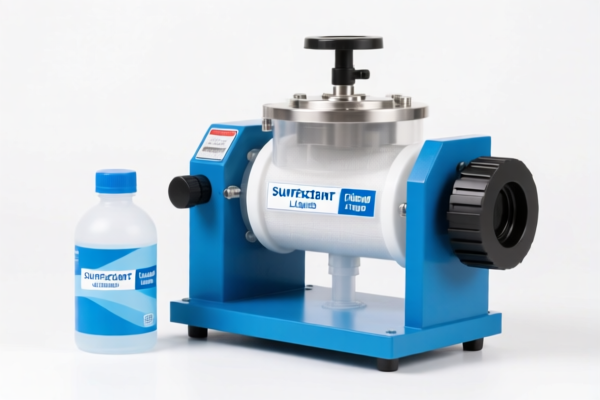
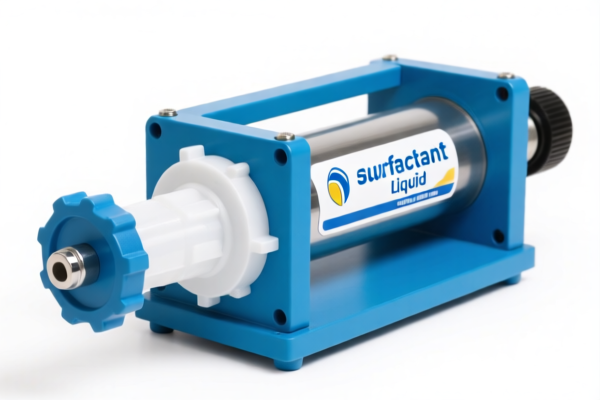
AI Analysis
🧪 Paraffin Surfactant (Paraffin Emulsifier)
🌐 HS Code Reference & Clearance Guide | 2026 Latest Tariff Analysis | Professional Customs Strategy
📌 I. Product Definition & Classification: What is "Paraffin Surfactant"?
Paraffin Surfactant (also known as Paraffin Emulsifier) is a chemical preparation used primarily in industrial applications such as rubber processing, paper sizing, textile treating, and pesticide formulation. It serves as an emulsifier or dispersant, allowing hydrophobic paraffin wax to mix with water.
In international trade, classification depends heavily on whether the product is viewed primarily as a mineral wax (Chapter 27) or a chemical surfactant/emulsifier (Chapter 34/38). Below are the five most likely HS Code classifications based on the provided data, along with their tax implications for imports from China to the US.
📦 II. HS Code Classification Details (2026 Latest Tariff Authority Cross-Reference)
| HS Code | Product Description | Application Scenario | Key Classification Logic |
|---|---|---|---|
2712.20.00.00 |
Paraffin Wax & Similar Products (Petroleum Wax) | Raw paraffin or products where paraffin is the dominant constituent | ✅ Core Material: Paraffin is the key material; surfactant is an additive that doesn't change the mineral wax nature. |
2712.90.20.00 |
Other Waxes (Similar Products) | Derivatives or additives where paraffin is a major component but not pure wax | ✅ Similar Product: Fits "similar products" and "others" categories; no material conflict. |
3402.42.20.10 |
Surface Active Agents (Non-Razor Blades) | Commercial emulsifiers derived from animal/plant/microbial fats | ✅ Function & Material: "Surfactant" fits function; "Paraffin" fits fat/hydrocarbon source; compatible with polyether categories. |
3402.42.20.50 |
Other Surface Active Agents | Other emulsifiers not specified elsewhere | ✅ By Inference: No specific chemical structure defined; defaults to "Others"; no material conflict with fat-derived substances. |
3824.99.49.00 |
Prepared Binders for Foundry Molds / Chemical Preparations | Chemical industrial preparations, mixtures of hydrocarbons | ✅ Preparation: Classified as a chemical industry preparation; core component (paraffin) is hydrocarbon-based. |
🔍 Critical Distinction:
- If the product is >90% paraffin wax with minor surfactants → Use 2712 (Chapter 27).
- If the product is a functional emulsion where paraffin is dispersed by surfactants → Use 3402 or 3824.
- Never split the shipment: If it’s a mixed preparation, declare it as a single unit under the most specific functional heading (usually 3402/3824) or material heading (2712) based on GRI 3(b).
💰 III. 2026 Latest Tariff Rate Breakdown (Including Surtaxes & Policy Surcharges)
✅ Applicable Country: United States (US)
✅ Origin: China (CN)
✅ Effective Date: From November 10, 2025 (and subsequent imports)
🎯 1. 2712.20.00.00 – Paraffin Wax & Similar Products (Most Favorable Rate)
| Item | Content |
|---|---|
| Base Tariff | 0% (Ad Valorem) |
| Section 301 Surtax | +7.5% (USITC Footnote 9903.88.01) |
| IEEPA Surtax | +10% (For Chinese/HK products, from Nov 10, 2025) |
| Total Effective Rate | 17.5% |
| Tax Calculation | CIF Value × 17.5% |
| De Minimis Eligibility | ❌ No (deny_de_minimis) |
| Legal Basis Path | IEEPA:9903.01.25 → IEEPA:9903.01.24 → USITC:2712.20.00.00 → FOOTNOTE:9903.88.01 |
📌 Explanation:
- This is the lowest tax category for paraffin-based products.
- The "7.5%" Section 301 tax applies to certain mineral waxes.
- Tip: If your product is primarily paraffin, fight for this classification to save ~20% compared to surfactant codes.
🎯 2. 2712.90.20.00 – Other Waxes
| Item | Content |
|---|---|
| Base Tariff | 0% |
| Section 301 Surtax | +25% |
| IEEPA Surtax | +10% |
| Total Effective Rate | 35.0% |
| Tax Calculation | CIF Value × 35.0% |
| De Minimis Eligibility | ❌ No |
| Legal Basis Path | IEEPA:9903.01.25 → IEEPA:9903.01.24 → USITC:2712.90.20.00 → FOOTNOTE:9903.88.01 |
📌 Note:
- Although base tariff is 0%, the 25% Section 301 tax makes this significantly more expensive than2712.20.00.00.
- Only use this if the product is classified as a "similar wax" but not "paraffin wax" specifically.
🎯 3. 3402.42.20.10 – Surface Active Agents (Paraffin-based)
| Item | Content |
|---|---|
| Base Tariff | 4.0% |
| Section 301 Surtax | +25% |
| IEEPA Surtax | +10% |
| Total Effective Rate | 39.0% |
| Tax Calculation | CIF Value × 39.0% |
| De Minimis Eligibility | ❌ No |
| Legal Basis Path | IEEPA:9903.01.25 → IEEPA:9903.01.24 → USITC:3402.42.20.10 → FOOTNOTE:9903.88.01 |
📌 Explanation:
- Classified under Chapter 34 (Soap, Organic Surface-Active Agents).
- Paraffin is considered a "fat-derived substance" or hydrocarbon compatible with surfactants.
- High base tariff (4%) plus surtaxes = 39%.
🎯 4. 3402.42.20.50 – Other Surface Active Agents
| Item | Content |
|---|---|
| Base Tariff | 4.0% |
| Section 301 Surtax | +25% |
| IEEPA Surtax | +10% |
| Total Effective Rate | 39.0% |
| Tax Calculation | CIF Value × 39.0% |
| De Minimis Eligibility | ❌ No |
| Legal Basis Path | IEEPA:9903.01.25 → IEEPA:9903.01.24 → USITC:3402.42.20.50 → FOOTNOTE:9903.88.01 |
📌 Note:
- Similar to above, but for "other" surfactants without specific chemical structure definition.
- Same total rate: 39%.
🎯 5. 3824.99.49.00 – Chemical Preparations (Industrial)
| Item | Content |
|---|---|
| Base Tariff | 6.5% |
| Section 301 Surtax | +25% |
| IEEPA Surtax | +10% |
| Total Effective Rate | 41.5% |
| Tax Calculation | CIF Value × 41.5% |
| De Minimis Eligibility | ❌ No |
| Legal Basis Path | IEEPA:9903.01.25 → IEEPA:9903.01.24 → USITC:3824.99.49.00 → FOOTNOTE:9903.88.01 |
📌 Warning:
- This is the highest tax category in the provided data.
- Classified as a "prepared chemical preparation."
- Only use if the product is a complex mixture not fitting Chapter 27 or 34 headings.
🛠️ IV. Clearance Practical Advice (Battle-Tested Pitfall Guide)
✅ 1. Document Checklist (Non-Negotiable)
| Document | Must Provide | Purpose |
|---|---|---|
| ✅ Product Specification Sheet | ✔️ | Lists exact composition % (Paraffin vs. Surfactant), CAS numbers, and function. |
| ✅ Formula/Composition Analysis | ✔️ | Critical for proving if it’s primarily "Wax" (Ch 27) or "Surfactant" (Ch 34/38). |
| ✅ Product Photos (Labeled) | ✔️ | Show packaging, label, and physical state (liquid/emulsion vs. solid wax). |
| ✅ Commercial Invoice | ✔️ | Must clearly state "Paraffin Surfactant" or "Paraffin Emulsifier," NOT just "Chemical." |
| ✅ Certificate of Origin (CO) | ✔️ | Required for Chinese origin verification; affects surtax applicability. |
| ✅ Safety Data Sheet (SDS) | ✔️ | Helps Customs determine hazard class and proper handling; supports material classification. |
✅ 2. Declaration Strategy (Key Mantras)
🔥 "Material Dominance Wins, Function Follows, Split Declares Disaster!"
| Scenario | Correct Declaration | Incorrect Action |
|---|---|---|
| High Paraffin Content (>80%) | Declare as 2712.20.00.00 | Declare as "Surfactant" → 39% Tax |
| Emulsified Liquid Form | Declare as 3402.42.20.10 | Declare as "Paraffin Wax" → Rejection/Fine |
| Complex Chemical Mix | Declare as 3824.99.49.00 | Split into parts → 89.5% Tax per part! |
| Unspecified "Similar Wax" | Declare as 2712.90.20.00 | Assume 0% tax → Underpayment Penalty |
✅ 3. Special Handling Tips
| Situation | Recommendation |
|---|---|
| OEM Custom Blend | Provide client’s formula + design specs. Avoid vague terms like "industrial chemical." |
| Liquid Emulsion | Emphasize "Surfactant" function but justify paraffin source. Aim for 3402 over 3824. |
| Solid Paraffin with Additives | Push for 2712.20.00.00 (17.5% tax). Provide lab reports showing paraffin dominance. |
| Mixed Packaging | Do not split paraffin and surfactant into separate shipments. They are one product. |
🌍 V. Global Market Comparison (2026 Latest)
| Country/Region | Recommended HS Code | Total Tax (China Origin) | Certification Requirements | Notes |
|---|---|---|---|---|
| 🇺🇸 USA | 2712.20.00.00 (Best Case) |
17.5% | None specific | 3824 hits 41.5%; avoid if possible. |
| 🇨🇳 China | 2712.20.00.00 |
5-9% (Import Duty) | None | No Section 301/IEEPA surtaxes. |
| 🇪🇺 EU | 2712.20.00 |
5% | REACH Registration | No equivalent to US 301 tariffs. |
| 🇬🇧 UK | 2712.20.00 |
5% | UK REACH | Post-Brexit tariffs similar to EU. |
| 🇯🇵 Japan | 2712.20.00 |
1.5-3% | JIS Standard | Low base tariff; no surtaxes. |
📌 Conclusion:
- The US is the most expensive market due to Section 301 and IEEPA surtaxes.
- Classification is key: Moving from3824(41.5%) to2712(17.5%) saves 24% in taxes.
- China origin triggers all surtaxes. Consider third-country processing (e.g., Vietnam) for IEEPA exemption if possible.
📌 VI. Common Errors & Pitfalls (Lessons Learned)
❌ Error 1: Declaring "Paraffin Surfactant" as generic "Chemical"
👉 Consequence: Customs assigns 3824.99.49.00 → 41.5% tax + delays.
❌ Error 2: Splitting paraffin and surfactant into two shipments
👉 Consequence: Each part taxed at 89.5% (if misclassified) or rejected as incomplete goods.
❌ Error 3: Ignoring IEEPA Surtax
👉 Consequence: Assume 0% base tax → 10-25% shortfall → Seizure/Fine.
❌ Error 4: Using "Wax" for a liquid emulsion
👉 Consequence: Customs rejects 2712 classification (Chapter 27 is for solid/semi-solid waxes) → Revaluation.
✅ Correct Approach:
"Paraffin Emulsifier, Liquid, 70% Paraffin Wax, 30% Surfactant, for Industrial Use, CAS No. XXXXX, Made in China"
🎯 VII. Conclusion: Precision Classification Saves Money!
🎯 Remember the Mantras:
🔹 "Wax Dominance = 17.5%, Surfactant = 39%, Prep = 41.5%!"
🔹 "Check Composition First, Then Choose HS Code!"
🔹 "IEEPA Adds 10%, Section 301 Adds 7.5-25%!"
📌 Pro Tip:
If your product contains <50% paraffin, fight for 3402 (39%) rather than 3824 (41.5%).
If >80% paraffin, insist on 2712.20.00.00 (17.5%).
Request a Pre-Ruling (ACE Portal) before shipping to lock in the HS Code.
📣 Immediate Action:
📞 Contact Customs Broker + Provide SDS + Submit Pre-Ruling Request
🚀 Clear Customs Smoothly, Reduce Costs, Maximize Profit!
✨ Professional Clearance Starts with Accurate Classification!
💼 Every Percentage Point Saved is Pure Profit!
Customer Reviews
About HS Code Classification
The Harmonized System (HS) is an internationally standardized nomenclature developed by the World Customs Organization (WCO) to classify traded products. Over 200 countries use the HS system as the basis for customs tariffs, trade statistics, and import/export regulations.
Each HS code follows a hierarchical structure:
- Chapter (2 digits) — Broad category of goods (e.g., Chapter 84: Machinery and Mechanical Appliances)
- Heading (4 digits) — More specific grouping within the chapter
- Subheading (6 digits) — Internationally standardized breakdown, used by all WCO member countries
- National subdivisions (8-10 digits) — Country-specific extensions for further classification, such as US HTSUS 10-digit codes
Correct HS code classification is essential for smooth customs clearance, accurate duty payment, and compliance with trade regulations. Misclassification can lead to customs delays, overpayment of duties, or penalties.
When importing from CN to US, the applicable tariff rates may include:
- Most-Favored-Nation (MFN) rate — The standard duty rate applied to WTO members
- General rate — Applied to countries without trade agreements
- Trade remedy duties — Additional tariffs such as Section 301 (anti-dumping), Section 232 (national security), or countervailing duties
The information provided on this page is for reference purposes only. For official classification, please consult with your local customs authority or a licensed customs broker.