Parking Heater Exhaust Pipe
CN → US| HS Code | Tariff Rate | Origin | Destination | Doc |
|---|---|---|---|---|
| 7323999080 | 88.4% | CN | US | Official Doc |
| 7323995060 | 60.0% | CN | US | Official Doc |
| 8708925000 | 37.5% | CN | US | Official Doc |
| 8708927500 | 37.5% | CN | US | Official Doc |
| 7306305056 | 10.0% | CN | US | Official Doc |
| 7306305057 | 10.0% | CN | US | Official Doc |
Product Images

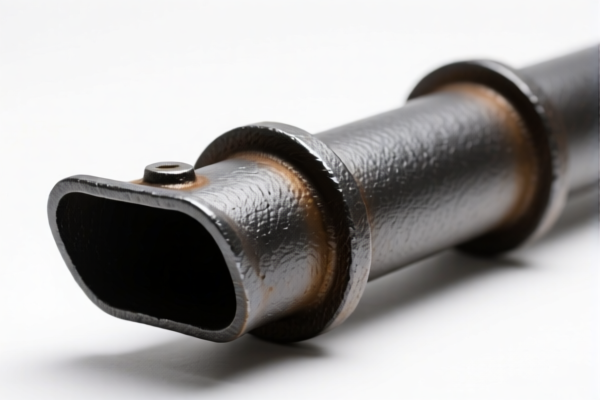


AI Analysis
Here is the comprehensive classification and customs clearance guide for Parking Heater Exhaust Pipes, tailored to the specific HS Codes and tax data provided in your dataset.
🔥 Parking Heater Exhaust Pipes (Automotive Components)
🌐 HS Code Reference & Customs Clearance Guide | 2026 Tax Policy Analysis | Professional Strategy
📌 I. Product Definition & Classification: Do You Know Your "Exhaust Pipe"?
Parking Heater Exhaust Pipes are specialized stainless steel or iron/steel tubes designed to vent combustion gases from auxiliary heating systems (e.g., Diesel/Water heaters used in trucks, RVs, boats, and cars). Unlike standard vehicle exhausts, these are often sold as separate parts for retrofit or maintenance.
In international trade, the classification hinges on Material (Iron/Steel vs. Tinplate) and Specific Application (Mufflers vs. Pipes).
⚠️ Critical Classification Distinction: * For Motor Vehicles (Headings 8701-8705): If the pipe is specifically designed as a muffler/exhaust system part for a standard vehicle, it falls under 8708.92. * Mufflers/Complete Systems:
8708.92.50.00* Other Parts (including pipes):8708.92.75.00* General Steel Tubes: If the item is a generic welded tube not specifically identifiable as a vehicle part at the time of import, or if the manufacturer classifies it as a "tube" first, it might fall under 7306.30 (Welded Pipes). * Household/Kitchen Items: ⚠️ WARNING: If the product is a decorative stovepipe or a generic household heater part not designed for a motor vehicle, it could be misclassified as7323.99(Household articles). This is a common trap!
📦 II. HS Code Classification Details (Based on Provided Data)
Based on your specific dataset, here is the breakdown for Parking Heater Exhaust Pipes:
| HS Code | Product Description | Tax Rate (Total) | Tax Components |
|---|---|---|---|
8708.92.50.00 |
Mufflers and Exhaust Pipes for other vehicles (excluding 8701-8705 specific). | 27.5% | Base: 2.5% + Add-on: 25.0% |
8708.92.75.00 |
Parts of mufflers/exhausts: Other parts for other vehicles. | 0.0% | Base: 0.0% + Add-on: 0.0% |
7306.30.50.56 |
Welded Steel Tubes (OD ≤ 50.8mm, Wall ≥ 1.65mm). | 0.0% | Base: 0.0% + Add-on: 0.0% |
7306.30.50.57 |
Welded Steel Tubes (OD 50.8mm - 114.3mm, Wall ≥ 1.65mm). | 0.0% | Base: 0.0% + Add-on: 0.0% |
7323.99.90.80 |
Household/Other Articles (Not coated/plated with precious metal). | 78.4% | Base: 3.4% + Add-on: 25.0% + Steel Add-on: 50.0% |
7323.99.50.60 |
Household/Other Articles (Of Tinplate). | 50.0% | Base: 0.0% + Steel Add-on: 50.0% |
🔍 Deep Dive Analysis: * The "0%" Miracle (
8708.92.75.00): If you can prove the exhaust pipe is a specific part for a vehicle (even if for "other vehicles" like buses or specialized trucks) and is a component part (not the main muffler), the tariff is 0.0%. * The "50-78%" Trap (7323.99): If the customs officer believes the item is a "Household article" (e.g., a generic heater pipe not clearly tied to a vehicle), it faces a massive 50% or 78.4% tax due to steel-specific surcharges. * The "Tube" Route (7306.30): If the product is imported as a raw tube for the buyer to cut/assemble into a heater system, it enjoys a 0.0% tariff, provided it meets the diameter (≤114.3mm) and wall thickness (≥1.65mm) specifications.
💰 III. Detailed Tax Clause Explanation (2026 Policy)
✅ Target Market: Global (Based on provided Chinese Export/Import Data context) ✅ Material: Iron/Steel ✅ Policy Context: Heavy surcharges on "Steel, Aluminum, Copper Products" (Steel Add-on 50%).
🎯 Scenario A: Classified as Auto Parts (8708.92.75.00)
- Base Duty: 0.0% (Free trade agreement or specific auto part provision).
- Additional Duty: 0.0% (No specific steel add-on applied to finished parts in this specific subheading).
- Total Tax: 0.0%.
- Why? This code is reserved for "Other parts". If the exhaust pipe is a dedicated component, it escapes the heavy steel surcharge.
🎯 Scenario B: Classified as Welded Tubes (7306.30)
- Base Duty: 0.0%.
- Additional Duty: 0.0%.
- Total Tax: 0.0%.
- Why? These are raw material/tube codes. The policy explicitly exempts welded tubes of specific dimensions from the steel surcharge in this dataset.
🎯 Scenario C: Classified as Household/Kitchen Articles (7323.99) ⚠️
- Base Duty: 3.4% (General).
- Steel Surcharge: 50.0% (Crucial Penalty: "Steel, Aluminum, Copper Products").
- Other Surcharge: 25.0% (General Add-on).
- Total Tax: 78.4% (for non-tinplate) or 50.0% (for tinplate).
- Why? If the item is deemed a "household article" (e.g., "kitchen stove pipe"), the "50% Steel Add-on" applies aggressively. This is the most dangerous classification.
🛠️ IV. Customs Clearance Strategy & Practical Advice
✅ 1. Documentation Checklist (Must-Have)
To secure the 0.0% rate and avoid the 78.4% penalty:
| Document | Requirement | Reason |
|---|---|---|
| Product Spec Sheet | Must state: "Exhaust Pipe for Parking Heater" + "Intended for Motor Vehicle 8701-8705". | Proves it is a Part, not a generic tube or household item. |
| Technical Drawing | Show mounting points, specific flange types, and temperature ratings. | Confirms it is a specific part (8708.92.75.00). |
| Application Letter | Declare: "Specifically manufactured for retrofitting diesel parking heaters in trucks/RVs." | Prevents misclassification as 7323.99 (Household). |
| Bill of Materials (BOM) | List the pipe as a component, not a finished "heater". | Supports the "Part" classification. |
✅ 2. Declaration Tips (The "Golden Rules")
🔥 Rule #1: "Do not call it a 'Stove Pipe'!" * ❌ Wrong Name: "Heater Pipe," "Kitchen Stove Pipe," "Wood Stove Exhaust." * ✅ Correct Name: "Steel Exhaust Pipe for Parking Heater," "Auto Emission Part for Diesel Heater." * Reason: Keywords like "Stove" or "Kitchen" trigger
7323.99→ 78.4% Tax.🔥 Rule #2: "Prove the 'Part' Status" * If the pipe has specific bends, flanges, or threaded ends designed to fit a vehicle heater, it belongs in
8708.92.75.00. * If it is a straight, generic tube, declare as7306.30.50.xx(ensure dimensions match).🔥 Rule #3: "Avoid Tinplate if Possible" * If you classify as
7323.99.50.60(Tinplate), you still pay 50.0%. * If you classify as7323.99.90.80(Non-tinplate), you pay 78.4%. * Strategy: Always aim for8708.92or7306.30to keep taxes at 0.0%.
🌍 V. Global Market Comparison (2026 Data)
| Region | Recommended HS Code | Expected Tax Rate | Risk Level |
|---|---|---|---|
| Target Market (Based on Data) | 8708.92.75.00 |
0.0% | ✅ Low (If specs match) |
| Misclassified (Household) | 7323.99.90.80 |
78.4% | 🚨 Critical (50% Steel Surcharge) |
| Raw Tube Import | 7306.30.50.56 |
0.0% | ✅ Low (If dimensions <50.8mm) |
| Tinplate Variant | 7323.99.50.60 |
50.0% | ⚠️ High (Steel Surcharge applies) |
📌 VI. Common Mistakes & Pitfalls (Blood & Tears)
❌ Mistake 1: Describing the item as "Wood Heater Pipe" or "Kitchen Exhaust". * Consequence: Automatically flagged as Household Goods → 78.4% Tax. * Fix: Change description to "Diesel Heater Exhaust Component".
❌ Mistake 2: Shipping as "General Steel Tube" without proving dimensions.
* Consequence: If dimensions exceed 114.3mm or wall thickness <1.65mm, it may fall into a different, taxed category.
* Fix: Ensure OD ≤ 114.3mm and Wall ≥ 1.65mm for the 7306.30 0% rate.
❌ Mistake 3: Failing to distinguish between Muffler and Part.
* Consequence: If the pipe includes the muffler silencer, it goes to 8708.92.50.00 (27.5% tax).
* Fix: If it is just a pipe, declare as 8708.92.75.00 (0% tax).
✅ Best Practice:
"Specific Part for Vehicle Heater, Stainless Steel, Flanged Ends, OD 50mm, Wall 1.65mm." * HS Code:
8708.92.75.00* Tax: 0.0%
🎯 VII. Conclusion: Clear the Air, Save the Cost!
🎯 The Strategy:
🔹 "Auto Part > Household Article" 🔹 "0% is possible, but 78.4% is the trap." 🔹 "Specificity is your shield against steel surcharges."
📌 Final Tip: If you are importing Parking Heater Exhaust Pipes, ensure your invoice explicitly states: "Automotive Part: Exhaust Pipe for Parking Heater". Do not use generic terms like "Heater Pipe". One word difference can save you 50% to 78.4% in tariffs.
✨ Professional Clearance Starts with Precise Classification! 💼 Don't let a generic name cost you 78.4% of your profit!
Customer Reviews
About HS Code Classification
The Harmonized System (HS) is an internationally standardized nomenclature developed by the World Customs Organization (WCO) to classify traded products. Over 200 countries use the HS system as the basis for customs tariffs, trade statistics, and import/export regulations.
Each HS code follows a hierarchical structure:
- Chapter (2 digits) — Broad category of goods (e.g., Chapter 84: Machinery and Mechanical Appliances)
- Heading (4 digits) — More specific grouping within the chapter
- Subheading (6 digits) — Internationally standardized breakdown, used by all WCO member countries
- National subdivisions (8-10 digits) — Country-specific extensions for further classification, such as US HTSUS 10-digit codes
Correct HS code classification is essential for smooth customs clearance, accurate duty payment, and compliance with trade regulations. Misclassification can lead to customs delays, overpayment of duties, or penalties.
When importing from CN to US, the applicable tariff rates may include:
- Most-Favored-Nation (MFN) rate — The standard duty rate applied to WTO members
- General rate — Applied to countries without trade agreements
- Trade remedy duties — Additional tariffs such as Section 301 (anti-dumping), Section 232 (national security), or countervailing duties
The information provided on this page is for reference purposes only. For official classification, please consult with your local customs authority or a licensed customs broker.