Parking Lot Barrier Controller
CN → US| HS Code | Tariff Rate | Origin | Destination | Doc |
|---|---|---|---|---|
| 8537109170 | 37.7% | CN | US | Official Doc |
| 8537109130 | 37.7% | CN | US | Official Doc |
| 9032896075 | 36.7% | CN | US | Official Doc |
| 9032896085 | 36.7% | CN | US | Official Doc |
Product Images
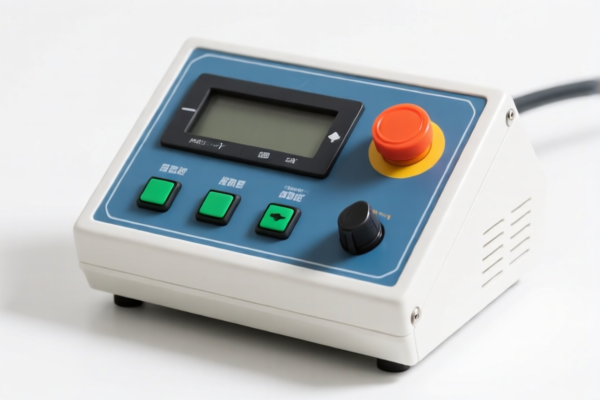
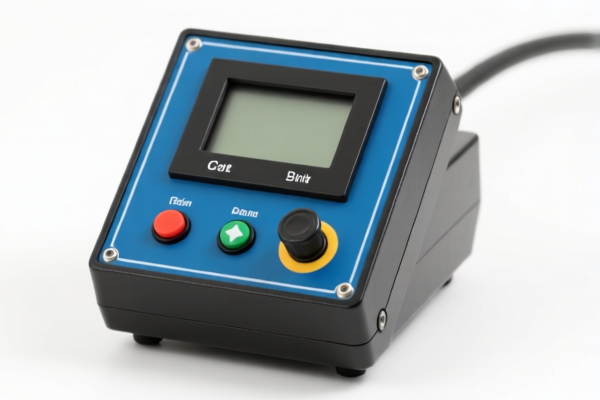
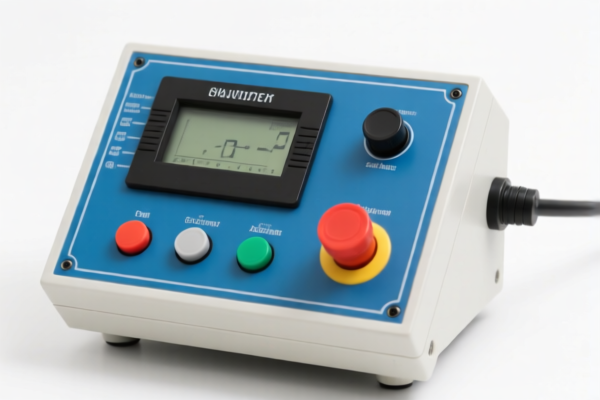
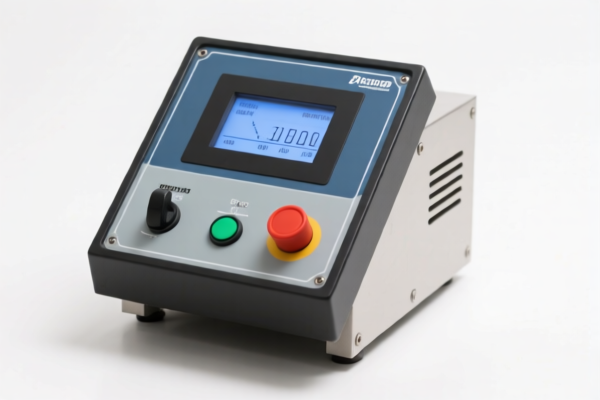
AI Analysis
🛑 Parking Lot Barrier Controller
🌐 HS Code Reference & Customs Clearance Guide | 2026 Latest Tariff Analysis | Professional Clearance Strategy
📌 I. Product Definition & Classification: What is a "Barrier Controller"?
A Parking Lot Barrier Controller (also known as a Gate Arm Controller) is an electronic control device that manages the operation of parking barriers, boom gates, or bollards. It receives input signals from access control systems (RFID readers, license plate recognition cameras, keypads) and outputs control signals to motors and mechanical arms.
In international trade, the classification hinges on what the device controls and its primary function: * Is it a Power Distribution Device? (If it primarily switches/distributes electrical power to the motor circuit without complex logic processing) → Chapter 85 (Electrical Machinery) * Is it an Automated Control Instrument? (If it primarily processes signals, regulates speed/position, or acts as an automatic regulation device) → Chapter 90 (Optical, Photographic, Cinematographic, Measuring, Checking, Precision, Medical or Surgical Instruments and Apparatus)
⚠️ Key Distinction Point:
- If the device is viewed as a switchboard/control panel distributing power to the motor load →归入 8537.10
- If the device is viewed as an automatic regulation/control instrument managing the mechanical execution (positioning, timing, logic) →归入 9032.89
📦 II. HS Code Classification Details (2026 Latest Tariff Data)
Based on the provided data, there are four potential classifications. The choice depends on the specific technical interpretation by customs authorities regarding the "nature" of the control.
| HS Code | Product Description | Application Logic | Total Tax Rate (US/CN) |
|---|---|---|---|
8537.10.91.70 |
Power Control Equipment (Control Panels/Distribution Boards) |
Defined as equipment for controlling or distributing electrical energy to the barrier motor. Focuses on the electrical switching aspect. | 37.7% |
8537.10.91.30 |
Electric Control Equipment (Mechanical Execution Control) |
Defined as control devices for controlling mechanical execution mechanisms (the gate arm motor). Focuses on the actuation aspect. | 37.7% |
9032.89.60.75 |
Process Control Instruments (Automated Control Devices) |
Defined as instruments and apparatus for process control. Focuses on the automation logic and regulation of the barrier's movement. | 36.7% |
9032.89.60.85 |
Electronic Control Devices (Automatic Regulation/Control) |
Defined as other automatic regulation or control devices, specifically electronic control units. Focuses on the electronic regulation aspect. | 36.7% |
🔍 Critical Reminder:
- The difference between 37.7% and 36.7% is small but significant for large volumes. - 8537 classifications view the controller as part of the electrical power system (switchgear/control panels). - 9032 classifications view the controller as an instrumentation/device for regulating mechanical processes. - Customs Discretion: The final classification often depends on how the product's internal circuitry is described (e.g., "microprocessor-based logic" vs. "power distribution relay").
💰 III. 2026 Latest Tariff Rate Breakdown (Including Surcharges)
✅ Applicable Country: United States (US)
✅ Country of Origin: China (CN)
✅ Effective Date: Includes subsequent imports from Nov 10, 2025 onwards.
🎯 1. 8537.10.91.70 & 8537.10.91.30
Class: Electrical Control Equipment / Power Distribution
| Item | Content |
|---|---|
| Basic Tariff | 2.7% (ad valorem) |
| Section 301 Additional Tariff | +25.0% |
| Section 122 Tariff | +10.0% |
| Total Tax Rate | 37.7% |
| Tax Calculation | CIF Value × 37.7% |
| De Minimis Exemption | ❌ Not Applicable (deny_de_minimis) |
| Legal Basis Path | USITC:8537.10.91.xx → FOOTNOTE:301 → SECTION122 |
📌 Explanation:
- The 2.7% is the standard Most Favored Nation (MFN) base rate for electrical control boards. - The 25% is the standard Section 301 tariff for Chinese-origin electrical machinery. - The 10% is the Section 122 tariff (National Security/Emergency Powers), often applied to specific electronics or components. - Total: 37.7%. This is a high-cost classification.
🎯 2. 9032.89.60.75 & 9032.89.60.85
Class: Automatic Regulation/Control Instruments
| Item | Content |
|---|---|
| Basic Tariff | 1.7% (ad valorem) |
| Section 301 Additional Tariff | +25.0% |
| Section 122 Tariff | +10.0% |
| Total Tax Rate | 36.7% |
| Tax Calculation | CIF Value × 36.7% |
| De Minimis Exemption | ❌ Not Applicable (deny_de_minimis) |
| Legal Basis Path | USITC:9032.89.60.xx → FOOTNOTE:301 → SECTION122 |
📌 Explanation:
- The 1.7% base rate is slightly lower than Chapter 85, reflecting the "instrumentation" classification. - The 25% Section 301 and 10% Section 122 surcharges remain identical because they apply broadly to Chinese-origin goods in these categories. - Total: 36.7%. This is 1.0% lower than the 8537 classification, offering a marginal cost advantage.
🛠️ IV. Customs Clearance Practical Advice (Real-World Pitfall Guide)
✅ 1. Documentation Checklist (Non-Negotiable)
| Document | Required? | Notes |
|---|---|---|
| ✅ Product Specifications | ✔️ | Must clearly state: Input Voltage, Control Logic (Microprocessor/Relay), Output Channels (Motor, Lights). |
| ✅ Circuit Diagram / Block Diagram | ✔️ | Crucial. If it shows complex logic processing → Argue for 9032. If it shows simple power switching/relays → Argue for 8537. |
| ✅ Product Photos (with Nameplate) | ✔️ | Show model number, input/output ports, and any safety certifications. |
| ✅ Third-Party Test Reports | ✔️ | FCC (for electronics), CE, RoHS, UL (if applicable for North America). |
| ✅ Commercial Invoice | ✔️ | Description should be precise: "Electronic Controller for Parking Barrier, Model XYZ" (Avoid vague terms like "Switch"). |
| ✅ Packing List | ✔️ | Detail contents: Main unit, mounting brackets, wiring harnesses. |
✅ 2. Declaration Strategy (Key Mantra)
🔥 "Function Dictates Code: Logic = 9032, Power = 8537"
| Scenario | Recommended HS Code | Why? | Risk if Wrong |
|---|---|---|---|
| Advanced Controller (PLR Integration, Logic Processing, PID Control) | 9032.89.60.75 / 85 |
Emphasize Automatic Regulation and Process Control. | Overpay by 1.0% if 8537 is chosen. |
| Simple Relay/Timer Controller (Basic On/Off, No Complex Logic) | 8537.10.91.70 / 30 |
Emphasize Control or Distribution of Electricity. | Underpay taxes if 9032 is chosen and Customs reclassifies to 8537. |
| Controller + Barrier Arm Assembly | See Individual Parts | If sold as a kit, customs may split the declaration. | Consolidated declaration may lead to delays. |
✅ 3. Special Considerations
| Situation | Handling Advice |
|---|---|
| OEM Custom Controllers | Provide design schematics to prove the nature of the control (Logic vs. Power). |
| Integration with Access Control | If the controller is physically separate from the reader/camera, declare it as a standalone Controller. If integrated, consider if it falls under a different HS code for the complete system. |
| Software Version | Mention if the control logic is hardware-based or software-driven. Software-heavy systems favor 9032. |
🌍 V. Global Market Comparison (2026 Update)
| Market | Preferred HS Code | Est. Tariff (CN Origin) | Certification Req. | Notes |
|---|---|---|---|---|
| 🇺🇸 USA | 9032.89.60.85 |
36.7% | FCC + RoHS | Slightly cheaper than 8537 (37.7%). |
| 🇨🇳 China | 8537.10.91.30 |
~1.7-2.7% | CCC | Low import tariff, but domestic VAT applies. |
| 🇪🇺 EU | 8537.10.91 or 9032.89 |
0-2% | CE + RoHS | No Section 301/122 equivalent. Check specific EU CN codes. |
| 🇬🇧 UK | 8537.10.90 |
0-3% | UKCA + RoHS | Post-Brexit standards apply. |
| 🇦🇺 Australia | 8537.10.90 |
5% | RCM | No special surcharges on this item. |
📌 Conclusion:
- The USA is the most expensive market due to Section 301 and Section 122 tariffs. - Choosing 9032 over 8537 saves 1.0%, which is significant for high-volume shipments. - EU/UK/Australia offer much more favorable rates, making diversification a key strategy.
📌 VI. Common Errors & Pitfalls (Lessons Learned)
❌ Error 1: Declaring as "Electronic Switch" (8536.50)
👉 Consequence: Customs will reclassify to 8537 or 9032. If reclassified to 8537, you owe back duties + penalties. The device is too complex for simple switches.
❌ Error 2: Ignoring the Section 122 Tariff
👉 Consequence: Failing to include the 10% Section 122 in cost calculations leads to unexpected expenses. This applies to both 8537 and 9032.
❌ Error 3: Vague Description "Barrier Part"
👉 Consequence: Customs will assign the highest duty rate or hold the shipment for inspection. Always use "Controller" or "Control Panel."
❌ Error 4: Confusing with "Gate Mechanism" (Motor/Arm)
👉 Consequence: The motor/arm is typically under 8431.39 or 8479. The controller is separate. Do not lump them unless sold as an integrated assembly.
✅ Correct Declaration Example:
"Electronic Automatic Regulation Controller for Parking Lot Barriers, Model ABC, Microprocessor-based, Input 120VAC, Output 24VDC, FCC Certified"
🎯 VII. Conclusion: Precision Saves Money
🎯 Key Takeaway:
🔹 "Logic = 9032 (36.7%), Power = 8537 (37.7%)"
🔹 "Section 122 is a 10% surcharge on ALL Chinese electrical/electronic goods."
🔹 "One percent difference adds up to thousands of dollars in volume."
📌 Pro Tip:
If your controller uses advanced microprocessors for timing, positioning, or integration with cameras, argue for 9032.89.60.85 to save the 1.0% difference. Prepare your circuit diagrams to support this claim.
📣 Action Item:
📞 Consult a licensed customs broker.
📄 Prepare technical specs highlighting "Automatic Regulation" features.
🚀 Clear customs smoothly, minimize duties, maximize profit.
✨ Professional Clearance Starts with Accurate Classification!
💼 Every percentage point counts in international trade.
Customer Reviews
About HS Code Classification
The Harmonized System (HS) is an internationally standardized nomenclature developed by the World Customs Organization (WCO) to classify traded products. Over 200 countries use the HS system as the basis for customs tariffs, trade statistics, and import/export regulations.
Each HS code follows a hierarchical structure:
- Chapter (2 digits) — Broad category of goods (e.g., Chapter 84: Machinery and Mechanical Appliances)
- Heading (4 digits) — More specific grouping within the chapter
- Subheading (6 digits) — Internationally standardized breakdown, used by all WCO member countries
- National subdivisions (8-10 digits) — Country-specific extensions for further classification, such as US HTSUS 10-digit codes
Correct HS code classification is essential for smooth customs clearance, accurate duty payment, and compliance with trade regulations. Misclassification can lead to customs delays, overpayment of duties, or penalties.
When importing from CN to US, the applicable tariff rates may include:
- Most-Favored-Nation (MFN) rate — The standard duty rate applied to WTO members
- General rate — Applied to countries without trade agreements
- Trade remedy duties — Additional tariffs such as Section 301 (anti-dumping), Section 232 (national security), or countervailing duties
The information provided on this page is for reference purposes only. For official classification, please consult with your local customs authority or a licensed customs broker.