Parts and Accessories of Aircraft
CN → US| HS Code | Tariff Rate | Origin | Destination | Doc |
|---|---|---|---|---|
| 9401104000 | 17.5% | CN | US | Official Doc |
| 9401108000 | 17.5% | CN | US | Official Doc |
| 8802200160 | 35.0% | CN | US | Official Doc |
| 8802300160 | 35.0% | CN | US | Official Doc |
Product Images
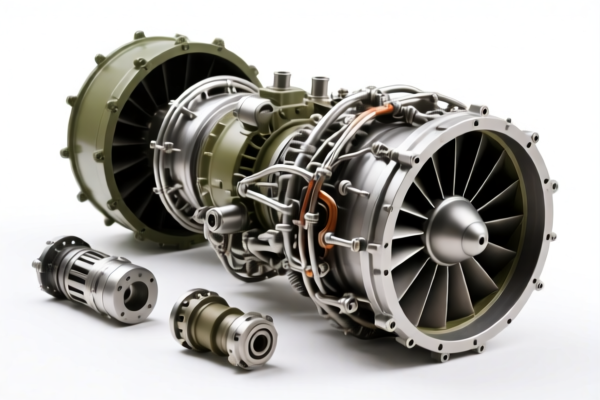
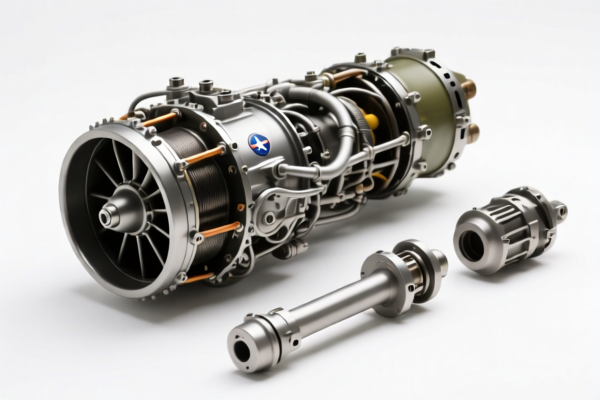
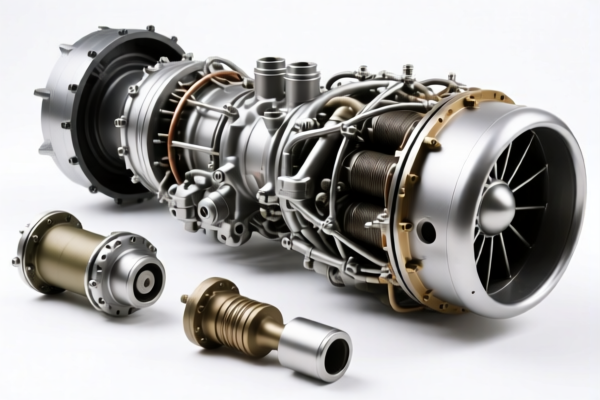
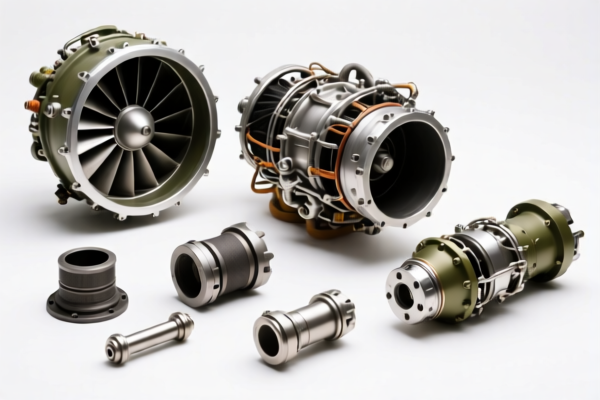
AI Analysis
✈️ Parts and Accessories of Aircraft (航空器部件及配件)
🌐 HS Code Reference & Customs Clearance Guide | 2026 Latest Tariff Analysis | Specialized Strategy for Aviation Components
📌 1. Product Definition: What are "Aircraft Parts"?
In international trade, "Parts and Accessories of Aircraft" is a broad category covering everything from seat cushions to complex avionics components. However, for customs classification and tariff calculation, the function and specific type of the part determine the HS Code and, consequently, the tax burden.
⚠️ Critical Distinction:
- Seats: Classified under Chapter 94 (Furniture).
- Airframe/Engine/Avionics Components: Classified under Chapter 88 (Aircraft).
- Misclassification Risk: Declaring an aircraft seat as a "general aircraft part" or vice versa can lead to massive tariff differences (17.5% vs. 35.0%).
📦 2. HS Code Classification Matrix (2026 Latest Tariff Data)
Based on the provided data, here is the breakdown of applicable HS Codes for Aircraft Parts. Note that two distinct tariff rates exist depending on the specific component type.
| HS Code | Product Description & Scope | Application Scenario | Total Tax Rate | Key Determination Factor |
|---|---|---|---|---|
| 9401.10.40.00 | Aircraft Seats | Passenger seats, pilot seats, cabin furniture | 17.5% | Functional classification as "Furniture/Seats" |
| 9401.10.80.00 | Other Aircraft Seats/Furniture | Specialized seating not elsewhere specified | 17.5% | Functional classification as "Furniture/Seats" |
| 8802.20.01.60 | Other Aircraft Parts | Structural components, non-seat assemblies | 35.0% | Classified as "Airframe/Body" parts |
| 8802.30.01.60 | Airframe Parts | Wings, fuselage sections, landing gear mounts | 35.0% | Classified as "Airframe" parts |
🔍 Key Insight:
- Seats vs. Airframe: The most critical distinction is whether the part is a seat (Chapter 94) or a structural/technical component (Chapter 88). - Seat Parts: Attributed to 9401.10.40.00 and 9401.10.80.00. - Technical Parts: Attributed to 8802.20.01.60 and 8802.30.01.60.
💰 3. Detailed Tariff Breakdown (China Origin → USA)
✅ Applicable Country: United States (US)
✅ Origin: China (CN)
✅ Effective Date: Current Trade Policy (Section 301 & IEEPA)
🎯 Group A: Aircraft Seats (HS Codes 9401.10.40.00 & 9401.10.80.00)
| Item | Details |
|---|---|
| Base Tariff | 0.0% |
| Section 301 Tariff | 7.5% (Add-on Duty) |
| Section 122 Tariff | 10.0% (Additional Duty under IEEPA) |
| Total Effective Rate | 17.5% |
| De Minimis Exemption? | ❌ NO (Deny De Minimis) |
| Legal Path | Base: 0% + Section 301: 7.5% + IEEPA: 10% |
📌 Explanation:
Although seats are technically "furniture," they are subject to the same heavy add-on tariffs as many other Chinese imports. The 17.5% total is significantly lower than the 35% applied to airframe parts, making accurate seat classification crucial for cost-saving.
🎯 Group B: Airframe & Technical Parts (HS Codes 8802.20.01.60 & 8802.30.01.60)
| Item | Details |
|---|---|
| Base Tariff | 0.0% |
| Section 301 Tariff | 25.0% (Higher Add-on Duty) |
| Section 122 Tariff | 10.0% (Additional Duty under IEEPA) |
| Total Effective Rate | 35.0% |
| De Minimis Exemption? | ❌ NO (Deny De Minimis) |
| Legal Path | Base: 0% + Section 301: 25.0% + IEEPA: 10% |
📌 Explanation:
Parts falling under 8802 (Airframes) are subject to the maximum Section 301 rate of 25%. Combined with the 10% IEEPA surcharge, this results in a 35.0% total tax burden. This is double the cost of aircraft seats.
🛠️ 4. Customs Clearance Practical Advice
✅ 1. Documentation Checklist (Mandatory)
| Document | Required? | Purpose |
|---|---|---|
| Commercial Invoice | ✔️ | Must clearly state "Aircraft Seat" or "Aircraft Part" to avoid ambiguity. |
| Technical Drawing/Schematic | ✔️ | Critical for 8802 vs. 9401: Proves if the item is a structural component or a seating assembly. |
| Product Photos | ✔️ | Show the item from all angles, including logos, labels, and mounting points. |
| Material Composition Sheet | ✔️ | Helps determine if any material triggers additional restrictions. |
| Certificate of Origin (CO) | ✔️ | Verify origin to ensure no preferential treatment is falsely claimed. |
| Airworthiness Certificate (if applicable) | ✔️ | For certified replacement parts, proves safety compliance. |
✅ 2. Classification Strategy: How to Choose the Right Code?
🔥 "Seat vs. Structure: Define Function First!"
| Scenario | Correct HS Code | Tax Rate | Why? |
|---|---|---|---|
| Passenger Seat Assembly (Cushion, Frame, Track) | 9401.10.40.00 |
17.5% | It is primarily a "Seat." Even with metal frames, the function is seating. |
| Pilot Chair | 9401.10.40.00 |
17.5% | Same as passenger seats; function is sitting. |
| Wing Flap/Hinge | 8802.30.01.60 |
35.0% | Structural airframe component. |
| Landing Gear Struts | 8802.20.01.60 |
35.0% | Technical aircraft part, not furniture. |
| Seat Belt Buckle (Sold Separately) | Check Specifics | Varies | Small accessories may be classified differently, but if sold with the seat, it follows the seat. |
| Avionics Box (Screen/Computer) | Check Specifics | Varies | Often falls under Ch. 85 or 90, not 88 or 94. Ensure it’s not misclassified as "aircraft part" if it’s electronic. |
⚠️ Warning: Do NOT classify an aircraft seat as
8802.20.01.60to save on paperwork. The 17.5% rate is already low; trying to force a 35% code offers no benefit and increases audit risk. Conversely, declaring a wing part as a "seat" to get 17.5% is fraud and will result in severe penalties.
✅ 3. Common Mistakes & Pitfalls
❌ Mistake 1: Declaring "Aircraft Parts" generically.
👉 Result: Customs may assign a default code (often 8802) leading to 35.0% tax if the item is a seat.
👉 Fix: Be specific: "Aircraft Passenger Seat" or "Aircraft Wing Component."
❌ Mistake 2: Ignoring the 10% Section 122 Tariff.
👉 Result: Unexpected bills upon entry.
👉 Fix: Factor 35.0% (for airframe parts) or 17.5% (for seats) into your landed cost calculation.
❌ Mistake 3: Assuming "De Minimis" applies.
👉 Result: Shipments under $800 are NOT exempt for these HS codes from China.
👉 Fix: All shipments, regardless of value, are subject to full duties.
🌍 5. Global Market Comparison (2026 Outlook)
| Market | HS Code | Base Tax | Add-on Tariff (China) | Total Est. Tax | Notes |
|---|---|---|---|---|---|
| 🇺🇸 USA | 9401.10.40.00 (Seats) |
0% | 17.5% | 17.5% | High compliance requirement. |
| 🇺🇸 USA | 8802.30.01.60 (Airframe) |
0% | 35.0% | 35.0% | Maximum duty rate. |
| 🇨🇳 China | 9401.10.40.00 |
0-10% | None | 0-10% | Import duties vary by year. |
| 🇪🇺 EU | 9401.10.40.00 |
0-6% | None | 0-6% | No Section 301/122 equivalent. |
| 🇬🇧 UK | 9401.10.40.00 |
0-6% | None | 0-6% | Post-Brexit tariffs apply. |
📌 Conclusion:
- The US market is the most expensive for Chinese-made aircraft parts due to Section 301 and IEEPA tariffs. - Seats (17.5%) are significantly cheaper to import than Airframe Parts (35.0%). - No de minimis exemption applies to these categories from China.
📌 6. Final Checklist for Exporters
- Identify Function: Is it a seat (Ch. 94) or airframe/technical part (Ch. 88)?
- Verify HS Code: Use
9401.10.40.00/80.00for seats;8802.20.01.60/30.01.60for airframe parts. - Calculate Landed Cost:
- Seats: Add 17.5% to CIF value.
- Airframe Parts: Add 35.0% to CIF value.
- Prepare Documents: Ensure commercial invoice explicitly states the specific part name and function.
- Consult a Broker: For complex components (e.g., cockpit instruments), seek pre-classification rulings to avoid misclassification.
🎯 7. Pro Tip: Cost Optimization Strategy
💡 "Separate Seats from Airframe!"
If you are exporting a cabin kit containing both seats and structural brackets, declare them separately.
- Seats →9401.10.40.00(17.5%)
- Brackets →8802.20.01.60(35.0%)By combining them as "Aircraft Part," you might risk a 35% tax on the entire shipment. By separating them, you pay the lower rate on the high-value seat portion, potentially saving significant costs.
📣 Immediate Action Required:
📞 Contact a Licensed Customs Broker to confirm the specific HS code for your unique component.
📄 Request a Pre-Ruling from CBP if the part’s function is ambiguous (e.g., a "reclining mechanism" vs. a "seat cushion").
💰 Budget for 17.5% (Seats) or 35.0% (Airframe Parts) in your cost structure.
✨ Precision Classification Saves Money!
💼 Don’t let tariff complexity ground your business.
Customer Reviews
About HS Code Classification
The Harmonized System (HS) is an internationally standardized nomenclature developed by the World Customs Organization (WCO) to classify traded products. Over 200 countries use the HS system as the basis for customs tariffs, trade statistics, and import/export regulations.
Each HS code follows a hierarchical structure:
- Chapter (2 digits) — Broad category of goods (e.g., Chapter 84: Machinery and Mechanical Appliances)
- Heading (4 digits) — More specific grouping within the chapter
- Subheading (6 digits) — Internationally standardized breakdown, used by all WCO member countries
- National subdivisions (8-10 digits) — Country-specific extensions for further classification, such as US HTSUS 10-digit codes
Correct HS code classification is essential for smooth customs clearance, accurate duty payment, and compliance with trade regulations. Misclassification can lead to customs delays, overpayment of duties, or penalties.
When importing from CN to US, the applicable tariff rates may include:
- Most-Favored-Nation (MFN) rate — The standard duty rate applied to WTO members
- General rate — Applied to countries without trade agreements
- Trade remedy duties — Additional tariffs such as Section 301 (anti-dumping), Section 232 (national security), or countervailing duties
The information provided on this page is for reference purposes only. For official classification, please consult with your local customs authority or a licensed customs broker.