Parts for Construction Machinery
CN → US| HS Code | Tariff Rate | Origin | Destination | Doc |
|---|---|---|---|---|
| 4016996050 | 37.5% | CN | US | Official Doc |
| 3926905900 | 37.4% | CN | US | Official Doc |
| 8431499038 | 85.0% | CN | US | Official Doc |
| 8431499090 | 85.0% | CN | US | Official Doc |
| 4016996010 | 37.5% | CN | US | Official Doc |
Product Images
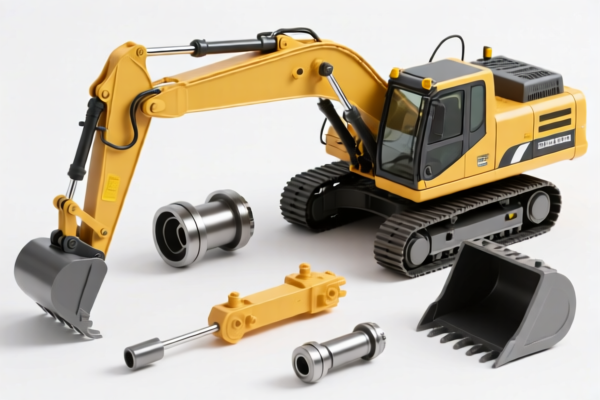
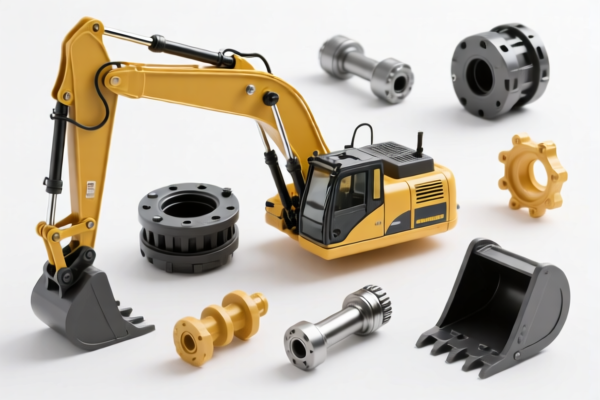
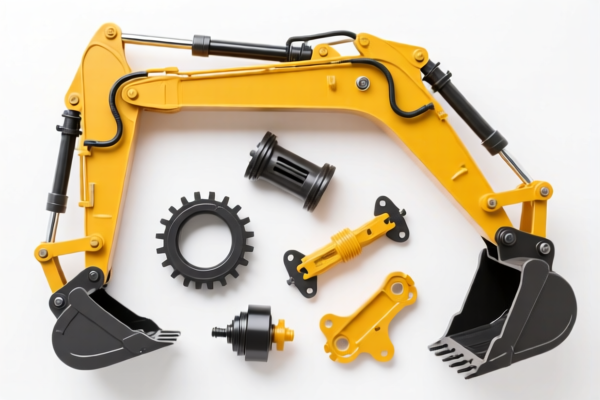

AI Analysis
🚜 Parts for Construction Machinery (Specifically Rubber Mechanical Accessories)
🌐 HS Code Reference & Customs Clearance Guide | 2026 Latest Tariff Analysis | Professional Clearance Strategy
📌 I. Product Definition & Classification: What Are "Rubber Mechanical Accessories"?
"Parts for Construction Machinery" is a broad category. However, based on the provided data, the specific item in question is "Rubber Mechanical Accessories" (橡胶机械配件). These are critical components made of vulcanized rubber, designed to fit specific machinery shapes.
In international trade, classification depends heavily on Material (Rubber) vs. Function (Machine Part).
⚠️ Critical Classification Conflict:
- If classified under Chapter 40 (Rubber Products): Lower base duty, but faces heavy US trade war tariffs.
- If classified under Chapter 84 (Machinery Parts): Potentially lower base duty (0%), but faces massive cumulative tariffs (including Steel/Aluminum/Copper surcharges if applicable, or just high 301/122 clauses).
📦 II. HS Code Classification Details (2026 Latest Tariff Authority Comparison)
Based on the provided dataset, there are 5 possible HS Codes. Here is the detailed breakdown:
| HS Code | Product Description | Classification Logic | Total Tax Rate |
|---|---|---|---|
4016.99.60.50 |
Rubber mechanical accessories | Primary Match: Matches rubber material + accessory form. Classified as "Other vulcanized rubber articles." | 37.5% |
4016.99.60.10 |
Rubber mechanical accessories | Secondary Match: Rubber material + accessory form. Based on default tendency for parts. | 37.5% |
3926.90.59.00 |
Rubber mechanical accessories | Fallback Rule: Classified as "Accessories/Parts." Based on catch-all category rules for "likely compliance." | 37.4% |
8431.49.90.38 |
Rubber mechanical accessories | Parts Classification: Form is accessory, material is rubber. Fits "default tendency" for mechanical parts. | 85.0% |
8431.49.90.90 |
Rubber mechanical accessories | Mechanical Parts: Accessory attribute fits parts classification. Rubber material no conflict. | 85.0% |
🔍 Key Distinction:
- Codes4016&3926: Focus on Material (Rubber/Plastic-like). Lower base duty, but high additional tariffs.
- Codes8431: Focus on Function (Parts of Machinery). Base duty is 0%, but total effective rate is 85% due to layered sanctions.
💰 III. 2026 Latest Tariff Rate Breakdown (Including Additional Taxes & Policy Surcharges)
✅ Applicable Country: United States (US)
✅ Origin: China (CN)
✅ Effective Date: Current trade war provisions (Section 301, Section 122, IEEPA) apply.
🎯 1. 4016.99.60.50 & 4016.99.60.10 —— Vulcanized Rubber Articles (Best Rate Option)
| Item | Content |
|---|---|
| Base Duty | 2.5% (Ad valorem) |
| Section 301 Surcharge | +25.0% (Trade War Tariff) |
| Section 122 Tariff | +10.0% (Specific China-related provision) |
| Total Effective Rate | 37.5% |
| Tax Calculation | CIF Value × 37.5% |
| De Minimis Exemption | ❌ Not Eligible (High tariff rates exclude from $800 exemption) |
| Legal Basis Path | USITC:4016.99.60.50 → FOOTNOTE:Section301 → IEEPA:Section122 |
📌 Explanation:
- This is the most cost-effective classification for rubber accessories.
- The base duty is low (2.5%).
- The bulk of the tax (35%) comes from Section 301 (25%) and Section 122 (10%).
- Note: Even though4016.99.60.10has the same rate (37.5%),4016.99.60.50is the more specific "summary" match for "rubber mechanical accessories."
🎯 2. 3926.90.59.00 —— Other Articles of Plastics/Rubber-like Materials (Lowest Rate Option)
| Item | Content |
|---|---|
| Base Duty | 2.4% (Ad valorem) |
| Section 301 Surcharge | +25.0% |
| Section 122 Tariff | +10.0% |
| Total Effective Rate | 37.4% |
| Tax Calculation | CIF Value × 37.4% |
| De Minimis Exemption | ❌ Not Eligible |
| Legal Basis Path | USITC:3926.90.59.00 → FOOTNOTE:Section301 → IEEPA:Section122 |
📌 Note:
- Slightly cheaper than4016by 0.1% (2.4% vs 2.5% base).
- Classified under "Accessories" via catch-all rules.
- Use only if customs accepts "plastic-like" or "other" classification for rubber parts, but4016is more technically accurate for vulcanized rubber.
🎯 3. 8431.49.90.38 & 8431.49.90.90 —— Parts of Machinery (High Risk Option)
| Item | Content |
|---|---|
| Base Duty | 0.0% |
| Section 301 Surcharge | +25.0% |
| Section 122 Tariff | +10.0% |
| Steel/Aluminum/Copper Surcharge | +50.0% (If material is detected as metal/composite) |
| Total Effective Rate | 85.0% |
| Tax Calculation | CIF Value × 85.0% |
| De Minimis Exemption | ❌ Not Eligible |
| Legal Basis Path | USITC:8431.49.90.90 → FOOTNOTE:Section301 → IEEPA:Section122 → FOOTNOTE:Steel/Al/Cu |
📌 Warning:
- DO NOT USE unless you are certain the part is not classified under Chapter 40.
- Even with 0% base duty, the 50% Steel/Aluminum/Copper surcharge (if applicable) or just the combination of 301+122 leads to 85% total tax.
- The summary states: "Steel, aluminum, copper products surcharge: 50%." This makes this option prohibitively expensive for rubber parts.
🛠️ IV. Customs Clearance Practical Advice (Real-World Pitfall Guide)
✅ 1. Recommended HS Code: 4016.99.60.50
| Item | Content |
|---|---|
| Total Tax | 37.5% |
| Base Duty | 2.5% |
| Section 301 | +25% |
| Section 122 | +10% |
| Why Choose This? | - Most accurate for "Vulcanized Rubber" articles. - Lowest total tax rate (37.5% vs 37.4% is negligible; 85% is disastrous). - Clear legal path. |
✅ 2. Preparation Checklist (Mandatory)
| Document | Required | Description |
|---|---|---|
| ✅ Product Spec Sheet | ✔️ | Must explicitly state "Vulcanized Rubber" and "Part for [Specific] Machine." |
| ✅ Material Certificate | ✔️ | Proof that the material is rubber, not plastic or metal composite. |
| ✅ Product Photos | ✔️ | Clear images showing the rubber texture and mechanical fit. |
| ✅ Commercial Invoice | ✔️ | Describe as "Rubber Mechanical Accessory, HS 4016.99.60.50." |
| ✅ Declaration Statement | ✔️ | Confirm no steel/aluminum/copper content to avoid the 50% surcharge. |
✅ 3. Classification Strategy Tips
| Scenario | Correct Action | Incorrect Action |
|---|---|---|
| Rubber Part | Use 4016.99.60.50 (37.5%) |
Use 8431.49.90.90 (85.0%) → Lose 47.5% profit! |
| Plastic Part | Consider 3926.90.59.00 (37.4%) |
Use 4016 (Incorrect material) → Risk of seizure. |
| Mixed Material (Rubber + Metal) | High Risk: May trigger 85% tax if metal core is dominant. | Declare as pure rubber → Customs audit & penalty. |
🌍 V. Global Market Comparison (2026)
| Country/Region | Recommended HS Code | Total Tax (US Origin) | Certification | Remarks |
|---|---|---|---|---|
| 🇺🇸 USA | 4016.99.60.50 |
37.5% | No special cert needed | High trade war tariffs apply. |
| 🇨🇳 China | 4016.99.60.50 |
5% (Import Duty) | None | Low base duty, no trade war tariffs. |
| 🇪🇺 EU | 4016.99.60.90 |
0% - 4% | CE (if applicable) | Generally low duties. |
| 🇯🇵 Japan | 4016.99.90.00 |
3% | JIS | Moderate duties. |
📌 Conclusion:
- USA is the most expensive market due to Section 301 & 122.
- China origin goods face 37.5% in the US.
- Avoid8431classification at all costs unless you have a specific legal ruling that exempts rubber parts from Chapter 40.
📌 VI. Common Mistakes & Pitfalls (Lessons Learned)
❌ Mistake 1: Declaring rubber parts under 8431 (Machinery Parts)
👉 Consequence: Tax rate jumps to 85% due to 301+122+Metal Surcharge. Loss of profit margin.
❌ Mistake 2: Ignoring Section 122
👉 Consequence: Underpayment by 10%. Customs audit + penalties.
❌ Mistake 3: Using 3926 for Rubber
👉 Consequence: If customs determines it's rubber, they may reclassify to 4016 (37.5%) or penalize for misdeclaration. Small savings (0.1%) not worth the risk.
❌ Mistake 4: Assuming "Accessories" means "Plastic"
👉 Consequence: Rubber is chemically different from plastics. Material misdeclaration.
✅ Correct Approach:
"Rubber Mechanical Accessory, Vulcanized, For [Machine Type], HS 4016.99.60.50"
🎯 VII. Conclusion: Professional Classification Saves Money!
🎯 Remember the Rule:
🔹 "Rubber is Chapter 40, Not Chapter 84."
🔹 "Base Duty is Low, But Trade Wars are High."
🔹 "37.5% is the Best You Can Do."
🔹 "85% is a Disaster."
📌 Pro Tip:
- If you have multiple SKUs, ensure consistent classification across all shipments.
- For large volumes, consider applying for a Binding Ruling from US Customs to lock in the 4016.99.60.50 classification and avoid disputes.
- Monitor Section 122 changes; if removed or reduced, your total tax could drop significantly.
📣 Immediate Action:
📞 Contact your customs broker with product photos and material specs.
📄 File correct invoices with HS Code4016.99.60.50.
🚀 Clear customs smoothly, avoid 85% tax traps, and protect your margins!
✨ Professional Clearance Starts with Accurate Classification!
💼 Every Percent Saved is Pure Profit!
Customer Reviews
About HS Code Classification
The Harmonized System (HS) is an internationally standardized nomenclature developed by the World Customs Organization (WCO) to classify traded products. Over 200 countries use the HS system as the basis for customs tariffs, trade statistics, and import/export regulations.
Each HS code follows a hierarchical structure:
- Chapter (2 digits) — Broad category of goods (e.g., Chapter 84: Machinery and Mechanical Appliances)
- Heading (4 digits) — More specific grouping within the chapter
- Subheading (6 digits) — Internationally standardized breakdown, used by all WCO member countries
- National subdivisions (8-10 digits) — Country-specific extensions for further classification, such as US HTSUS 10-digit codes
Correct HS code classification is essential for smooth customs clearance, accurate duty payment, and compliance with trade regulations. Misclassification can lead to customs delays, overpayment of duties, or penalties.
When importing from CN to US, the applicable tariff rates may include:
- Most-Favored-Nation (MFN) rate — The standard duty rate applied to WTO members
- General rate — Applied to countries without trade agreements
- Trade remedy duties — Additional tariffs such as Section 301 (anti-dumping), Section 232 (national security), or countervailing duties
The information provided on this page is for reference purposes only. For official classification, please consult with your local customs authority or a licensed customs broker.