Parts for Machine Tools
CN → US| HS Code | Tariff Rate | Origin | Destination | Doc |
|---|---|---|---|---|
| 8442509000 | 17.5% | CN | US | Official Doc |
| 8466933000 | 40.8% | CN | US | Official Doc |
| 8466931530 | 35.0% | CN | US | Official Doc |
| 8466100130 | 38.9% | CN | US | Official Doc |
Product Images
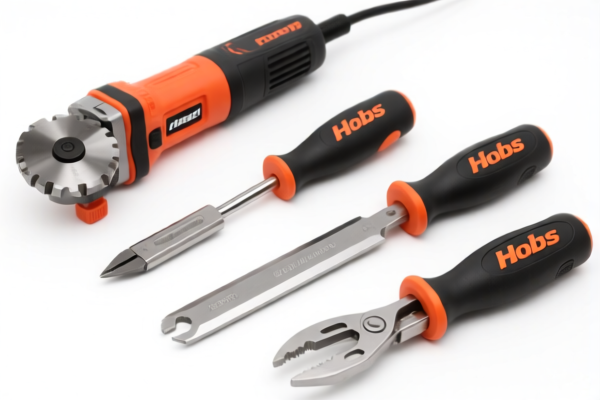
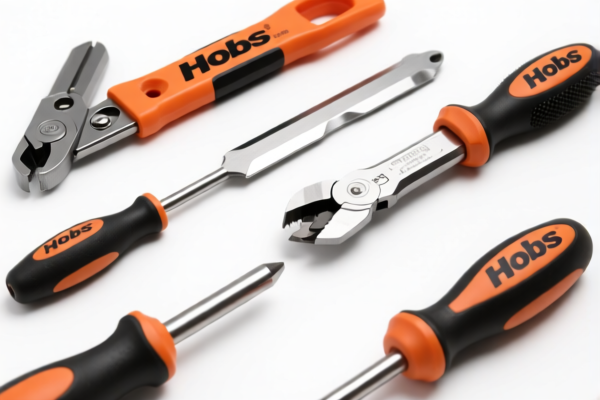
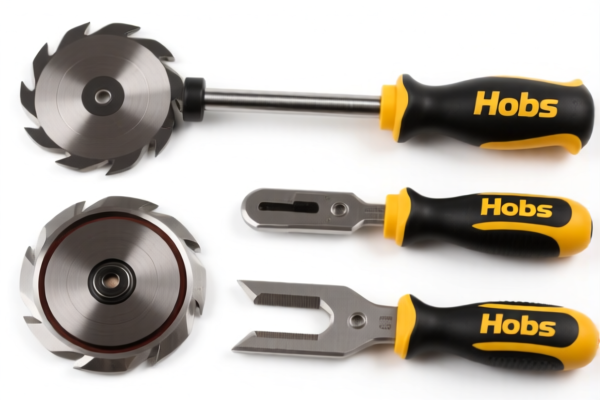
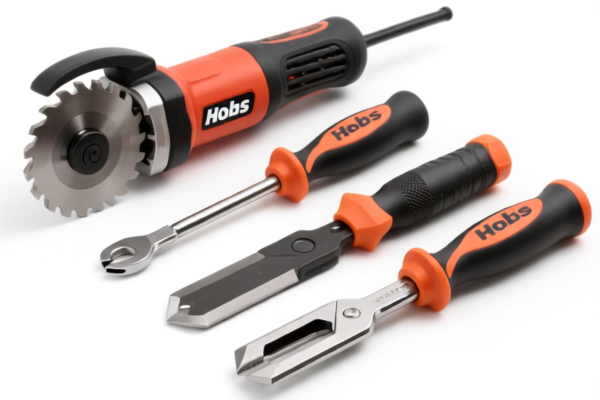
AI Analysis
🏭 Parts for Machine Tools
🌐 HS Code Reference & Customs Clearance Guide | 2026 Latest Tariff Analysis | Professional Entry Strategy
📌 I. Product Definition & Classification: What Exactly Are "Machine Tool Parts"?
"Parts for Machine Tools" is a broad category in international trade, covering components, accessories, and sub-assemblies used in metal cutting, forming, or processing machinery. The critical challenge lies in determining which specific type of machine tool the part belongs to (e.g., general CNC milling, engraving, or simple drilling) and the functional role of the part (structural component vs. cutting tool holder).
⚠️ Key Distinction Point:
- If the part is a general mechanical component not specifically designed for a complex machine tool, it may fall under 8442.50 (Miscellaneous machine tool parts).
- If the part is specifically designed for a metal cutting machine (like an engraving milling machine spindle, table, or tool holder), it falls under 8466 (Parts and accessories suitable for use solely or principally with machines of heading 8456 to 8465).
📦 II. HS Code Classification Details (2026 Latest Tariff Authority Comparison)
| HS Code | Product Description | Application Scenario | Function/Role |
|---|---|---|---|
8442.50.90.00 |
Other Parts of Machines (Catch-all) | General machine tool accessories, non-specific components, fallback category | ⚙️ Generic Mechanical Part |
8466.93.30.00 |
Parts of Metal Cutting Machines (Engraving/Milling) | Worktables, spindle heads, chucks for engraving milling machines | 🛠️ Structural Machine Component |
8466.93.15.30 |
Parts of Metal Cutting Machines (Engraving/Milling) | Specialized components for engraving/milling, classified by specific sub-heading | 🛠️ Specialized Machine Component |
8466.10.01.30 |
Tool Holders and Parts Thereof | Tool holders, arbors, collets, and related holders for machine tools | 🔧 Tool Holding System |
🔍 Key Reminder:
- 8442.50.90.00 is often a "fallback" category for parts that do not fit more specific headings but are still recognized as machine tool parts. It typically attracts lower base tariffs but still faces significant add-on taxes.
- 8466 Series is for parts principally used with metal-cutting machines (Heading 8456-8465). These are more specific and generally carry higher base tariffs due to their specialized nature.
- 8466.10 is specifically for tool holders. If your part is a collet or arbor, this is the correct code, not a general machine part.
💰 III. 2026 Latest Tariff Rate Breakdown (Including Surtaxes & Policy Add-ons)
✅ Applicable Country: USA (US)
✅ Country of Origin: China (CN)
✅ Effective Date: November 10, 2025 (and subsequent imports)
🎯 1. 8442.50.90.00 — Other Machine Tool Parts (Fallback Category)
| Item | Detail |
|---|---|
| Base Duty Rate | 0.0% |
| Section 301 Surtax | +7.5% (Standard 301 duty) |
| Section 122 Tariff | +10% (Specific China-related surcharge) |
| Total Effective Rate | 17.5% |
| Tax Calculation | CIF Value × 17.5% |
| De Minimis Eligibility | ❌ No (deny_de_minimis applies) |
| Legal Basis Path | Base: 0% → Section 301: 7.5% → Section 122: 10% |
📌 Explanation:
- This is the lowest tax option among the listed codes for Chinese-origin machine tool parts.
- It is suitable for parts that are not specifically designed for high-end metal cutting machines or fall into general mechanical accessory categories.
- Warning: Misclassifying a specific milling machine spindle head as "other parts" to save tax is high-risk. Customs may reclassify it under 8466, leading to back taxes.
🎯 2. 8466.93.30.00 — Parts of Metal Cutting Machines (Engraving/Milling)
| Item | Detail |
|---|---|
| Base Duty Rate | 5.8% |
| Section 301 Surtax | +25.0% (High 301 duty for specific machinery parts) |
| Section 122 Tariff | +10% |
| Total Effective Rate | 40.8% |
| Tax Calculation | CIF Value × 40.8% |
| De Minimis Eligibility | ❌ No |
| Legal Basis Path | Base: 5.8% → Section 301: 25.0% → Section 122: 10% |
📌 Explanation:
- This code is for structural components of engraving milling machines (e.g., worktables, spindle housings).
- The base tariff of 5.8% is significantly higher than 8442.50, plus the standard 25% Section 301 duty applies to these specific machinery parts.
- Total tax impact is more than double that of 8442.50.90.00.
🎯 3. 8466.93.15.30 — Parts of Metal Cutting Machines (Engraving/Milling, Specific Sub-item)
| Item | Detail |
|---|---|
| Base Duty Rate | 0.0% |
| Section 301 Surtax | +25.0% |
| Section 122 Tariff | +10% |
| Total Effective Rate | 35.0% |
| Tax Calculation | CIF Value × 35.0% |
| De Minimis Eligibility | ❌ No |
| Legal Basis Path | Base: 0.0% → Section 301: 25.0% → Section 122: 10% |
📌 Explanation:
- Similar to 8466.93.30.00, but under a different specific sub-heading for engraving/milling machine parts.
- While the base rate is 0%, the 25% Section 301 surcharge remains, making the total 35.0%.
- This is cheaper than 8466.93.30.00 (40.8%) but still significantly more expensive than 8442.50.90.00 (17.5%).
🎯 4. 8466.10.01.30 — Tool Holders and Parts Thereof
| Item | Detail |
|---|---|
| Base Duty Rate | 3.9% |
| Section 301 Surtax | +25.0% |
| Section 122 Tariff | +10% |
| Total Effective Rate | 38.9% |
| Tax Calculation | CIF Value × 38.9% |
| De Minimis Eligibility | ❌ No |
| Legal Basis Path | Base: 3.9% → Section 301: 25.0% → Section 122: 10% |
📌 Explanation:
- This code is strictly for tool holders (collets, arbors, chucks) and their parts.
- If your product is a tool holder, this is the correct classification, regardless of the high tax. Misclassifying it as a general machine part (8442) could lead to severe penalties.
- Total tax is 38.9%, which is high but unavoidable if the item is functionally a tool holder.
🛠️ IV. Customs Clearance Practical Advice (Field Avoidance Guide)
✅ 1. Required Documentation Checklist (None Can Be Skipped)
| Document | Required? | Description |
|---|---|---|
| ✅ Product Specification Sheet | ✔️ | Must include material, dimensions, weight, and intended machine model. |
| ✅ Technical Drawing/Cross-Section | ✔️ | Critical to prove if the part is a tool holder (8466.10) or a machine component (8466.93). |
| ✅ High-Resolution Photos | ✔️ | Show the part mounted on a machine or next to a standard tool for scale/context. |
| ✅ Commercial Invoice | ✔️ | Describe as "Machine Tool Part" or "Tool Holder," not just "Metal Part." |
| ✅ Packing List | ✔️ | Clearly separate machine parts from any accompanying consumables (oil, coolant). |
✅ 2. Declaration Tips (Key Mnemonics)
🔥 “Function Dictates Code, Not Material! Tool Holders Are Special!”
| Scenario | Correct Declaration | Incorrect Practice |
|---|---|---|
| General bracket, clamp, or non-specific part | 8442.50.90.00 (17.5%) |
Classify as tool holder → 38.9% |
| Worktable, spindle head for CNC mill | 8466.93.30.00 or 8466.93.15.30 |
Classify as general part → Risk of reclassification |
| Collet, Arbour, or Tool Holder | 8466.10.01.30 (38.9%) |
Classify as general part → High Penalty Risk |
| Mix of parts in one shipment | Split Declaration | Combine all as one code → Customs may audit entire shipment |
✅ 3. Special Handling Cases
| Scenario | Handling Advice |
|---|---|
| OEM Parts for Specific Machine | Provide the machine brand and model on the invoice. This helps justify classification under 8466. |
| Universal Tool Holder | If it fits multiple machines, it is still a Tool Holder (8466.10). Do not try to use 8442.50 to save tax. |
| Part with Electronic Components | If the part has integrated electronics (e.g., smart spindle), ensure it is not misclassified as a simple mechanical part. |
| Kit with Tool Holder + Wrench | The tool holder determines the classification. The wrench is an accessory but may be taxed differently if declared separately. |
🌍 V. Global Market Comparison for Machine Tool Parts (2026)
| Country/Region | Recommended HS Code | Duty Rate (China Origin) | Certification Requirements | Notes |
|---|---|---|---|---|
| 🇺🇸 USA | 8442.50.90.00 |
17.5% (Lowest Option) | No specific tech cert, but strict compliance | High risk of reclassification if not generic |
| 🇺🇸 USA | 8466 Series |
35.0% - 40.8% | N/A | Mandatory for specific milling parts/tool holders |
| 🇨🇳 China | 8442.50.90.00 |
0% - 5% | CCC (if applicable) | Much lower import duty for domestic processing |
| 🇪🇺 EU | 8466 Series |
0% - 4.7% | CE (if powered) | No Section 301/122 equivalents |
| 🇬🇧 UK | 8466 Series |
0% - 5% | UKCA | Post-Brexit tariffs may vary |
📌 Conclusion:
- The USA imposes the highest effective tariffs due to Section 301 and Section 122 add-ons.
- 8442.50.90.00 is the most cost-effective route only if the part genuinely qualifies as a general machine tool part.
- For tool holders, the high tax (38.9%) is unavoidable.
📌 VI. Common Errors & Pitfalls (Lessons Learned from Blood & Tears)
❌ Error 1: Calling a CNC Mill Spindle Head a "General Machine Part"
👉 Consequence: Customs reclassifies to 8466.93.30.00. You pay 40.8% instead of 17.5%. + Penalties for misdeclaration.
❌ Error 2: Declaring a Collet as a "Tool Holder" but using code 8442.50
👉 Consequence: Collets are tool holders. Correct code is 8466.10.01.30 (38.9%). Using 8442 is a high-risk error.
❌ Error 3: Omitting Technical Drawings
👉 Consequence: Customs cannot determine if the part is for a "metal cutting machine" (8466) or general use. Shipment delayed for further inquiry.
❌ Error 4: Ignoring Section 122 Tariff
👉 Consequence: Even if base duty is 0%, the +10% Section 122 tariff applies to all Chinese-origin goods in this category. Budget accordingly!
✅ Correct Practice:
"CNC Milling Machine Work Table, Steel, Model XYZ, Compatible with ABC CNC Mill" (for 8466)
OR
"General Purpose Machine Tool Bracket, Steel, Unbranded" (for 8442, only if truly generic)
🎯 VII. Conclusion: Precise Classification Saves Money!
🎯 Remember the Mantra:
🔹 "Generic Parts = 17.5% (8442) | Tool Holders = 38.9% (8466.10) | Mill Parts = 35-40% (8466.93)"
🔹 "Do NOT misclassify tool holders as generic parts. The penalty is not worth the savings!"
🔹 "Section 122 is a fixed 10%. Always factor it in."
📌 Pro Tip:
If your parts are originally from Vietnam, Mexico, or Malaysia, you may avoid Section 301 and Section 122 tariffs, reducing costs significantly.
Consider supply chain diversification if tariffs exceed your profit margin.
👉 Apply for an Advance Ruling (Pre-Classification) from U.S. Customs (CBP) to confirm the correct HS Code for your specific part design.
📣 Immediate Action:
📞 Contact a licensed customs broker + Provide Technical Drawings + Apply for HS Code Pre-Ruling
🚀 Ensure your Parts for Machine Tools clear customs smoothly, avoiding costly delays and audits!
✨ Professional Classification Starts Here!
💼 Your bottom line depends on the right HS Code!
Customer Reviews
About HS Code Classification
The Harmonized System (HS) is an internationally standardized nomenclature developed by the World Customs Organization (WCO) to classify traded products. Over 200 countries use the HS system as the basis for customs tariffs, trade statistics, and import/export regulations.
Each HS code follows a hierarchical structure:
- Chapter (2 digits) — Broad category of goods (e.g., Chapter 84: Machinery and Mechanical Appliances)
- Heading (4 digits) — More specific grouping within the chapter
- Subheading (6 digits) — Internationally standardized breakdown, used by all WCO member countries
- National subdivisions (8-10 digits) — Country-specific extensions for further classification, such as US HTSUS 10-digit codes
Correct HS code classification is essential for smooth customs clearance, accurate duty payment, and compliance with trade regulations. Misclassification can lead to customs delays, overpayment of duties, or penalties.
When importing from CN to US, the applicable tariff rates may include:
- Most-Favored-Nation (MFN) rate — The standard duty rate applied to WTO members
- General rate — Applied to countries without trade agreements
- Trade remedy duties — Additional tariffs such as Section 301 (anti-dumping), Section 232 (national security), or countervailing duties
The information provided on this page is for reference purposes only. For official classification, please consult with your local customs authority or a licensed customs broker.