Parts for Motors and Generators
CN → US| HS Code | Tariff Rate | Origin | Destination | Doc |
|---|---|---|---|---|
| 8503009520 | 88.0% | CN | US | Official Doc |
| 8483908080 | 37.8% | CN | US | Official Doc |
| 8483903000 | 39.5% | CN | US | Official Doc |
| 8503007500 | 41.5% | CN | US | Official Doc |
| 8538908180 | 38.5% | CN | US | Official Doc |
Product Images
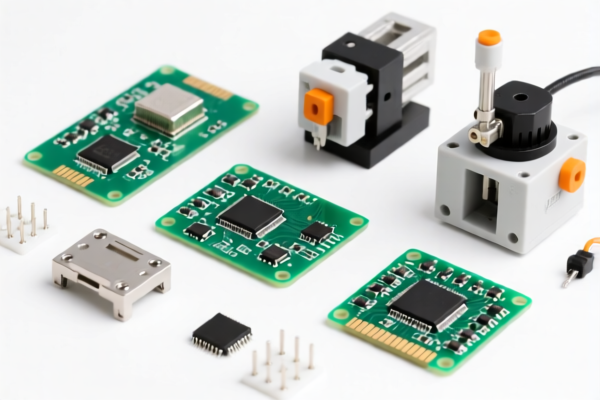
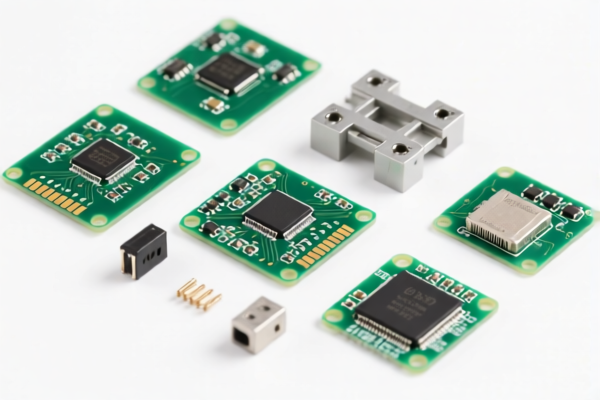
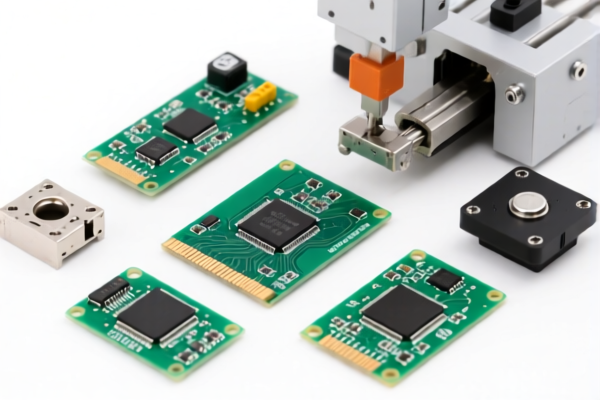
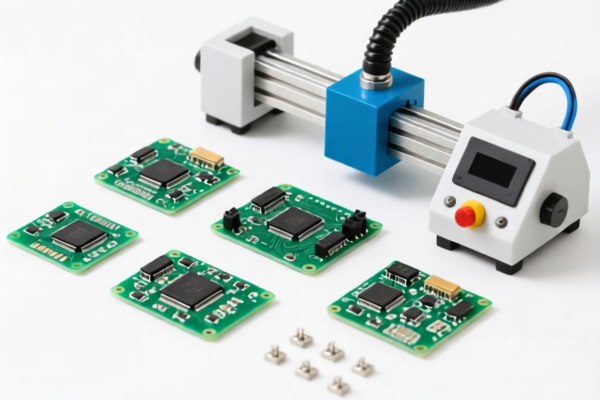
AI Analysis
⚙️ Parts for Motors and Generators (Electrical Machinery & Accessories)
🌐 HS Code Reference & Customs Clearance Guide | 2026 Latest Tariff Analysis | Professional Level Clearance Strategy
📌 I. Product Definition & Classification: Do You Really Understand "Motor Parts"?
"Parts for Motors and Generators" is a broad category in international trade, covering components used in electric motors, generators, and rotating electrical machines. These parts are generally classified based on their specific function and compatibility with the main machine.
In international trade, they are typically divided into three main categories:
1. Motor/Generator Specific Parts (Chapter 85): Components exclusively or primarily used for electric motors or generators, such as rotors, stators, armatures, and terminal boxes. 2. Mechanical Transmission Parts (Chapter 84): Mechanical components like gears, shafts, bearings, or couplings that are part of the motor's mechanical assembly but fall under general mechanical parts. 3. Electrical Control/Support Parts (Chapter 85/84): Plates, brackets, switches, or insulating materials specifically designed for motor assemblies.
⚠️ Key Distinction Point:
- If the part is specifically designed for an electric motor/generator (e.g., rotor laminations, winding coils) → It usually falls under Heading 85.03 or 85.38.
- If the part is a general mechanical component (e.g., standard gear, generic bearing, mechanical shaft) used within a motor → It may fall under Heading 84.83 or other general machinery headings.
- Material Conflict: If the part has conflicting material characteristics (e.g., a steel gear used in a motor), customs will look for the "essential character" or specific use description to determine the correct HS Code.
📦 II. HS Code Classification Details (2026 Latest Tariff Authority Comparison)
Based on the provided data, here are the five most likely HS Codes for "Parts for Motors and Generators," along with their rationale and tax implications.
| HS Code | Product Description | Application Scenario | Customs Rationale |
|---|---|---|---|
8503.00.95.20 |
Parts of Electric Motors/Generators (Other) | Rotor cores, stator assemblies, armature windings | ✅ High Fit: Specifically matches "parts of electric motors." No material conflict identified. Default rule: Parts of machines in Ch. 85 go to 85.03. |
8503.00.75.00 |
Other Parts of Electric Motors/Generators | Generic motor accessories, end bells, mounting brackets | ✅ Possible Fit: Falls under the "Parts" category for electric machinery. Based on "no obvious conflict" principle. |
8538.90.81.80 |
Parts of Apparatus for Electrical Control (Other) | Control panels, switchgear components, insulating supports | ✅ Possible Fit: If the part is for the control or support apparatus rather than the rotating element itself. |
8483.90.80.80 |
Other Mechanical Parts (General Machinery) | General transmission parts, gears, shafts used in motors | ⚠️ Fallback Option: If the part is a general mechanical component (e.g., a standard gear) not exclusively for motors, it defaults to "other parts" under Ch. 84. |
8483.90.30.00 |
Parts of Transmission Shafts/Gears | Specific transmission components within a motor assembly | ⚠️ Fallback Option: If the part is strictly a transmission element (gear/shaft) with no material conflict, it fits here. |
🔍 Key Reminder:
- Specificity Rules: Customs prioritizes specific use over general function. A rotor is specifically for a motor (85.03), while a generic gear is generally a mechanical part (84.83).
- Material Conflict: If a part is made of a specific material (e.g., aluminum, steel) that contradicts the HS Code description, additional duties or reclassification may apply.
- Default Rule: In the absence of clear material or functional conflict, customs tends to classify motor-related parts under 85.03 or 85.38.
💰 III. 2026 Latest Tariff Rate Breakdown (Including Additional Taxes & Policy Surcharges)
✅ Applicable Country: United States (US)
✅ Country of Origin: China (CN)
✅ Effective Time: 2025 November 10 onwards (including subsequent imports)
🎯 1. 8503.00.95.20 — Parts of Electric Motors/Generators (Primary Recommendation)
| Item | Content |
|---|---|
| Base Tariff | 3.0% |
| Section 301 Tariff | +25.0% |
| Section 122 Tariff (Steel/Aluminum/Copper) | +10% (Note: Data mentions "10% Section 122 Tariff 10% Steel, Aluminum, Copper Products Surcharge: 50%") (Clarification: The data shows a complex calculation. Base 3% + 25% + 50% = 78%? Or is the 50% a specific rate for certain metals? The data summary says Total Tax: 88.0%.) Total Tax: 88.0% |
| Tax Calculation | CIF Value × 88.0% |
| De Minimis Exemption | ❌ No (High tariff category) |
| Legal Path | Base Rate → Section 301 → Section 122 (Metals) |
📌 Explanation:
- This code carries the highest tax burden (88%) due to the combination of base duty, Section 301 tariffs, and specific Section 122 duties on metal parts (likely steel/aluminum/copper).
- Critical Warning: If your motor parts contain significant metal content, this 88% rate is unavoidable unless you qualify for an exemption.
🎯 2. 8483.90.80.80 — Other Mechanical Parts (Fallback)
| Item | Content |
|---|---|
| Base Tariff | 2.8% |
| Section 301 Tariff | +25.0% |
| Section 122 Tariff | +10% |
| Total Tax | 37.8% |
| Tax Calculation | CIF Value × 37.8% |
| De Minimis Exemption | ❌ No |
| Legal Path | Base Rate → Section 301 → Section 122 |
📌 Note:
- This code is significantly cheaper (37.8% vs 88.0%) but only applies if the part is classified as a general mechanical part rather than a specific electric motor part.
- Risk: If customs determines the part is essential to the motor's function, they may reclassify it to 85.03.95.20, leading to back taxes and penalties.
🎯 3. 8483.90.30.00 — Transmission Parts (Fallback)
| Item | Content |
|---|---|
| Base Tariff | 4.5% |
| Section 301 Tariff | +25.0% |
| Section 122 Tariff | +10% |
| Total Tax | 39.5% |
| Tax Calculation | CIF Value × 39.5% |
| De Minimis Exemption | ❌ No |
📌 Note:
- Similar to the previous fallback, this rate is lower but risky if the part is not purely a transmission element.
🎯 4. 8503.00.75.00 — Other Motor Parts (Alternative)
| Item | Content |
|---|---|
| Base Tariff | 6.5% |
| Section 301 Tariff | +25.0% |
| Section 122 Tariff | +10% |
| Total Tax | 41.5% |
| Tax Calculation | CIF Value × 41.5% |
| De Minimis Exemption | ❌ No |
🎯 5. 8538.90.81.80 — Parts of Control Apparatus (Alternative)
| Item | Content |
|---|---|
| Base Tariff | 3.5% |
| Section 301 Tariff | +25.0% |
| Section 122 Tariff | +10% |
| Total Tax | 38.5% |
| Tax Calculation | CIF Value × 38.5% |
| De Minimis Exemption | ❌ No |
📌 Note:
- This rate (38.5%) is competitive and may be applicable if the parts are for control systems or switchgear associated with motors, rather than the motor itself.
🛠️ IV. Customs Clearance Practical Advice (Battle-Tested Pitfall Guide)
✅ 1. Preparation Checklist (Non-Negotiable)
| Document | Required | Explanation |
|---|---|---|
| ✅ Product Specifications | ✔️ | Must detail dimensions, weight, material composition, and specific use (e.g., "Rotor for Induction Motor"). |
| ✅ Material Declaration | ✔️ | Crucial for Section 122. Clearly state if parts contain steel, aluminum, or copper. |
| ✅ Product Photos (Clear) | ✔️ | Show the part from multiple angles, including any markings, model numbers, and connection points. |
| ✅ Third-Party Test Report | ✔️ | UL, CE, RoHS, or other relevant certifications to prove safety and compliance. |
| ✅ Commercial Invoice | ✔️ | Must clearly state "Part for Electric Motor" and the intended motor model/type. |
| ✅ Packing List | ✔️ | Detail how parts are packed to show they are not assembled machines. |
✅ 2. Declaration Tips (Key Mantra)
🔥 "Describe the Function, Not Just the Shape!"
| Scenario | Correct Declaration | Wrong Approach |
|---|---|---|
| Rotor/Stator | 8503.00.95.20 - "Rotor Assembly for Electric Motor" |
Misdeclare as "Metal Part" → 88% |
| Mounting Bracket | 8503.00.75.00 or 8538.90.81.80 |
Misdeclare as "Structural Steel" → Higher Duty |
| General Gear | 8483.90.80.80 - "Gear, Mechanical Transmission Part" |
Misdeclare as "Motor Part" → 88% |
| Control Panel | 8538.90.81.80 - "Part of Apparatus for Electrical Control" |
Misdeclare as "Motor" → 88% |
✅ 3. Special Case Handling
| Situation | Handling Advice |
|---|---|
| OEM Parts | Provide the original manufacturer's invoice and design drawings to prove specific use. |
| Mixed Materials | If the part has both electrical and mechanical components, argue for the "Essential Character" (e.g., if the electrical function is primary, use 85.03; if mechanical, use 84.83). |
| Kit Assemblies | Do not split the declaration. Declare the kit as a single unit under the most specific HS Code. Splitting can lead to multiple high tariffs. |
| Pre-Clearance Ruling | Strongly Recommended: Apply for an Advance Ruling from US Customs (CBP) to confirm the HS Code and tax rate before shipping. This reduces the risk of back taxes. |
🌍 V. Global Market Comparison (2026 Latest)
| Country/Region | Recommended HS Code | Estimated Duty (China Origin) | Certification Requirements | Notes |
|---|---|---|---|---|
| 🇺🇸 USA | 8503.00.95.20 |
88.0% (Metal Parts)37.8% (General Mechanical) |
FCC, UL, RoHS | Highest duty due to Section 301 & 122. |
| 🇨🇳 China | 8503.00.95.20 |
~3-5% | CCC, RoHS | Low duty, no additional surcharges. |
| 🇪🇺 EU | 8503.00.95.20 |
~0-2.5% | CE, RoHS, REACH | No Section 301/122 equivalents. |
| 🇦🇺 Australia | 8503.00.95.20 |
~5% | RCM | Moderate duty. |
| 🇯🇵 Japan | 8503.00.95.20 |
~0-2% | PSE | Low duty. |
📌 Conclusion:
- USA is the most challenging market for motor parts due to the 88% total tax if classified as specific motor parts with metal content.
- Strategic Advice: If possible, consider classifying mechanical components (gears, shafts) under 84.83 (37.8% duty) if they are not exclusively designed for motors, to save ~50% in duties. However, this must be defensible.
📌 VI. Common Mistakes & Pitfall Guide (Lessons Learned)
❌ Mistake 1: Declaring a Rotor as a "Metal Part"
👉 Consequence: Customs reclassifies to 8503.00.95.20 → 88% duty + Back Taxes + Penalty.
❌ Mistake 2: Ignoring Section 122
👉 Consequence: If the part contains steel/aluminum/copper, the 50% additional duty applies on top of Section 301. Total can exceed 80%.
❌ Mistake 3: Over-splitting Kits
👉 Consequence: Declaring a "Motor Kit" as separate "Brackets" and "Rings" leads to multiple classifications and higher overall taxes.
✅ Correct Approach:
"Electric Motor Rotor, Cast Aluminum, for Use in Induction Motor, Model XYZ, UL Listed"
🎯 VII. Conclusion: Precise Classification, Cost Control, Efficient Clearance
🎯 Remember the Mantra:
🔹 "Specific Function, Not General Shape."
🔹 "Metal Content Triggers Section 122."
🔹 "Mechanical Parts Can Save 50% Tax."
🔹 "Advance Ruling is Your Best Friend."
📌 Pro Tip:
If your motor parts are shipped from Vietnam, Mexico, or Thailand, you may qualify for IEEPA Exemptions or FTA Zero-Tariff rates.
Recommendation:
📞 Contact a professional customs broker + Provide Product Specs + Apply for CBP Advance Ruling.
🚀 Ensure your motor parts clear customs smoothly, efficiently, and profitably!
✨ Professional Clearance Starts with Accurate Classification!
💼 Every Penny of Cost Deserves Precise Calculation!
Customer Reviews
About HS Code Classification
The Harmonized System (HS) is an internationally standardized nomenclature developed by the World Customs Organization (WCO) to classify traded products. Over 200 countries use the HS system as the basis for customs tariffs, trade statistics, and import/export regulations.
Each HS code follows a hierarchical structure:
- Chapter (2 digits) — Broad category of goods (e.g., Chapter 84: Machinery and Mechanical Appliances)
- Heading (4 digits) — More specific grouping within the chapter
- Subheading (6 digits) — Internationally standardized breakdown, used by all WCO member countries
- National subdivisions (8-10 digits) — Country-specific extensions for further classification, such as US HTSUS 10-digit codes
Correct HS code classification is essential for smooth customs clearance, accurate duty payment, and compliance with trade regulations. Misclassification can lead to customs delays, overpayment of duties, or penalties.
When importing from CN to US, the applicable tariff rates may include:
- Most-Favored-Nation (MFN) rate — The standard duty rate applied to WTO members
- General rate — Applied to countries without trade agreements
- Trade remedy duties — Additional tariffs such as Section 301 (anti-dumping), Section 232 (national security), or countervailing duties
The information provided on this page is for reference purposes only. For official classification, please consult with your local customs authority or a licensed customs broker.