Parts for Sewing Machines
CN → US| HS Code | Tariff Rate | Origin | Destination | Doc |
|---|---|---|---|---|
| 8452902090 | 17.5% | CN | US | Official Doc |
| 8452902010 | 17.5% | CN | US | Official Doc |
| 8448591000 | 17.5% | CN | US | Official Doc |
| 8448512000 | 35.0% | CN | US | Official Doc |
| 7117909000 | 28.5% | CN | US | Official Doc |
Product Images
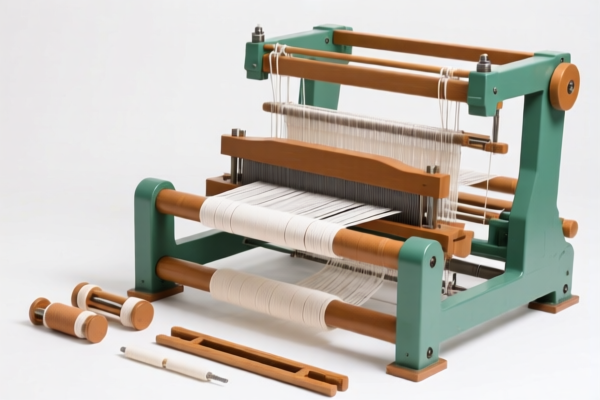
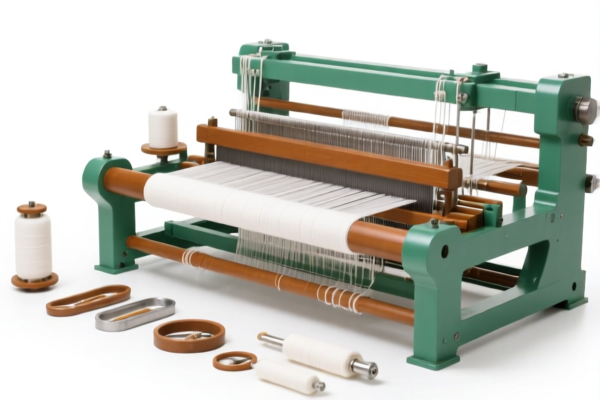
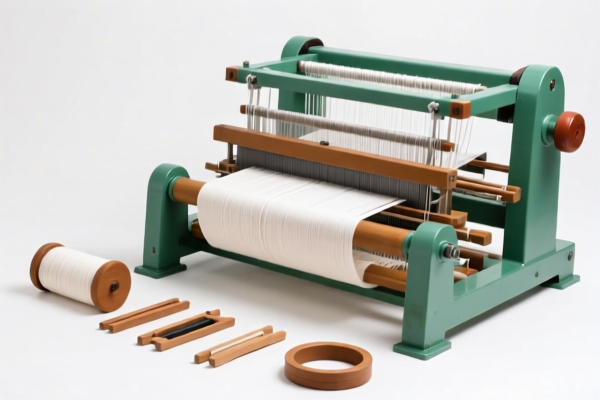
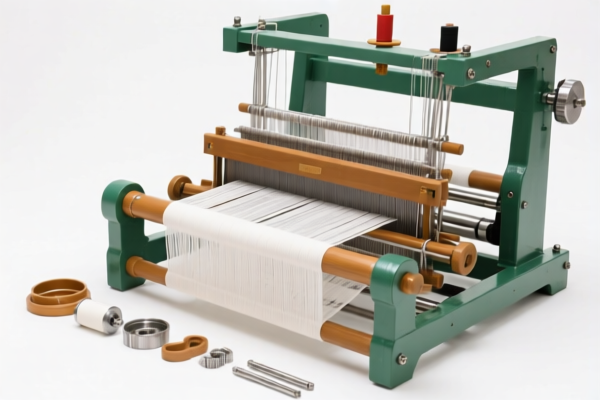
AI Analysis
🧵 Parts for Sewing Machines (Sewing Machine Accessories)
🌐 HS Code Reference & Customs Clearance Guide | 2026 Latest Tariff Analysis | Professional Entry Strategy
📌 I. Product Definition & Classification: Do You Really Understand "Sewing Machine Parts"?
Sewing machine parts are critical components used in the maintenance, repair, and operation of sewing, embroidering, and knitting machinery. In international trade, they are generally classified under Chapter 84 (Nuclear reactors, boilers, machinery and mechanical appliances; parts thereof).
However, classification depends heavily on the specific function and compatibility with the main machine. Key distinctions include:
- General Sewing Machine Parts (8452): Components specifically for sewing, embroidering, or button-sewing machines (e.g., needles, presser feet, bobbins).
- Knitting Machine Parts (8448): Specialized components for knitting, crocheting, or lace-making machines.
- Costume/Decoration Accessories (7117): Items like decorative buttons, sequins, or non-precious metal trims that are not mechanical parts but rather fashion accessories.
⚠️ Key Distinction Point:
- If it is a mechanical component essential for the machine's operation (e.g., motor, needle, feed dog) → It falls under 8452 or 8448.
- If it is a fashion accessory (e.g., decorative button, plastic trim) → It may fall under 7117 or Chapter 62/63.
- Crucial: Misclassifying a mechanical part as a "fashion accessory" or vice versa can lead to significant duty differences and customs seizures.
📦 II. HS Code Classification Details (2026 Latest Tariff Authority Comparison)
| HS Code | Product Description | Application Scenario | Key Characteristic |
|---|---|---|---|
8452.90.20.90 |
Sewing Machine Parts (Other) | General sewing machine accessories not specifically listed elsewhere | ✅ General mechanical parts |
8452.90.20.10 |
Sewing Machine Parts (Other) | Specific category under "Other" for sewing machine parts | ✅ General mechanical parts |
8448.59.10.00 |
Knitting Machine Parts (Other) | Accessories for knitting machines, matching classification definitions | ✅ Knitting-specific mechanical parts |
8448.51.20.00 |
Knitting Machine Auxiliary Machinery Parts | Specialized parts for auxiliary knitting machinery | ✅ Specialized knitting parts |
7117.90.90.00 |
Costume Jewelry & Accessories (Other) | Non-precious metal decorative accessories, buttons, trims | ❌ Not mechanical; fashion/accessory |
🔍 Important Reminder:
- 8452 & 8448 codes are for mechanical parts. Even if the part is made of plastic, if it functions as a sewing/knitting machine component, it belongs here.
- 7117 is for decorative items. A plastic button is not a sewing machine part; it is a garment accessory.
💰 III. 2026 Latest Tariff Rate Details (Including Additional Taxes & Policy Surcharges)
✅ Applicable Country: United States (US)
✅ Origin: China (CN)
✅ Effective Date: From November 10, 2025 (including subsequent imports)
🎯 1. 8452.90.20.90 & 8452.90.20.10 —— Sewing Machine Parts (Other)
| Item | Content |
|---|---|
| Base Tariff | 0.0% (ad valorem) |
| Section 301 Additional Tariff | +7.5% |
| Section 122 Tariff | +10% |
| Total Tariff Rate | 17.5% |
| Tax Calculation | CIF Value × 17.5% |
| De Minimis Exemption | ❌ Not Eligible (deny_de_minimis) |
| Legal Basis Path | Section 301: 8452.90.20.90 → Section 122: US-China Trade → Total: 17.5% |
📌 Explanation:
- Although the base tariff is 0%, two additional surcharges apply:
1. Section 301: 7.5% for goods originating from China.
2. Section 122: 10% for specific textile-related machinery parts.
- Total 17.5%. While lower than some electronics, this is a significant cost for high-volume shipments.
🎯 2. 8448.59.10.00 —— Knitting Machine Parts (Other)
| Item | Content |
|---|---|
| Base Tariff | 0.0% (ad valorem) |
| Section 301 Additional Tariff | +7.5% |
| Section 122 Tariff | +10% |
| Total Tariff Rate | 17.5% |
| Tax Calculation | CIF Value × 17.5% |
| De Minimis Exemption | ❌ Not Eligible (deny_de_minimis) |
| Legal Basis Path | Section 301: 8448.59.10.00 → Section 122: US-China Trade → Total: 17.5% |
📌 Note:
- Same tariff structure as sewing machine parts.
- Applies to knitting machine components. Ensure your product description explicitly states "Knitting Machine Part" to avoid misclassification.
🎯 3. 8448.51.20.00 —— Knitting Machine Auxiliary Machinery Parts
| Item | Content |
|---|---|
| Base Tariff | 0.0% (ad valorem) |
| Section 301 Additional Tariff | +25.0% |
| Section 122 Tariff | +10% |
| Total Tariff Rate | 35.0% |
| Tax Calculation | CIF Value × 35.0% |
| De Minimis Exemption | ❌ Not Eligible (deny_de_minimis) |
| Legal Basis Path | Section 301: 8448.51.20.00 → Section 122: US-China Trade → Total: 35.0% |
📌 Warning:
- This HS code carries a much higher Section 301 tariff (25%).
- This usually applies to more specialized or advanced auxiliary machinery parts.
- Total 35% is a significant cost. Ensure you are not misclassifying a standard part into this higher-tier code.
🎯 4. 7117.90.90.00 —— Costume Jewelry & Accessories (Other)
| Item | Content |
|---|---|
| Base Tariff | 11.0% (ad valorem) |
| Section 301 Additional Tariff | +7.5% |
| Section 122 Tariff | +10% |
| Total Tariff Rate | 28.5% |
| Tax Calculation | CIF Value × 28.5% |
| De Minimis Exemption | ❌ Not Eligible (deny_de_minimis) |
| Legal Basis Path | Base Tariff: 7117.90.90.00 → Section 301: 7117.90.90.00 → Section 122: US-China Trade → Total: 28.5% |
📌 Explanation:
- This code is for non-precious metal decorative items (e.g., buttons, trimmings).
- The base tariff is 11%, plus 7.5% (Section 301) and 10% (Section 122).
- Total 28.5%. Note that if these items are actually mechanical sewing machine parts, misclassifying them here is illegal and carries high penalty risks.
🛠️ IV. Customs Clearance Practical Advice (Battle-Tested Pitfall Avoidance Guide)
✅ 1. Preparation Checklist (All Documents Required)
| Document | Mandatory | Description |
|---|---|---|
| ✅ Product Specification Sheet | ✔️ | Must detail material, function, and compatibility (e.g., "For Brother Sewing Machine Model X"). |
| ✅ Technical Diagrams/Parts List | ✔️ | To prove it is a mechanical part (for 8452/8448) vs. decorative item (for 7117). |
| ✅ Product Photos | ✔️ | Clear images showing labels, model numbers, and physical structure. |
| ✅ Commercial Invoice | ✔️ | Must accurately describe the item as "Sewing Machine Part" or "Knitting Machine Part," NOT just "Accessory." |
| ✅ Packing List | ✔️ | Detailing quantities and weights per HS code. |
| ✅ Certificate of Origin | ✔️ | To confirm China origin and apply correct Section 301/122 rates. |
✅ 2. Declaration Techniques (Key Mnemonics)
🔥 "Mechanical is 84, Decorative is 71, Accuracy Saves Money!"
| Scenario | Correct Declaration | Incorrect Practice |
|---|---|---|
| Sewing Machine Needle | 8452.90.20.90 |
Misclassified as "Metal Part" or "Garment Accessory" → Risk of Penalty |
| Knitting Machine Needle | 8448.59.10.00 or 8448.51.20.00 |
Misclassified as "Sewing Machine Part" → Wrong Duty Rate (17.5% vs 35%) |
| Plastic Button (Garment) | 7117.90.90.00 (if non-precious) |
Misclassified as "Sewing Machine Part" → Overpayment of Duty (28.5% vs 17.5% is complex, but function must match) |
| OEM Spare Part | Specific HS Code + OEM Part Number | Generic "Parts for Machine" → Customs Delay |
✅ 3. Special Case Handling
| Situation | Handling Advice |
|---|---|
| Mixed Shipment | Separate mechanical parts (8452/8448) from decorative accessories (7117) in different boxes or clearly listed on invoice. |
| Unfinished Parts | If the part is not yet functional (e.g., raw metal cast), it may still be classified as a part if intended solely for that machine. Provide proof of intent. |
| Knitting vs. Sewing | Do not confuse "Knitting Machine Parts" (8448) with "Sewing Machine Parts" (8452). They have different duty rates for some sub-categories (e.g., 35% vs 17.5%). |
| Decorative vs. Functional | A "presser foot" is mechanical (8452). A "decorative button" is accessory (7117). Function determines classification. |
🌍 V. Global Market Comparison (2026 Latest)
| Country/Region | Recommended HS Code | Tariff (China Origin) | Certification Requirements | Notes |
|---|---|---|---|---|
| 🇺🇸 USA | 8452.90.20.90 |
17.5% (Sewing) / 35% (Knitting Aux) | None specific for parts | High Section 301/122 impact |
| 🇨🇳 China | 8452.90.20.90 |
0% - 5% (Import Duty) | None | Low duty, but focus on export |
| 🇪🇺 EU | 8452.90.90 |
0% - 2.7% | CE Mark (if applicable) | No Section 301/122 |
| 🇯🇵 Japan | 8452.90.10 |
0% - 3.2% | PSE (if electrical) | Competitive tariff |
| 🇬🇧 UK | 8452.90.90 |
0% - 3.0% | UKCA Mark | Post-Brexit rules apply |
📌 Conclusion:
- The US market has the most complex tariff structure for these parts due to Section 301 (7.5%-25%) and Section 122 (10%).
- EU, Japan, and UK offer significantly lower duties for sewing/knitting machine parts.
- Optimization Tip: If exporting to the US, consider kitting or bundling with other low-duty items if permitted, but never misdeclare.
📌 VI. Common Errors & Pitfall Guide (Lessons Learned)
❌ Error 1: Classifying a Sewing Machine Needle as "Metal Hardware" (7318)
👉 Consequence: Incorrect HS Code, potential audit, duty miscalculation.
✅ Correct: Always use 8452 for sewing machine specific parts.
❌ Error 2: Classifying Knitting Machine Parts as Sewing Machine Parts (8452 vs 8448)
👉 Consequence: May lead to 35% duty instead of 17.5% if misidentified as auxiliary knitting machinery.
✅ Correct: Verify machine type and part function before selecting 8448.
❌ Error 3: Declaring Decorative Buttons as Sewing Machine Parts
👉 Consequence: Overpayment of duty (28.5% vs 17.5%) or underpayment if misclassified as low-duty item.
✅ Correct: Use 7117 for non-mechanical accessories.
❌ Error 4: Ignoring Section 122 Tariff
👉 Consequence: Underpayment by 10% + penalties.
✅ Correct: Always account for 10% Section 122 for Chinese-origin textile machinery parts.
🎯 VII. Conclusion: Professional Classification, Save Time, Reduce Costs!
🎯 Remember the Mantra:
🔹 "Mechanical Parts are 84, Decorative are 71."
🔹 "Sewing is 17.5%, Knitting Aux is 35%."
🔹 "Section 301 + 122 = High Duty, Plan Ahead!"
📌 Pro Tip:
If your parts are shipped in small quantities (e.g., de minimis), remember that Section 301 and 122 duties are NOT exempt for China-origin goods under $800.
🚀 Recommendation: Apply for Advance Ruling from US Customs (CBP) to confirm the correct HS Code for your specific parts.
📣 Immediate Action:
📞 Consult a licensed customs broker.
📄 Provide detailed technical specs and product photos.
📋 Verify HS Code before shipment to avoid 17.5%-35% surprises.
✨ Professional Clearance Starts with Accurate Classification!
💼 Every cent of duty matters!
Customer Reviews
About HS Code Classification
The Harmonized System (HS) is an internationally standardized nomenclature developed by the World Customs Organization (WCO) to classify traded products. Over 200 countries use the HS system as the basis for customs tariffs, trade statistics, and import/export regulations.
Each HS code follows a hierarchical structure:
- Chapter (2 digits) — Broad category of goods (e.g., Chapter 84: Machinery and Mechanical Appliances)
- Heading (4 digits) — More specific grouping within the chapter
- Subheading (6 digits) — Internationally standardized breakdown, used by all WCO member countries
- National subdivisions (8-10 digits) — Country-specific extensions for further classification, such as US HTSUS 10-digit codes
Correct HS code classification is essential for smooth customs clearance, accurate duty payment, and compliance with trade regulations. Misclassification can lead to customs delays, overpayment of duties, or penalties.
When importing from CN to US, the applicable tariff rates may include:
- Most-Favored-Nation (MFN) rate — The standard duty rate applied to WTO members
- General rate — Applied to countries without trade agreements
- Trade remedy duties — Additional tariffs such as Section 301 (anti-dumping), Section 232 (national security), or countervailing duties
The information provided on this page is for reference purposes only. For official classification, please consult with your local customs authority or a licensed customs broker.