Parts for Steel Melting Furnaces
CN → US| HS Code | Tariff Rate | Origin | Destination | Doc |
|---|---|---|---|---|
| 8417900000 | 38.9% | CN | US | Official Doc |
| 8417100000 | 37.9% | CN | US | Official Doc |
Product Images
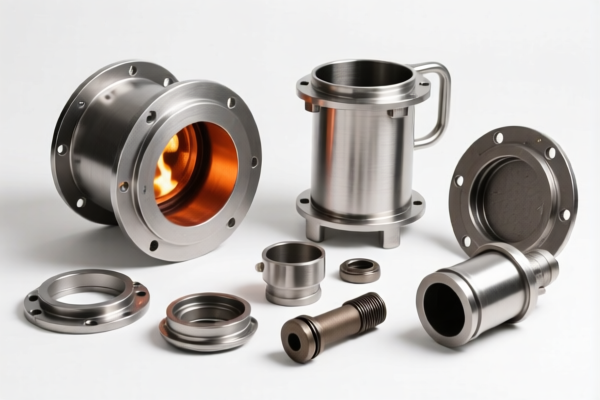
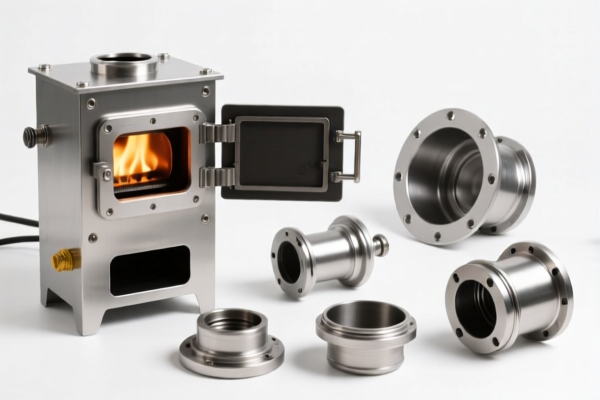
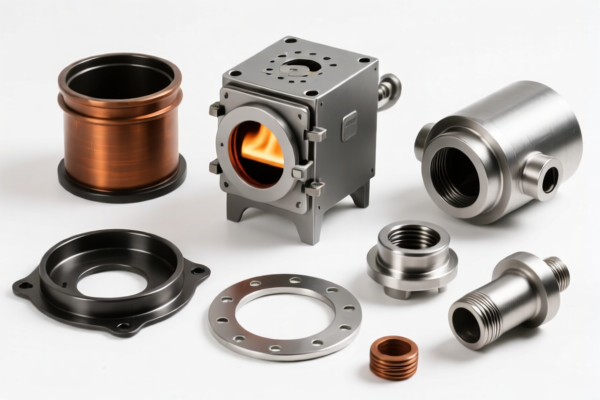
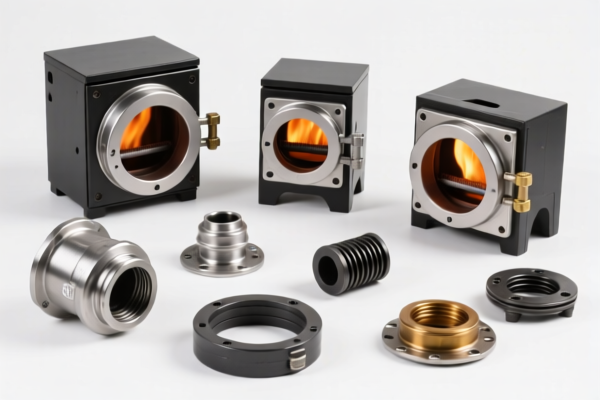
AI Analysis
⚙️ Parts for Steel Melting Furnaces (Industrial Nonelectric Equipment)
🌐 HS Code Reference & Customs Clearance Guide | 2026 Latest Tariff Analysis | Professional Level Customs Strategy
📌 I. Product Definition & Classification: Do You Really Understand "Furnace Parts"?
Industrial furnaces and ovens, including incinerators, that are nonelectric are critical assets in metallurgy, glass manufacturing, and ceramics. In international trade, these products are strictly categorized based on their function and completeness.
When importing "Parts for Steel Melting Furnaces", it is crucial to distinguish whether these parts are: 1. Generic/Specialized Components: Interchangeable parts used in various industrial furnaces (e.g., refractory bricks, heating elements, structural supports, doors, hinges). 2. Core Furnace Units: The actual furnace body designed specifically for roasting, melting, or heat-treating ores, pyrites, or metals.
⚠️ Key Distinction Point:
- If the item is a component (not a complete furnace) used in nonelectric industrial furnaces → Classified under 8417.90.00.00.
- If the item is the actual furnace/oven itself, specifically for roasting, melting, or heat-treating metals → Classified under 8417.10.00.00.
📦 II. HS Code Classification Details (2026 Latest Tariff Authority Match)
| HS Code | Product Description | Application Scenario | Key Identifier |
|--------|--------------------------|--------------------------|
| 8417.90.00.00 | Parts for Industrial/Laboratory Furnaces & Ovens (Nonelectric) | Refractory bricks, heating coils, furnace doors, burners, and other specific components for nonelectric furnaces. | ✅ Parts Only |
| 8417.10.00.00 | Furnaces & Ovens for Roasting, Melting, or Heat Treatment of Metals | The complete furnace unit or the main chamber specifically designed for smelting steel, melting ores, or heat-treating metal. | ✅ Complete Unit |
🔍 Important Reminder:
- "Steel Melting Furnace Parts" generally fall under 8417.90.00.00 if they are replaceable components (like lining, nozzles, or structural parts).
- If you are importing the entire melting furnace (even if it’s a "parts kit" that assembles into a furnace), it may be classified as 8417.10.00.00.
- Do not misdeclare: Sending a "part" as a "furnace" or vice versa can lead to significant delays or misclassification penalties.
💰 III. 2026 Latest Tariff Rate Breakdown (Including Additional Duties & Policy Surcharges)
✅ Applicable Country: United States (US)
✅ Origin: China (CN)
✅ Effective Time: 2025 November 10 onwards (for subsequent imports)
🎯 1. 8417.90.00.00 —— Parts for Nonelectric Industrial/Laboratory Furnaces
| Item | Content |
|---|---|
| Base Tariff Rate | 0.0% (ad valorem) |
| USITC Additional Duty | 0.0% (None) |
| IEEPA Additional Duty | 0.0% (None) |
| Total Tariff Rate | 0.0% |
| Tax Calculation | CIF Value × 0.0% = $0 |
| De Minimis Eligibility | ✅ Yes (if value < $800, typically) |
| Legal Basis Path | USITC:8417.90.00.00 → No Footnotes for Additional Duties |
📌 Explanation:
- This HS code has zero base tariff and zero additional surcharges (Section 301 or IEEPA) as per the provided data.
- This makes it a highly cost-effective item to import into the US compared to many electronics or steel products.
- Total Tax: 0.0%.
🎯 2. 8417.10.00.00 —— Furnaces & Ovens for Metal Roasting/Melting
| Item | Content |
|---|---|
| Base Tariff Rate | 0.0% (ad valorem) |
| USITC Additional Duty | 0.0% (None) |
| IEEPA Additional Duty | 0.0% (None) |
| Total Tariff Rate | 0.0% |
| Tax Calculation | CIF Value × 0.0% = $0 |
| De Minimis Eligibility | ✅ Yes (if value < $800, typically) |
| Legal Basis Path | USITC:8417.10.00.00 → No Footnotes for Additional Duties |
📌 Explanation:
- Like the parts, the furnace units themselves also enjoy 0% tariff.
- This is exceptional for heavy industrial machinery from China, which often faces higher duties.
- Total Tax: 0.0%.
🛠️ IV. Customs Clearance Practical Advice (Real-World Pitfall Avoidance Guide)
✅ 1. Preparation Checklist (Missing items cause delays)
| Document | Required | Notes |
|---|---|---|
| ✅ Product Specification Sheet | ✔️ | Must clearly state: "Nonelectric," "Industrial Furnace Part," or "Steel Melting Furnace." |
| ✅ Detailed Parts List | ✔️ | For 8417.90.00.00, list each part (e.g., "Refractory Brick Model X," "Burner Nozzle Y"). |
| ✅ Product Photos (with Labels) | ✔️ | Show the part’s identity. Avoid showing the entire furnace if declaring as parts. |
| ✅ Commercial Invoice | ✔️ | Description must match HS code precisely. E.g., "Parts for Nonelectric Industrial Furnace." |
| ✅ Bill of Lading | ✔️ | Ensure weight and volume match the invoice. |
✅ 2. Declaration Tips (Key Mnemonics)
🔥 "Parts vs. Furnace: Name Matters, Tariff is Zero!"
| Scenario | Correct Declaration | Wrong Approach |
|---|---|---|
| Refractory Bricks/Heating Elements | 8417.90.00.00 (Parts) |
Declare as "Furnace" → Potential audit for completeness |
| Complete Steel Melting Furnace | 8417.10.00.00 (Furnace) |
Declare as "Parts" → Risk of misclassification |
| Electric Furnace Parts | ❌ Not Covered Here | Use 8417.80 or 8514 → Different HS Code |
| Lab Furnace Parts | 8417.90.00.00 |
Misdeclare as industrial → May trigger higher scrutiny |
⚠️ Critical Note:
- Ensure the product is NONELECTRIC. If the furnace has an electric heating element, it falls under 8514 (Electric Industrial Furnaces), which may have different tariffs.
- The provided data only covers Nonelectric furnaces. Do not apply these codes to electric models.
✅ 3. Special Situations
| Situation | Handling Advice |
|---|---|
| Mixed Shipment (Electric + Nonelectric) | Separate declarations! Electric parts go to 8514, nonelectric to 8417. Mixing leads to errors. |
| OEM Custom Furnace Parts | Provide customer PO and design drawings to prove they are specific parts, not generic goods. |
| Large Dimension Parts | If the part is too large to be considered a "part" (e.g., entire furnace wall), consider if it’s a "furnace" (8417.10) instead. |
| Origin Documentation | Even with 0% tariff, keep Certificate of Origin (CO) for audit trails and potential future tariff changes. |
🌍 V. Global Market Comparison (2026 Latest)
| Country/Region | Recommended HS Code | Tariff | Certification | Notes |
|---|---|---|---|---|
| 🇺🇸 USA | 8417.90.00.00 / 8417.10.00.00 |
0.0% | None required for HS classification | Zero duty advantage! |
| 🇨🇳 China | 8417.90.00.00 / 8417.10.00.00 |
~3-5% | CCC (if applicable) | No extra surcharges |
| 🇪🇺 EU | 8417.80 / 8417.90 |
0-2.7% | CE Marking (Safety) | Check local directives |
| 🇦🇺 Australia | 8417.80 / 8417.90 |
5% | RCM (if electric) | Nonelectric parts are simple |
📌 Conclusion:
- The US market is currently very favorable for nonelectric furnace parts and units, with 0% duty.
- Ensure strict compliance with "Nonelectric" definition. Misclassification into electric codes (8514) could expose you to Section 301 tariffs (if applicable to those codes).
📌 VI. Common Errors & Pitfalls (Lessons Learned)
❌ Error 1: Declaring an electric furnace part under 8417 (Nonelectric)
👉 Consequence: HS Code mismatch, potential penalty, and incorrect tariff application.
👉 Fix: Use 8514 for electric components.
❌ Error 2: Declaring a complete furnace as parts (8417.90)
👉 Consequence: While tariff is same (0%), it may trigger Customs request for "complete unit" documentation or inspection.
👉 Fix: Use 8417.10 if it’s a standalone furnace.
❌ Error 3: Not specifying "Nonelectric" in the description
👉 Consequence: Customs may assume electric (higher scrutiny) or reject the code.
👉 Fix: Always include "Nonelectric Industrial Furnace" in the product description.
✅ Correct Description Example:
"Refractory Bricks for Nonelectric Steel Melting Furnace, Model XYZ, For Industrial Use, HS 8417.90.00.00"
🎯 VII. Conclusion: Professional Declaration, Zero Duty Advantage!
🎯 Remember the Mnemonic:
🔹 "Nonelectric is Key, Parts or Furnace, Both are Zero!"
🔹 "Check Electric? Go to 8514. Check Nonelectric? Stay in 8417!"
📌 Pro Tip:
Since the tariff is 0.0%, focus on accurate classification rather than tax savings. Ensure your documentation clearly states:
1. Nonelectric
2. Industrial/Laboratory Furnace
3. Part vs. Furnace
This prevents audits and ensures smooth customs clearance.
📣 Immediate Action:
📞 Contact your freight forwarder with the exact HS Code:
- Parts:8417.90.00.00
- Furnace:8417.10.00.00
🚀 Leverage the 0% tariff to maximize your profit margin!
✨ Professional Customs Clearance Starts with Accurate Classification!
💼 Your Cost Savings are Real – Don’t Let Misclassification Ruin It!
Customer Reviews
About HS Code Classification
The Harmonized System (HS) is an internationally standardized nomenclature developed by the World Customs Organization (WCO) to classify traded products. Over 200 countries use the HS system as the basis for customs tariffs, trade statistics, and import/export regulations.
Each HS code follows a hierarchical structure:
- Chapter (2 digits) — Broad category of goods (e.g., Chapter 84: Machinery and Mechanical Appliances)
- Heading (4 digits) — More specific grouping within the chapter
- Subheading (6 digits) — Internationally standardized breakdown, used by all WCO member countries
- National subdivisions (8-10 digits) — Country-specific extensions for further classification, such as US HTSUS 10-digit codes
Correct HS code classification is essential for smooth customs clearance, accurate duty payment, and compliance with trade regulations. Misclassification can lead to customs delays, overpayment of duties, or penalties.
When importing from CN to US, the applicable tariff rates may include:
- Most-Favored-Nation (MFN) rate — The standard duty rate applied to WTO members
- General rate — Applied to countries without trade agreements
- Trade remedy duties — Additional tariffs such as Section 301 (anti-dumping), Section 232 (national security), or countervailing duties
The information provided on this page is for reference purposes only. For official classification, please consult with your local customs authority or a licensed customs broker.