Parts for Stoves and Similar Equipment
CN → US| HS Code | Tariff Rate | Origin | Destination | Doc |
|---|---|---|---|---|
| 8417900000 | 38.9% | CN | US | Official Doc |
| 8417800000 | 38.9% | CN | US | Official Doc |
| 7323999080 | 88.4% | CN | US | Official Doc |
| 7323999040 | 88.4% | CN | US | Official Doc |
| 8516908010 | 35.0% | CN | US | Official Doc |
| 8516908050 | 85.0% | CN | US | Official Doc |
Product Images
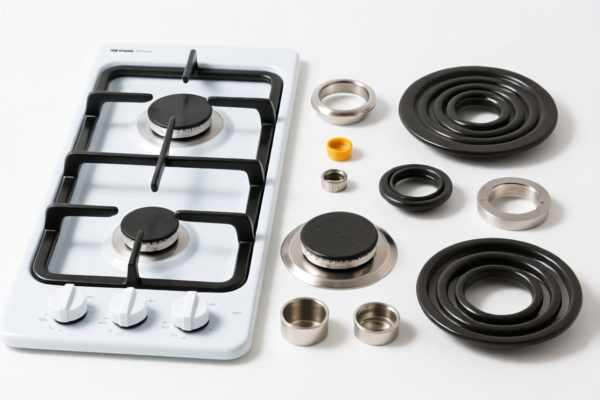
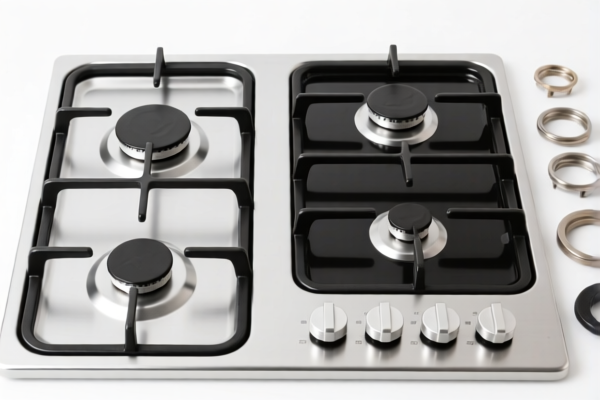
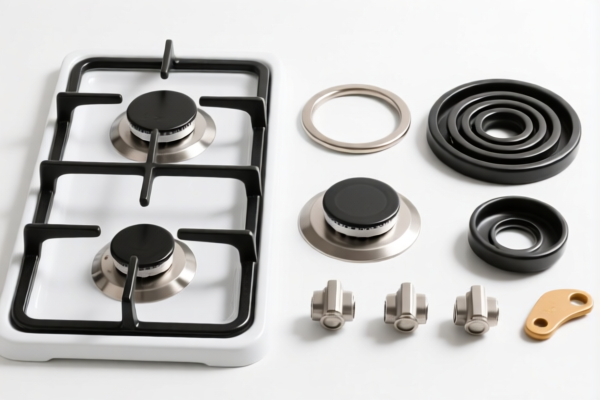
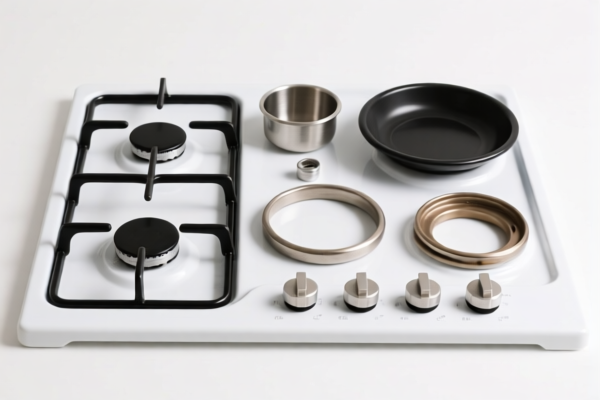
AI Analysis
🔥 Parts for Stoves and Similar Equipment (炉灶零件)
🌐 HS Code Reference & Customs Clearance Guide | 2026 Latest Tariff Analysis | Professional Clearance Strategy
📌 Part 1: Product Definition and Classification: Do You Really Understand "Stove Parts"?
"Stove Parts" is a broad category in international trade, covering components for both electric and non-electric cooking appliances (stoves, ovens, grills, etc.). The critical factor for classification is whether the part is designed for electrical or non-electrical equipment, as this determines the HS Code chapter (Chapter 84 vs. Chapter 85).
Key Classification Principles: * Non-Electric Stoves/Ovens: Parts fall under Chapter 84 (Nuclear reactors, boilers, machinery). * Electric Stoves/Ovens: Parts fall under Chapter 85 (Electrical machinery and equipment). * Material-Based Classification: If the part is primarily a generic iron/steel kitchen item (e.g., a grate, rack, or pan) and not specifically identifiable as a mechanical/electrical component, it may fall under Chapter 73 (Articles of iron or steel).
⚠️ Critical Distinction Point:
- If the part is a mechanical component (burner, oven door hinge, thermostat housing) for a non-electric stove → HS 8417.
- If the part is an electrical component (heating element, control board, switch) for an electric stove → HS 8516.
- If the part is a generic steel structure (grate, shelf, tray) not uniquely identifiable for specific machinery → HS 7323.
📦 Part 2: HS Code Classification Details (2026 Latest Tariff Authority Comparison)
Based on the provided data, here are the potential HS Codes and their specific applications:
| HS Code | Product Description | Application Scenario | Material/Type Conflict |
|---|---|---|---|
8417.90.00.00 |
Parts for non-electric industrial/laboratory furnaces or ovens | Mechanical parts for gas stoves, non-electric ovens | ✅ No material conflict |
8516.90.80.10 |
Parts for electrical heating appliances | Electrical components for electric stoves/ovens | ✅ Matches "Electrical Appliance Parts" |
8516.90.55.00 |
Parts for cooking stoves, ranges, and ovens (Electrical) | Specific electrical parts for electric cooking units | ✅ Matches "Cooking Equipment Parts" |
8417.80.00.00 |
Parts for other furnaces, ovens, and incubators | General mechanical parts for non-electric equipment | ✅ No material conflict |
7323.99.90.80 |
Articles of iron or steel (Kitchenware parts) | Steel grates, racks, or generic steel parts | ⚠️ Conflict: Subject to additional steel/aluminum/copper tariffs |
🔍 Key Reminder:
- Electrical parts (Heating elements, controllers) must be declared under 8516 series.
- Non-electrical mechanical parts (Burners, casings for non-electric units) must be declared under 8417 series.
- Generic steel parts (Grates, racks) fall under 7323, but beware of the 50% additional tariff for steel products from China.
💰 Part 3: 2026 Latest Tariff Rate Details (Including Surcharges and Policy Add-ons)
✅ Applicable Country: United States (US)
✅ Origin: China (CN)
✅ Effective Time: As per current trade policies (Section 301, Section 232, and IEEPA)
🎯 1. 8417.90.00.00 —— Parts for Non-Electric Industrial/Lab Ovens
| Item | Content |
|---|---|
| Base Tariff | 3.9% |
| Section 301 Surcharge (25%) | +25% (Added Tariff) |
| Section 122 Surcharge (10%) | +10% (Additional Tariff) |
| Total Tariff Rate | 38.9% |
| Calculation Method | CIF Value × 38.9% |
| De Minimis Exemption | ❌ Not Eligible (deny_de_minimis) |
📌 Explanation:
- This code applies to non-electric stove parts.
- The 38.9% rate includes the base rate (3.9%) plus the 25% Section 301 tariff and 10% Section 122 tariff.
- No steel-specific penalty applies unless it is classified under Chapter 73.
🎯 2. 8516.90.80.10 & 8516.90.55.00 —— Parts for Electrical Heating/Cooking Appliances
| Item | Content |
|---|---|
| Base Tariff | 0.0% |
| Section 301 Surcharge (25%) | +25% (Added Tariff) |
| Section 122 Surcharge (10%) | +10% (Additional Tariff) |
| Total Tariff Rate | 35.0% |
| Calculation Method | CIF Value × 35.0% |
| De Minimis Exemption | ❌ Not Eligible (deny_de_minimis) |
📌 Explanation:
- These codes apply to electrical stove parts (e.g., heating elements, control panels).
- The 35.0% rate is lower than non-electric parts because the base tariff is 0%.
- Still subject to 25% Section 301 and 10% Section 122 tariffs.
🎯 3. 8417.80.00.00 —— Parts for Other Furnaces/Ovens
| Item | Content |
|---|---|
| Base Tariff | 3.9% |
| Section 301 Surcharge (25%) | +25% (Added Tariff) |
| Section 122 Surcharge (10%) | +10% (Additional Tariff) |
| Total Tariff Rate | 38.9% |
| Calculation Method | CIF Value × 38.9% |
| De Minimis Exemption | ❌ Not Eligible (deny_de_minimis) |
📌 Explanation:
- Similar to8417.90.00.00, this code covers other non-electric furnace parts.
- Same tariff structure: 3.9% Base + 25% + 10% = 38.9%.
🎯 4. 7323.99.90.80 —— Articles of Iron or Steel (Kitchenware Parts)
| Item | Content |
|---|---|
| Base Tariff | 3.4% |
| Section 301 Surcharge (25%) | +25% (Added Tariff) |
| Section 122 Surcharge (10%) | +10% (Additional Tariff) |
| Steel/Aluminum/Copper Surcharge (50%) | +50% (Additional Tariff for Steel Products) |
| Total Tariff Rate | 88.4% |
| Calculation Method | CIF Value × 88.4% |
| De Minimis Exemption | ❌ Not Eligible (deny_de_minimis) |
📌 Explanation:
- This code applies to generic steel parts (e.g., grates, racks) that are not specifically identifiable as machinery parts.
- The 88.4% rate is extremely high due to the 50% steel-specific tariff on top of the base and other surcharges.
- Avoid this classification if possible unless the part is truly a generic steel item.
🛠️ Part 4: Customs Clearance Practical Advice (Combat Avoidance Guide)
✅ 1. Required Documentation Checklist
| Document | Required | Notes |
|---|---|---|
| ✅ Product Specification Sheet | ✔️ | Must clearly state if the part is for electric or non-electric use. |
| ✅ Technical Drawings/Photos | ✔️ | Show unique features (e.g., electrical connectors vs. mechanical mounts). |
| ✅ Commercial Invoice | ✔️ | Accurate description: "Electric Stove Heating Element" vs. "Gas Stove Burner". |
| ✅ Packing List | ✔️ | Ensure items are not misidentified as generic kitchenware. |
| ✅ Certificate of Origin (CO) | ✔️ | Required for origin verification. |
✅ 2. Declaration Tips (Key Mantras)
🔥 "Electric vs. Non-Electric, Don't Mix Up! Steel Parts Are a Trap, 88% Tax Will Crush!"
| Scenario | Correct Declaration | Wrong Practice |
|---|---|---|
| Electric Stove Part (e.g., heating coil) | 8516.90.80.10 or 8516.90.55.00 (35%) |
Misdeclare as 7323 → 88.4% OR 8417 → 38.9% |
| Non-Electric Stove Part (e.g., burner) | 8417.90.00.00 or 8417.80.00.00 (38.9%) |
Misdeclare as 7323 → 88.4% |
| Steel Grate/Rack (Generic) | 7323.99.90.80 (88.4%) |
High Risk! Try to prove it's a specific machine part to use 8417 or 8516. |
✅ 3. Special Handling Cases
| Case | Handling Advice |
|---|---|
| OEM Custom Parts | Provide detailed drawings to prove specific use for electric/non-electric stoves. |
| Mixed Shipments | Declare separately! Do not mix electric and non-electric parts in one HS Code. |
| Steel Parts | If possible, classify as machine parts (8417/8516) to avoid the 50% steel tariff. |
| Pre-Ruling | Apply for an Advance Ruling from US Customs to confirm the correct HS Code and avoid penalties. |
🌍 Part 5: Global Market Clearance Comparison (2026 Latest)
| Country/Region | Recommended HS Code | Tariff Rate | Certification Required | Notes |
|---|---|---|---|---|
| 🇺🇸 USA | 8516.90.80.10 / 8417.90.00.00 |
35% - 38.9% | UL, CSA, FCC (if electrical) | Highest tariffs due to Section 301 & 122. |
| 🇨🇳 China | 8516.90.80.10 / 8417.90.00.00 |
Low (MFN) | CCC (if electrical) | No additional surcharges. |
| 🇪🇺 EU | 8516.90.80.10 / 8417.90.00.00 |
~0% - 4% | CE, RoHS | No additional tariffs. |
| 🇦🇺 Australia | 8516.90.80.10 / 8417.90.00.00 |
~5% - 10% | RCM | Moderate tariffs. |
| 🇯🇵 Japan | 8516.90.80.10 / 8417.90.00.00 |
~0% - 5% | PSE, METI | Low tariffs. |
📌 Conclusion:
- The USA is the most challenging market due to high additional tariffs (301, 122, and Steel).
- Accurate classification is crucial: Misclassifying electric parts as steel items can lead to an 88.4% tariff instead of 35%.
📌 Part 6: Common Errors & Pitfalls (Lessons Learned)
❌ Error 1: Declaring electric stove parts as non-electric parts (8417)
👉 Consequence: Higher base tariff (3.9% vs 0%), total 38.9% instead of 35%. Small difference, but incorrect.
❌ Error 2: Declaring specific machine parts as generic steel items (7323)
👉 Consequence: 88.4% tariff due to the 50% steel surcharge. Massive cost increase!
❌ Error 3: Mixing electric and non-electric parts in one shipment without clear separation
👉 Consequence: Customs may audit the entire shipment, leading to delays and potential misclassification penalties.
❌ Error 4: Failing to provide technical documentation
👉 Consequence: Customs cannot determine if the part is for electric or non-electric use, leading to highest possible rate or return.
✅ Correct Practice:
"Electric Stove Heating Element, Model XYZ, 120V/240V, UL Certified, for Brand ABC Stove"
"Gas Stove Burner Assembly, Stainless Steel, Model PQR, for Brand DEF Range"
🎯 Part 7: Conclusion: Precision Classification Saves Money!
🎯 Remember the Mantra:
🔹 "Electric vs. Non-Electric, Define Clearly!"
🔹 "Steel Parts Are a Trap, Avoid the 50% Penalty!"
🔹 "35% for Electric, 38.9% for Non-Electric, 88.4% for Generic Steel!"
📌 Pro Tip:
If your products are originating from Vietnam, Mexico, Thailand, or Malaysia, you may apply for IEEPA Exemptions or FTA Benefits, reducing tariffs to 0% - 5%.
Recommendation: Always apply for an Advance Ruling (HS Code Pre-classification) to avoid unexpected costs.
📣 Immediate Action:
📞 Contact a professional customs broker + Provide product photos + Apply for HS Code Pre-classification
🚀 Let your stove parts clear customs smoothly, efficiently, and profitably!
✨ Professional clearance starts with accurate classification!
💼 Every cent of cost deserves precise calculation!
Customer Reviews
About HS Code Classification
The Harmonized System (HS) is an internationally standardized nomenclature developed by the World Customs Organization (WCO) to classify traded products. Over 200 countries use the HS system as the basis for customs tariffs, trade statistics, and import/export regulations.
Each HS code follows a hierarchical structure:
- Chapter (2 digits) — Broad category of goods (e.g., Chapter 84: Machinery and Mechanical Appliances)
- Heading (4 digits) — More specific grouping within the chapter
- Subheading (6 digits) — Internationally standardized breakdown, used by all WCO member countries
- National subdivisions (8-10 digits) — Country-specific extensions for further classification, such as US HTSUS 10-digit codes
Correct HS code classification is essential for smooth customs clearance, accurate duty payment, and compliance with trade regulations. Misclassification can lead to customs delays, overpayment of duties, or penalties.
When importing from CN to US, the applicable tariff rates may include:
- Most-Favored-Nation (MFN) rate — The standard duty rate applied to WTO members
- General rate — Applied to countries without trade agreements
- Trade remedy duties — Additional tariffs such as Section 301 (anti-dumping), Section 232 (national security), or countervailing duties
The information provided on this page is for reference purposes only. For official classification, please consult with your local customs authority or a licensed customs broker.