Parts for instruments measuring or checking electrical quantities
CN → US| HS Code | Tariff Rate | Origin | Destination | Doc |
|---|---|---|---|---|
| 9028900080 | 35.0% | CN | US | Official Doc |
| 9033009000 | 39.4% | CN | US | Official Doc |
| 9033002000 | 35.0% | CN | US | Official Doc |
| 8548000000 | 35.0% | CN | US | Official Doc |
| 9028900040 | 35.0% | CN | US | Official Doc |
Product Images
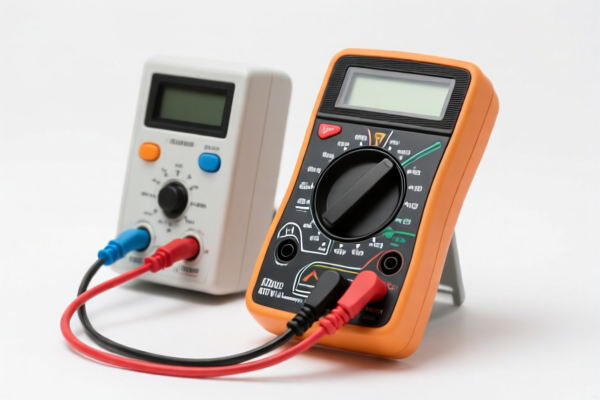
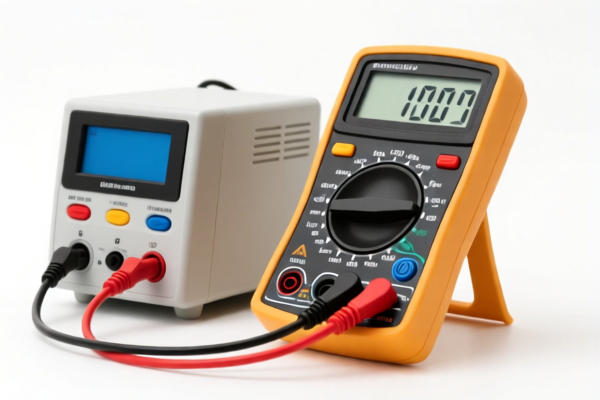
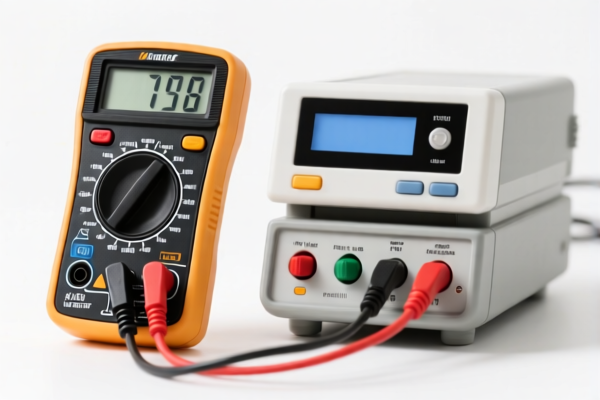
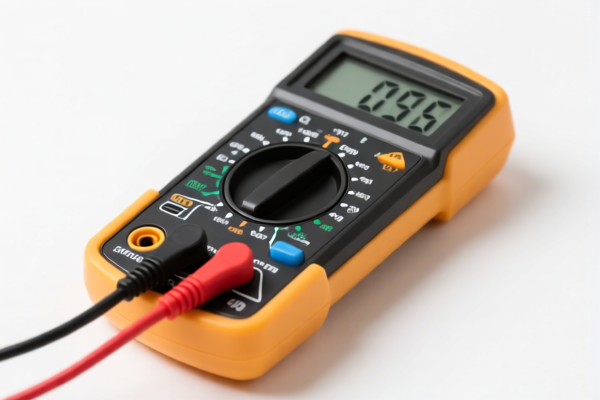
AI Analysis
⚡ Parts for Instruments Measuring or Checking Electrical Quantities
🌐 HS Code Reference & Customs Clearance Guide | 2026 Latest Tariff Analysis | Professional Clearance Strategy
📌 I. Product Definition & Classification: What Exactly Are "Electrical Instrument Parts"?
"Parts for instruments measuring or checking electrical quantities" refer to components specifically designed for devices that measure electricity, voltage, current, power, frequency, or other electrical parameters. Common examples include parts for electricity meters (electric meters), multimeters, power analyzers, and circuit testing equipment.
In international trade, these parts are often confused with general machine parts or electronic components. The key to correct classification lies in determining whether the part is "specialized" for electrical measuring instruments or general-purpose mechanical/electrical parts.
⚠️ Key Distinction Points:
- If the part is specifically designed for electricity meters or electrical measuring instruments (e.g., meter dials, current transformers for meters, specialized sensors) → Classified under Chapter 90 (Optical, Photographic, Cinematographic, Measuring, Checking, Medical or Surgical Instruments).
- If the part is a general electrical component (e.g., generic resistors, capacitors, generic motor parts) not uniquely identifiable for electrical instruments → Classified under Chapter 85 or others.
- Crucial Note: Under US Customs regulations (Section XI, Note 2), parts specially designed for articles of Chapter 90 are classified in Chapter 90, even if they could also be used in Chapter 85.
📦 II. HS Code Classification Details (2026 Latest Tariff Authority Comparison)
| HS Code | Product Description | Applicable Scenario | Specialized for Electrical Instruments? |
|---|---|---|---|
9028.90.00.80 |
Parts of electricity measuring instruments | Meters for electric energy (kW/h), electric meter internal components | ✅ Yes |
9033.00.90.00 |
Parts and accessories of measuring/checking instruments (General Chapter 90) | General instrument parts not specifically listed elsewhere in Ch 90 | ✅ Yes |
9033.00.20.00 |
Parts of instruments, apparatus, and machines (Specific machinery context) | Parts for mechanical testing instruments or specific instrument families | ✅ Yes |
8548.00.00.00 |
Electrical parts of mechanical or electrical devices | Generic electrical parts (e.g., relays, switches) not specific to Ch 90 instruments | ❌ No (General Electrical) |
9028.90.00.40 |
Parts and accessories for electric meters | Specific components for electricity meters (e.g., meter registers, current coils) | ✅ Yes |
🔍 Important Reminder:
-9028.90is for electricity meters (measuring electric energy). Parts here are strictly for devices that measure energy consumption.
-9033.00is a residual category for parts of other measuring instruments in Chapter 90 (e.g., parts for multimeters, oscilloscopes, non-electric measuring tools).
-8548.00is for electrical parts that are NOT specialized for Chapter 90 instruments. If a part is clearly for an electrical meter, do NOT use8548.00, as it may lead to misclassification penalties.
-9028.90.00.40vs9028.90.00.80: Both are for electricity meter parts. The distinction often lies in the specific component type or HS subheading interpretation in specific jurisdictions. In the US context provided, both have the same tariff structure, but40may refer to specific sub-categories like "parts for electric meters" vs "other parts" depending on detailed customs rulings. For tariff purposes in this data, both are treated similarly.
💰 III. 2026 Latest Tariff Rate Details (Including Additional Taxes, Policy Add-ons)
✅ Applicable Country: United States (US)
✅ Country of Origin: China (CN)
✅ Effective Date: From November 10, 2025 (Including subsequent imports)
🎯 1. 9028.90.00.80 & 9033.00.20.00 & 8548.00.00.00 & 9028.90.00.40 — Parts of Electrical/Electricity Meters & Instruments
| Item | Content |
|---|---|
| Base Tariff | 0% (ad valorem) for 9028 and 9033 & 8548 (Note: Base rate is often 0% for instrument parts, but check latest HTSUS; Data provided indicates 0% base for some, 4.4% for others) |
| USITC Additional Tax (Section 301) | +25% (From USITC Footnote 9903.88.01 for Chinese origin) |
| IEEPA Additional Tax | +10% (Targeting China/Hong Kong products, effective Nov 10, 2025) |
| Total Tariff Rate | 35.0% |
| Tax Calculation | CIF Value × 35% |
| De Minimis Eligibility | ❌ No (deny_de_minimis) |
| Legal Basis Path | IEEPA:9903.01.25 → USITC:9028.90.00.80 → FOOTNOTE:9903.88.01 |
📌 Explanation:
- The 25% Section 301 tax applies to most Chinese-origin machinery and instrument parts.
- The 10% IEEPA tax is a new add-on for Chinese goods effective late 2025.
- Base Tariff: For9028.90.00.80,9033.00.20.00,8548.00.00.00, and9028.90.00.40, the base duty is 0% (as per provided data). Thus, 0% + 25% + 10% = 35%.
- High Tariff Alert: Even though the base is low, the additional taxes make it 35%, which is significant for high-value instrument parts.
🎯 2. 9033.00.90.00 — Parts and Accessories of Measuring/Checking Instruments (General Category)
| Item | Content |
|---|---|
| Base Tariff | 4.4% (ad valorem) |
| USITC Additional Tax (Section 301) | +25% |
| IEEPA Additional Tax | +10% |
| Total Tariff Rate | 39.4% |
| Tax Calculation | CIF Value × 39.4% |
| De Minimis Eligibility | ❌ No (deny_de_minimis) |
| Legal Basis Path | IEEPA:9903.01.24 → USITC:9033.00.90.00 → FOOTNOTE:9903.88.01 |
📌 Note:
- This code falls under the general residual category for instrument parts not specifically listed elsewhere in Chapter 90.
- The base duty is 4.4%, which is higher than the 0% base for specific electricity meter parts (9028.90).
- Total Tariff: 4.4% + 25% + 10% = 39.4%.
- This is the highest tariff among the listed codes. Ensure you do not misclassify specific electricity meter parts as "general instrument parts" to avoid paying 39.4% instead of 35%.
🛠️ IV. Customs Clearance Practical Advice (Battle-Tested Pitfall Guide)
✅ 1. Preparation Checklist (All Required)
| Document | Mandatory | Description |
|---|---|---|
| ✅ Product Specification Sheet | ✔️ | Details the part's function, compatibility with specific instrument models, and technical parameters. |
| ✅ Part Number & OEM Reference | ✔️ | Link the part to the original instrument model (e.g., "Part for Fluke Multimeter Model X"). |
| ✅ Product Photos (Including Labels) | ✔️ | Clear images showing the part, any markings, and packaging. |
| ✅ Declaration of Exclusivity | ✔️ | Statement confirming the part is specially designed for electrical measuring instruments and not a general-purpose component. |
| ✅ Commercial Invoice | ✔️ | Must describe the item accurately as "Part for Electrical Measuring Instrument" not generic "Electrical Part". |
| ✅ Packing List | ✔️ | Show relationship between parts and main instrument if shipped together. |
| ✅ Certificate of Origin (CO) | ✔️ | For US imports, if not Chinese origin, may apply for different tariffs. |
✅ 2. Declaration Tips (Key Mantra)
🔥 "Specialized Parts, Chapter 90; General Parts, Chapter 85. Be Specific, Avoid 39.4%!"
| Scenario | Correct Declaration | Wrong Practice |
|---|---|---|
| Parts for Electricity Meters (Energy meters) | 9028.90.00.80 or 9028.90.00.40 |
Misclassify as 9033.00.90.00 → 39.4% |
| Parts for Multimeters, Power Analyzers | 9033.00.90.00 |
Misclassify as 8548.00.00.00 → Risk of misclassification penalty |
| General Electrical Components (Resistors, generic switches) | 8548.00.00.00 |
Declare as "Instrument Part" → Risk of penalty if not specialized |
| Mixed Shipment (Parts + Instrument) | Declare parts as accessories | Split incorrectly → Higher total tax |
✅ 3. Special Circumstances Handling
| Situation | Handling Advice |
|---|---|
| OEM Replacement Parts | Provide original manufacturer documentation proving the part is specifically for the instrument. |
| Kit with Multiple Parts | Ensure all parts are specialized for Chapter 90 instruments. If any part is generic, it may be classified separately. |
| Parts for Medical Electrical Instruments | If for medical devices (e.g., ECG parts), check if 9018 applies. If so, different tariffs may apply. |
| Parts for Industrial Control Equipment | If the "measuring" part is for PLCs or controllers, it might be 8537 or 8548, not 9033. Ensure correct function. |
🌍 V. Global Major Market Clearance Comparison (2026 Latest)
| Country/Region | Recommended HS Code | Tariff (China Origin) | Certification Requirements | Notes |
|---|---|---|---|---|
| 🇺🇸 USA | 9028.90.00.80 / 9033.00.90.00 |
35% / 39.4% | FCC (if electronic) | High additional taxes apply. |
| 🇨🇳 China | 9028.90.00.80 / 9033.00.90.00 |
0-4.4% (Base) | CCC (if applicable) | No additional Section 301 taxes. |
| 🇪🇺 EU | 9028.90.00 / 9033.00.00 |
0-4.4% (Base) | CE Marking | No additional punitive taxes. |
| 🇬🇧 UK | 9028.90.00 / 9033.00.00 |
0-4.4% (Base) | UKCA Marking | Post-Brexit rules apply. |
| 🇯🇵 Japan | 9028.90.00 / 9033.00.00 |
0-4.4% (Base) | PSE (if electronic) | No additional taxes. |
📌 Conclusion:
- USA has the highest total tariff burden due to Section 301 (25%) + IEEPA (10%).
- China, EU, UK, Japan only charge the base duty (0-4.4%), making them significantly cheaper for clearance.
- Strategy: For US-bound goods, ensure precise classification to avoid overpaying 39.4% when 35% might apply, or consider supply chain diversification (e.g., parts manufactured in Vietnam/Mexico) to potentially qualify for IEEPA exemptions.
📌 VI. Common Mistakes & Pitfall Guide (Lessons from Experience)
❌ Mistake 1: Declaring "Electricity Meter Parts" as "General Electrical Parts" (8548.00.00.00)
👉 Consequence: While the base rate is 0%, if deemed misclassified, customs may impose penalties and back taxes for incorrect declaration. Also, you lose the benefit of precise classification.
❌ Mistake 2: Declaring "Specific Electricity Meter Parts" as "General Instrument Parts" (9033.00.90.00)
👉 Consequence: You pay 39.4% instead of 35%. Overpayment by 4.4%, which adds up significantly for large shipments.
❌ Mistake 3: Using generic terms like "Electrical Component" or "Machine Part" on Invoice
👉 Consequence: Customs may request additional documentation, delay clearance, or assign a higher tariff code based on their interpretation.
❌ Mistake 4: Ignoring IEEPA 10% add-on
👉 Consequence: Unexpected cost increase for goods imported after Nov 10, 2025. Factor this into your pricing strategy.
✅ Correct Practice:
"Electricity Meter Part, Model XYZ, Specifically Designed for [Instrument Model], Non-Generic Component, FCC Certified (if applicable)"
🎯 VII. Conclusion: Precise Classification Saves Money!
🎯 Remember the Mantra:
🔹 "Specialized Parts → Chapter 90; General Parts → Chapter 85"
🔹 "Electricity Meter Parts → 35%; General Instrument Parts → 39.4%"
🔹 "Base 0% + 25% + 10% = 35%; Base 4.4% + 25% + 10% = 39.4%"
📌 Pro Tip:
If your parts are originating from Vietnam, Mexico, Thailand, or Malaysia, you may qualify for IEEPA exemptions, reducing the total tariff to 0-5%.
Recommendation: Apply for an Advance Ruling (Ruling Letter) from US Customs (CBP) before shipment to confirm the correct HS code and tariff rate.
📣 Immediate Action:
📞 Contact a licensed customs broker + Provide product specs + Request an Advance Ruling
🚀 Ensure smooth clearance, avoid penalties, and maximize profit margins!
✨ Professional Clearance Starts with Accurate Classification!
💼 Every cent of your cost deserves precise calculation!
Customer Reviews
About HS Code Classification
The Harmonized System (HS) is an internationally standardized nomenclature developed by the World Customs Organization (WCO) to classify traded products. Over 200 countries use the HS system as the basis for customs tariffs, trade statistics, and import/export regulations.
Each HS code follows a hierarchical structure:
- Chapter (2 digits) — Broad category of goods (e.g., Chapter 84: Machinery and Mechanical Appliances)
- Heading (4 digits) — More specific grouping within the chapter
- Subheading (6 digits) — Internationally standardized breakdown, used by all WCO member countries
- National subdivisions (8-10 digits) — Country-specific extensions for further classification, such as US HTSUS 10-digit codes
Correct HS code classification is essential for smooth customs clearance, accurate duty payment, and compliance with trade regulations. Misclassification can lead to customs delays, overpayment of duties, or penalties.
When importing from CN to US, the applicable tariff rates may include:
- Most-Favored-Nation (MFN) rate — The standard duty rate applied to WTO members
- General rate — Applied to countries without trade agreements
- Trade remedy duties — Additional tariffs such as Section 301 (anti-dumping), Section 232 (national security), or countervailing duties
The information provided on this page is for reference purposes only. For official classification, please consult with your local customs authority or a licensed customs broker.