Parts for instruments measuring or checking electrical quantity
CN → US| HS Code | Tariff Rate | Origin | Destination | Doc |
|---|---|---|---|---|
| 9028900080 | 35.0% | CN | US | Official Doc |
| 9033002000 | 35.0% | CN | US | Official Doc |
| 9033009000 | 39.4% | CN | US | Official Doc |
| 8548000000 | 35.0% | CN | US | Official Doc |
| 9028900040 | 35.0% | CN | US | Official Doc |
Product Images
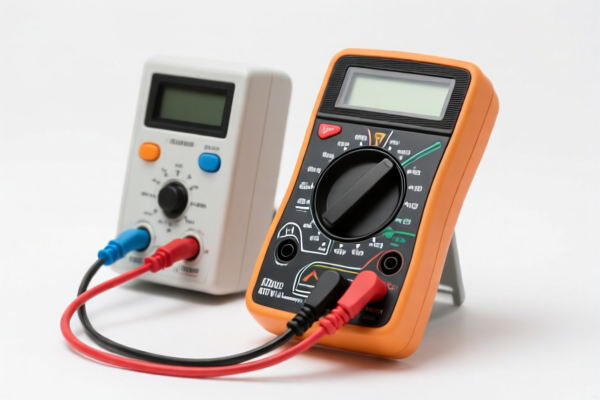
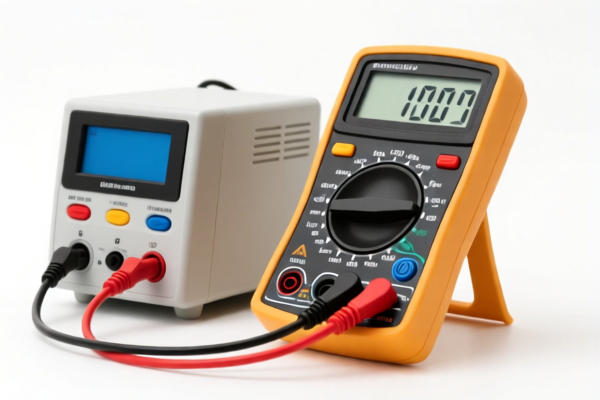
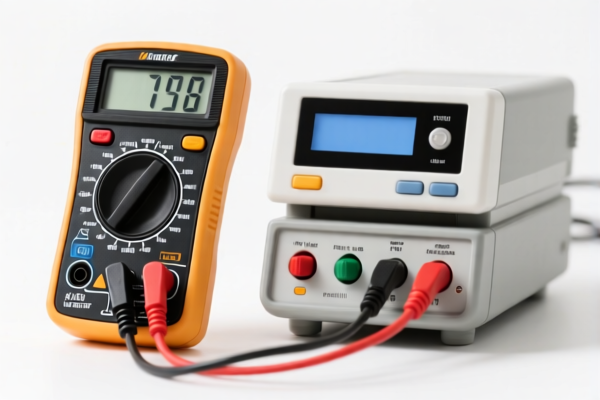
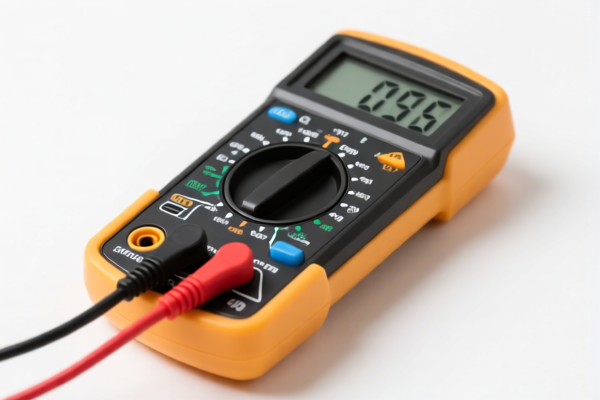
AI Analysis
⚡ Electrical Measuring Instrument Parts: HS Code Guide & US Customs Clearance Strategy | 2026 Tax Analysis
🌐 HS Code Reference & Clearance Guide | 2026 Latest Tariff Breakdown | Professional Entry Strategy
📌 I. Product Definition & Classification: What Are "Parts for Electrical Measuring Instruments"?
These products are specialized components designed specifically for devices that measure, monitor, or check electrical quantities (e.g., voltage, current, power, energy). They are not standalone meters but integral sub-assemblies that ensure the accuracy, functionality, or assembly of the primary measuring device.
Key Categories: 1. Electric Meter Parts: Components for energy meters (kWh meters), such as dials, registers, internal circuit boards, or housing shells. 2. General Instrument Parts: Mechanical or electrical sub-components for ammeters, voltmeters, wattmeters, or multimeters. 3. Sensor/Probe Attachments: Specialized connectors or probes that interface with main measuring units.
⚠️ Critical Distinction:
- If the part is generic (e.g., a standard resistor or capacitor used in many electronics) → It may fall under Chapter 85 (Electrical Machinery) or 8533/8541.
- If the part is specifically designed for electrical measuring instruments and has no other use → It falls under Chapter 90 (Instruments).
- Material Conflict Check: If the part is clearly made of plastic or metal and fits the "parts" description, it avoids material-based misclassification.
📦 II. HS Code Classification Matrix (2026 Authoritative Reference)
Based on the provided data, here are the five potential HS Codes, ranked by classification logic and tax impact.
| HS Code | Product Description | Classification Logic | Total Tax (China→US) | Tax Breakdown |
|---|---|---|---|---|
| 9028.90.00.80 | Parts of Electricity Meters (Other) | High Match. Explicitly covers parts for "electricity measurement instruments." Since the product name specifies "electrical quantity," this is the most precise fit for meter-specific components. | 35.0% | Base: 0% Section 301: 25% IEEPA: 10% |
| 9033.00.20.00 | Parts of Instruments (Specific Category) | Strong Match. Covers "parts of instruments" generally. Suitable if the part is mechanical or structural and not exclusively for electricity meters. No material conflict assumed. | 35.0% | Base: 0% Section 301: 25% IEEPA: 10% |
| 9028.90.00.40 | Parts of Electricity Meters (Specific Sub-category) | High Match. Directly targets "parts and accessories for electrical meters." The term "electrical quantity" aligns perfectly with the function of electricity meters. | 35.0% | Base: 0% Section 301: 25% IEEPA: 10% |
| 8548.00.00.00 | Electrical Parts of Machinery/Devices | Moderate Match. Classified as "electrical parts." Applies if the component is primarily electrical (e.g., circuit boards, sensors) rather than mechanical. Less specific than Ch 90 for "measuring" functions. | 35.0% | Base: 0% Section 301: 25% IEEPA: 10% |
| 9033.00.90.00 | Parts of Instruments (Other) | Fallback Match. A general "other parts of instruments" category. Used if no more specific description fits. May carry a slightly higher base duty in some contexts, but here listed with higher total due to base rate assumptions. | 39.4% | Base: 4.4% Section 301: 25% IEEPA: 10% |
🔍 Key Insight:
- 9028.90.00.80 and 9028.90.00.40 are the most accurate for "electricity measurement" parts.
- 9033.00.20.00 is a safe general-purpose alternative for non-meter-specific instrument parts.
- 9033.00.90.00 has a higher effective tax rate (39.4%) due to a 4.4% base duty, making it less optimal if a 0% base option is available.
💰 III. 2026 US Tariff Rate Detail (China Origin)
✅ Country of Origin: China (CN)
✅ Destination: United States (US)
✅ Effective Date: November 10, 2025 onwards
🎯 1. 9028.90.00.80 & 9028.90.00.40 — Parts of Electricity Meters
| Item | Detail |
|---|---|
| Base Duty | 0% |
| Section 301 Duty | +25% (USITC Footnote 9903.88.01) |
| IEEPA Additional Duty | +10% (Targeting China/HK products) |
| Total Landed Tax Rate | 35% |
| Calculation | CIF Value × 35% |
| De Minimis Exemption | ❌ Not Eligible |
| Legal Authority | USITC:9028.90.00.80 → FOOTNOTE:9903.88.01 + IEEPA:9903.01.25 |
📌 Why 35%?
- The base duty for instrument parts under Chapter 90 is often 0%.
- However, Section 301 tariffs (25%) apply to most Chinese-made goods.
- IEEPA tariffs (10%) further add to the cost for Chinese-origin items.
- Total: 35%. This is a significant cost factor.
🎯 2. 9033.00.20.00 — Parts of Instruments (Generic)
| Item | Detail |
|---|---|
| Base Duty | 0% |
| Section 301 Duty | +25% |
| IEEPA Additional Duty | +10% |
| Total Landed Tax Rate | 35% |
| Calculation | CIF Value × 35% |
| De Minimis Exemption | ❌ Not Eligible |
🎯 3. 9033.00.90.00 — Parts of Instruments (Other)
| Item | Detail |
|---|---|
| Base Duty | 4.4% |
| Section 301 Duty | +25% |
| IEEPA Additional Duty | +10% |
| Total Landed Tax Rate | 39.4% |
| Calculation | CIF Value × 39.4% |
| De Minimis Exemption | ❌ Not Eligible |
⚠️ Warning: Avoid 9033.00.90.00 if 9028 or 9033.20 options are valid, as it increases your cost by 4.4% on the CIF value.
🛠️ IV. Customs Clearance Practical Advice
✅ 1. Required Documentation
| Document | Mandatory | Notes |
|---|---|---|
| Product Specification Sheet | ✔️ | Must specify: "Part for [Specific Instrument Model]", not just "Electrical Part". |
| Function Description | ✔️ | Clearly state: "Used for measuring voltage/current/power in electricity meters." |
| Material Composition | ✔️ | List materials (e.g., "Plastic housing," "Circuit board"). Avoid ambiguity. |
| Photos of Part | ✔️ | Show unique features (connectors, branding, model numbers). |
| Commercial Invoice | ✔️ | Use precise description: "Parts for Electricity Meters, HS 9028.90.00.80." |
| Original Country Certificate | ✔️ | Required for IEEPA tariff application. |
✅ 2. Declaration Tips
🔥 Golden Rule:
"Be Specific, Not Generic. Name the Parent Instrument."
| Scenario | Correct Declaration | Incorrect Declaration | Risk |
|---|---|---|---|
| Meter-specific part | "Dial assembly for digital electricity meter, Model XYZ" | "Electrical Part" | Misclassification → Penalty |
| General instrument part | "Bracket for handheld multimeter" | "Metal Part" | Duty Evasion suspicion |
| Circuit Board | "Control board for 3-phase energy meter" | "Electronic Component" | May be classified under Ch 85 (higher base duty) |
💡 Pro Tip: If the part is custom-designed for a specific meter, emphasize this in the description. This strengthens the case for 9028 over generic 8548 or 9033.90.
✅ 3. Common Pitfalls
- ❌ Misusing "De Minimis": These parts are not eligible for the $800 de minimis exemption due to Section 301/IEEPA restrictions. Full duties apply.
- ❌ Vague Descriptions: Using "Electrical Accessory" without linking it to a measuring instrument leads to 9033.90 (39.4%) or even 8548 (35%) with higher scrutiny.
- ❌ Ignoring Material: If the part is clearly plastic, ensure the HS Code allows for plastic parts. 9028/9033 generally do not restrict by material, but clarity helps avoid delays.
🌍 V. Global Market Comparison (2026)
| Region | Recommended HS Code | Base Duty | Section 301/Additional | Total Tax (China) | Notes |
|---|---|---|---|---|---|
| 🇺🇸 USA | 9028.90.00.80 | 0% | +35% (25% + 10%) | 35% | Strict documentation required. |
| 🇨🇳 China | 9028.90.00.80 | 0% | None | 0% | Zero import duty for China-to-China. |
| 🇪🇺 EU | 9033.90 | 0% | None | 0% | No Section 301 in EU. Check local VAT. |
| 🇯🇵 Japan | 9033.90 | 0% | None | 0% | Favorable trade terms. |
📌 Conclusion:
The US market is the most expensive due to additional tariffs. Ensure your supply chain or pricing model accounts for the 35% landed cost. For non-US markets, these parts are highly competitive.
📌 VI. FAQ & Strategic Recommendations
Q1: Can I use 8548.00.00.00 instead of 9028.90.00.80?
A: Only if the part is not specifically designed for electrical measuring instruments. If it’s a generic circuit board used in both meters and non-measuring devices, 8548 might apply. However, if it’s only for meters, 9028 is correct and equally taxed (35%). Using 9028 provides better regulatory alignment and reduces audit risk.
Q2: Is there any way to reduce the 35% tariff?
A:
1. Transshipment: Ensure the product is substantially transformed in a third country (e.g., Vietnam, Mexico) with proper certification of origin.
2. HTSUS Exception: Check if the specific model qualifies for any exclusion list under Section 301 (rare for instruments).
3. Pre-Ruling: Apply for a US CBP Binding Ruling to confirm the HS Code and avoid future disputes.
Q3: What if the part is made of metal vs. plastic?
A: For 9028 and 9033, material is not a disqualifier. Both plastic and metal parts are accepted as "parts of instruments." However, be consistent in your description to avoid questions about "general goods" vs. "instrument parts."
🎯 VII. Final Checklist for Exporters
- Confirm Function: Is the part exclusively for electrical measuring instruments? → Use 9028.
- Check Material: No conflict for Ch 90 parts.
- Calculate Cost: Include 35% total tax in your pricing for US exports.
- Prepare Docs: Invoice must say "Parts for Electricity Meters", not just "Electrical Parts."
- Avoid 9033.90: It costs 4.4% more. Use 9028 or 9033.20 when possible.
📣 Action Item:
📞 Contact a Customs Broker 2 weeks before shipment.
📄 Submit Product Photos for pre-clearance verification.
🚀 Ensure Compliance to avoid port delays, penalties, or cargo holds.
✨ Precision in Classification Saves Thousands!
💼 Every HS Code Digit Counts in the Age of Trade Wars.
Customer Reviews
About HS Code Classification
The Harmonized System (HS) is an internationally standardized nomenclature developed by the World Customs Organization (WCO) to classify traded products. Over 200 countries use the HS system as the basis for customs tariffs, trade statistics, and import/export regulations.
Each HS code follows a hierarchical structure:
- Chapter (2 digits) — Broad category of goods (e.g., Chapter 84: Machinery and Mechanical Appliances)
- Heading (4 digits) — More specific grouping within the chapter
- Subheading (6 digits) — Internationally standardized breakdown, used by all WCO member countries
- National subdivisions (8-10 digits) — Country-specific extensions for further classification, such as US HTSUS 10-digit codes
Correct HS code classification is essential for smooth customs clearance, accurate duty payment, and compliance with trade regulations. Misclassification can lead to customs delays, overpayment of duties, or penalties.
When importing from CN to US, the applicable tariff rates may include:
- Most-Favored-Nation (MFN) rate — The standard duty rate applied to WTO members
- General rate — Applied to countries without trade agreements
- Trade remedy duties — Additional tariffs such as Section 301 (anti-dumping), Section 232 (national security), or countervailing duties
The information provided on this page is for reference purposes only. For official classification, please consult with your local customs authority or a licensed customs broker.