Parts for machinery of heading 8430 or 8431
CN → US| HS Code | Tariff Rate | Origin | Destination | Doc |
|---|---|---|---|---|
| 8431438040 | 35.0% | CN | US | Official Doc |
| 8431438020 | 35.0% | CN | US | Official Doc |
Product Images
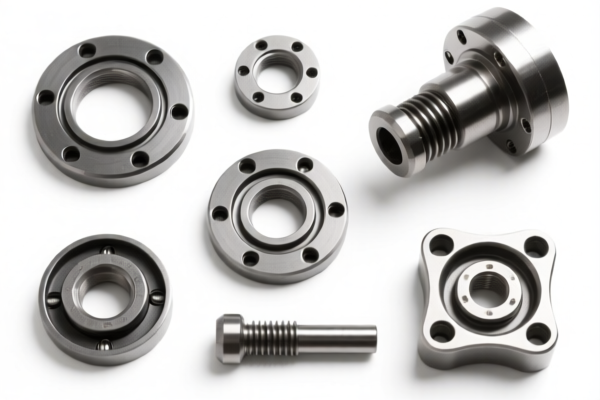
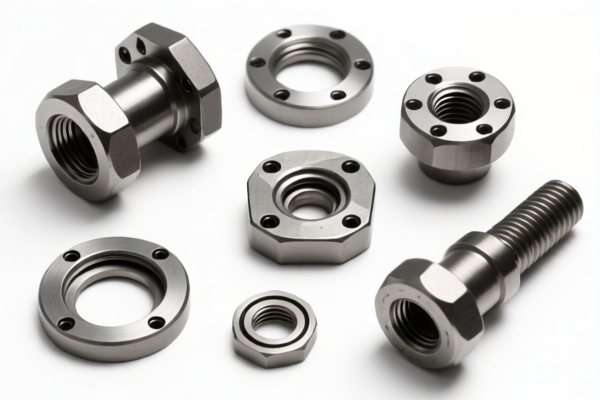
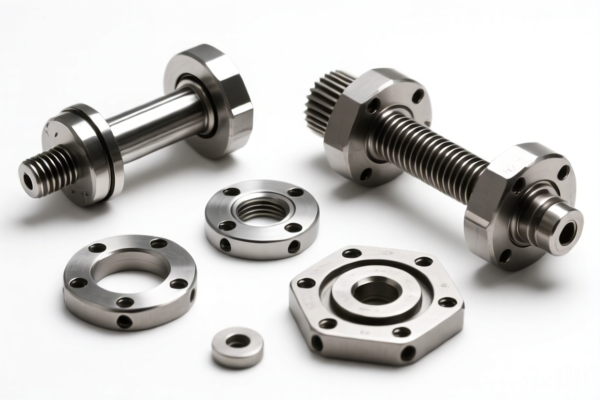
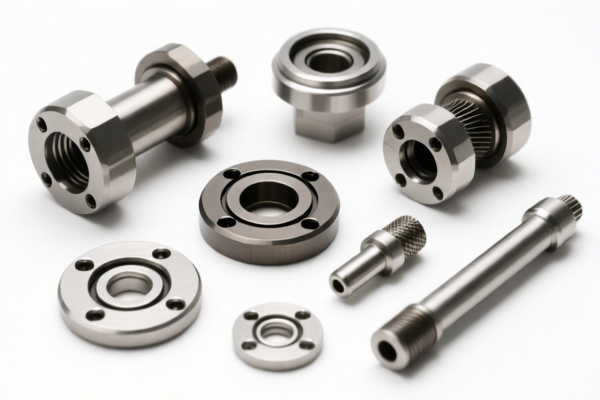
AI Analysis
⛏️ Drilling & Boring Machinery Parts (HS 8430/8431)
🌐 HS Code Reference & Customs Clearance Guide | 2026 Latest Tariff Analysis | Specialized Clearance Strategy
📌 Part 1: Product Definition & Classification: What Are "Drilling Parts"?
In the international trade of heavy machinery, parts for heading 8430 (Boring, sinking and driving machinery) are specialized components designed exclusively for oil and gas field operations. These are not general mechanical spare parts but critical functional components for deep-earth drilling rigs.
Internationally, these parts are strictly categorized into two distinct types based on their function and assembly state:
-
Drill Pipe Fitted with Tool Joints (
8431.43.80.40):
These are long, hollow steel pipes used to transmit torque and weight to the drill bit. The key feature is that the tool joints are already fitted (welded or threaded) onto the pipe ends. They are ready for immediate use in the drill string. -
Standalone Tool Joints (
8431.43.80.20):
These are the heavy-duty couplings (often forged) that connect drill pipes together. They can be supplied whether or not they are forged. If sold separately from the pipe, they fall under this specific subheading.
⚠️ Key Distinction Point:
- If the item is a pipe with joints attached → It is a "Drill Pipe" assembly → HS 8431.43.80.40
- If the item is just the joint/coupling (no pipe body attached) → It is a "Tool Joint" → HS 8431.43.80.20
- Note: General mechanical parts (gears, bearings, seals) for other machinery headings (8425-8429) do not apply here unless specifically for the boring machinery defined in 8430.
📦 Part 2: HS Code Classification Details (2026 Latest Tariff Authority Comparison)
| HS Code | Product Description | Application Scenario | Component State |
|---|---|---|---|
8431.43.80.40 |
Parts for boring/sinking machinery: Other Of oil and gas field machinery: Drill pipe fitted with tool joints |
Deep-sea or onshore oil/gas exploration; used as part of the drill string to transmit force. | ✅ Pipe + Joints Assembled |
8431.43.80.20 |
Parts for boring/sinking machinery: Other Of oil and gas field machinery: Tool joints, whether or not forged |
Replacement couplings for connecting drill pipes; standalone heavy-duty metal fittings. | ✅ Standalone Joint/Coupling |
🔍 Critical Reminder:
- Both HS Codes fall under Chapter 84 (Nuclear Reactors, Boilers, Machinery and Mechanical Appliances).
- Specifically, they are Parts of machinery of Heading 8430 (Boring, sinking and driving machinery).
- Do NOT confuse these with general "steel pipes" (Chapter 73) or "general mechanical parts" (e.g., 8483). The specificity of "oil and gas field machinery" drives the classification.
💰 Part 3: 2026 Latest Tariff Rate Detailed Explanation
✅ Applicable Country: United States (US)
✅ Origin: China (CN)
✅ Effective Time: Current Trade Restrictions Applied
🎯 1. HS Code 8431.43.80.40 – Drill Pipe Fitted with Tool Joints
| Item | Detail |
|---|---|
| Basic Tariff Rate | 0.0% (Ad Valorem) |
| Additional Tariff (Section 301) | +25.0% |
| Total Tariff Rate | 25.0% |
| Tax Calculation | CIF Value × 25% |
| De Minimis Exemption | ❌ Not Applicable (High-value industrial goods) |
| Legal Basis Path | HTSUS: 8431.43.80.40 → Section 301 Footnote → Total 25% |
📌 Explanation:
- The 0% base rate reflects the standard Most Favored Nation (MFN) treatment for these specific industrial parts.
- However, due to Section 301 Trade Measures, a 25% additional tariff is imposed on Chinese-origin goods in this category.
- Total Cost Impact: For every $10,000 of goods, you pay $2,500 in duties alone.
🎯 2. HS Code 8431.43.80.20 – Tool Joints (Whether or Not Forged)
| Item | Detail |
|---|---|
| Basic Tariff Rate | 0.0% (Ad Valorem) |
| Additional Tariff (Section 301) | +25.0% |
| Total Tariff Rate | 25.0% |
| Tax Calculation | CIF Value × 25% |
| De Minimis Exemption | ❌ Not Applicable |
| Legal Basis Path | HTSUS: 8431.43.80.20 → Section 301 Footnote → Total 25% |
📌 Note:
- Identical tax treatment to the drilled pipe assembly.
- Whether the tool joint is forged (high strength) or machined does not change the tariff rate, only the technical classification within the same HS code bracket.
🛠️ Part 4: Customs Clearance Practical Advice (Risk Avoidance Guide)
✅ 1. Required Documentation Checklist (Mandatory)
| Document | Must Provide? | Description |
|---|---|---|
| ✅ Detailed Product Specification | ✔️ | Must specify: Outer diameter, wall thickness, material grade (e.g., L80, N80, P110), and thread type (NC, BTC, STC). |
| ✅ Proof of End-Use | ✔️ | Declaration that parts are "Solely/Principally for Use" with Boring/Sinking Machinery (Heading 8430). |
| ✅ Commercial Invoice | ✔️ | Must clearly distinguish between Drill Pipe (Fitted) and Standalone Tool Joints to avoid misclassification. |
| ✅ Packing List | ✔️ | Detailed weight and dimensions. Heavy steel items require precise weight declarations. |
| ✅ Origin Certificate | ✔️ | Crucial for applying any potential FTA benefits (though 25% 301 tariffs often override most FTAs for these items). |
✅ 2. Declaration Tips (Key Rules of Thumb)
🔥 "Be Specific: Pipe vs. Joint is the Key!"
| Scenario | Correct Declaration | Error to Avoid |
|---|---|---|
| Long pipe with connectors welded on | 8431.43.80.40 "Drill Pipe Fitted with Tool Joints" |
Labeling as "Steel Pipe" (Ch 73) → Misclassification Penalty |
| Standalone thick metal couplings | 8431.43.80.20 "Tool Joints, Forged" |
Labeling as "General Machinery Parts" → Delay in Inspection |
| General bolts/washers for the rig | Check other subheadings (e.g., 8431.43.00.xx) | Do NOT put small accessories under 8431.43.80.40 unless they are integral to the pipe joint assembly. |
✅ 3. Special Handling Notes
| Situation | Handling Advice |
|---|---|
| Mixed Containers | If a container has both Drill Pipes and Standalone Tool Joints, you must declare them on separate line items with their respective HS codes (...40 and ...20). Do not lump them together. |
| Forged vs. Machined | For "Tool Joints," specify "Forged" in the description if applicable. It does not change the tariff but helps customs verify the quality/grade quickly. |
| Anti-Dumping/Countervailing | Check if specific Chinese manufacturers are subject to AD/CVD orders. While the tariff is 25%, additional duties may apply depending on the specific producer. |
🌍 Part 5: Global Market Comparison (2026 Update)
| Country/Region | Recommended HS Code | Tariff (China Origin) | Remarks |
|---|---|---|---|
| 🇺🇸 USA | 8431.43.80.40 / .20 |
25% (Total) | Subject to Section 301. High cost entry. |
| 🇨🇳 China | 8431.43.80.40 / .20 |
0% - 5% (Export/Import varies) | Domestic trade often exempt; Import into China may have low duties. |
| 🇪🇺 EU | 8431.43.xx |
0% - 2.7% | Generally lower tariffs than US. No Section 301 equivalent. |
| 🇦🇺 Australia | 8431.43.xx |
0% - 5% | Check ASEAN-Australia FTA if applicable. |
📌 Conclusion:
- The US market is the most expensive for these imports due to the flat 25% additional tariff.
- Supply chain diversification (e.g., sourcing from non-China origins if possible) might save 25% on duties.
📌 Part 6: Common Mistakes & Pitfalls
❌ Mistake 1: Classifying Drill Pipes as general "Steel Tubes" (Heading 7304)
👉 Consequence: Incorrect HS Code. Drill pipes are specifically designed for boring machinery (8430). Misclassification leads to seizure or heavy fines.
❌ Mistake 2: Declaring Standalone Tool Joints as Drill Pipe Assemblies
👉 Consequence: While the tax rate is the same (25%), it misrepresents the goods. If customs inspects and finds no pipe body, it triggers an audit.
❌ Mistake 3: Ignoring the "Fitted With Tool Joints" Requirement
👉 Consequence: If you ship a pipe without joints and label it 8431.43.80.40, it will be rejected. It might fall under a different general parts category or be rejected as incomplete.
✅ Correct Practice:
"Drill Pipe, 4-1/2 inch, N80 Grade, Fitted with NC50 Tool Joints, for Oil Field Boring Machinery (HS 8431.43.80.40)"
🎯 Part 7: Conclusion: Precision Saves Money!
🎯 Remember the Rule:
🔹 "Pipe + Joint = 8431.43.80.40"
🔹 "Just Joint = 8431.43.80.20"
🔹 "Both = 25% Total Tariff (US)"
📌 Pro Tip:
Before shipping, pre-classify your goods with a licensed customs broker. The difference between a "pipe" and a "joint" is technical but financially significant in documentation accuracy.
🚀 Accurate declaration = Faster clearance = Lower risk of port storage fees.
✨ Professional clearance starts with precise classification!
💼 Your drilling project depends on it.
Customer Reviews
About HS Code Classification
The Harmonized System (HS) is an internationally standardized nomenclature developed by the World Customs Organization (WCO) to classify traded products. Over 200 countries use the HS system as the basis for customs tariffs, trade statistics, and import/export regulations.
Each HS code follows a hierarchical structure:
- Chapter (2 digits) — Broad category of goods (e.g., Chapter 84: Machinery and Mechanical Appliances)
- Heading (4 digits) — More specific grouping within the chapter
- Subheading (6 digits) — Internationally standardized breakdown, used by all WCO member countries
- National subdivisions (8-10 digits) — Country-specific extensions for further classification, such as US HTSUS 10-digit codes
Correct HS code classification is essential for smooth customs clearance, accurate duty payment, and compliance with trade regulations. Misclassification can lead to customs delays, overpayment of duties, or penalties.
When importing from CN to US, the applicable tariff rates may include:
- Most-Favored-Nation (MFN) rate — The standard duty rate applied to WTO members
- General rate — Applied to countries without trade agreements
- Trade remedy duties — Additional tariffs such as Section 301 (anti-dumping), Section 232 (national security), or countervailing duties
The information provided on this page is for reference purposes only. For official classification, please consult with your local customs authority or a licensed customs broker.